 Written by Sophie Clarke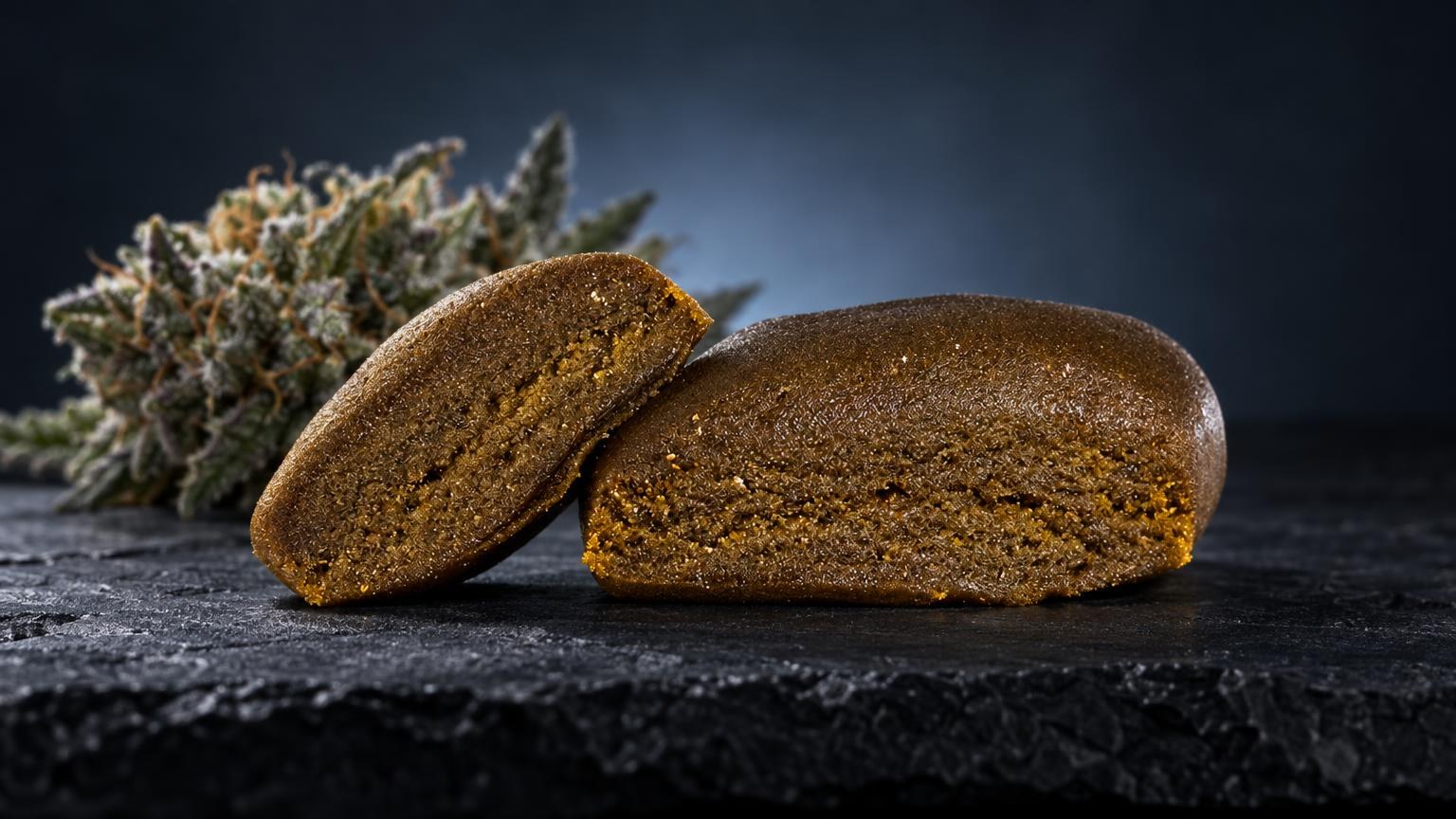
Frozen hash is ice water hash pressed from fresh frozen dry material rather than dried and cured flowers, which just changes how trichomes behave once separated. Understanding frozen hash making means reading grades hash dried into categories such as full melt, since purity and raw material are two different things to check before you buy.
Hash THCX at Spliff · from €5.90/g · ★ 4.9/5 (423 reviews)
72 h delivery in Europe · Free delivery from €99
Contents7 sections
- What is frozen hash? Ice water hash in plain terms
- Fresh frozen vs dried and cured: why the raw material matters
- Frozen sift and frozen static: the cold-separation family
- Frozen hash vs ice-o-lator, bubble hash and full melt compared
- Reading a frozen hash label: colour, texture and lab report
- Conclusion
- Frequently asked questions
Frozen hash refers to ice water hash made from plant material frozen right after harvest, before the resin is separated, so the flowers skip drying and curing and go from the field to the freezer. Hash itself is cannabis resin: the trichome heads, separated from the plant and pressed together (no relation to hash browns, sorry, potato fans).
Ice water hash (also water hash or ice hash) separates the resin with cold water rather than friction.
Most guides blur all the names together. This one sorts them on three levels:
- Method: ice water, or cold dry separation such as frozen dry sift and dry ice hash.
- Raw material: material kept fresh frozen, or dried and cured flowers.
- Grade: purity levels like full melt, which describe quality, not a process.
With that grid in mind, a label like “fresh frozen ice-o-lator full melt” stops reading like a stutter and starts reading like a spec sheet.
What is frozen hash? Ice water hash in plain terms
Cold does the heavy lifting in frozen hash. Ice-cold water and gentle agitation snap brittle trichome heads off the plant, the resin sinks, the leafy material floats, and the collected resin is then dried before pressing or packing.
Why cold? It turns resin glands brittle, a bit like chocolate straight from the freezer that cracks instead of bending. Stir that plant material in ice water and the heads break away cleanly from their stalks.
Water then does the sorting. The resin heads are dense enough to settle, while leaf fragments drift up, much like rinsing lentils where the husks rise and the good stuff stays at the bottom. Hash makers collect what settled, sieve it by size and leave it to dry.
The “frozen” part happens upstream, at the farm. According to Leafly’s cannabis glossary, fresh frozen material is frozen right after harvest, usually with dry ice, to protect the trichomes for extraction, and it skips trimming as well as drying and curing[6].
Want to skip the water entirely? That route, cold alone on dry material, is covered in “Frozen sift and frozen static: the cold-separation family“.

Fresh frozen vs dried and cured: why the raw material matters
Think of basil. Leaves frozen fresh keep that bright, green, almost peppery top note, while dried basil from a jar is the same plant with a warmer, rounder, slightly hay-like profile. Fresh frozen buds work the same way: the volatile terpenes that drying slowly pushes off stay locked in, so frozen hash tends to come across as loud, zesty and “alive”.
That’s why hash makers freeze. Frozen buds reach the wash with their trichome heads intact and barely handled, leaving less time for oxidation and breakdown between harvest and separation. As covered above, it’s about which aromas survive the trip.
One thing to keep straight: according to Leafly’s cannabis glossary, fresh frozen cannabis should not be smoked, and only dried, cured buds should be[6].
Dried and cured dry material isn’t the lesser option, it’s a different style. Expect deeper, riper, rounder notes, closer to an aged ingredient than a fresh one, from a plant that has turned crumbly and brittle. Our take: go fresh frozen if you want bright, terpene-forward character, and dried and cured if you like a mellow, classic hash profile.
The cut of the plant counts too, whether it ends up as water hash or frozen dry sift. Whole flowers carry more resin-rich surface, so they usually give a cleaner, more aromatic result. Many hash makers also make trim fresh frozen a regular wash material: it’s leafier, which typically means a more modest, earthier hash.
Frozen sift and frozen static: the cold-separation family
Water isn’t the only way to put cold to work in hash making. A second family skips the ice cold water entirely and separates frozen trichomes dry, so “frozen” can sit on a dry sift label as easily as on a frozen hash washed in water.
Classic dry sift is the old-school approach: dried flowers are worked over fine screens until the resin heads fall through, a bit like dusting icing sugar through a sieve. Frozen dry sift uses the same idea with frozen material. The cold makes the heads brittle, so they snap off more cleanly and less leafy debris comes through with them.
- Dry ice hash: solid carbon dioxide, better known as dry ice, supplies the cold with no water involved. It’s a technique for experienced professionals who know how to handle the material safely. A lab study measured a concentration of cannabinoid content as high as 60.7%[5].
- Frozen static: a niche technique where static electricity pulls frozen trichome heads away from the plant material, like a balloon picking up confetti.
On the dry ice side, a lab study published in PMC found that the collected trichome material reached that same cannabinoid concentration while keeping monoterpenoids that are usually lost[5].
The real dividing line with ice hash is drying. Water hash has to be dried after the wash. According to a review of cannabis processing methods published in PMC, freeze-drying preserves volatile compounds and the acidic form of cannabinoids, and its end products are generally considered higher quality than those of other drying methods[4].
Keep the scope in mind, though: that review looks at drying cannabis material in general, not hash specifically. It tells you why freeze-drying makes sense after a wash, not how a given hash will turn out.
Dry separation never gets wet, so that whole step drops out of the hash making process. The finish changes too: frozen dry sift tends to be powdery and sandy, while a water wash has a grainier, more doughy feel. Dry sift is often pressed or used as a starting material for rosin.
Frozen hash vs ice-o-lator, bubble hash and full melt compared
With both families laid out, each word on a label answers a different question. Ice-o-lator (the Dutch trade name), bubble hash and water hash all name the same ice water method, while “full melt” names the grade, so a frozen bubble hash or “fresh frozen bubble” label isn’t redundant. It’s three facts stacked on one jar, as the breakdown above shows.
| Term | Axis | What it guarantees | Typical texture | Common use |
|---|---|---|---|---|
| Ice-o-lator, bubble hash, water hash | Method | Resin separated in ice-cold water | Sandy to soft, depending on grade | Classic hash |
| Frozen, fresh frozen | Raw material | Plants frozen before separation | Set by method and grade | Hash or concentrate |
| Full melt | Grade | Very few plant particles left | Greasy, uniform | Often pressed into rosin |
When hash makers make bubble hash in volume, many swap hand stirring for a washing machine (sometimes a portable washing machine) as the agitator, then catch the resin in filter bags. The tool changes nothing on the grid: it’s still the ice water method.
There’s no “best” label in absolute terms. Full melt promises purity, not an effect, and frozen promises a raw material, not a quality level. A solventless dry-ice study published in PMC concentrated cannabinoid content as high as 60.7% while keeping monoterpenoids usually lost in conventional drying and curing[5].
Can you dab fresh frozen hash? The purest grades are commonly pressed into rosin or handled as a concentrate, while lower grades stay in classic hash form. The best way to shop is axis by axis.
Where to see these labels in practice: in our CBD hash collection, take Piatella Hash. Piatella is a style name, not a method, so check the product page for how it’s made.
Reading a frozen hash label: colour, texture and lab report
All that vocabulary pays off the moment you open a product page. A frozen hash listing should let you check three things: how the resin looks, how it handles and what the lab found.
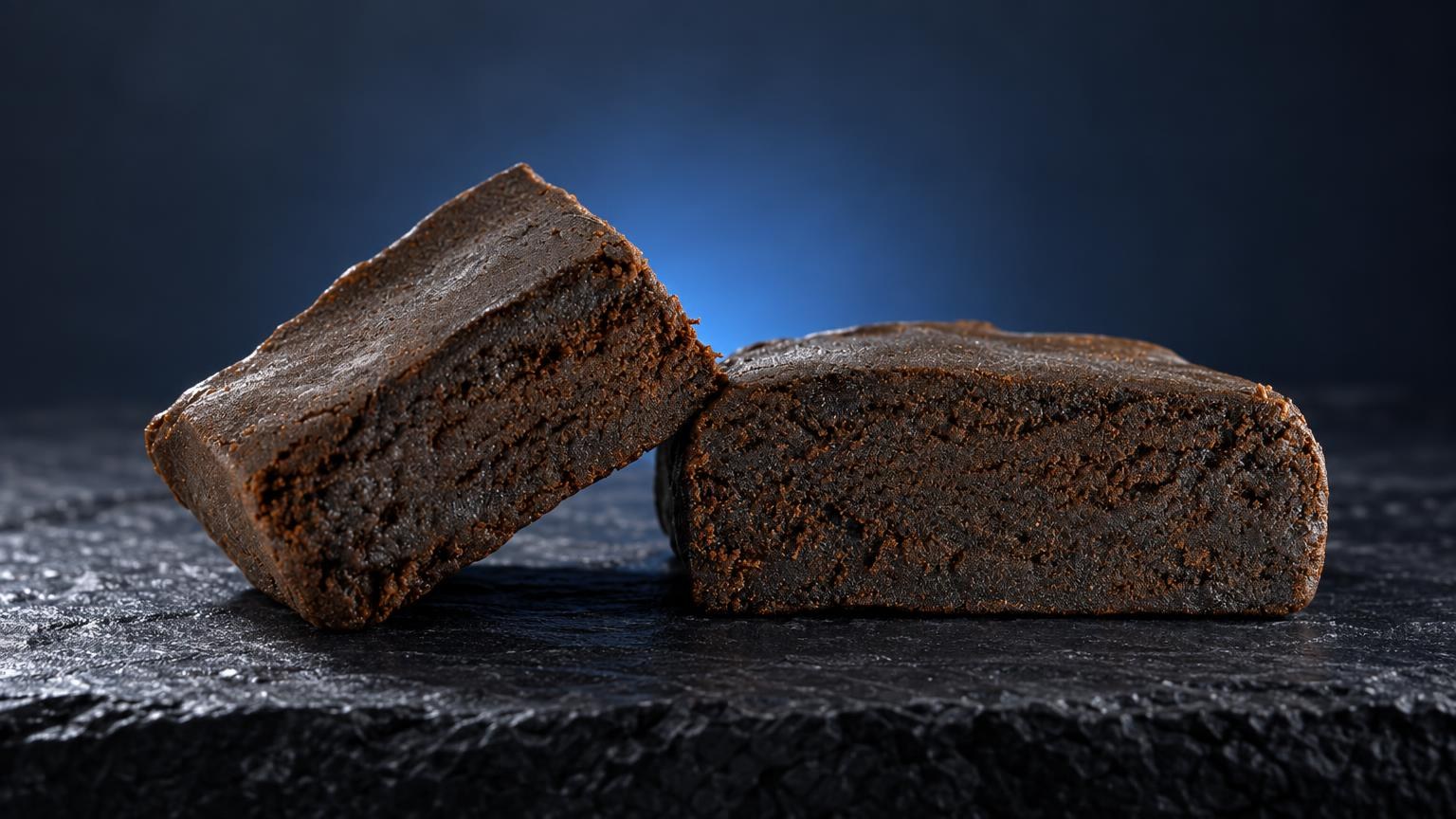
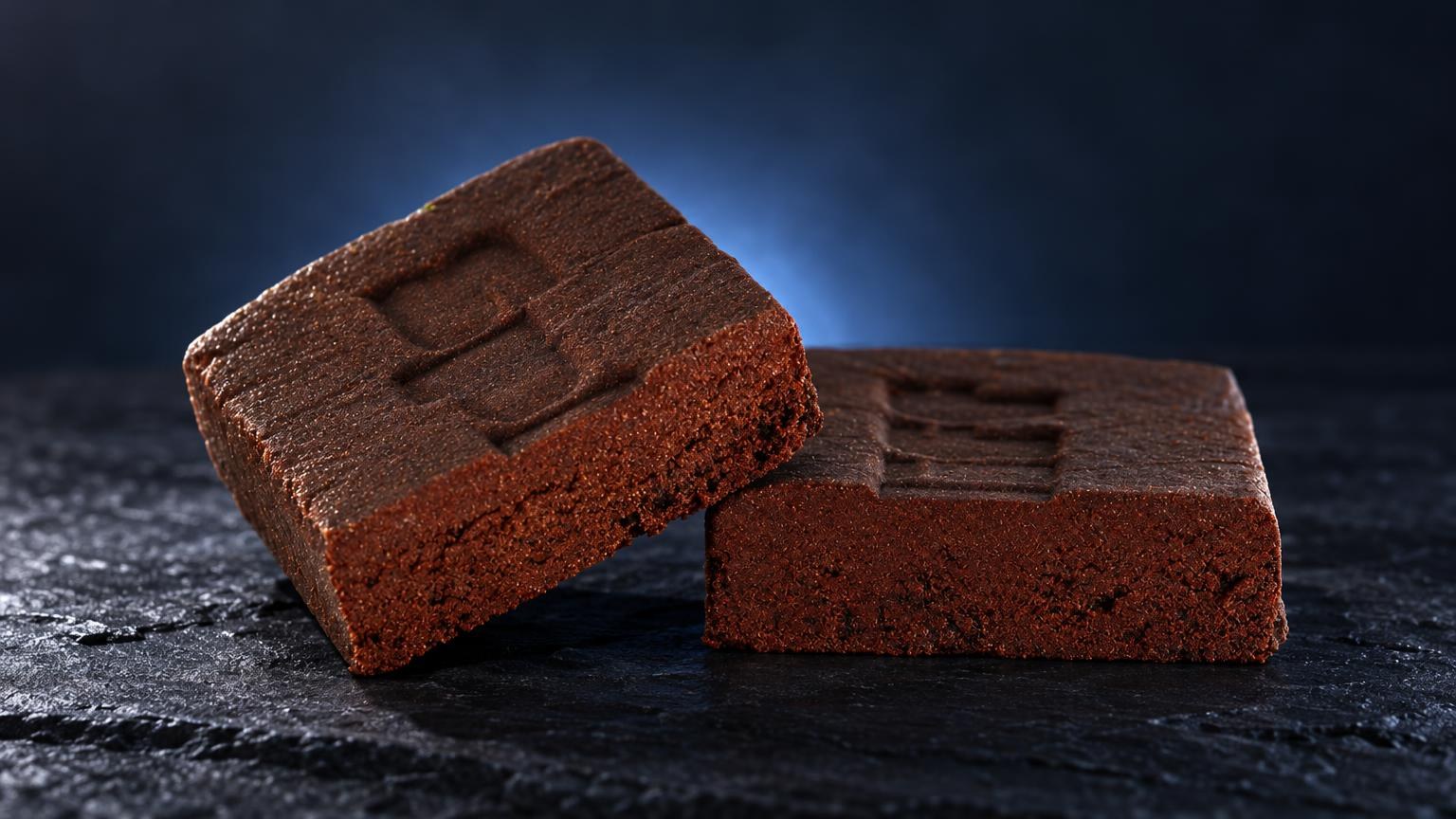
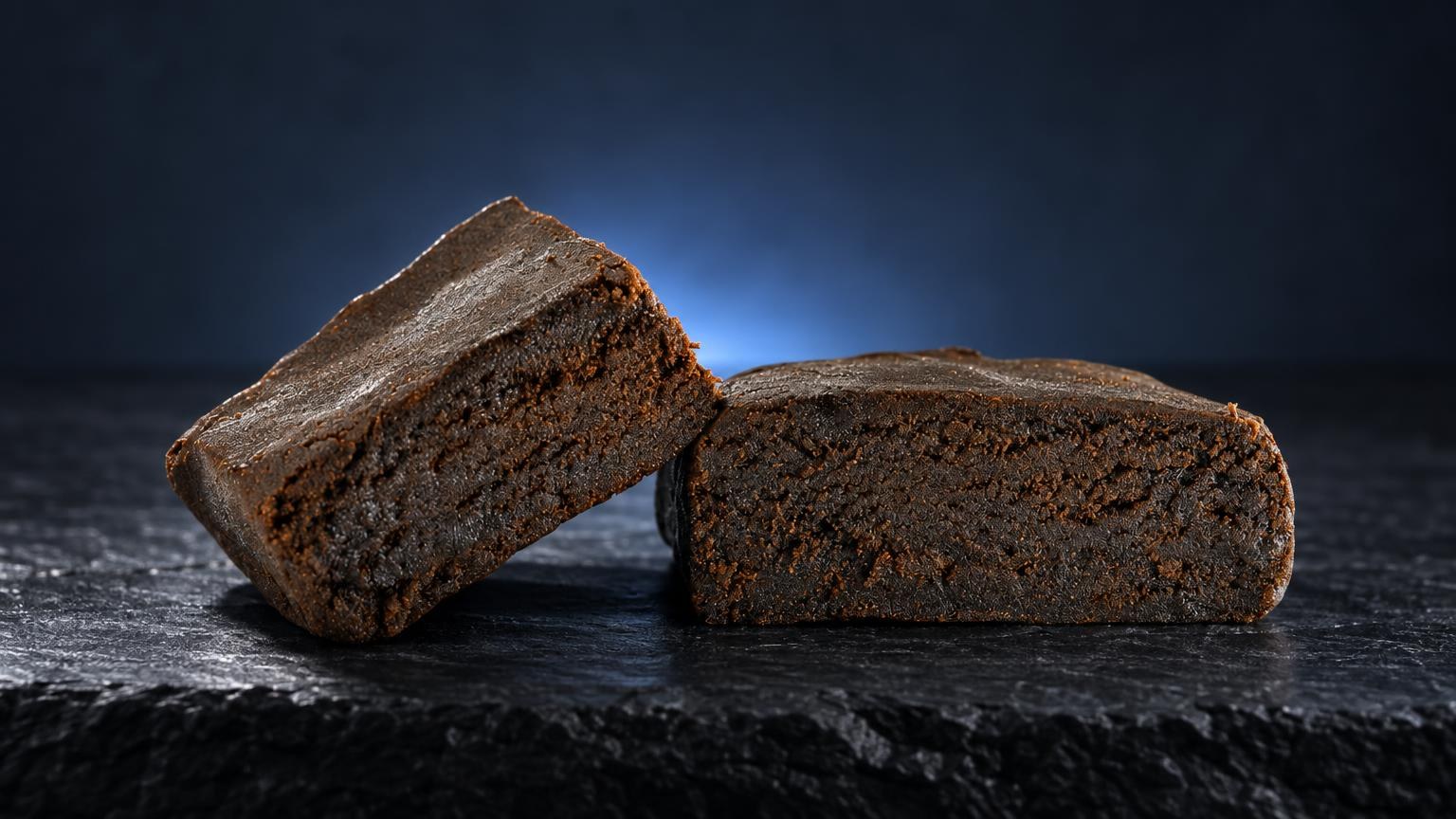
Colour is a clue, never proof. Shades run from pale blond to deep brown depending on strain, raw material and oxidation. Pale doesn’t automatically mean fresh frozen hash, and dark doesn’t mean poor, so always cross it with texture and the method on the label.
- Texture: sandy and loose often points to sift or dry ice hash, creamy to a fine ice water wash, firm and compact to a pressed style.
- Method words: ice-o-lator, bubble or dry sift tell you how the resin was separated, and that’s all they tell you.
- Raw material: was the starting material dry and cured, or frozen cannabis straight from harvest? Only “fresh frozen” answers that.
- Grade: “full melt” describes purity, not effect.
Try the grid on Zkittlez Hash or Cereal Milk Hash. The CBN figures in their names are the cannabinoid figures to match against the analysis, while method and texture come from the product page itself.
The THCX hash collection reads the same way. THCX is a trade name, not a molecule: every batch is lab-tested for classified molecules and none are detected. Adults only, in countries where consumption is permitted.
Conclusion
Keep those three axes handy (method, raw material, grade) and any hash label resolves in seconds instead of stumping you.
Three axes, zero confusion: that’s the whole trick to reading a jar.
Browse our CBD hash collection and see which jars actually tell you how they were made.
CBD is not a medicine and is not a substitute for medical advice or treatment. If in doubt, consult a healthcare professional.
Frequently asked questions
Can you eat frozen hash made from cannabis?
No. Frozen hash is made from cannabis frozen right after harvest for resin extraction, and this fresh frozen material should not be smoked or consumed as-is; only dried, cured buds are meant for smoking[6]. The frozen plant material is strictly a step in the hash-making process, not a finished product for direct use.
Sources
- Processing and extraction methods of medicinal cannabis – PMC — pmc.ncbi.nlm.nih.gov
- Novel Solventless Extraction Technique to Preserve … – PMC — pmc.ncbi.nlm.nih.gov
- What is fresh frozen? | Cannabis Glossary — www.leafly.com