 Written by Sophie Clarke
 Contents10 sections
- What terpenes actually are
- The terpenes you will actually smell
- Do terpenes get you high?
- The entourage effect: what is established, and what is not
- Why the same strain never smells exactly the same twice
- How to keep the aroma alive at home
- Spliff, September 2026: the aromas actually in stock
- The nose knows before the label does
- Conclusion
- FAQ
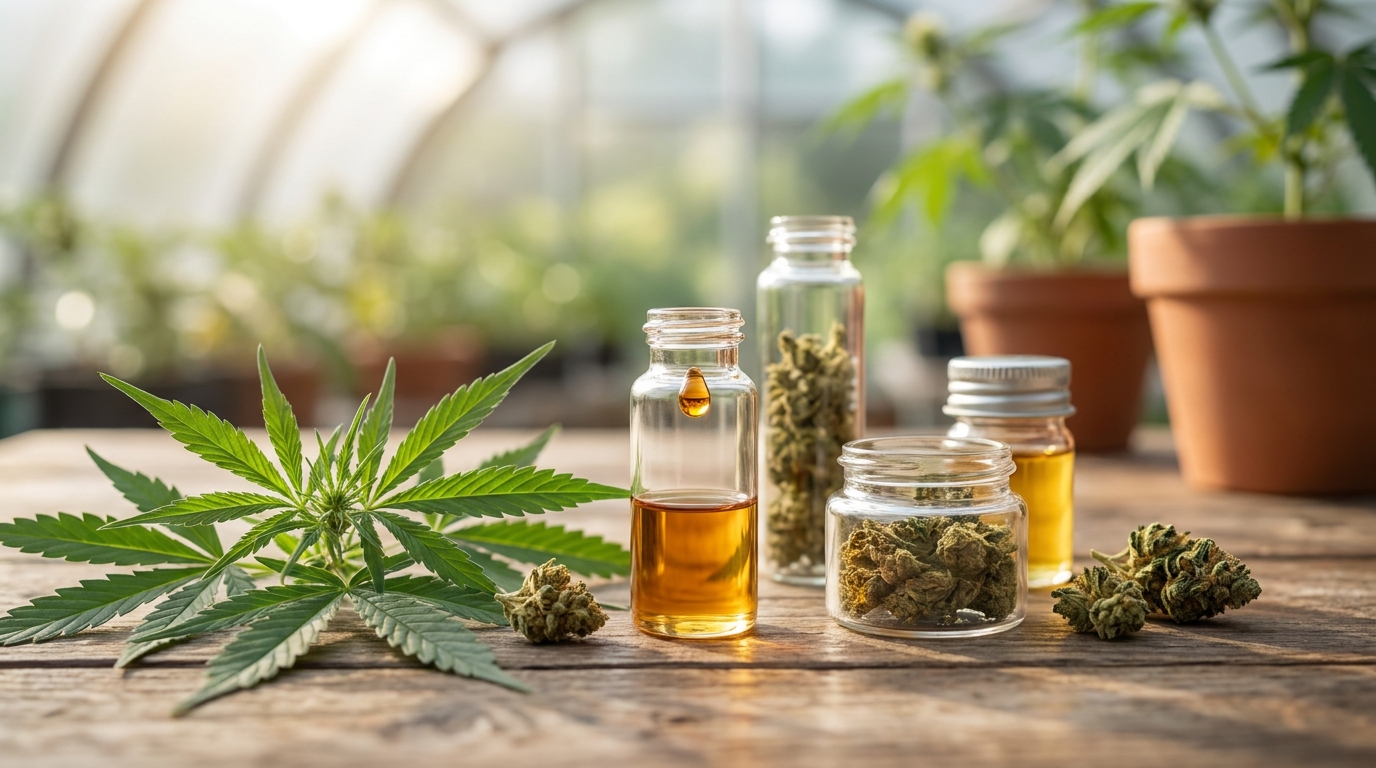
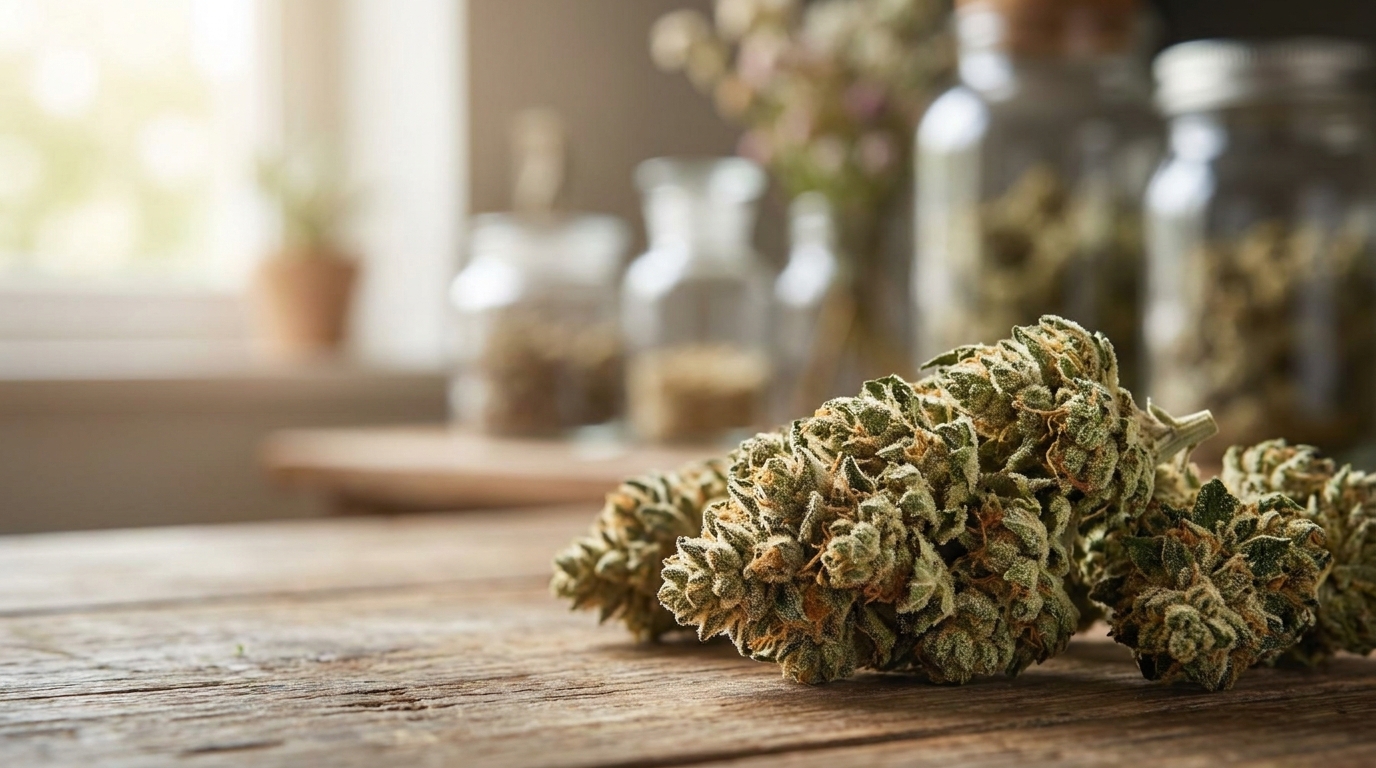
Cannabis terpenes are the volatile aromatic compounds the plant builds inside its trichomes, the same chemical family that makes a lemon peel smell like lemon and a pine needle smell like pine. In cannabis, they carry the smell and the taste, and that is their job. They are not cannabinoids, they are not intoxicating on their own, and because they evaporate so easily, bad storage quietly erases them. Adults only, in countries where consumption is permitted.[2]
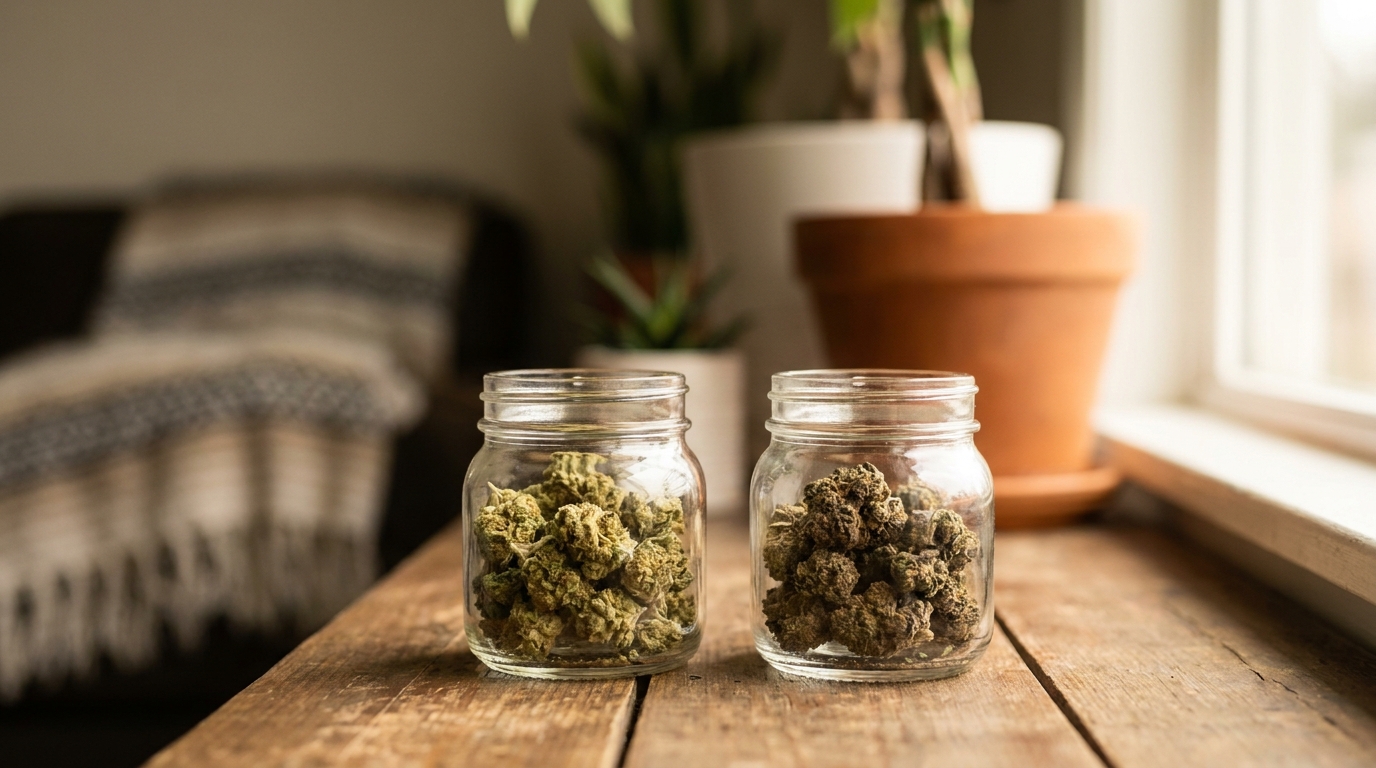
Honestly, my nose figured this out years before I read a single paper on it. Open two jars side by side in my Lisbon kitchen, one bright and citrusy, one dark and peppery, and you already know something no label will ever tell you.
Volatile is the key word here. These compounds sit right on the surface of the flower and drift off into the air, which is exactly why you can smell a bag from across the room. Thousands of plants make them too: citrus fruit, hops, pine, lavender, black pepper.
Dozens of individual terpenes have been identified in cannabis sativa, and they sit alongside the cannabinoids, not among them. THC and CBD belong to one family, terpenes to another. Mixing up the two is where most of the internet goes off the rails.[3]
What you smell in one specific jar is its terpene profile: the aromatic fingerprint of that batch, at that moment. Two harvests of the same genetics can show noticeably different terpene profiles, and your nose picks that up instantly.
Hold on to that line, because everything else in this article leans on it: a profile describes an aroma, never an effect.
The essentials in 30 seconds
Cannabis terpenes are the aromatic compounds that give each flower its distinct smell and taste, separate from cannabinoids like THC and CBD. Research suggests terpenes play an important role in shaping how a strain is perceived, though their profile fades with poor storage, light, heat, and time. Genetics sets the ceiling, but handling determines what survives in the jar.
- Terpenes are not intoxicating on their own; they interact with body endocannabinoid signals differently than cannabinoids do, and only THC drives the high.
- The known entourage effect proposes that cannabinoids and terpenes work together, but the entourage effect cannabinoids theory remains a hypothesis, not a confirmed mechanism.
- Airtight, dark, cool storage protects aroma longevity, while heat, light, air exposure, and time act as the main thieves of a jar’s original scent.
What terpenes actually are
So what is the plant actually doing when it builds these molecules? Terpenes are the aromatic branch of plant chemistry, and cannabis is nowhere near the only member of the club. Rosemary, hops, black pepper, conifer resin, orange peel: same family of compounds, different combinations, wildly different smells.[3]
Here’s the thing though. In nature, those aromas were never made for us. Strong plant smells do a job for the plant itself, out in a garden or a forest, long before anyone holds a jar up to their nose.
What we get out of it is simply the part we can smell.
Now for the line that everything else in this article depends on. Terpenes are not cannabinoids. THC and CBD belong to one chemical family, terpenes to a completely different one, which is exactly why a proper lab report lists them in separate blocks.
The scale is different too. Cannabinoids show up as a meaningful percentage of the dried flower, while the terpene fraction of that same sample is much smaller. Tiny quantities, enormous impact on what your nose registers.
Three quick things terpenes are not, because this confusion genuinely costs people money:
- Not cannabinoids, so they are not what a THC or CBD figure on a label refers to.
- Not scheduled molecules, and not the reason a product is controlled or not.
- Not flavourings added to a finished product. In a real flower, the aroma was built by the cannabis plant itself.
So how many are we talking about? Dozens of distinct terpenes have been identified in cannabis, and the exact tally shifts depending on which analysis you read and which cultivar was tested. I’m not going to hand you a neat round number I invented, because that number moves with the method.[3]
What matters practically is that only a handful ever reach a concentration your nose can actually pick out. That small group is what gives terpenes cannabis its recognisable smells, from lemon to diesel to wet earth.
Which brings us to the term you’ll spot on any decent lab sheet: the terpene profile. It’s the aromatic fingerprint of one specific batch, the list of which aromatic molecules were present and in what proportion on the day it was tested.
The terpenes you will actually smell
Once you know what these molecules actually are, the fun part starts: putting names on smells your nose already sorts out without any help from you.
Only a handful of the identified terpenes really drive what you notice when you crack open a jar. Learn seven names and you can describe almost any flower you meet. Here is the short repertoire I actually use.
| Terpene | What it smells like | Where else you meet it |
|---|---|---|
| Myrcene | Earthy, musky, slightly sweet | Ripe mango, hops |
| Limonene | Bright citrus, zesty | Lemon and orange peel |
| Caryophyllene | Peppery, warm, spicy | Black pepper, cloves |
| Pinene | Fresh pine, resinous | Pine needles, rosemary |
| Linalool | Floral, soft, powdery | Lavender, coriander leaf |
| Terpinolene | Herbal, green, fruity-fresh | Apple skin, garden herbs |
| Humulene | Dry, woody, hoppy | Hops, sage |
You have probably spotted what is missing from that table. There is no “effect” column. That is completely deliberate, and honestly it is the whole reason I wanted to write this piece.
Nearly every terpene chart floating around online tacks on a third promise next to the smell, telling you which molecule makes you sleepy, focused or chatty. The human evidence for those claims simply is not there, and I am not going to pretend otherwise. What those charts are really leaning on is the entourage effect, an idea I unpack properly in “The entourage effect: what is established, and what is not”.
The most cited piece of support comes from LaVigne et al. (2021, Scientific Reports), who proposed that Cannabis sativa terpenes are cannabimimetic. It is genuine conceptual backing for the hypothesis, not a clinical demonstration in humans. As it stands, the idea rests on deductive reasoning, a few limited clinical observations and a small body of preclinical work.[4]
In practice, the combinations matter far more than any single name. The myrcene limonene pinene trio is the one you meet constantly, and a small shift in the balance is enough to take a jar from earthy-mango to sharp lemon-forest. Add linalool to a limonene pinene base and the whole thing reads softer and more floral, even though nothing about the family label changed.
Which is exactly why cannabis terpenes make a better shorthand than the old indica versus sativa split, a debate the site already settles elsewhere, and why the strain portraits published on the blog describe aroma first.
Want to train this properly? Next time you open a fresh jar, breathe once, then name two notes out loud before you read the label. Do that for a month and you will be reading a flower the way a sommelier reads a glass, no terpenes sample kit or lab report required.
Do terpenes get you high?
No. At the levels present in a flower, terpenes are not intoxicating, and no amount of sniffing a jar will get you high. The intoxicating part of cannabis is THC, a cannabinoid[1]. What terpenes change is the smell, the taste, and the words you reach for when you describe a strain.
This is the question I get asked more than any other about cannabis terpenes, usually by someone holding an open jar with a very impressed look on their face. A loud smell feels like power. It is not a potency meter.
Two flowers can carry a near identical cannabinoid figure on the label and smell nothing alike, simply because different terpenes dominate each profile. Your nose reads the aroma. The label reads the chemistry. Two separate readings of the same jar.[3]
And here is the honest part, because it matters. What you smell steers what you expect, and expectation colours how you describe the experience afterwards. That is perception, and perception is not pharmacology.
So yes, terpenes matter for how you recognise a batch, how you remember it, and how you pick the next one. They play no part in how hard it lands.
You will also run into articles claiming research shows terpenes do far more than carry an aroma, that claim leans on the LaVigne hypothesis.
Worth keeping in mind: that hypothesis rests on deductive reasoning, a handful of limited clinical observations and a small number of preclinical studies. So when a blog tells you a given terpene is known to interact with receptors somewhere in the body, the question to ask is always the same one. Was the work done in humans, or in a dish?[6]
That literature is genuinely interesting, and it is nowhere near as settled as the infographics suggest. I unpack exactly what stands up and what does not in the next section, on the entourage effect.
The entourage effect: what is established, and what is not
Which brings us to the argument the whole industry leans on. It deserves a straight look, not a shrug.
The hypothesis goes like this: cannabinoids and terpenes would act together rather than separately, so a whole aroma profile alongside a cannabinoid would produce something neither delivers alone. Under the banner of the entourage effect, cannabinoids get the lead role and terpenes the supporting one. Hanuš and Hod (2020), in Med Cannabis Cannabinoids, reviewed the plant’s terpenes and terpenoids by GC/MS analysis and discussed exactly this supposed synergy.
Notice the verb: discussed. That is the honest state of play. The phrase entourage effect dropped a very tidy story into a genuinely untidy field, and the story travelled faster than the evidence behind it.
When terpenes have been tested on their own, the work has been mostly preclinical, in vitro or in animal models, and the results came out mixed rather than conclusive. That gives the entourage hypothesis conceptual support, not a clinical demonstration in humans.[6]
So here is the split I keep in my head:
- Established: terpenes exist in measurable, reproducible amounts, they define smell and taste, and their profile differs from one lot to the next.
- Not established: that a given terpene, at the concentration found in a flower, meaningfully changes what a cannabinoid does in a human body.
You will still find charts online listing terpenes with columns like “anti inflammatory”, “analgesic” or “terpenes benefits”, usually lifted from cell-culture or animal work and quietly reprinted as consumer advice. That leap is the problem, not the underlying research. Health authorities describe what cannabis does in terms of its cannabinoid content, not its aroma profile[1].
So why is this claim absolutely everywhere in cannabis marketing? Because it is a gift to a seller. It answers, in one sentence, something people genuinely notice: two flowers with near-identical lab numbers do not read the same. And nobody can disprove it across a counter.
Does that mean the idea is nonsense? Not at all. Plant chemistry is full of real interactions, and this one may well hold up once we have human studies. Until then, take it for what it is: a plausible hypothesis, heavily used commercially, and not an established fact.
Why the same strain never smells exactly the same twice
Which brings up something every regular buyer clocks sooner or later: two batches wearing the same strain name can smell like cousins rather than twins.
Genetics sets the ceiling. The seed decides which aromatic molecules the plant is able to build, and in roughly what proportions. What actually lands in your jar depends on how it was grown and, above all, on when it was cut.[3]
Harvest a few days earlier or later and the balance tips. Not the identity of the flower, just its emphasis: brighter citrus in one sample, heavier earth in the next. Same name, same lineage, different signature.
Then comes the part nobody smells but everybody tastes: drying and curing. Those few weeks decide how much of the aromatic load survives inside the flower before it ever reaches you. A batch handled patiently arrives loud, a batch rushed through drying arrives flat, and no packaging fixes that afterwards.[5]
And once the flower is finished, the clock starts. Four things quietly steal what’s left:
- Heat, which speeds up evaporation. A jar on a sunny windowsill loses its top notes fastest.
- Light, which degrades aromatic compounds over weeks rather than months.
- Air, because every opening lets the lightest molecules walk out and never come back.
- Time, the slowest and most reliable thief of all.
The order matters here. The lightest, most fragrant molecules leave first, which is why an ageing flower so often turns generically hay-like: the bright citrus and pine notes go early, the heavier earthy and woody ones stick around. What you are smelling is not a different strain, it is the same strain with its high notes missing.[5]
Here is the practical takeaway I would hand anyone who shops by smell: a product that no longer smells of anything has usually been stored badly, not grown badly. Cannabis terpenes are the first thing to disappear in a bad jar, long before anything else about the flower changes visibly.
One honest caveat, though. It is tempting to assume the cannabinoid side of the equation sits untouched while the aroma quietly evaporates, and in everyday terms a faded jar is an aromatic disappointment rather than an empty one. But how those two families age side by side depends on the batch, the storage and the timescale, and that is not something your nose can measure.
How to keep the aroma alive at home
Which is good news, honestly: keeping the smell alive at home isn’t a skill you have to learn. You just have to slow those four thieves down.
The base kit is three things. An airtight container, kept in the dark, kept cool but never in the freezer. A glass jar with a proper seal, tucked in a drawer or a cupboard, does more for your cannabis terpenes than any gadget you can buy.
The freezer is the one that surprises people. Cold is fine, but freezing brings condensation every single time you take the jar out, and brittle frozen trichomes snap off on the first handling. Treat your flower like the essential oils in your bathroom cabinet: sealed, dark, cool, used before it goes flat.[5]
The mistakes I see most often are all variations on the same theme: too much air, or too much heat.
- Soft plastic baggies, which are neither airtight nor kind to trichomes.
- A half empty jar opened constantly, so the headspace refills with fresh air each time.
- Stock parked on top of the fridge, above the oven, or in a car glovebox.
- A clear jar living on a bright kitchen shelf, quietly bleaching in the light.
Grinding is the other habit worth changing. Breaking a bud up multiplies the surface exposed to air, so pre grinding your whole week’s supply on a Sunday is basically a slow leak. Grind right before you use it and you’ll clock the difference in the first minute.
This is also where the lightest molecules betray you first. The one terpene that jumped out of the jar on day one can be exactly the one missing a fortnight later. That’s why a flower can smell flatter without smelling bad.
If you vaporise, temperature does most of the talking. A low setting lets the aromatic compounds come through and you actually taste the profile. Push the heat up and you sail straight past them into something generic and toasty.[2]
Start low, walk up slowly, and stop where the flavour is still there.
For the mechanics of the session itself, the how to smoke hash guide covers the gesture, and what is actually inside a vape is handled separately.
Spliff, September 2026: the aromas actually in stock
All of this is easier to test than to read about, so here is the part nobody else can hand you: a dated look at what was actually sitting on our shelves.
On 10/09/2026 I pulled our Store API and noted every loose flower and hash then in stock, with the aroma note that dominates the jar and the regular price of that day. Nothing on promotion appears here, so the figures stay comparable.
| Product | Format | Dominant aroma note | Regular price |
|---|---|---|---|
| Amnesia 25 THCX | Loose flower | Citrus and haze | 23,70 € |
| Purple Haze | Loose flower | Sweet berry | 21,30 € |
| Purple Haze 25 THCX | Loose flower | Sweet berry | 23,70 € |
| Gelato | Loose flower | Creamy and sweet | 20,40 € |
| Gelato Cali USA THCX | Loose flower | Creamy and sweet | 26,70 € |
| OG Kush THCX | Loose flower | Earthy and piney | 26,70 € |
| Ice Runtz USA THCX | Loose flower | Candy and fruit | 26,70 € |
| Super Lemon Haze 30 THCX | Loose flower | Lemon zest | 23,70 € |
| Diamond Kush 60 THCX | Hash | Earthy and spicy | 32,70 € |
Read that third column as a map, not a ranking. Five aroma families cover the whole list: citrus and lemon zest, sweet berry, creamy and sweet, earthy and woody or spicy, and candy fruit. Nine products, five smells, one nose (yours) to make the call.
A quick note on vocabulary, because it trips people up. When smokers say a kush smells like gas, they are describing that heavy, fuel-and-pine edge of the earthy family, not an added flavouring. It is the same volatile molecules, just a punchier way of naming them.
You will notice there is no effect column, and that is deliberate on my side. The cannabimimetic hypothesis I mentioned earlier is conceptual support, not a clinical demonstration in humans, so a dominant aroma note is all I am willing to put in writing.[4]
In practice, that means Amnesia 25 THCX for the citrus and haze corner, Purple Haze at 21,30 € if sweet berry is the note you chase (its profile is taken apart in our Purple Haze strain guide), and Gelato at 20,40 € as the cheapest way into the creamy family.
At the other end of the shelf, OG Kush THCX is the earthy and piney reference, while Ice Runtz USA THCX sits alone in the candy and fruit register; for that sweets-not-citrus reading, the Zkittlez strain portrait is the reference. Want the full character of each plant? The portraits we published on Gelato, OG Kush and Amnesia Haze go deeper than an aroma note ever could.
The nose knows before the label does
Whatever else unfolds in your evening comes from THC and the other cannabinoids, which live on a completely different page of the plant’s chemistry.
We ship to 21 EU countries (not the UK, Ireland or Switzerland).
And yes, I know the entourage idea sounds lovely. That is interesting science, not a promise for your Friday night.
You do not need to memorise trans nerolidol, or humulene, or any other name on a lab report to buy well. You also do not need the colourful wheels promising anti inflammatory or anti inflammatory analgesic properties. Those describe a bench experiment, not the jar in your hand.
What you do need is the habit. Open the container, breathe, and check whether the citrus, the berry, the pepper or the pine is still in there. Aroma molecules leave fast, so a flower that smells of nothing is quietly telling you how it was stored.
A well-kept flower announces itself before you read the label. That is the whole skill, and it takes about three seconds to practise. 👃
If you want to train that nose on real jars, start with the aroma families you already love and work your way through our THCX flower range, lab-tested batch by batch, and see which ones your nose picks out first.
Conclusion
One last thing worth saying, because it changes how you shop: terpenes are an identification tool, not a dosing chart. Your nose picks up the gas note or the sweet berry faster than any label, but that signature does not decide your evening for you.[2]
So trust the smell for identification, keep your jars properly stored, and let the cannabinoid content answer the rest. When you want to put that to the test, browse the flowers and hash currently in stock and start with the aroma family you already know you like. 🌿
FAQ
Four questions turn up in the search bar over and over, so let’s get them out of the way properly.
Do cannabis terpenes get you high?
No, the “high” question is answered in detail above. Anything that shifts how you actually feel comes from the cannabinoid side of the plant, not the aroma side.
What do terpenes do in cannabis?
They give a flower its aroma and its flavour, full stop. For you, they work like the identity card of a batch: citrus, sweet berry, black pepper, pine, herbal. Common cannabis terpenes are what let a regular buyer recognise a jar blind, before reading a single label. I’ll describe how they smell, never what they supposedly do to you.
How many terpenes are there in cannabis?
No single figure, see above for why the count moves with the method.
Are cannabis terpenes addictive?
No. Terpenes aren’t substances that create dependence, and you meet the very same molecules every day in citrus peel, hops and pine needles. Their role here is aromatic, not habit forming. Dependence questions concern cannabis itself and its cannabinoids, a separate subject that health authorities address on its own terms[2].
Sources
- Cannabis — World Health Organization — www.who.int
- Russo EB (2011). Taming THC: potential cannabis synergy and phytocannabinoid-terpenoid entourage effects. British Journal of Pharmacology (PMC3165946) — pmc.ncbi.nlm.nih.gov
- Booth JK, Bohlmann J (2019). Terpenes in Cannabis sativa – From plant genome to humans. Plant Science — linkinghub.elsevier.com
- LaVigne JE et al. (2021). Cannabis sativa terpenes are cannabimimetic and selectively enhance cannabinoid activity. Scientific Reports — www.nature.com
- Milay L et al. (2020). Metabolic profiling of cannabis secondary metabolites for evaluation of optimal postharvest storage conditions. Frontiers in Plant Science — www.frontiersin.org
- Ferber SG et al. (2020). The Entourage Effect: terpenes coupled with cannabinoids for the treatment of mood disorders and anxiety disorders. Current Neuropharmacology (PMC7324885) — pmc.ncbi.nlm.nih.gov