 Written by Sarah Mitchell
 CBD Flower at Spliff · from €0.65/g · ★ 4.9/5 (928 reviews)
72 h delivery in Europe · Free delivery from €99
Contents9 sections
- What Purple Haze Smells Like: Berry, Floral, Citrus
- Why It Turns Purple: Anthocyanins, Genetics and Cold
- The Haze Lineage: Where the Name Comes From
- A Strain Name Is a Nose, Not a Promise
- Purple Haze in Three Forms: CBD Flower, THCX, Resin or Pre-Roll
- Reading the Label: Batch Analysis, Terpene Data and Local Rules
- Choosing Your Purple Haze: One Question to Ask First
- Conclusion
- Frequently asked questions
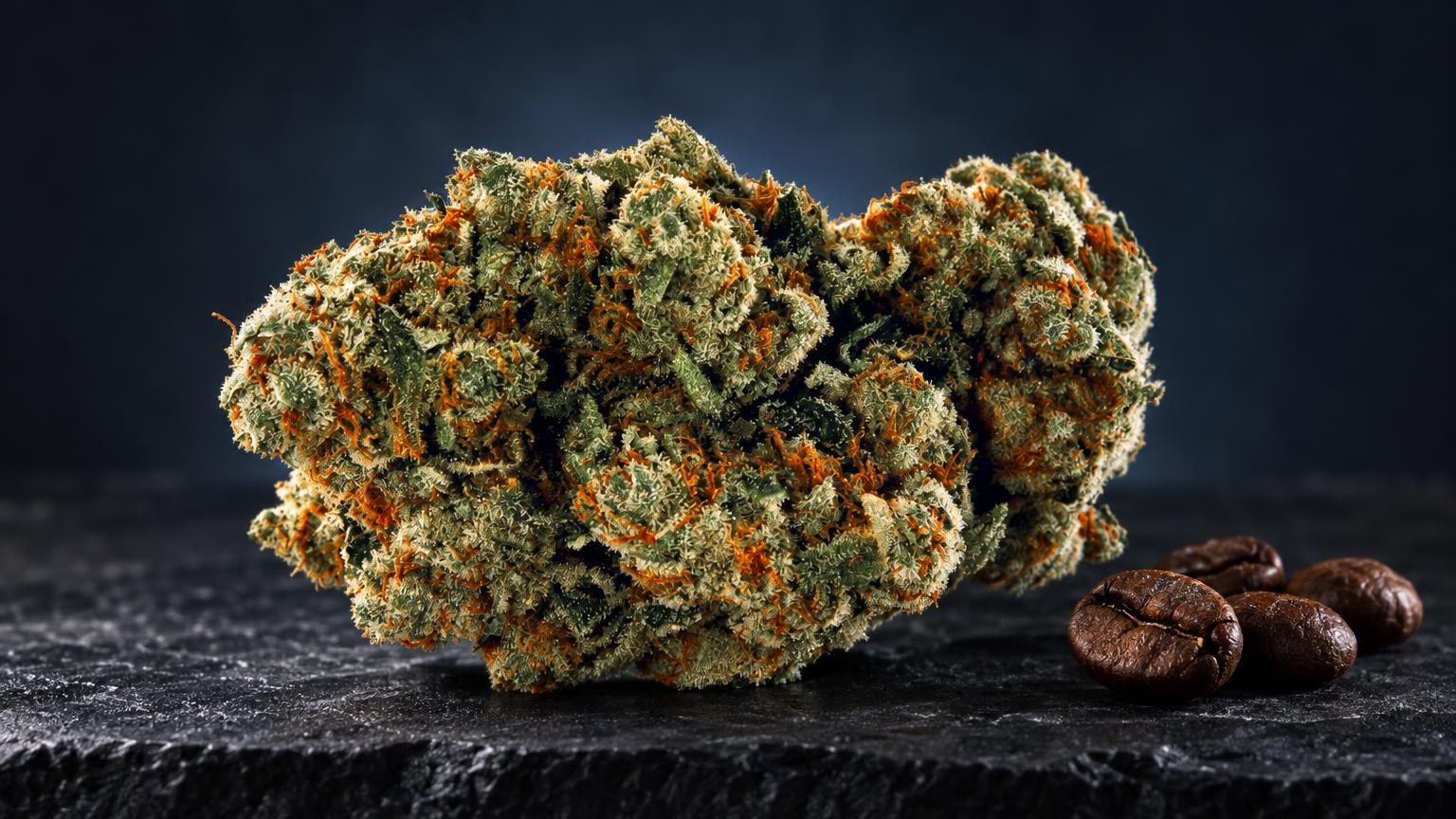
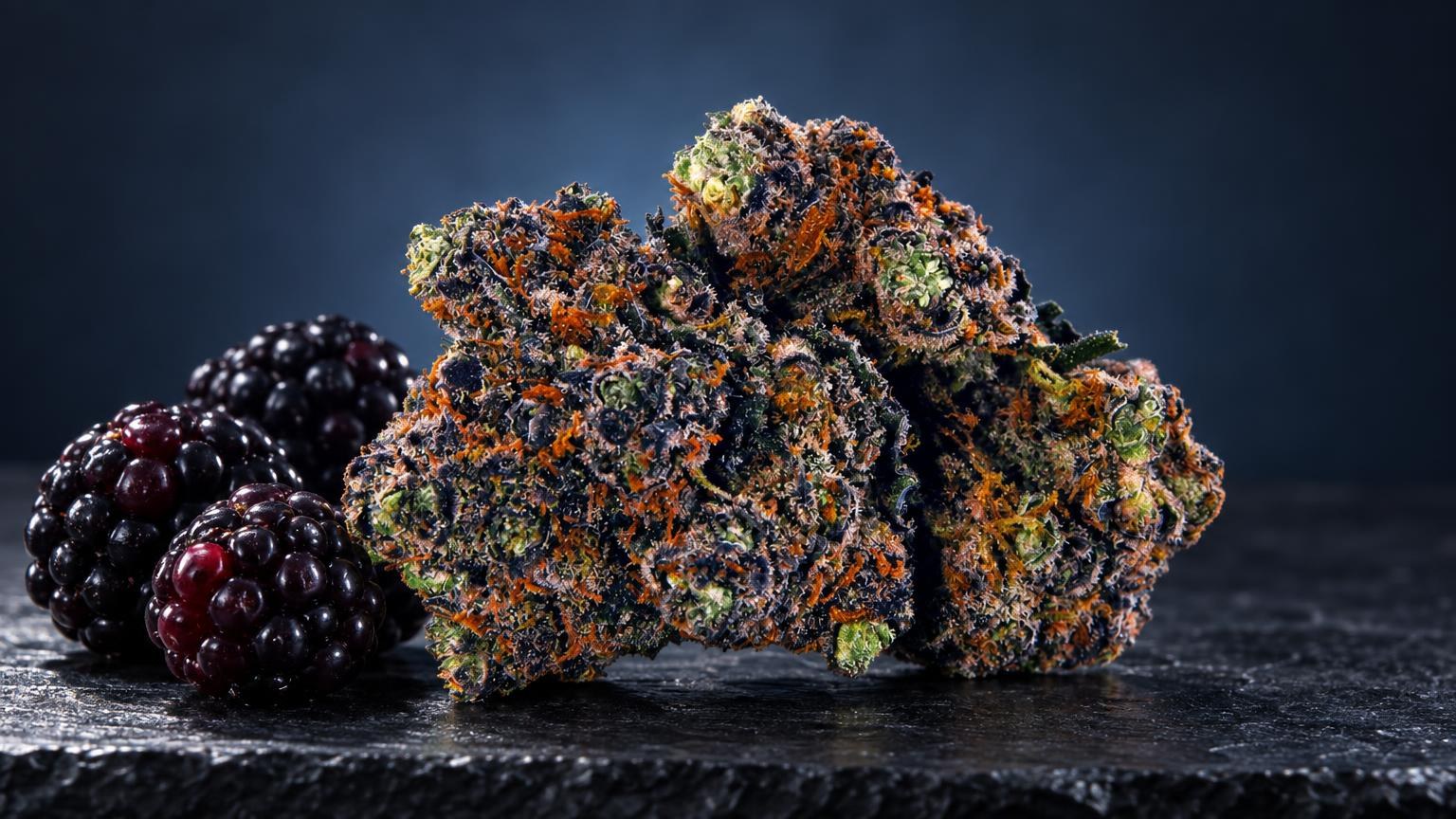
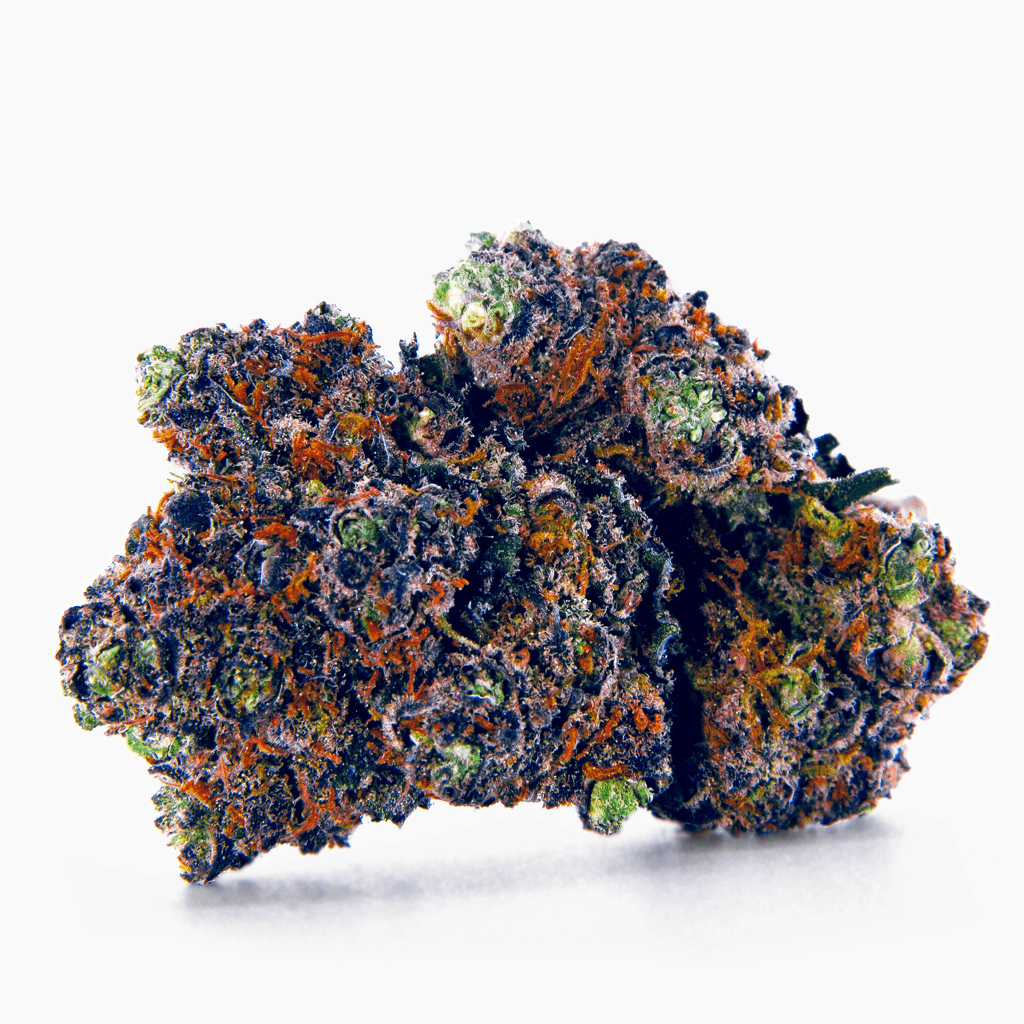
Purple Haze is a Haze-family cultivar whose most reliable signature is aromatic: sweet berry up front, a soft floral edge behind it, then citrus zest and damp earth underneath. What makes Purple Haze recognisable is that sequence, sweet then spicy, not the violet tint on the photo.
Ask ten people what the purple haze strain is and you’ll get ten answers about how it makes them feel. That’s the wrong end of the plant. I’d rather talk about what’s actually in the trichome heads.
Crack a bud between your fingers and the berry note hits first, jammy rather than candy-sweet. On the exhale it turns peppery and slightly resinous, with a lemon-peel brightness that lingers on the tongue.
None of that comes from the word “purple”. It comes from terpenes, the volatile compounds the plant synthesises in its glandular trichomes. Ethan Russo’s 2011 review in the British Journal of Pharmacology, “Taming THC”, catalogues the main players and their aromas:[1]
- Myrcene : earthy, musky, slightly herbal. The base note.
- Limonene : citrus zest, sharp and bright.
- Caryophyllene : black pepper, warm spice.
- Linalool : floral, lavender-adjacent.
- Pinene : pine needles, fresh conifer.
Where do those compounds come from? In 2020, Judith Booth and colleagues at the University of British Columbia sequenced the terpene synthase genes of five cannabis cultivars in Plant Physiology. They found that the set of synthase genes, and how strongly each one is expressed, differ from one cultivar to the next. In plain terms, genetics decides which aromatic compounds a plant can make at all.[2]
Which explains something growers already know. If you grow Purple Haze in two different rooms, you get two different noses from identical seeds, because growth conditions (light intensity, temperature, harvest timing) shape how much of each terpene the plant actually accumulates. Genetics sets the recipe. Cultivation decides how much of it ends up in the jar.
The essentials in 30 seconds
Purple Haze is a Purple Thai × Haze lineage recognised by its aroma rather than by any fixed chemistry, sold as CBD flower, THCX flower, resin or pre-roll.
- The purple tint comes from anthocyanin pigments, which the plant produces more of when late-flowering nights are cool.
- Across the three formats the aroma stays and the dominant cannabinoid changes.
- The lab sheet of the lot you are buying is the only measured document; the strain name is not.
What Purple Haze Smells Like: Berry, Floral, Citrus
Purple Haze smells like ripe berry over a floral top note, with citrus brightness lifting out the moment you break the bud and a damp earthiness sitting underneath. The nose arrives in stages, and that staging is exactly what most strain descriptions flatten into a single adjective.
Flavour tracks the aroma without copying it. Heat rearranges the order: the sweetness thins, the pepper steps forward, and what lingers on the palate reads closer to spice and pine than to jam. Sweet on the nose, spicy on the tongue: that is the short version of the strain purple haze fans describe in reviews.
None of the five aromatics already named acts alone. What you register is a ratio, and that ratio shifts from harvest to harvest within a single cultivar. That variability is why two jars of identical genetics can read as berry-forward or as flatly earthy.
Molecular weight explains most of what happens after harvest. Monoterpenes such as limonene and pinene are small, low-boiling compounds, so they are the first to leave under warmth, light and air. Caryophyllene is a heavier sesquiterpene, so it persists longer.
That asymmetry is why an old, badly stored jar smells peppery and dull: the bright top notes left, the heavy base note stayed.
Why It Turns Purple: Anthocyanins, Genetics and Cold
The colour runs on a completely different chemical toolkit than the aroma. Anthocyanins are water-soluble flavonoid pigments, the same class that reddens autumn leaves and darkens blueberry skin. A 2023 study in Antioxidants identified cyanidin-3-rutinoside as the main anthocyanin in cannabis leaf and flower tissue, and proposed the first model of how the plant switches the pathway on.[4]
Two variables govern how much pigment you actually see. First, genetic background: the cultivar needs the pathway expressed in the first place. Second, environment, with temperature during late flowering acting as one of the strongest triggers.
Cool nights push anthocyanin expression upward. A 2025 study in the Journal of Cannabis Research grew a purple-pigmented population at temperatures from 0.5 to 22 °C: pigment peaked at 8 °C and 15 °C, while CBD content followed plant maturity rather than temperature.[5] That’s why one genotype can finish deep violet in one run and stay stubbornly green in the next, with no change to the seed stock at all. Identical clones can diverge on colour purely on the basis of tent temperature, and the purple haze strain inherited its name from a tendency.
Here’s the commercial wrinkle: purple photographs beautifully, and a dark, frosted bud sells fast. Read the tint as a clue to varietal identity, worth noting alongside the aroma, and leave it there.
The Haze Lineage: Where the Name Comes From
The Haze family is a set of sativa-dominant breeding lines selected from equatorial landrace genetics, and “Purple Haze” is one branch of it crossed with Purple Thai. The cross Purple Thai × Haze gives a sativa dominant hybrid, and most descriptions file it as sativa dominant for that reason. It pays to ask where that genetic material actually came from: these plants adapted to long tropical seasons, not short northern summers.
Breeders held onto them for two traits: loud aromatic expression and a lanky, open morphology with long internodes and airy flower structure. Those are the sativa-dominant characteristics the family takes its name from. The Purple Thai side of the parentage is usually credited with the pigment tendency, although, as the previous section shows, colour depends on the whole genome and on the grow.
On the chronology question, my answer is short. The strain name is usually traced to Jimi Hendrix’s song of the same name, and there is no documented breeding record behind that link. Treat the Hendrix story as folklore that stuck.
The same looseness runs through the whole Haze branch, Amnesia included. What the name reliably carries is a lineage and a nose. The sativa, indica and THC labels that shops attach to it are marketing shorthand, and the ratio of sativa to indica genetics in a given cut is rarely documented anywhere.
A Strain Name Is a Nose, Not a Promise
A strain name is an aromatic label, not a chemical specification. Agricultural cultivars sit in official registries with reference descriptions attached; cannabis strain names have no equivalent, so what the name actually carries is a nose, and every chromatogram I have looked at points the same way.
The research backs that up. In 2012, Arno Hazekamp and Justin Fischedick wrote in Drug Testing and Analysis that more than 700 named cultivars had already been described, with no evidence that those names reflected any relevant difference in chemical composition. They analysed 28 major compounds across cultivars from several sources and proposed grouping cannabis by chemovar, meaning its measured chemistry, instead.[3]
Booth’s 2020 team reached the same conclusion from the other direction: plants grown from 32 seed sources showed large variation in terpene profile both between cultivars and within plants sold under the same cultivar name, and the authors flag incorrect cultivar labelling as a major problem for the industry.[2]
What travels reliably from one version of a strain to another is the terpene signature, not the effect. How a given batch feels depends on which cannabinoid dominates it, and across the versions of purple haze circulating in Europe that variable swings enormously.
Which reframes the question people actually type into a search bar. “Is purple haze a good strain” has no answer in the abstract, because there is no single object being described, and the effects purple haze is credited with online are a description of somebody else’s jar and somebody else’s experience.
The two useful questions are narrower:
- Do I like this berry-floral-citrus profile?
- Which cannabinoid leads in this specific batch?
No strain description answers the second one. The batch analysis does. A descriptive page tells you what the genetics tend to produce; the certificate of analysis tells you what this particular harvest contains. Only one of those documents was measured. When you compare two jars, read the COA first and the name never.
Purple Haze in Three Forms: CBD Flower, THCX, Resin or Pre-Roll
One genetic reaches you in three formats, and only the chemistry changes: a CBD-dominant flower, a THCX flower, and a pressed resin or pre-roll. Here’s the grid I work from. Read it as illustrative reasoning about how the market presents a single name, not as a lab measurement of any specific batch.
| Reading criterion | CBD-dominant flower | THCX range | Resin or pre-roll |
|---|---|---|---|
| Dominant cannabinoid | CBD | A trade name, not a molecule, built to reproduce THC-like effects | Whatever the source material carried |
| Nose and flavour | Berry, floral, citrus, damp earth | Same inherited signature | Same signature, denser and often darker |
| Perceived intensity | Mild | Marked | Concentrated by the format itself |
| What the format actually changes | Nothing but the chemistry | Nothing but the chemistry | Convenience and aromatic density |
| Document that settles it | Batch analysis | Batch analysis | Batch analysis |
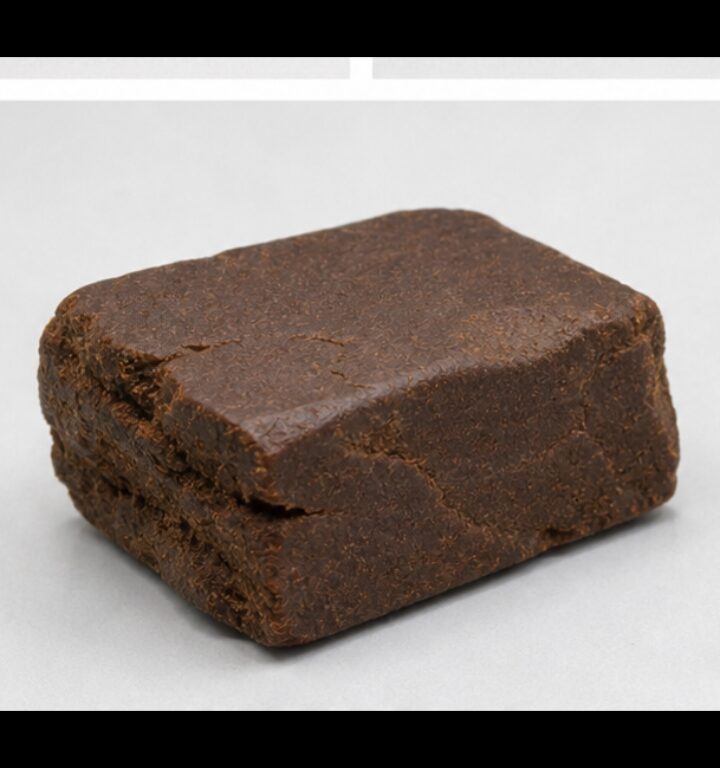
This grid is where the pattern above cashes out in practice. Pressing the material into a resin concentrates the aromatic fraction into a smaller mass, so the same profile reads heavier and less bright. A pre-roll or a ready-rolled spliff mostly changes convenience. Across the three formats, the only thing they share is the nose.
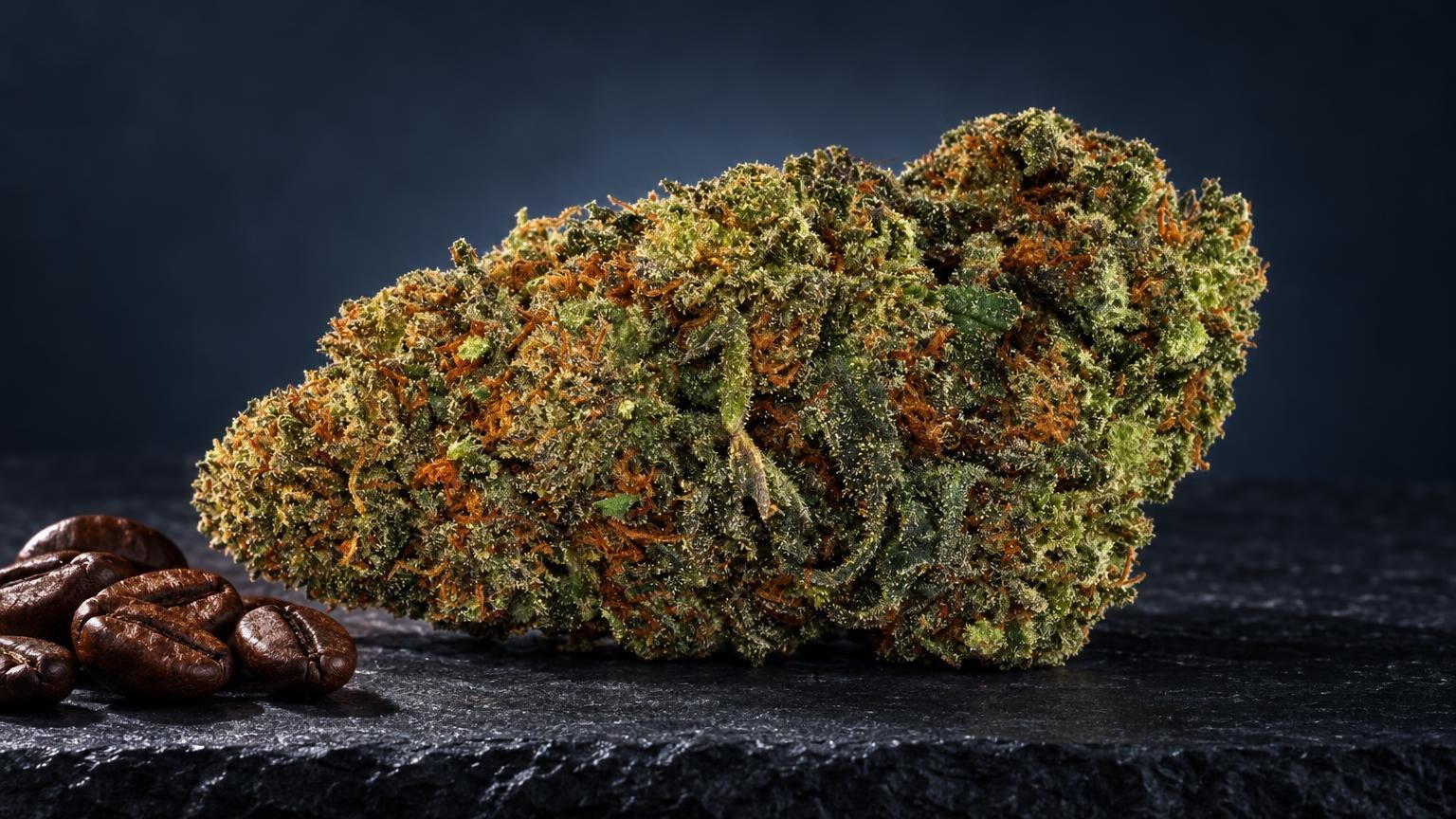
Of those three formats, we carry the first two as flower. Our hydroponic Purple Haze CBD flower is lab-tested batch by batch: the lab analysis of each batch is available on request from customer service. The buds are tight and resin-heavy, which is precisely what keeps that berry note intact in the jar.
The other is Purple Haze THCX flower. THCX works as a commercial label, so two shops can sell different formulations under the same three letters. THCX is a trade name, not a molecule: every batch is lab-tested for classified molecules and none are detected. The batch analysis, available on request from customer service, is the only description of that lot worth reading.
Reading the Label: Batch Analysis, Terpene Data and Local Rules
A certificate of analysis is the batch-specific lab document that quantifies what a given lot of flower actually contains, from cannabinoid percentages to terpene concentrations. It’s the only piece of paper that answers back when a label makes a claim.
A proper COA reports the cannabinoid profile of one specific lot, identified by batch number and analysis date. Some laboratories add a terpene panel, which is the section worth hunting for when you’re buying a purple haze strain for its aromatic signature rather than anything else. If the certificate isn’t tied to a batch number matching your packaging, it documents nothing.
Read it for these four things:
- Batch identifier and analysis date matching the product in your hand.
- Laboratory name and the analytical method used, typically chromatographic separation.
- Whether acidic forms are reported separately or as decarboxylated totals, because the two figures are not interchangeable.
- Terpene panel, if present, with individual compounds listed rather than a single total.
Here’s the part most buyers skip: sampling matters as much as the instrument. A gram pulled from one corner of a harvest doesn’t automatically represent the rest of the lot.
Ingestible hemp preparations are a separate case, covered in our guide to edibles.
Choosing Your Purple Haze: One Question to Ask First
With the certificate in hand, the choice narrows to one question: which cannabinoid dominates the batch, and which format you want it in.
If it’s the first, the hydroponic CBD flower is the straightforward pick. Dense, resinous buds, that jammy berry hit intact when you crack one open.
If it’s the second, the Purple Haze THCX flower covers that ground, with its batch analysis available on request from customer service.
- Check the batch date, not just the strain name.
- Buy the format you’ll actually finish while it’s fresh, and take other strains’ reviews for what they are: one nose, one week, one jar.
- Keep the jar cool, dark and closed once opened: temperature and time strip the light terpenes first, and no storage method brings them back.
Conclusion
Strip away the mythology and purple haze becomes refreshingly concrete: a Purple Thai × Haze lineage, an aroma you can recognise with your eyes closed, and a lab sheet for every lot.
Read that lab sheet the way we read one for static hash: batch number first, terpene panel second, reputation of the name last.
Frequently asked questions
What is the purple haze strain?
It's a Haze-family cultivar crossed with Purple Thai, a sativa-dominant plant grown today as CBD flower, THCX flower, resin or pre-roll.
What strain is purple haze exactly?
It belongs to the sativa-dominant Haze breeding line, selected from equatorial landrace genetics for loud aroma and lanky, open plant structure, then crossed with Purple Thai.
Is purple haze a good strain?
Fresh, resinous buds with a matching batch number on the lab report are the practical markers to look for.
Why does purple haze turn purple?
Anthocyanin pigments, whose production the plant ramps up when late-flowering temperatures drop.
How can I tell if my purple haze flower is fresh?
Smell it: bright berry and citrus top notes mean the lighter aromatics are still there; a flat, peppery profile means they have left.
What should I check on a purple haze label before buying?
A certificate of analysis tied to the exact batch number on your packaging, with the lab named and, ideally, a terpene panel listing individual compounds.
Sources
- Russo EB (2011). Taming THC: potential cannabis synergy and phytocannabinoid-terpenoid entourage effects. British Journal of Pharmacology, 163(7):1344-1364 — pmc.ncbi.nlm.nih.gov
- Booth JK, Yuen MMS, Jancsik S, Madilao LL, Page JE, Bohlmann J (2020). Terpene Synthases and Terpene Variation in Cannabis sativa. Plant Physiology, 184(1):130-147 — pmc.ncbi.nlm.nih.gov
- Hazekamp A, Fischedick JT (2012). Cannabis – from cultivar to chemovar. Drug Testing and Analysis, 4(7-8):660-667 — pubmed.ncbi.nlm.nih.gov
- Bassolino L, Fulvio F, Pastore C et al. (2023). When Cannabis sativa L. Turns Purple: Biosynthesis and Accumulation of Anthocyanins. Antioxidants, 12(7):1393 — pmc.ncbi.nlm.nih.gov
- Kim SR, Basnet P, Kovaleski AP, Ellison SL (2025). Anthocyanin accumulation, inflorescence dry weight and total cannabidiol content have different temperature optima in Cannabis sativa. Journal of Cannabis Research, 7:51 — pmc.ncbi.nlm.nih.gov