 Written by Sarah Mitchell
 CBD Flower at Spliff · from €0.65/g · ★ 4.9/5 (929 reviews)
72 h delivery in Europe · Free delivery from €99
Contents9 sections
- The Amnesia Haze Nose: Citrus, Spice and Earth
- Genetics: Haze × Northern Lights × Skunk #1
- Why a Strain Name Is a Nose, Not a Promise
- Same Genetics, Three Products: A Three-Column Reading Grid
- Amnesia Haze's Product Forms in Europe
- Reading the Label: Batch Analysis and Terpenes
- Which Amnesia Haze Version Fits You
- Conclusion
- Frequently asked questions
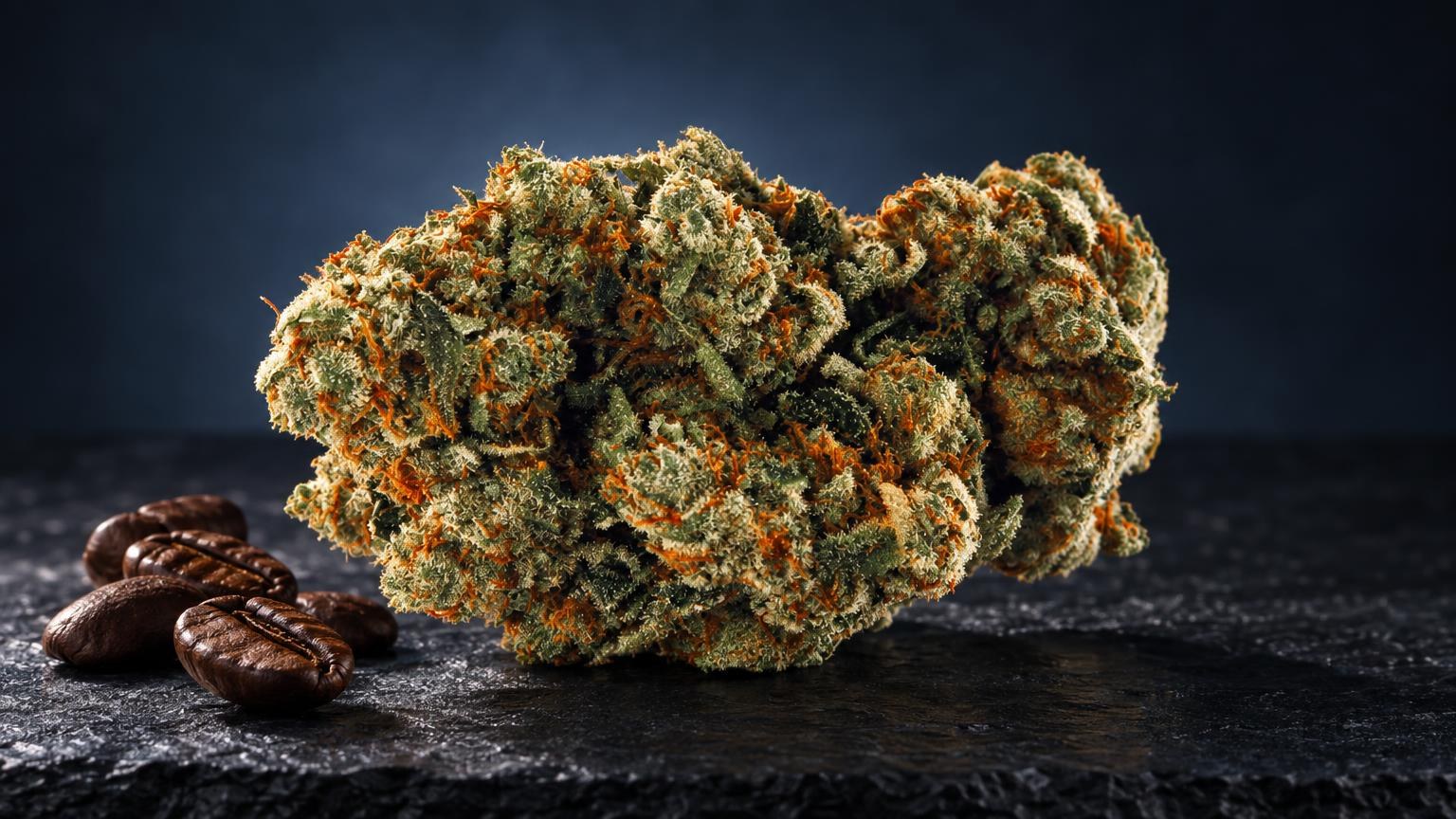
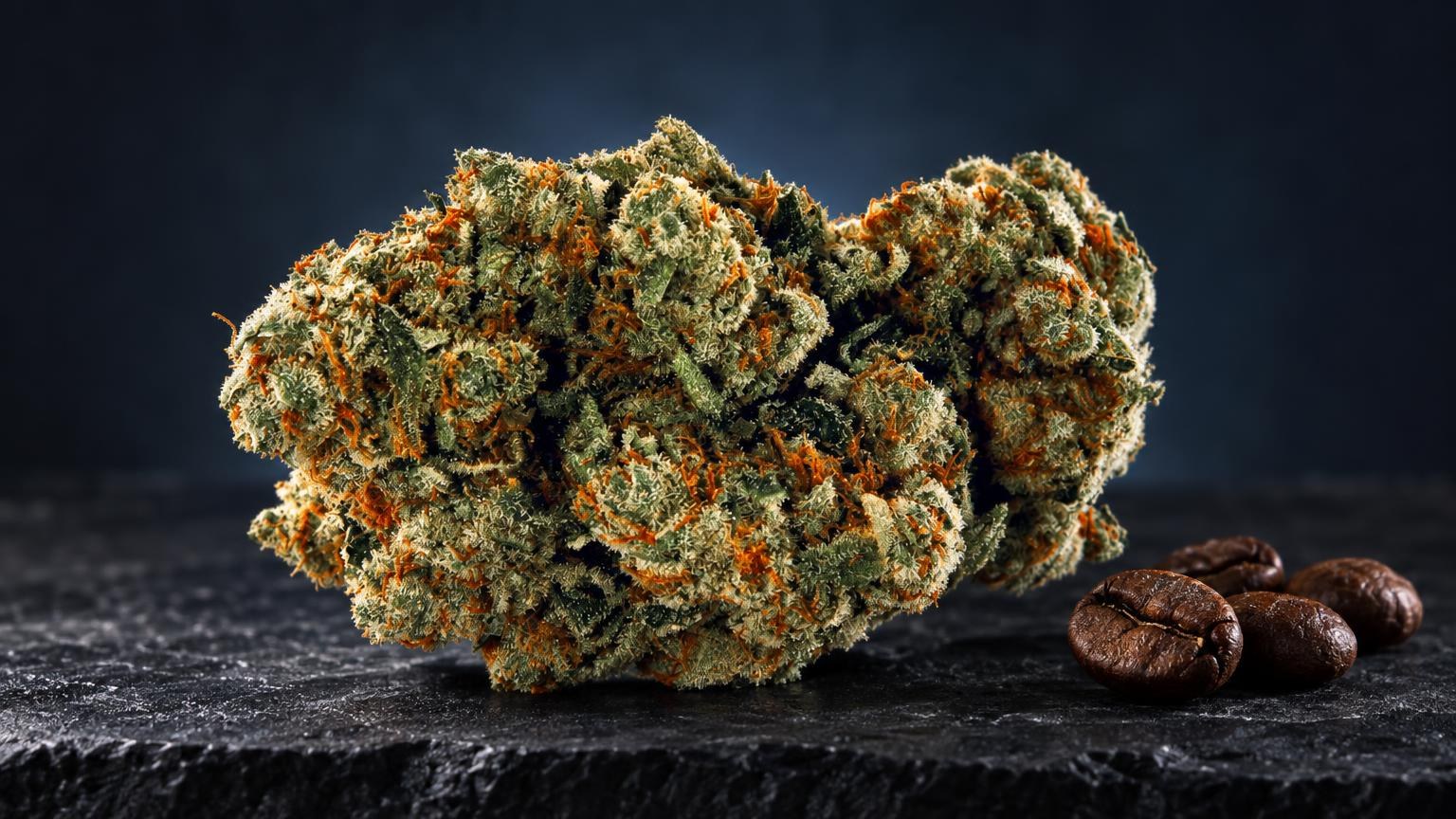
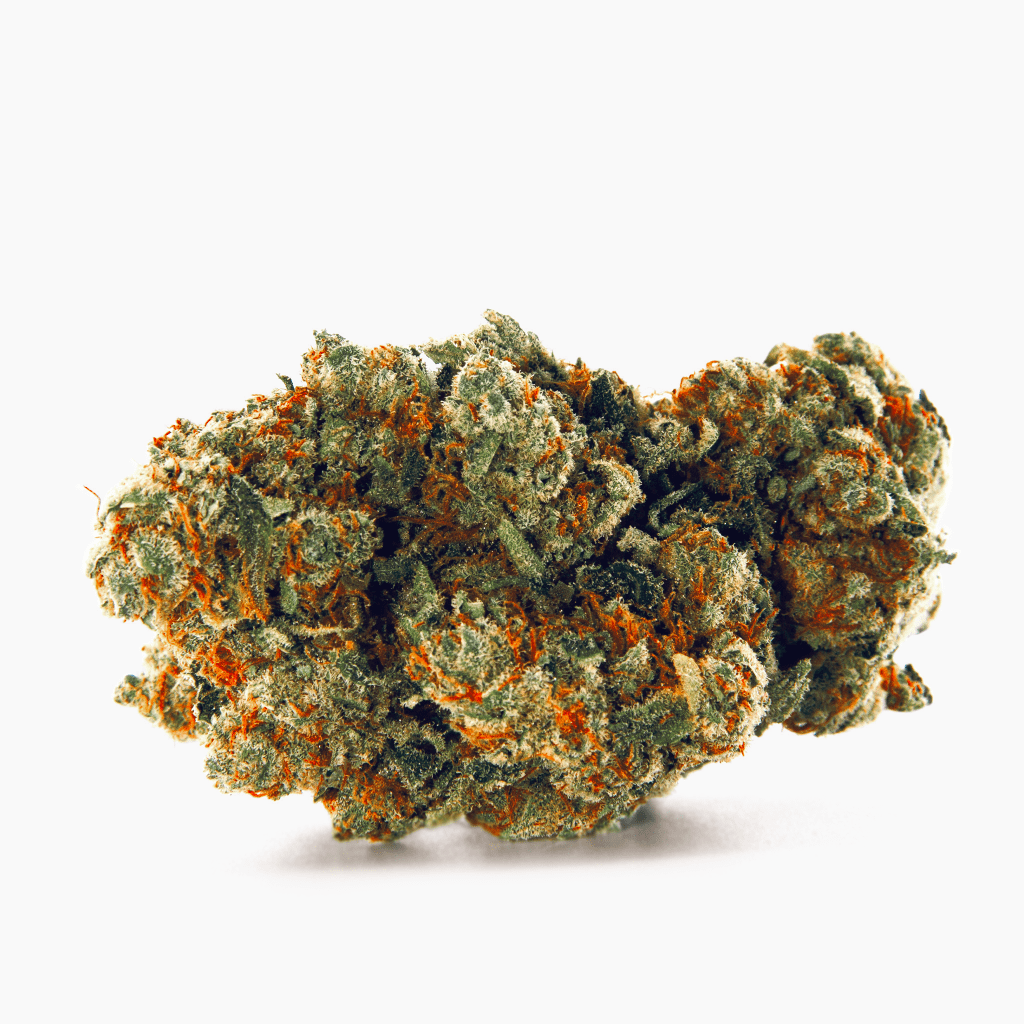
Open a jar of Amnesia Haze and citrus arrives first. Not a soft, juicy orange note, but a sharp zest, the kind you get scraping a lemon peel with your thumbnail. That top note is the strain’s calling card, and it fades within seconds.
Underneath sits something completely different: earthy, slightly musky, close to damp soil after rain. Then the flower warms in your palm and a peppery bite comes through, followed by a resinous pine edge on the exhale.
Each of those impressions is commonly attributed to a volatile terpene. Terpene chemistry isn’t decoration here. It’s the most plausible reason the amnesia haze strain smells the way it does, and the reason this guide starts with aroma rather than with the reputation of the name.
Russo’s review of cannabis terpenoid chemistry (Russo 2011, British Journal of Pharmacology) lists limonene, myrcene, alpha-pinene, linalool and beta-caryophyllene among the recurring constituents of the plant’s essential oil fraction.[1] What that literature describes is composition, not a guaranteed experience.
That’s the part to check first on any batch. So when someone asks whether this haze is a good one, the honest answer starts with the nose.
The essentials, in short
Amnesia Haze’s signature nose is commonly attributed to terpenes such as limonene, myrcene, caryophyllene and pinene. Genetics explain the aromatic tendency; format, freshness and storage decide what actually reaches your nose. The same genetic line is sold in Europe as hydroponic hemp flower, as a CBD pre-roll and in the THCX range.
The Amnesia Haze Nose: Citrus, Spice and Earth
Those four moments in the nose fall into two structural families: monoterpenes (ten carbons, light, quick to evaporate) and sesquiterpenes (fifteen carbons, heavier, slower to leave the flower). Knowing which family you’re smelling tells you a lot about what will still be in that jar next month.
Here’s the working vocabulary for this profile, molecule by molecule:
- D-limonene (monoterpene): the lemon-peel zest, sharp and volatile.
- Beta-myrcene (monoterpene): damp earth and musk, with a ripe, slightly herbal edge underneath.
- Beta-caryophyllene (sesquiterpene): black pepper and dry clove, the heaviest of the group and the last to fade.
- Alpha-pinene (monoterpene): fresh pine resin, crushed needles, that clean sap-like lift.
- Linalool (monoterpene alcohol): soft floral, faintly lavender, usually a background presence rather than a lead.
According to Russo, monoterpenes usually predominate in the cannabis essential oil, limonene, myrcene and pinene in particular, and their yield diminishes with drying and storage.[1] Treat the aroma descriptors above for what they are: a descriptive reading of that chemistry, not a laboratory measurement of the jar in front of you.
Ross and ElSohly compared fresh and air-dried buds and found that drying did not change which volatile compounds were present, while the proportions between them shifted.[4] Leave the jar open, park it on a warm shelf, or grind the flower early, and the lighter fraction thins out first while caryophyllene holds its ground.
Genetics: Haze × Northern Lights × Skunk #1
A nose like that has a pedigree, and this one is written straight onto our own seed listing: Haze × Northern Lights × Skunk #1, sativa-dominant. On paper that makes it a sativa dominant hybrid, one of the most popular Haze strains of the Dutch scene, and one of the best known names in European cannabis.
Each parent contributed something structurally distinct. Haze brought the long-flowering, tall sativa architecture; Northern Lights added compact growth and broad leaflets; Skunk #1 supplied the stabilised hybrid backbone that keeps the line reproducible from one generation to the next. Hazekamp and Fischedick point out that the popular indica versus sativa split is not known to reflect real differences in chemical composition.[2]
So, is the amnesia haze strain indica or sativa? Sativa-dominant, by breeding convention. But look closely at what that label actually measures: leaf shape, internode spacing, flowering time, plant height. It describes the plant’s body, not what the flower contains.
Amnesia vs Amnesia Haze: the same family?
Think of them as neighbouring selection families rather than one fixed cultivar. Strain names carry no normalisation: no authority, registry or certification body validates them. Any breeder can name a line, and plenty have, which is why Amnesia, Amnesia Haze and breeder-specific versions circulate in parallel.
And the word amnesia itself? A breeding and marketing legacy from the Dutch scene of the nineties. It tells you nothing about how the plant behaves.
Why a Strain Name Is a Nose, Not a Promise
Pedigree explains where the nose comes from. It tells you nothing about what sits in the jar in front of you, and that gap is exactly where most strain encyclopaedias quietly fall apart.
Analytical chemistry settled this years ago by swapping one word for another. A cultivar is a named selection, a label a breeder attaches. A chemovar is a plant classified by its measured composition: which cannabinoids dominate, which terpenes are genuinely present, and in what ratios.
Hazekamp and Fischedick made the argument in Drug Testing and Analysis (2012). They note that more than 700 cultivars have been described under popular names and that it is unclear whether that naming reflects real differences in chemical composition; analysing 28 major compounds, they sorted samples into distinct chemovar groups instead.[2]
The reason is biological, not commercial. Cannabis resin contains hundreds of terpene and cannabinoid metabolites, and Booth and Bohlmann describe our understanding of the genomic and biosynthetic systems behind them, and of the factors that drive their variability, as still rudimentary (Plant Science, 2019).[3]
So an amnesia haze strain label describes a lineage and an aromatic tendency, inherited through selection. Amnesia haze cannabis from two sources can share the name and the terpenes and still differ in quality, because the name travels and the chemistry does not.
This is also why “is Amnesia Haze strong?” has no honest answer in the abstract. Potency belongs to the dominant cannabinoid in that batch, documented by that lab report.
And the limit cuts both ways. The literature describes recurring profile tendencies across samples; it never guarantees the composition of any individual plant.
Same Genetics, Three Products: A Three-Column Reading Grid
Here is the practical translation of that idea: one genetic line, three ways of buying it, and a simple way to sort what travels between them from what does not.
Read the grid below as a reasoning tool, not a laboratory result. It carries no percentages and no measurements, because neither can be deduced from a name.
| Reading axis | CBD hemp flower | THCX range | Resin / pre-roll |
|---|---|---|---|
| Dominant cannabinoid | CBD | THCX is a commercial name; the product page and lot analysis say what each reference carries | Whatever the base material carries |
| Format and making | Dried, cured buds | Flower and derived formats sold under the range | Pressed resin, or a ready-rolled cone you don’t grind |
| Terpene backbone | Citrus attack, earthy body, peppery return | Same inherited backbone | Same backbone, heavier end more present |
| What tells you the content | Lot analysis | Lot analysis | Lot analysis |
What changes between columns is the cannabinoid and the object in your hand. What stays is the aromatic architecture the plant inherited, and the lineage detailed earlier explains why.
Genealogy explains the nose. It never predicts a number.
Resins and concentrates deserve one nuance: concentration shifts the balance toward the heavier sesquiterpene end.
Side by side, that shift tends to be obvious. The pepper and the wood come forward, the lemon zest gets shorter, and the family resemblance still holds.
So, practically: pick the column for the cannabinoid and the format you want. The nose comes along for free, and so does the long citrus-earth-pepper aroma that made this strain a favourite of users across Europe.
Amnesia Haze's Product Forms in Europe
A genetics grid stays abstract until you put actual jars next to it. So here is what that line looks like on a European shelf, format by format.
The hemp-side version is the most straightforward of the lot. Our hydroponic Amnesia flower is listed at 17% CBD on its product page, with the citrus-earth-pepper signature carried over intact. If you want it ready to go, the same material exists as a CBD Amnesia pre-roll, sold individually or in a box of three.
That figure is a declaration on a product page, and it means what Hazekamp and Fischedick’s chemovar logic says it means: a measured value for a given lot, not a property of the name.[2] Amnesia seeds also sit in the catalogue, as a product listing and nothing more. I won’t give you cultivation guidance here, and no seed page can tell you what a finished flower will actually contain, because expression depends on the grow, not the packet.
The other family is the THCX range. See Amnesia THCX for the listing built on this genetic line.
Aromatically, its Haze neighbours in the range diverge exactly where the terpene profiles say they should. Purple Haze THCX leans sweeter and berry-tinged, while Super Lemon Haze THCX pushes the lemon-zest top note harder than Amnesia does.
Reading the Label: Batch Analysis and Terpenes
Once you have settled on a format, the last checkpoint is not the name on the jar. It is the paperwork behind it, and it is the same paperwork whatever strain amnesia haze is compared with on the shelf.
A batch report is short, dull and extremely useful. Read it for four things, and expect nothing else from it.
- Declared cannabinoids, with the method used to quantify them;
- A terpene profile, when the lab ran one (many don’t);
- A batch identifier that matches the code on your packaging;
- A date, because volatile monoterpenes don’t wait for you.
What a certificate never states is an effect. No compliant report will tell you how an amnesia haze strain flower will feel, and any label that does has stopped doing analytics and started doing advertising.
Why potency and price move between formats
Concentration, weight and processing all differ between flower, resin and pre-roll, so any general figure quoted across formats would be meaningless. Read the batch analysis for the format you are holding. The lab analysis of each batch is available on request from customer service.
Which Amnesia Haze Version Fits You
So the decision comes down to three intentions.
- You want the ritual. Grinding, rolling, opening the jar just to smell it between sessions: the hydroponic Amnesia hemp flower is the version where that citrus-zest attack is still intact when you break the seal.
- You want zero preparation. The CBD pre-roll, on its own or in the box of three, carries the same terpene backbone in a format you don’t have to assemble.
- You want the THCX range. Amnesia THCX is where that intention meets this genetic line.
If it’s the Haze nose you’re after rather than this exact cultivar, Purple Haze THCX and Super Lemon Haze THCX occupy the same aromatic neighbourhood. Use the same reading grid for those strains: nose first, format second, batch report last.
Conclusion
Three intentions, three formats, none of them dictated by the label on the jar.
Pick the aroma you enjoy, pick the format that fits how you consume, then let the lot analysis settle the rest. The name is heritage. The certificate is data.
Frequently asked questions
Is Amnesia Haze a strong strain?
"Strong" isn't a lab metric here. The strain is sativa-dominant with a bold citrus-earth-pepper terpene profile, and the actual potency of any product depends on the format you pick and on what its own lot analysis declares.
Is Amnesia Haze indica or sativa?
Sativa-dominant, per its Haze, Northern Lights and Skunk lineage.
Is Amnesia a sativa or indica strain?
Amnesia belongs to the same sativa-dominant selection family as Amnesia Haze. The two names circulate in parallel because no registry validates strain names.
Are Amnesia and Amnesia Haze the same?
They trace back to the same genetics, but names can drift from the plant inside the jar; see "Why a Strain Name Is a Nose, Not a Promise."
Is Amnesia Haze a good strain?
It's a distinctive, well-regarded nose, but "good" hinges on freshness and storage, since the lighter terpenes fade fastest if a jar sits open or warm.
What strain is Amnesia Haze?
A sativa-dominant cross from the Dutch scene, recognisable by its citrus, earth and pepper nose, and sold in Europe as hydroponic CBD flower, CBD pre-rolls and THCX products. Its aromatic backbone rests on the terpenes Russo lists as the plant’s main volatiles.[1]
Sources
- Russo EB (2011). Taming THC: potential cannabis synergy and phytocannabinoid-terpenoid entourage effects. British Journal of Pharmacology 163(7):1344-64 — pubmed.ncbi.nlm.nih.gov
- Hazekamp A, Fischedick JT (2012). Cannabis, from cultivar to chemovar. Drug Testing and Analysis 4(7-8):660-7 — pubmed.ncbi.nlm.nih.gov
- Booth JK, Bohlmann J (2019). Terpenes in Cannabis sativa, from plant genome to humans. Plant Science 284:67-72 — pubmed.ncbi.nlm.nih.gov
- Ross SA, ElSohly MA (1996). The volatile oil composition of fresh and air-dried buds of Cannabis sativa. Journal of Natural Products 59(1):49-51 — pubmed.ncbi.nlm.nih.gov