 Written by Sarah Mitchell
 CBD Hash at Spliff · from €3.50/g · ★ 4.9/5 (429 reviews)
72 h delivery in Europe · Free delivery from €99
Contents8 sections
- What Gelato Strain Actually Smells and Tastes Like
- Sunset Sherbet × Thin Mint GSC: The Genetics Behind the Nose
- The Same Genetics, Three Different Products: A Reading Grid
- Indica, Sativa, Gelato 33 or 41: What the Labels Don't Tell You
- Product Forms in Europe and How to Read a Batch Analysis
- Choosing Your Gelato: A Three-Question Decision
- Conclusion
- Frequently asked questions
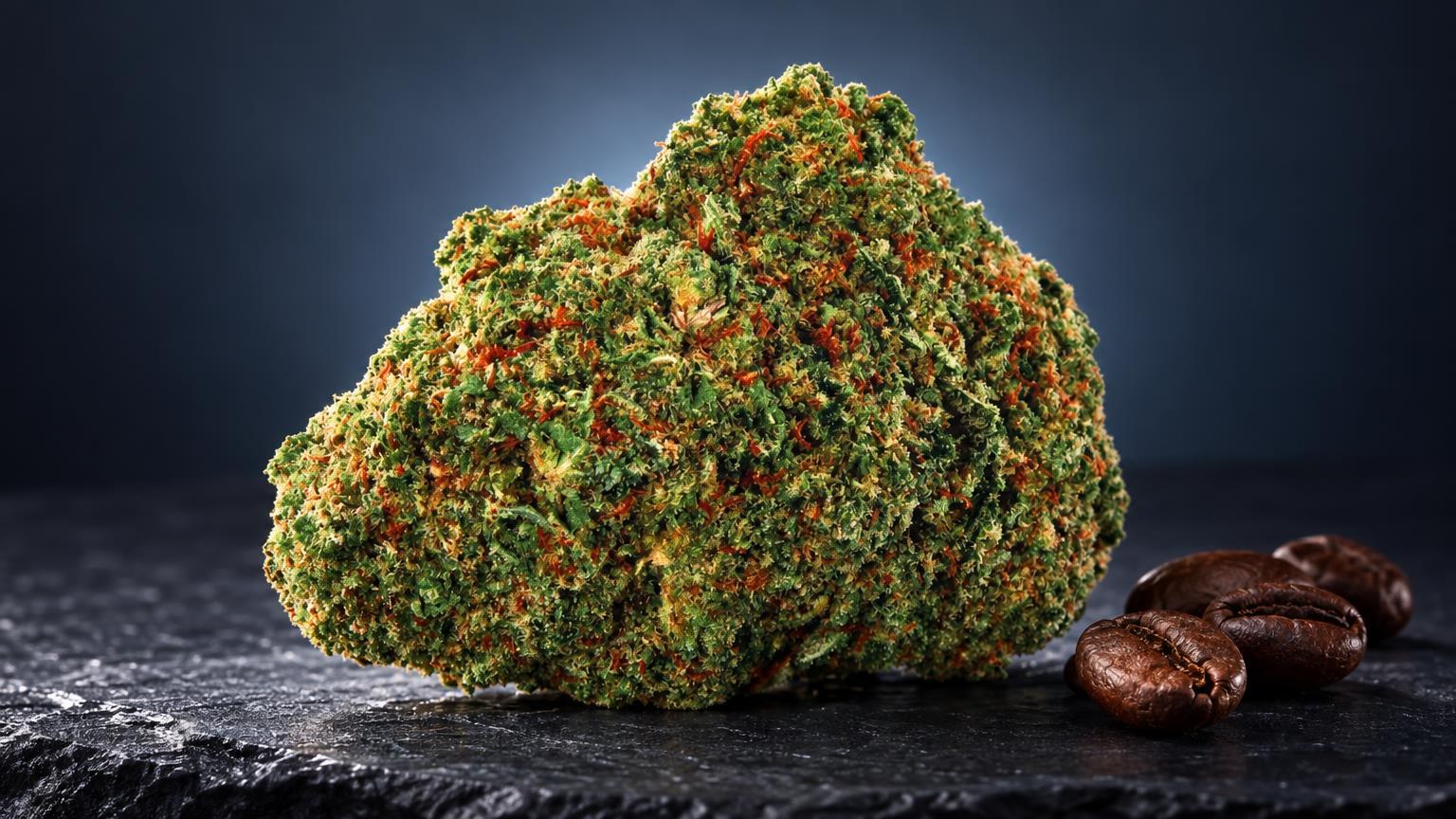
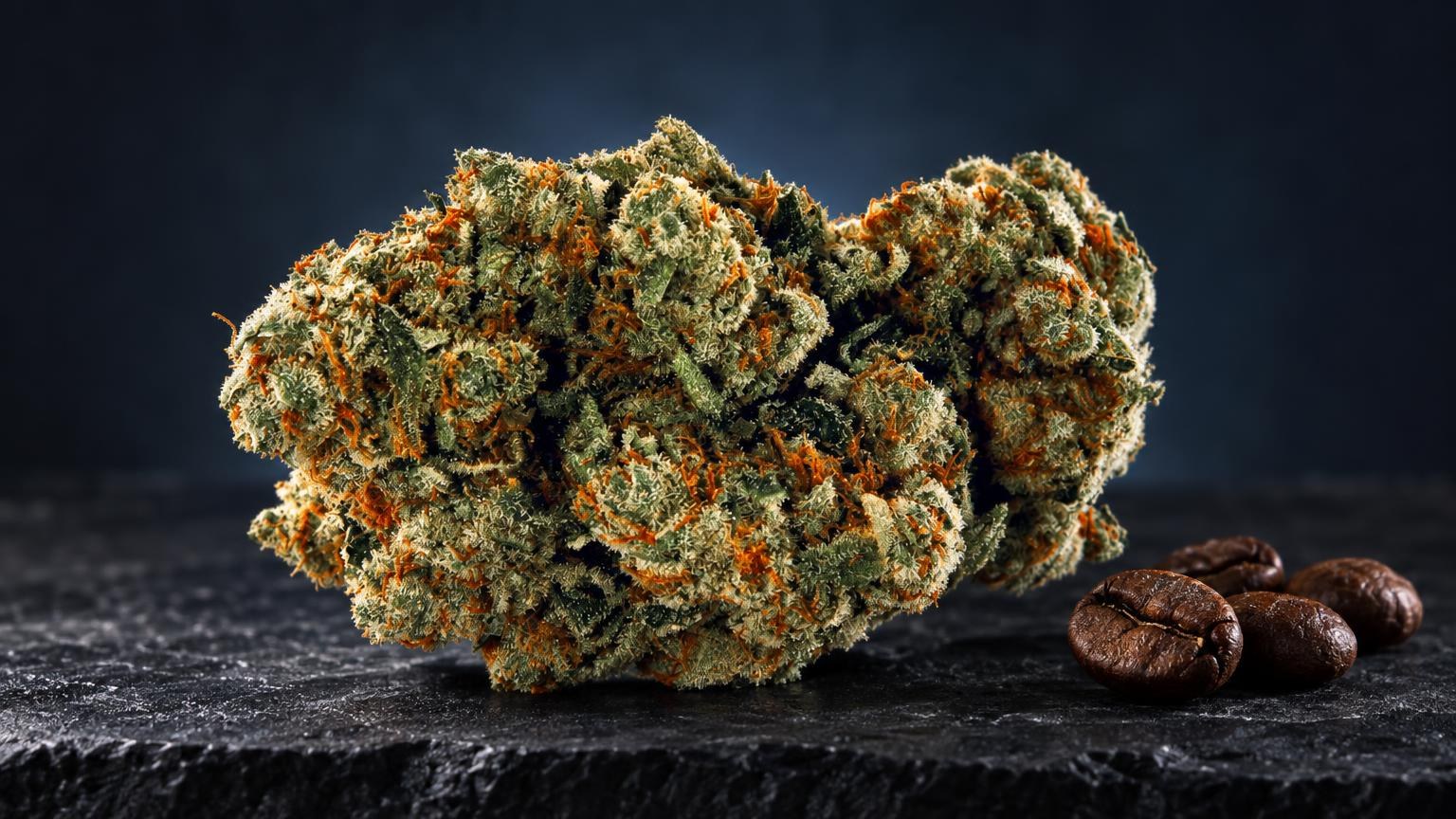
The Gelato strain is a cannabis cultivar named after an Italian dessert for one reason: its aroma. Open a jar and the first note is creamy and lactic; underneath sit ripe fruit, a citrus lift and a peppery finish.
That’s a tasting note, nothing more. Nothing on this page concerns frozen desserts, and the resemblance stops at the aromatic signature that earned the Gelato cannabis cultivar its name.
What you’re smelling is chemistry you can actually name, and the genetics section below names it molecule by molecule. Those molecules are exactly what breeders select for, generation after generation.
This is where most Gelato weed strain content goes wrong. It treats the name as a guarantee of an experience, when a cultivar name only ever describes a lineage and, at best, an aromatic profile. The aroma travels reliably across flower, resin and cannabis seeds. The rest does not. That is the whole thesis of this guide, and it holds for every hybrid, indica or sativa, sold under this name.
People ask whether the Gelato marijuana strain is “top shelf”. That’s a shop category, not a measurement. What actually separates two batches is aromatic preservation: careful drying and curing, intact trichome heads, and a batch analysis you can ask for.
So here’s the frame for everything that follows: the nose is reproducible because molecules are reproducible. The effect attributed to the name is a different question entirely. It depends on which cannabinoid dominates the batch in front of you.
The essentials in thirty seconds
The Gelato strain is a Cookies-family cannabis cultivar whose name describes an aroma, not an effect. This guide explains where that layered nose comes from (genetics and terpene biosynthesis, with peer-reviewed sources), why indica/sativa tags and phenotype numbers say nothing about chemistry, how the same genetics reads across CBD flower, THCX flower, resin and pre-roll, and what to check on a batch analysis before choosing a product.
What Gelato Strain Actually Smells and Tastes Like
Break the profile down and it arrives in stages, not all at once. The dry jar leads with that lactic, almost vanillic sweetness; grinding pushes the fruit forward; the exhale is where the pepper shows up. Most people who call the Gelato strain “dessert-like” are reacting to the first stage only.
- Dry nose: cold cream, a touch of vanilla, sweet and rounded rather than sharp.
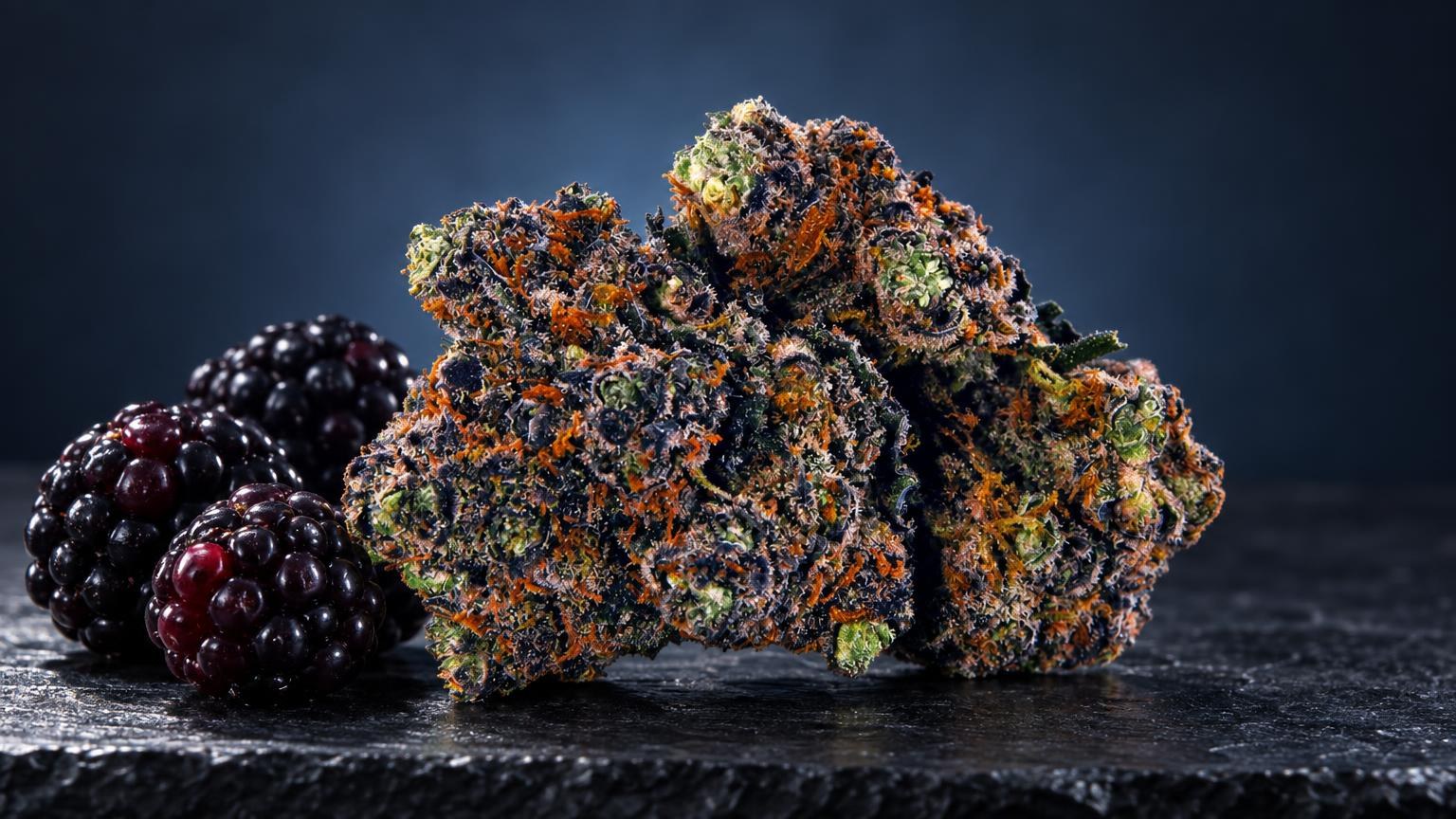
- After grinding: ripe stone fruit and berry, with the sweetness gaining volume.
- On the inhale: a bright citrus lift, closer to zest and rind than to juice.
- On the exhale: dry pepper, a light woody edge, and a finish that lingers longer than the sweetness suggests.
“Creamy” here is a texture word, not a dairy flavour. It describes how the sweetness sits on the palate: soft-edged, low in acidity, without the sharp fuel or diesel note that dominates other cannabis cultivars. That contrast is exactly why the dessert name stuck. New batches and known cuts alike keep those sweet notes; what varies over time is how much of the fruit survives.
The aromatic signature is not the whole chemistry, though. A comprehensive two-dimensional liquid chromatography study of two industrial hemp strains sold as “cookie” and “gelato” found distinct analytical fingerprints: 41 cannabinoid markers characterised the cookie sample, while 24 phenolic compounds emerged as potential markers of the gelato sample (Montero et al., 2022, Analytical and Bioanalytical Chemistry)[4]. Same naming family, different analytical fingerprints, a reminder that the label everyone argues over upstream settles nothing about what’s actually in the jar.
Sunset Sherbet × Thin Mint GSC: The Genetics Behind the Nose
That layered nose is inherited, not improvised. The Gelato strain, as documented on our product sheets, comes from crossing Sunset Sherbet with Thin Mint Girl Scout Cookies, a slightly indica dominant hybrid built inside the wider Cookies family, the Bay Area Cookie family that also gave the market GSC and Sunset Sherbet.
Both parents were selected for sweetness and richness rather than pungency. Sunset Sherbet brings the rounded, fruit-forward side; the Thin Mint Girl Scout Cookies parent contributes the darker, sweeter, faintly herbal backbone. What you smell is the overlap of those two selections.
Descend one level and the aroma stops being poetry and becomes chemistry. Russo’s 2011 review in the British Journal of Pharmacology, covering more than 40 years of research since THC was first isolated in 1964, lists the cannabis terpenoids most studied, limonene, myrcene, α-pinene, linalool and β-caryophyllene among them, and notes that terpenoids share a biosynthetic precursor with the phytocannabinoids and are common flavour and fragrance components of the human diet (Russo, 2011)[1]. In the Gelato nose they map like this:
- β-caryophyllene (a sesquiterpene): the peppery, faintly spicy finish.
- Limonene (a monoterpene): the bright citrus lift.
- Myrcene: earthy, musky, slightly fruity depth.
- Linalool: floral, soft, the part that rounds edges off.
- α-pinene: the thin resinous, pine-like top note.
No single molecule smells like cream. That sensation is combinatorial: a sweet monoterpene base sitting under a heavier sesquiterpene, read by your olfactory system as one continuous impression rather than five separate signals.
The plant manufactures these molecules in its glandular trichomes, under the control of terpene synthase genes, and Booth and Bohlmann’s 2019 research review in Plant Science traces that pathway from genome to resin. The same authors point to a “lack of consistency with regard to the terpene and cannabinoid composition” between products sold under the same strain name (Booth & Bohlmann, 2019)[3]. The enzymes are encoded genetically, so the aromatic architecture travels down the line when the plant is bred; the exact ratios do not.
The Same Genetics, Three Different Products: A Reading Grid
What actually survives when the same genetics gets sold in four different formats? Here is the reading grid I apply to labels, not a laboratory measurement: it separates what the product page declares from what the name suggests.
| Reading the label | CBD flower | THCX flower | Resin & pre-roll |
|---|---|---|---|
| Dominant cannabinoid | CBD | A trade name, not a single molecule | Follows the source material |
| Declared intensity | Stated as a percentage on the sheet | Batch analysis on request from customer service | Concentrated by the extraction step |
| Format & material density | Loose buds, you prepare them | Loose buds | Pressed resin, or a rolled joint ready to go |
| Terpene skeleton | Unchanged | Unchanged | Unchanged |
Start with the first column. Our hydroponic Gelato CBD flower states its CBD content as a percentage on its product sheet, and I want to be exact about what that figure is: a producer declaration, not an independent laboratory result you can audit from here. Dense, well-trimmed buds, and the creamy-citrus nose arrives precisely where you expect it.
The second column behaves differently. THCX is a trade name, not a molecule: every batch is lab-tested for classified molecules and none are detected. The range is formulated to reproduce effects close to THC, and our Gelato Cali USA THCX flower carries no percentage I would repeat here. The one verifiable data point is its batch analysis. The lab analysis of each batch is available on request from customer service.
Column three covers the same genetics in other physical states. The Gelato CBD pre-roll is the flower already rolled, which changes your handling and nothing about the aromatic profile. In resin, concentration tightens that profile: less plant matter per gram, higher terpene density per inhale, and hash formats such as piatella push the logic further.
Gelato auto cannabis seeds exist as a fourth expression of the same lineage. I mention them only to complete the picture, because a seed is a genetic starting point, not a finished chemovar.
Indica, Sativa, Gelato 33 or 41: What the Labels Don't Tell You
Which brings us to the two shortcuts most Gelato strain listings still lean on: the indica/sativa tag and the phenotype number.
Ask “is the Gelato strain a sativa or an indica?” and the conventional answer is indica dominant hybrid, sometimes written as a balanced hybrid or as a gelato indica sativa ratio in strain reviews. That answer describes plant architecture and breeding heritage, not chemistry. Broad leaflets, short internodes and a stocky habit are morphological traits, and they tell you nothing about which molecules the trichomes actually accumulate.
Hazekamp and Fischedick tested that assumption directly in a 2012 study. Comparing cannabis cultivars obtained from multiple sources on 28 major cannabinoids and terpenoids, then running a principal component analysis, they found the samples sorting into chemovar groups defined by measured composition, and noted that with more than 700 named cultivars in circulation it remains unclear whether popular names or the indica/sativa split reflect any relevant difference in chemical composition (Hazekamp & Fischedick, 2012)[2].
The label is a folk taxonomy that survived because it is easy to say.
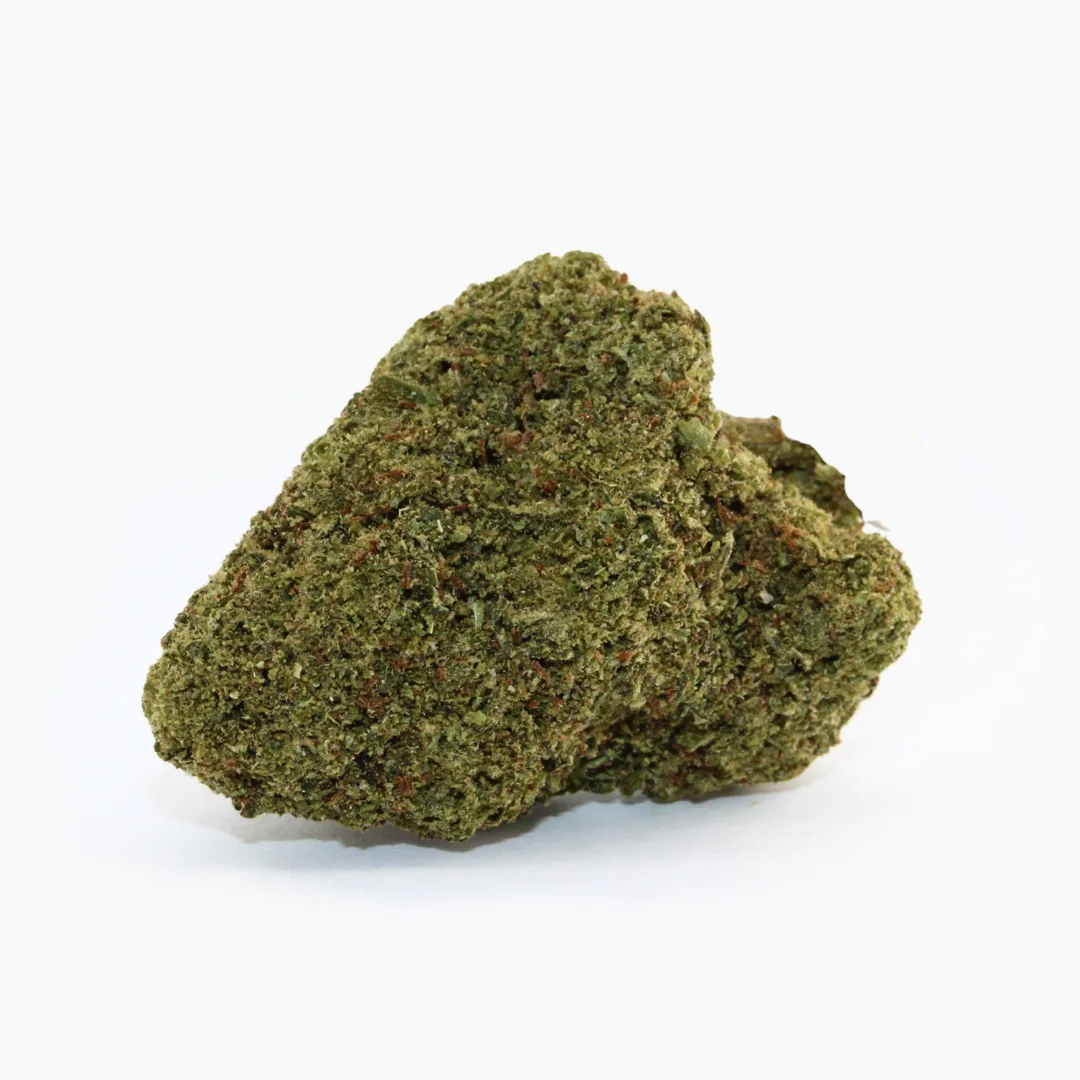
The numbers work the same way. Gelato 33, nicknamed Larry Bird after the basketball player’s shirt number, 41 and 45 are generally presented by breeders and seed catalogues as selections kept for their nose or their vigour, and I have found no independent documentation confirming their exact lineage relationship. For Gelato 33 itself, from its history to its look and aromas, see our Gelato 33 strain guide.
Read a number as a breeder’s bookmark, not as a guarantee of composition. The neighbouring Gelato names appear to follow that same selection logic.
Community-sourced strain databases compound the problem by publishing potency percentages and indica/sativa ratios for each cultivar. In my own reading of these platforms, those figures are self-reported and commercially sourced, not peer-reviewed laboratory analyses. Read them as claims, never as measurements.
That is also why the questions people type most often, “does the Gelato strain make you sleepy”, “is it stronger than Runtz”, cannot be answered honestly. Both assume a name predicts a bodily response. The only documentable variable is the dominant cannabinoid declared on the batch analysis, and individual response varies from person to person.
My position: this industry needs a chemical nomenclature, not a folkloric one. Keep the name for what it genuinely encodes, an aromatic signature and a selection marker, and let the analysis speak for the rest.
Product Forms in Europe and How to Read a Batch Analysis
Reasoning by chemovar only works if you actually hold the document that describes the chemovar. That document is the batch analysis. Learning to read one is a skill worth ten minutes of your time.
Flowers, resins and pre-rolls are not food; edibles are a separate category.
This also explains why identical genetics show up in two commercial families, sold as separate categories because the dominant cannabinoid differs.
For a THCX product, that certificate is where the material gets screened for classified molecules, and none are found.
So what do you actually look at on a certificate?
- Date and laboratory: an identifiable lab, a batch number that matches your bag, and a date. Undated equals worthless.
- Method: HPLC for cannabinoids, GC-MS for terpenes. If no method appears, the numbers have no traceable origin.
- Declared cannabinoid profile: the full panel, not one flattering headline figure.
- Terpene profile: quantified, or absent. Many certificates skip it entirely, which tells you something.
- Contaminant screening: pesticides, heavy metals, residual solvents on extracts.
Keep the variability described in the genetics section front of mind: the certificate in your hand describes the batch in your hand, which is exactly why it matters more than the name on the label.
Choosing Your Gelato: A Three-Question Decision
With a certificate in hand, the choice stops being about which Gelato strain is “best” and becomes a question of what you actually want from it. Three questions settle it.
Question one: do you want the nose without a psychotropic effect? That points to our hydroponic Gelato CBD flower, read through the grid above. Hydroponic cultivation also explains why the trichome coverage survives handling as well as it does.
Question two: do you want it ready to go? The Gelato CBD pre-roll delivers the same aromatic profile in a rolled format, so there is nothing to grind and nothing to prepare. If you smoke socially rather than ceremonially, this is the honest answer. Users who write reviews of Gelato pre-rolls almost always describe the same sweet notes, and that consistency is the terpenes, not the marketing.
Question three: are you after an intensity closer to THC? Then it is the THCX Gelato Cali USA flower, from the THCX range described earlier. Do not take my word for what is in it: read its batch analysis before you buy.
The reflex to carry out of this article is short. Buy a nose and a lab report, never a promise: the name tells you what it will smell like, the document tells you what it contains.
Conclusion
What to Carry Out of This
Warm a pinch, smell it in stages, then ask for the certificate before you trust the adjectives on the product page. Everything else said about the Gelato strain, effects included, is folklore attached to a very good nose. Sweet, fruity, sativa or indica in name only: the strains that carry this name are worth judging one batch at a time.
Frequently asked questions
Is the Gelato strain a sativa or an indica?
It is conventionally labelled an indica-dominant hybrid, but that tag describes plant architecture, not chemistry. The batch analysis is more informative than the indica/sativa tag.
Is the Gelato strain top shelf?
Quality is not determined by the name but by how well the aromatics survived drying, curing and storage, plus what a dated certificate of analysis with a stated method shows.
Is the Gelato strain stronger than Runtz?
Not verifiably. The section on labels explains why named-strain strength comparisons cannot be trusted; only two certificates of analysis can be compared.
How many different Gelato strains or types are there?
There is no independently documented count. Numbered versions such as Gelato 33, 41 and 45 are breeder selections, presented as bookmarks for nose or vigour rather than a verified lineage tree.
What gives the Gelato strain its distinctive taste profile?
A layered nose that builds in stages, traced to the terpenes detailed in the genetics section above; the sensory breakdown is in the first section of this guide.
Sources
- Russo EB (2011). Taming THC: potential cannabis synergy and phytocannabinoid-terpenoid entourage effects. Br J Pharmacol 163(7):1344-64 — pubmed.ncbi.nlm.nih.gov
- Hazekamp A, Fischedick JT (2012). Cannabis – from cultivar to chemovar. Drug Test Anal 4(7-8):660-7 — pubmed.ncbi.nlm.nih.gov
- Booth JK, Bohlmann J (2019). Terpenes in Cannabis sativa – From plant genome to humans. Plant Sci 284:67-72 — pubmed.ncbi.nlm.nih.gov
- Montero L et al. (2022). Differentiation of industrial hemp strains by their cannabinoid and phenolic compounds using LC x LC-HRMS. Anal Bioanal Chem 414(18):5445-5459 — pubmed.ncbi.nlm.nih.gov