 Written by Sophie Clarke
 Contents9 sections
- What Is THCX? The Straight Answer
- Does THCX Get You High? Effects, Onset and Duration
- How Strong Is THCX? Reading 25%, 30% and 60% Concentrations
- THCX vs THC: Same Kind of Buzz, Different Labels
- Is THCX Safe? What Batch-by-Batch Lab Testing Actually Proves
- Why Two Products Labelled THC-X Can Be Completely Different
- Choosing Your First THCX Product Without Overdoing It
- Conclusion
- Frequently asked questions
THCX is the commercial name Spliff uses for a product range that mimics the effects of THC. It is not a single molecule, not a chemical entity you’ll find on a periodic chart. It’s a range label, and what’s inside is defined by the lab report of the batch you buy.
Right, let’s be straight with you from the first line, because almost nobody else in this corner of the internet is bothering. Search “what is thcx” and you’ll get half a dozen guides describing a precise molecule, complete with an invented structure copy-pasted from one site to the next. That molecule doesn’t exist.
The name exists because the market needed a label you could actually read. So we gave it a name, and I’d rather tell you that outright than pretend otherwise.
Here’s what the name does not tell you. Unlike CBD or THC, both of which have a fixed, published structure, “THCX” doesn’t describe one specific thing. The only reliable information about any THCX product is what the batch analysis says about it.
That distinction runs through everything below: the effects you can expect, the intensity grid by format, and why two products sold as “THC-X” in two countries may have nothing in common.
The essentials in 30 seconds
THCX is Spliff’s commercial label for a product range, not a fixed molecule. Effects mimic THC and depend on concentration (25-60%), format and personal tolerance. Batch lab testing only confirms scheduled substances are absent, nothing more.
What Is THCX? The Straight Answer
As laid out above, THCX carries no fixed identity of its own, it’s the house name Spliff puts on whatever tested batch is on the shelf that week.
So why bother inventing a name? Because the trade needed one readable word for a category that keeps moving. Shops were switching from one compound to the next faster than any packaging could keep up, and you were left squinting at acronyms nobody could be bothered to explain.
For a compound that does have a fixed, published structure, see our guide to what THCP is and why its seven-carbon side chain changes the dosing maths.
Here’s the bit the American guides skip right over. There’s no published clinical research or peer-reviewed literature on “THCX” as a market term, because a market term isn’t something science can actually study. You can study a specific compound. You can’t study a shop label.
Which is exactly why a THCX vape you pick up in Berlin and something branded “THC-X” bought elsewhere can behave nothing alike. Same three letters, different formulations, different intensity, different everything.
The honest version: you’re buying a tested batch under a house name, and the certificate is the only thing making that name mean anything at all.
Does THCX Get You High? Effects, Onset and Duration
Yes. Inhaled formats typically come on within 2–5 minutes, peak around 20–30 minutes in, and fade over roughly 2–4 hours, windows borrowed from inhaled-THC pharmacology, the profile these products chase[5]. Intensity depends on your tolerance, the format and how much you take.
Let’s not be coy about it. If you buy a thcx product expecting to feel something, you will feel something. That’s the entire point of the category, and any shop pretending otherwise is either dodging the question or selling you something else altogether.
What it actually feels like is easier to describe than to measure. People talk about a euphoric lift in mood, music and films and conversation landing differently, and a heavy, settled feeling in the body. Appetite turns up uninvited, and time goes a bit funny: twenty minutes can stretch out like an hour.
None of that is a health benefit, and I’m not going to dress it up as one. It’s a recreational experience, described in the language of experience, because that’s the only honest way to talk about it.
Onset and duration by format
Your format shapes the session far more than the number printed on the packaging does. Inhalation puts you in the driver’s seat: you know where you are within a few minutes, so you can stop, wait, and decide what happens next.
That fast feedback loop is exactly why flowers, hash and a vape kit are the sensible place to start if the category is new to you.
| Format | Typical onset | Peak | Overall window |
|---|---|---|---|
| THCX vape | 2–5 min | ~20 min | 1.5–3 h |
| THCX flower | 3–10 min | ~30 min | 2–4 h |
| Hash / extract | 3–10 min | ~30 min | 2–4 h |
Those ranges track what clinical pharmacology has long measured for inhaled THC itself (Grotenhermen, 2003), the profile THCX products are designed to mimic, not a measurement of THCX products themselves.
Treat those windows as ranges reported across the category, not a promise. One draw from a pro vape kit and three bowls of flower are nowhere near the same session, even if the onset curve looks similar on paper. Extracts and distillate cartridges sit at the top end, which is why experienced users treat them as the potent option rather than the first one, simply because concentration climbs fast once you leave raw plant material behind.
Why your mate’s experience won’t be yours
Tolerance is the biggest variable by a mile. Someone who smokes daily and someone whose last encounter with cannabis was at a festival in 2019 can take the identical amount and describe two completely different afternoons. Both of them are telling the truth.
The rest is context. An empty stomach hits harder and faster. A familiar living room with people you trust feels lovely, while a loud, crowded space can tip straight into overwhelming.
Chuck in hydration, sleep and whatever mood you walked in with, and you’ve got enough moving parts to explain every contradictory review you’ll ever read about thcx.
So read published effects as a map, not a timetable. Your first session with a new batch is data collection, and there’s no prize for finishing it quickly.
How Strong Is THCX? Reading 25%, 30% and 60% Concentrations
Strength scales with two things: concentration and format. Spliff’s THCX range runs from 25% flowers as the entry tier, through 30% hash and extracts in the middle, up to concentrates reaching 60%. The percentage tells you the active load per gram, not a guaranteed effect. Your tolerance and your format decide the rest.
Right, let’s turn that percentage into something you can actually use. A figure on a label is a loading number: it tells you how much active material sits in each gram. It’s not a scoreboard, and it’s definitely not a promise that you and your mate will land in the same place.
Percentages carry extra baggage in cannabis, and there’s a reason for that. The European Union Drugs Agency notes that many countries legally control the cannabis plant based on its capacity to produce THC, so we’ve all been trained to read a % as a risk score. On a THCX product it’s plainer than that: concentration, nothing more.
Format is where most people misread the grid. A 25% flower burns surrounded by plant material, so the active load arrives spread out and comparatively forgiving. A 30% extract packs a denser payload into a much smaller quantity, which is why those five points on paper feel like a much bigger gap in your hand.
| Tier | Concentration | Typical format | Who it suits |
|---|---|---|---|
| Entry | 25% | Flower | Coming from CBD flower, or back after a break |
| Mid | 30% | Hash, extract | Regular smokers wanting denser sessions |
| High | up to 60% | Concentrates | Experienced users, minimal amounts |
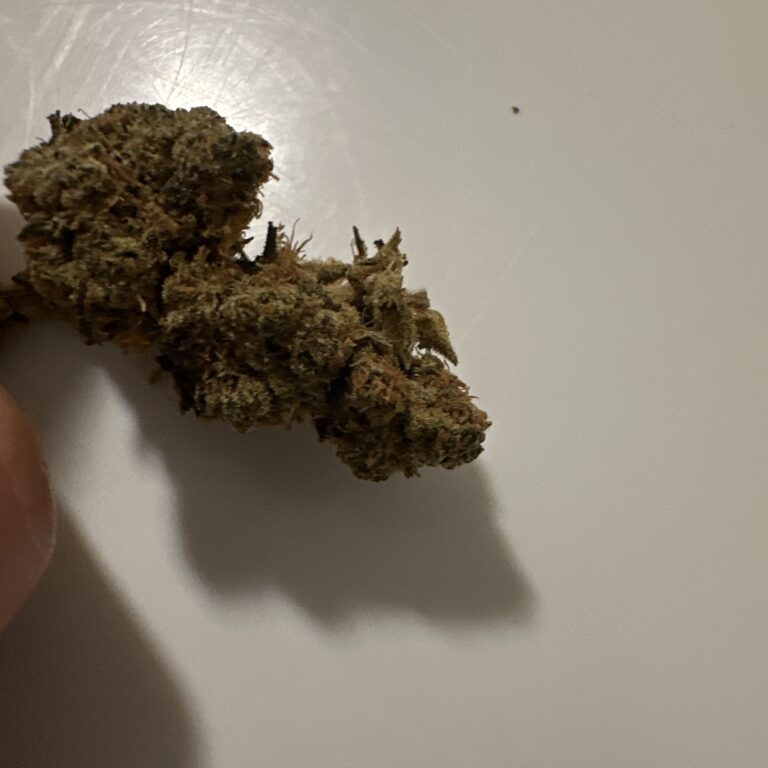
If you’re stepping across from CBD flower, the 25% tier is the honest starting line. Amnesia 25% THCX is a good first pick: bright, peppery haze nose, rolls beautifully, and the load is spread across the whole joint instead of stacked into one hit. Have a browse through the rest of the THCX flowers once you know how that tier sits with you.
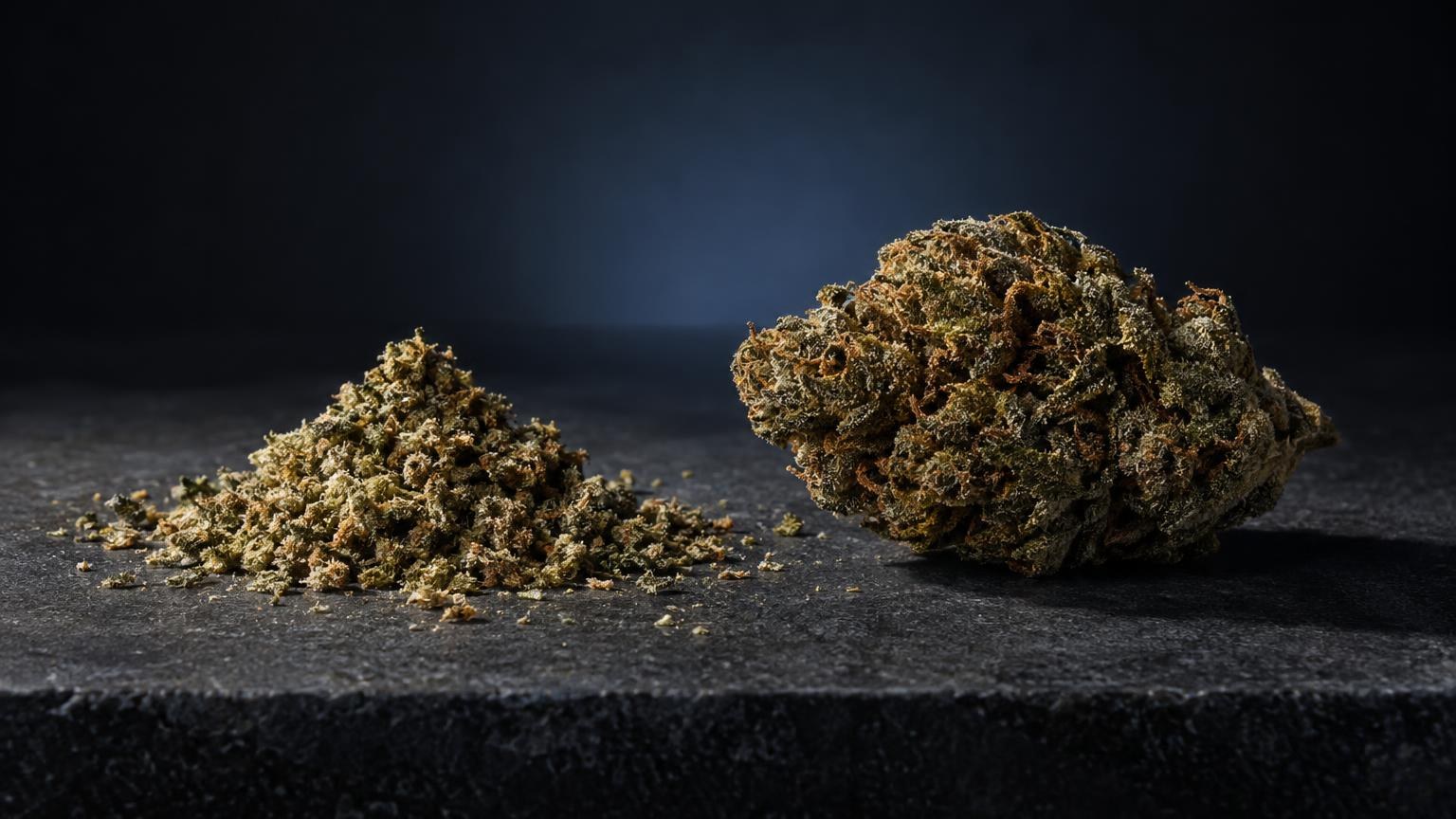
The 30% tier is hash and extract territory, and it changes the ritual as much as the intensity. Black Afghan 30% THCX is that dark, soft, deeply resinous slab you crumble into a small amount and regret rushing. Charas 30% THCX plays in the same league with a more aromatic, hand-rubbed character.
Both come with their batch analysis, so you’re not guessing at what you’ve bought. If that texture appeals, the wider THCX hash and THCX extracts ranges sit around the same tier.
Worth knowing: at equal percentages, two extracts can taste like different planets. That’s the terpene profile talking, and formats built around live resin terpenes keep far more of the plant’s aromatic character than a stripped-back distillate. Same number on the label, completely different session.
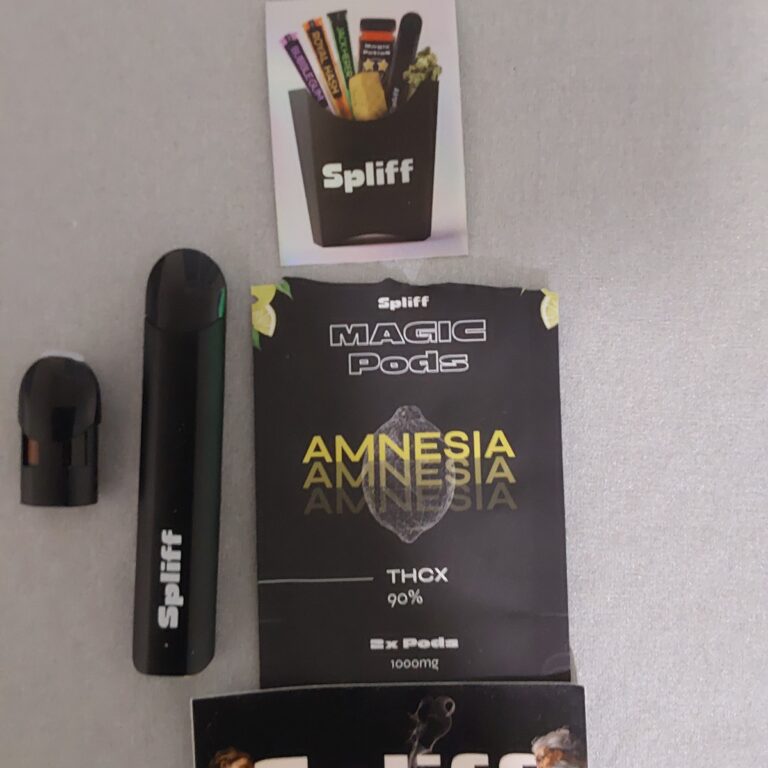
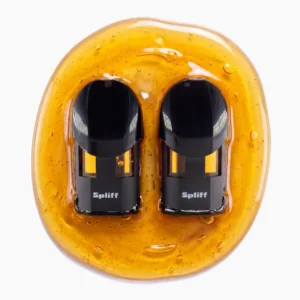
A THCX vape sits slightly outside the grid, and honestly that’s its strength. A pod gives you the finest dose control of any format, because a draw is a smaller and far more repeatable unit than a rolled joint or a crumbled slab. It’s also the discreet one: no ash, no smell clinging to your jacket on the tram home.
And no, the grid doesn’t transfer across categories. A water soluble CBG drink is measured in milligrams per serving, not in percent per gram, so don’t try to read one against the other. Different maths, different product entirely.
Concentrates up to 60% deserve their own mental category. The right quantity there is visibly smaller than what you’d use at 30%. Treating a concentrate as just a stronger version of hash is the single most common mistake.
THCX vs THC: Same Kind of Buzz, Different Labels
Right, so you’ve placed yourself on the intensity grid. The next question is always the comparison one: how does thcx actually differ from THC? On the experience side, honestly? Less than you’d expect. The entire design brief of a THCX-labelled product is to reproduce the kind of buzz people associate with THC, which is exactly why “thcx vs thc” is one of the most typed phrases in this corner of the internet.
The real divergence isn’t in what you feel. It’s in what the name covers. THCX is a trade name, not a molecule: every batch is lab-tested for classified molecules and none are detected.
HHC is a separate story: our guide HHC vs THC: What HHC Was and Why Europe Pulled It covers it.
Here’s the communication rule we hold ourselves to, and I’d much rather explain it to you than have you stumble across it in the small print. What we can say, and prove, is simple: no classified molecule is detected, and the batch analysis is what shows it.
Industry blogs only muddy this further: one will tie “THC-X” to non-standardised US-market blends while another applies the same three letters to a chemically distinct build entirely, different naming, same lesson already on the table above.
| Criterion | THC | THCX (Spliff label) |
|---|---|---|
| Origin of the name | Chemical name of a defined molecule | Commercial name for a product range, not a molecule |
| Formats | Flowers, hash, extracts, vapes | Same range, sized to the tiers already covered above |
| Perceived intensity | Depends on concentration, format, tolerance | Same variables, same logic |
| What the lab report checks | THC content declared | Screening for scheduled substances, none detected |
Read that table as a recap. The habit worth building is simpler than any comparison chart: judge a thcx product by the batch document it ships with, never by the letters printed on the label.
Is THCX Safe? What Batch-by-Batch Lab Testing Actually Proves
No honest seller can call any THCX product “safe” full stop, and I’m not about to. What batch testing proves is narrow but real: each lot is screened in a lab for scheduled molecules, and none are detected. That tells you what is not in the jar. It doesn’t conjure long-term human data that doesn’t exist yet, European assessment of hemp-derived cannabinoids is still a work in progress[1].
If a scheduled molecule turns up, that batch doesn’t get sold. Simple as. That’s the whole commitment, and it’s the only one a third party can actually verify instead of you taking it on trust.
Now the bit most vendors quietly skip: what that report does not say. It doesn’t say the compounds inside are harmless, and it doesn’t say they’ve been studied in humans for years.
Regulators are visibly still working through this whole category. The European Food Safety Authority has set a safe intake level for Delta-8 THC, a psychoactive cannabinoid occasionally detected in hemp-derived products.
Read that precisely: EFSA’s figure applies to Delta-8 THC and nothing else. It says nothing about products sold under the thcx label, and anyone stretching it that far is selling you a story. What it does show is that European assessment work on hemp-derived cannabinoids is live and unfinished, which is the honest position to hold here.
Why batch-level testing is the whole ballgame here
Since the label itself travels loosely between vendors (covered earlier), traceability is the only thing separating a real product from a sticker.
Testing one production run and reusing that certificate for the next twelve? That trick absolutely exists. Batch-by-batch means the number on your packaging matches the number on the analysis, and that link is what makes the claim checkable. It’s also what backs the only statement on that front worth making: no classified molecule is detected in the batch, and the analysis is what shows it.
How to read any product page like a buyer, not a browser
Apply this to us and to everyone else, please. Four checks, thirty seconds, and you’ll filter out most of the market before anything lands in your basket.
- Stated concentration. A real figure per gram or per cartridge, not “extra strong” or “premium potency”.
- Format, clearly named. Flower, hash, extract or vape, because that’s half of your intensity outcome.
- Batch identifier. Present on the packaging and traceable back to a specific analysis.
- Availability of the lab results. Obtainable on request, dated, and naming the substances screened for.
If a shop can’t produce three of those four, walk away. That’s not brand loyalty talking, it’s the bare minimum in a category where a label on its own carries no fixed meaning.
And keep up the boring habits: store away from heat and light, keep everything well out of reach of children, and buy quantities you’ll actually get through instead of stockpiling.
Why Two Products Labelled THC-X Can Be Completely Different
Which brings us to the bit that catches out most buyers: the label travels a lot further than the product does.
Type those three letters into a search bar and you’ll mostly land on pages written for another continent. American guides, mainly, describing something they also call “THC-X”. Same acronym, no international body forcing the two to match up.
And that’s not me being paranoid. Peer-reviewed work on hemp-derived psychoactive products in the US describes that market as largely unregulated, with items sold through channels as varied as online shops and petrol station counters. No shared standard, no shared naming convention, no shared anything.
So picture yourself holding a thcx product bought here while reading a review posted by someone in Ohio. Those two things might share nothing beyond a hyphen. Their experience is real; it just isn’t evidence about your jar.
Here’s what genuinely does not transfer across a label like this:
- Dosing advice. “Two puffs was plenty” refers to a load you can’t verify from a forum post.
- Strength rankings. Someone’s “this one barely did anything” describes their supplier, not ours.
- Side-effect reports. Useful context, but attached to a product you never bought.
And it works in reverse too. Nothing on this page describes what a competitor in another market sells under a similar name, because I genuinely don’t know what’s in it. Neither does anyone quoting them second-hand.
Which leaves exactly one thing worth trusting, and it isn’t the acronym. A vendor who names the format, states the concentration, references the batch and can show you the screening for scheduled molecules is giving you something checkable; three letters printed on a jar are giving you a marketing category.
Choosing Your First THCX Product Without Overdoing It
So you’ve decided to give it a go. Here’s exactly how I’d set up a first session. No sales patter, just the order I’d do things in.
Start at the bottom of whichever family appeals to you. If it’s flowers, that means the 25% tier, not reaching straight for a 30% hash because the number looked more impressive. Buy the entry tier once, learn how your body answers it, then decide whether you actually want more.
Keep that first session small and deliberately boring. A modest amount, a full stop, and no topping up until the effects have completely settled and started to fade. Honestly, a rough first experience usually comes from reading the come-up as proof that nothing is happening.
The other half of the decision is context, not power. Match the format to the evening you’ve actually got planned rather than to the biggest percentage on the page. A quick discreet hit and a long slow ritual are two very different nights. Vapes and pre filled pods are the discreet, portable end; THCX gummies are the slow one; flowers and hash sit in between, with the terpenes doing most of the work on taste.
| Your evening | Format that fits | Why |
|---|---|---|
| Sofa, series, nothing else planned | Flower | Slow to prepare, easy to stop mid-session |
| Out and about, short window | THCX vape | Portable, dose measured draw by draw |
| Mates round, taking your time | Hash or extract | The ritual is half the point, richer flavour |
Think of that as a buying order, not a shopping list. First purchase: Amnesia 25% THCX. Only once you know how you handle that tier does the step up to hash make any sense, and you can compare the THCX flowers and THCX hash ranges when you’re ready.
Storage is the unglamorous bit nobody writes about. Keep every THCX product in its sealed packaging, away from heat and direct light, and well out of reach of children and pets. Flowers and hash also hold their aroma far longer in a cool, dark cupboard than in a jacket pocket.
One last practical habit, and it’s a proper good one: note what you took and how it went. Format, rough quantity, how long before you felt it, how long it lasted. Three sessions of that and you’ll know your own baseline better than any complete guide can tell you, and that short list of notes is worth more than the best product page.
Ready to pick your tier? Have a proper look through the THCX extracts, check the batch details included on whatever catches your eye, and start one step below where your ego wants to start.
Conclusion
So where does that actually leave you? The percentage sets the active load, the format sets the pace, and the lab report does one job only: it confirms that no scheduled molecule is present in the batch. That’s the honest limit of what any seller can promise you, us included.
Everything else is on you. Your tolerance, your evening, your patience.
If you try one THCX product this month, here’s my no-drama plan:
- Pick the lowest tier of whichever family appeals to you, flower, hash or vape.
- Take one dose. One. Then wait out the full onset window before touching anything else.
- Give it an unhurried evening, phone down, before you form an opinion.
Honestly? Most bad experiences aren’t strength problems. They’re impatience problems.
Frequently asked questions
What is THCX?
THCX is a house name Spliff uses for a product range designed to mimic THC’s effects. It’s not a single molecule but a category label; what’s actually inside your jar is defined by the lab report of that specific batch, not by the name on the packaging.
Does THCX get you high?
Yes. Inhaled formats typically come on within 2–5 minutes, peak around 20–30 minutes, and fade over 2–4 hours, with intensity shaped by tolerance, format and amount taken. Expect euphoria, mood shifts, altered perception of time, and increased appetite, a recreational experience, not a health effect.
Is THCX the same as THC?
The experience is designed to feel similar. THCX is a trade name, not a molecule: every batch is lab-tested for classified molecules and none are detected.
Is THCX safe?
No seller can honestly call it “safe” outright. Batch testing only proves that no scheduled molecule was detected in that specific lot, it doesn’t confirm long-term human safety data, which doesn’t yet exist for this category. Treat any THCX product cautiously: small amount, familiar setting, no mixing.
Is THCX strong?
Strength depends on concentration and format together. Spliff’s range spans 25% flowers (entry), 30% hash/extracts (mid), up to 60% concentrates. A concentrate isn’t just “stronger hash”, at 60%, the right quantity is noticeably smaller than at 30%, so start with a fraction of your usual amount.
Is THCX a good buy?
Judge any THCX listing by four checkable items: stated concentration per gram, clearly named format, a traceable batch identifier, and available lab results naming what was screened. If a shop can’t produce at least three of these, that’s a reason to walk away rather than buy.
Why do THC-X products from different sellers vary so much?
The acronym travels across borders without any body forcing consistency, so a “THC-X” product from another country can be a completely different formulation or strength than a Spliff THCX batch. Dosing advice, strength rankings and side-effect reports from elsewhere don’t transfer to what you’re actually buying.
Sources
- Delta-8 THC: EFSA sets safe intake level — European Food Safety Authority — www.efsa.europa.eu
- Cannabis laws in Europe: defining cannabis — European Union Drugs Agency — www.euda.europa.eu
- Hemp-derived psychoactive products in the US market — peer-reviewed study (PMC) — pmc.ncbi.nlm.nih.gov
- Cannabis — World Health Organization — www.who.int
- Grotenhermen F. (2003) Pharmacokinetics and pharmacodynamics of cannabinoids — PubMed — pubmed.ncbi.nlm.nih.gov