 Written by Sarah Mitchell
 THC Edibles at Spliff · from €17.90 · ★ 4.9/5 (1,327 reviews)
72 h delivery in Europe · Free delivery from €99
Contents8 sections
- What Eating Cannabinoids Actually Feels Like
- The Chemistry Behind Ingestion: Why Edibles Behave Differently
- Formats and Milligrams: From 100 mg Packs to 1000 mg Strengths
- Homemade Versus Lab-Dosed: The Consistency Problem
- Labelling and Responsible Use in Europe
- Buying Edibles Online in Europe: What to Check Before You Order
- Conclusion
- Frequently asked questions
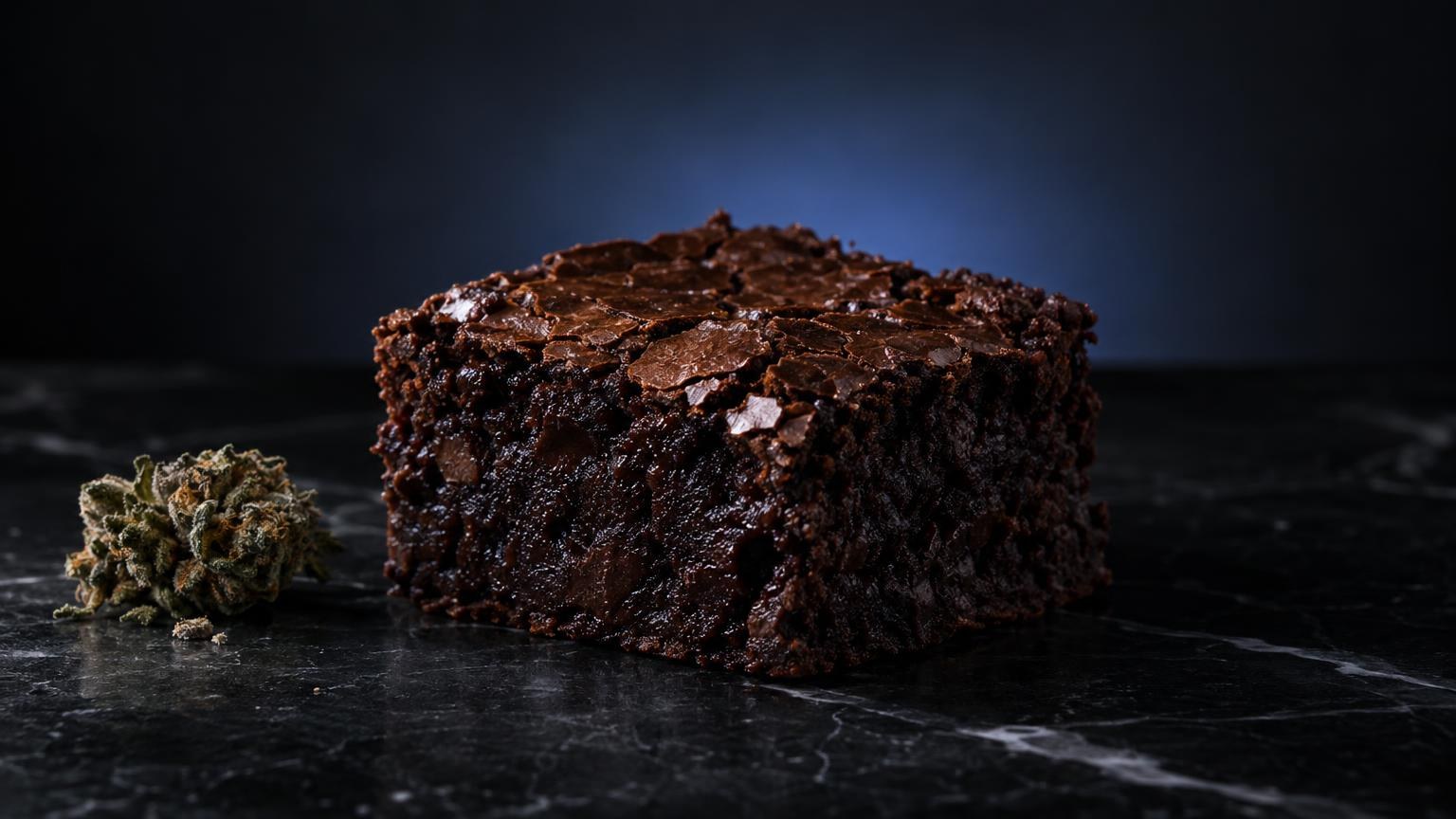
The first thing worth knowing about edibles is that, for a while, nothing seems to happen. An edible is simply a food or drink infused with cannabinoids and dosed in milligrams, and that word “ingested” changes the entire pharmacokinetic picture.
How strong an edible feels depends on the dose in milligrams you swallow, the cannabinoid profile (THCX or CBD) and your personal tolerance, not on the format itself. Onset typically runs from 30 to 90 minutes, the plateau lasts considerably longer than inhalation, and the offset is gradual.
That delay causes more bad experiences with cannabis edibles than any other variable, and, as the chemistry section explains, no two bodies run it on the same clock. The reference pharmacokinetics review puts oral onset at 30 to 90 minutes, with peak effects two to three hours in, far later than most people expect (Grotenhermen, Clin Pharmacokinet).
Which is why the only rule that matters at the start is patience: give it at least two hours before you even think about a second dose, however little you feel at 45 minutes. Everything that follows here, from chemistry to labels to milligrams, expands on that single sentence.
The essentials in 30 seconds
Edibles work through digestion, so timing and intensity follow a different logic than smoking or vaping.
- Onset timing varies from person to person even with identical products.
- Do the label math before splitting a portion.
- Vet the vendor’s paperwork and shipping practices before you pay.
What Eating Cannabinoids Actually Feels Like
Start with texture, because that is where ingestion genuinely parts company with smoke. An inhaled dose arrives as a step change within a few breaths; an ingested one accumulates, because the compounds have to clear your digestive tract and your liver before they reach circulation. Most people only register the shift in hindsight, a few minutes after it has already begun.
What users typically report during that build is physical rather than cerebral: a settling weight in the limbs and shoulders, sound and texture becoming more salient, time stretching out of proportion, appetite arriving with real conviction.
Why that window moves so much between people, and between occasions in the same person (stomach contents, liver enzymes, tolerance) is the chemistry section’s territory below; the practical consequence here is simply that sharing a pack rarely produces shared experiences.
The plateau is the genuinely distinctive stretch. Instead of the peak-and-fade curve of inhalation, cannabis edibles hold at a fairly level intensity, then release you slowly. Plan the evening around that shape rather than fighting it: a familiar room, nothing scheduled afterwards, no alcohol in the mix.
Composition is what separates the two broad families on the shelf. CBD edibles contain a non-intoxicating cannabinoid, and what users describe is subtle: no distortion of perception, no altered time sense. Broad spectrum CBD edibles keep a wider range of plant cannabinoids and terpenes with the THC removed, whereas isolate-based CBD gummy bears use the pure molecule; the difference shows in taste far more than in effects. Move to THC edibles, or to profiles sold under names such as THCX, and you are handling products made to be felt, where what users report scales with the ingested dose. THCX is a trade name, not a molecule: every batch is lab-tested for classified molecules and none are detected.
The Chemistry Behind Ingestion: Why Edibles Behave Differently
That slow build has a mechanism behind it, and it starts long before the product reaches you. Raw cannabis carries very little neutral THC or CBD; what it actually holds are the acidic precursors, THCA and CBDA. Heat converts them, and that conversion step is decarboxylation.
In industrial production, decarboxylation is a controlled temperature-and-time pairing applied to the extract, never to the finished sweet. Push the temperature too high or hold it too long and you degrade cannabinoids and volatilise terpenes; stay too gentle and a fraction of the acid form survives unconverted.
Once you swallow it, the second mechanism takes over. Absorbed cannabinoids travel via the portal vein to the liver before they reach general circulation, and the liver converts part of the THC into a metabolite that the pharmacokinetics literature describes as contributing to the felt effect alongside the parent molecule. Oral bioavailability stays low and varies widely between individuals, which is the technical reason the same milligram figure lands differently on two people.
This hepatic detour is documented by Knowable Magazine.
It also stretches the clock. Where an inhaled peak has largely faded within two to three hours, an ingested dose typically keeps working for four to eight hours, with a residual tail possible beyond that, figures from the reference pharmacokinetics review, not folklore (Grotenhermen, Clin Pharmacokinet).
Third mechanism: you. Body mass, hepatic enzyme activity and gut transit all shift absorption further. Add tolerance to that, and a universal dosing table for thc edibles becomes scientifically indefensible.
Which is why analytical accuracy on the label matters more here than in any other cannabis category. The clearest evidence remains the 2017 RTI Press report Tasty THC (archived on PubMed Central), which cites laboratory testing of 75 medicinal edibles bought in California and Washington: the measured Δ9-THC content of 83 % of those products did not match the packaging. One US sample from 2017 is not a universal law, but it is exactly the failure mode an unchecked label invites.
A mislabelled mg figure is therefore not a rounding error: it is the entire basis of your decision, whether you are handling cbd edibles or psychoactive ones.
Formats and Milligrams: From 100 mg Packs to 1000 mg Strengths
Once you understand why an ingested dose behaves the way it does, the only number that governs your evening is the one printed on the packaging. That number is exactly where most product pages turn vague.
Here is the distinction that decides everything: milligrams per unit are not milligrams per pack. A jar advertised as 1000 mg states the total cannabinoid load of the whole container, not a serving. Divide before you chew.
| Stated pack strength | Pieces | Per unit |
|---|---|---|
| 100 mg | 10 | 10 mg |
| 500 mg | 20 | 25 mg |
| 1000 mg | 20 | 50 mg |
| 1000 mg | 40 | 25 mg |
Two packs sharing the same headline “1000 mg” can differ by a factor of two per piece. If a label gives you a total without a piece count, or a piece count without a total, the arithmetic is impossible. Read that gap as a quality signal, not a detail, it is the same failure the label testing in the chemistry section documented at scale.
Format shifts absorption more than intensity. Anything that lingers in the mouth releases a small fraction across the buccal mucosa before the remainder goes through full digestion. Anything swallowed whole skips that route entirely.
- Gummies and infused sweets: the reference format for cannabis edibles, easy to divide, and the easiest to dose precisely per piece, because the mg per gummy is printed rather than implied.
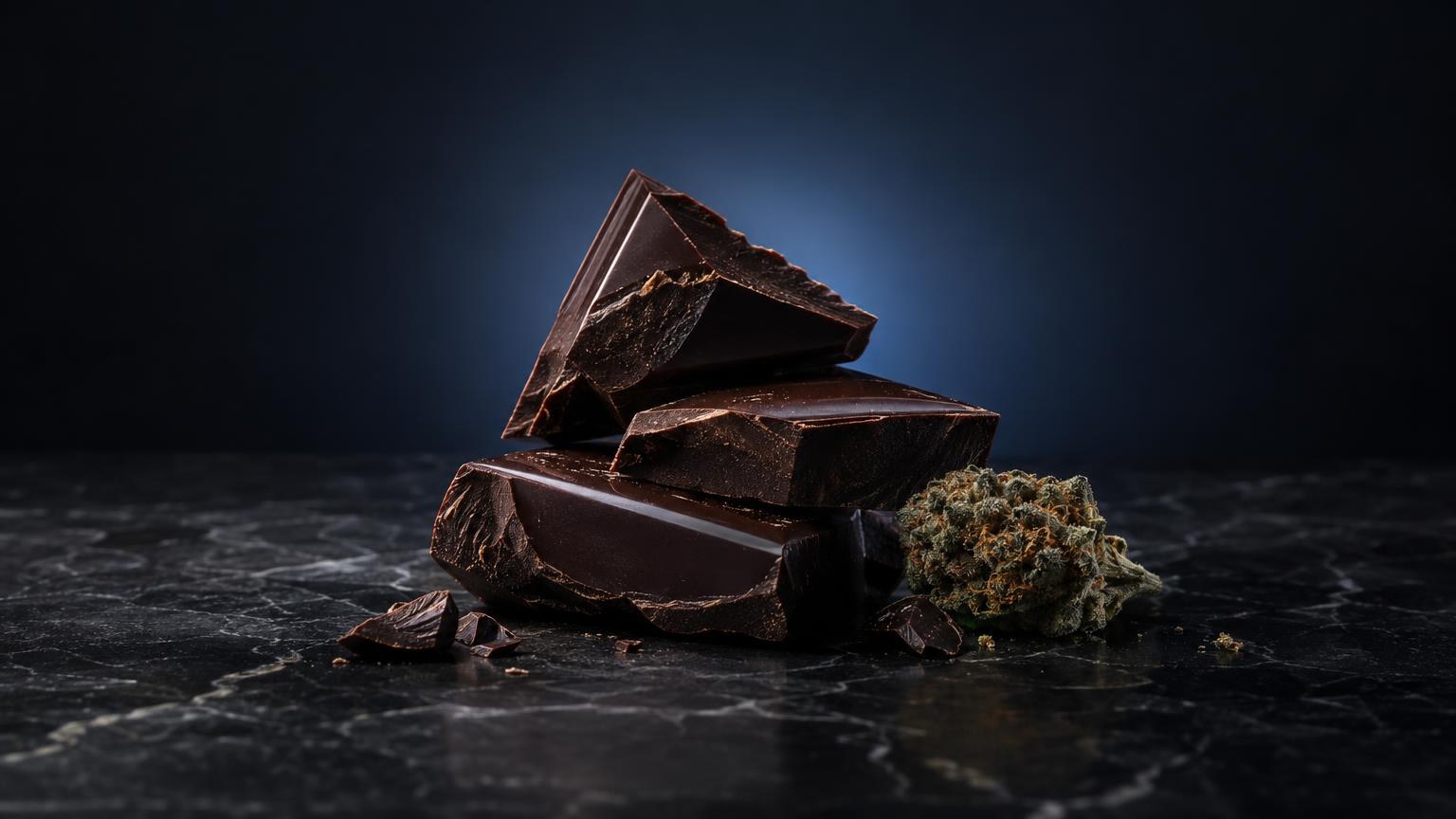
- Chocolates and biscuits: a fat-rich matrix, pleasant to eat, but portioning depends on how the bar is scored.
- Infusions, infused honey and spreads: dosing depends on how much you actually pour or spread, which is the weak point.
- Capsules: no taste, no buccal contribution, entirely reliant on digestion.
Across the European market the widest choice of options sits in gummies: hemp-derived CBD infused edibles at one end, THC gummies and THCX gummies at the other, with CBD THC edibles that blend both in between. Oil tinctures and capsules are the discreet alternatives, and a shop that keeps all of them in stock at a stable current price is usually one that turns its inventory quickly, which matters for freshness.
For a first approach, take the smallest fraction a unit can be cut into cleanly. Note the time you took it and the time you first noticed anything, then keep that note. Step up only once you have lived through a complete cycle.
That is self-calibration, not a posology, and it is the one method that survives the individual variability the chemistry section maps out.
One underrated advantage of the format: research on CBD edibles has documented that eating rather than inhaling makes use discreet and portable, avoiding social stigma, which is precisely why they travel well in a weekday bag (PubMed, 2022).
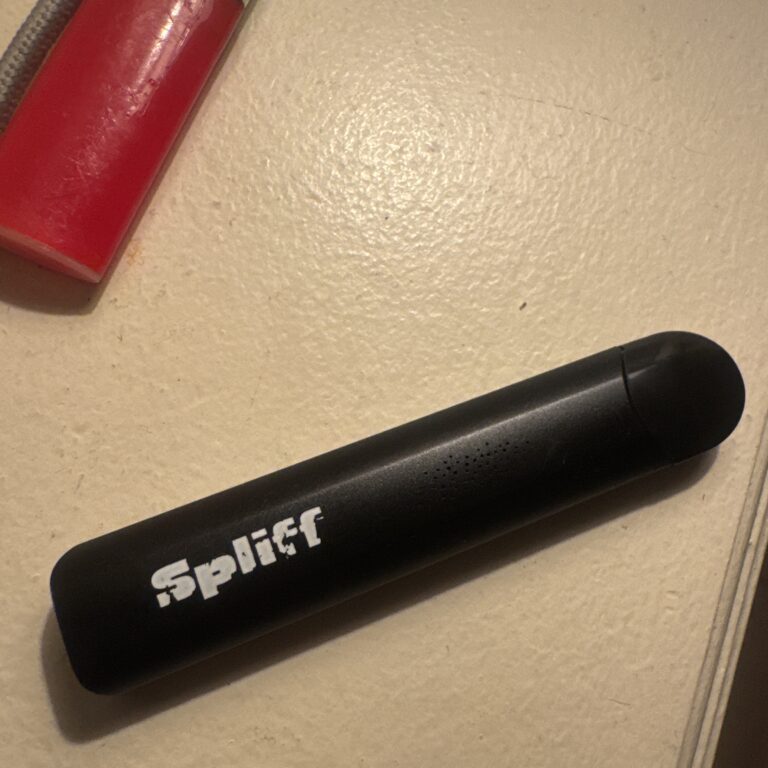
The trade-off is control. If you want intensity you can adjust breath by breath and stop dead, inhalation answers in minutes: the Magic Pod for a clean, no-fuss draw, the Magic Pod Live Rosin x2 if you care about a full terpene profile from solventless extract, or the Magic Vape THCX.
An edible asks for the opposite posture: commit before you commit to a second bite. Choose the format for the occasion, then let the mg per unit, verified against a batch COA, make the real decision. Our THC edibles are labelled that way on purpose.
Homemade Versus Lab-Dosed: The Consistency Problem
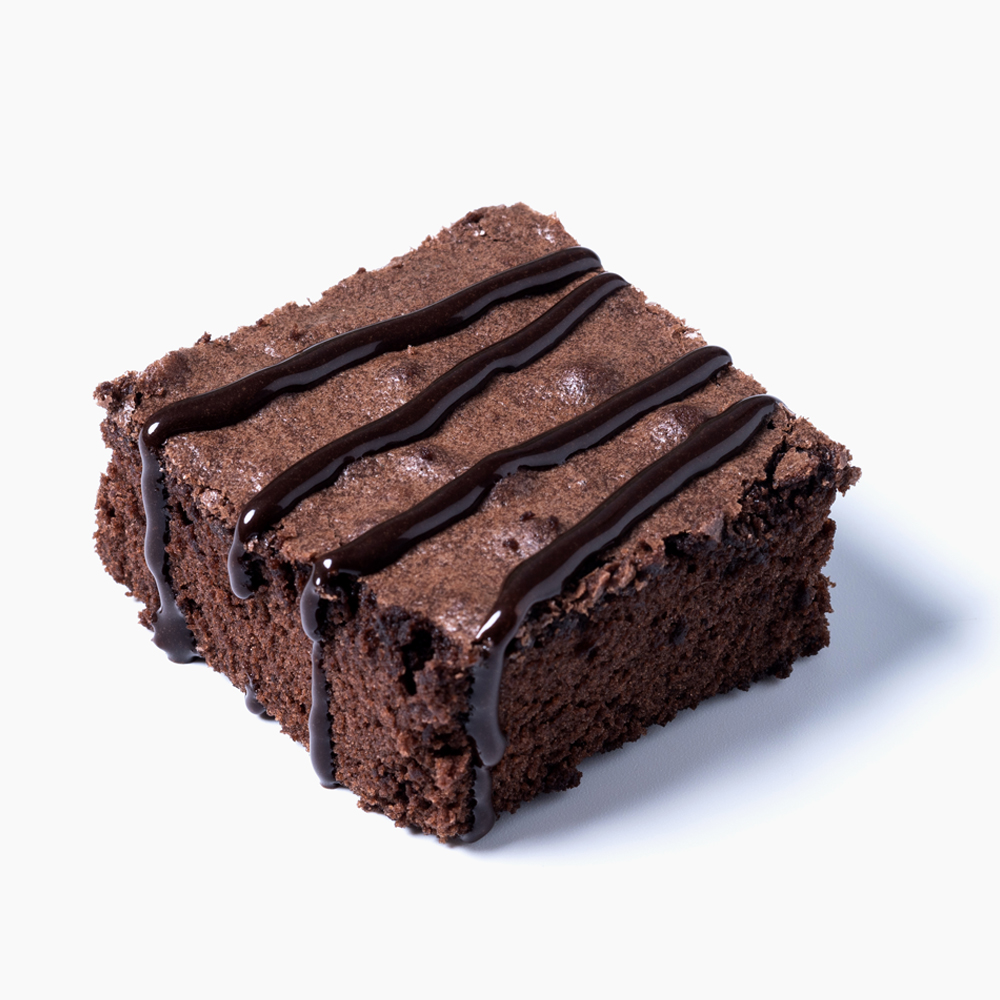
All that arithmetic holds only if the number printed on the label describes the piece actually in your hand. That is exactly where home preparation falls apart. The most searched question in this field deserves a measurement answer, not a recipe.
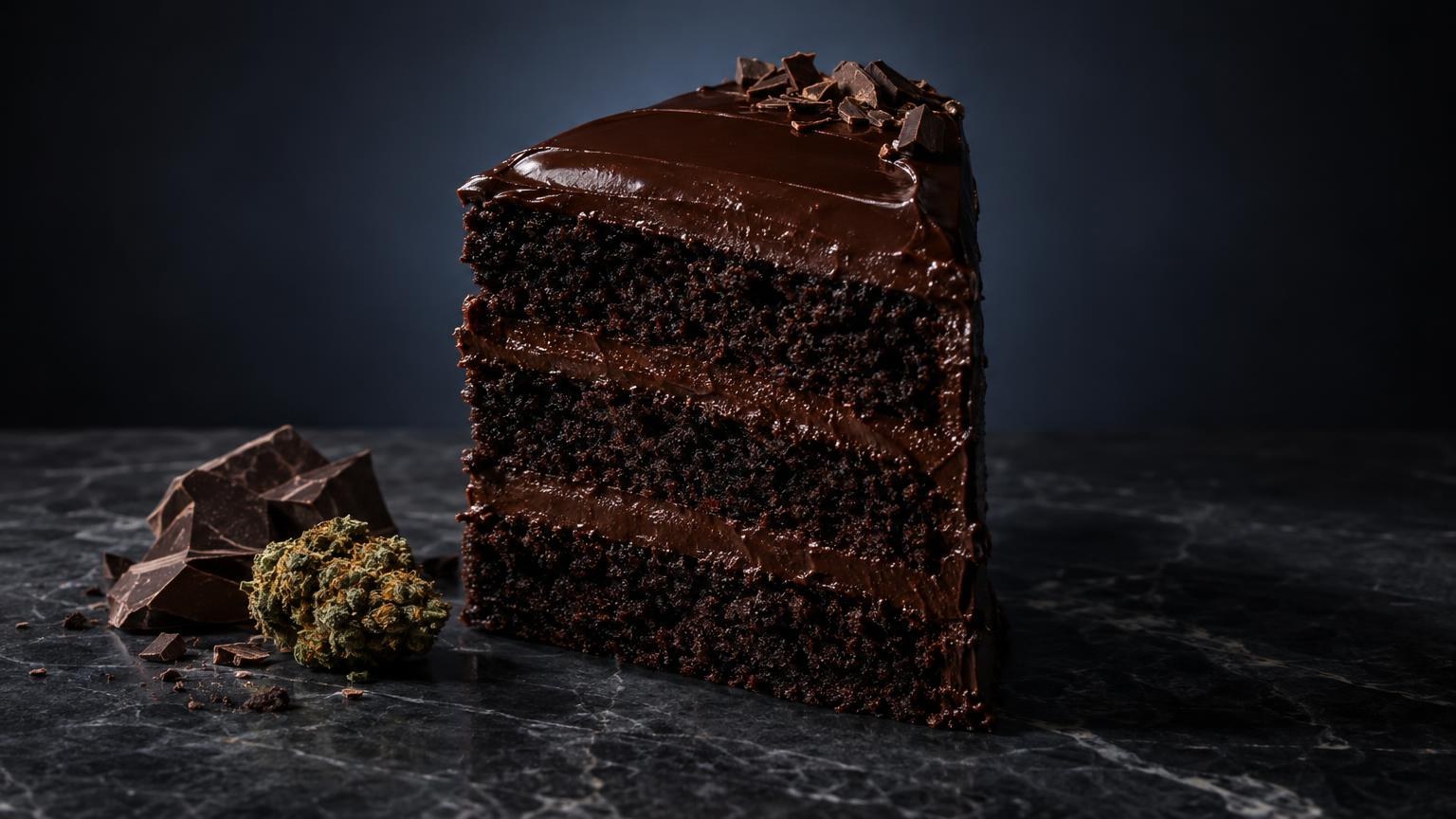
For the Amsterdam-style slice specifically, read Space Cake: Effects, Timing and Dosage Explained.
Without high-shear mixing or a stabilised emulsion, the extract concentrates in pockets rather than dispersing evenly through a batter. A viscous mixture then locks those pockets in place as it sets.
Then you lose material nobody bothers to account for. A measurable fraction stays on the bowl, the spatula and the tray. The outer edges of a bake also sit at a higher effective temperature than the centre for longer, which degrades part of what made it in.
That variance carries a documented consequence. Excessive consumption can produce cannabis poisoning, with reported effects including nausea and panic attacks, according to Medical News Today. Overshooting is rarely a decision you made; it is usually a measurement you never took.
A laboratory-produced edible is not better because it is commercial. It is better because four specific operations happen that a kitchen cannot replicate, the emulsion and stabilisation work described in Knowable Magazine’s review of edibles science:
- Homogenisation: the cannabinoid fraction is emulsified into the matrix under controlled shear, so unit-to-unit distribution is even.
- Analytical quantification: cannabinoid content is measured per batch by chromatography, not estimated from the input material.
- Declared milligrams per unit: the figure on the pack refers to one piece, calculated from that measurement.
- Lot traceability: a batch number ties the product you hold to the certificate of analysis that tested it.
My position on DIY cannabis edibles is not a moral one. Cook all you like; what I object to is the pretence that a gram of extract stirred into 200 g of butter yields a known dose per portion. That is a metrology problem, and metrology runs on instruments, not enthusiasm.
Labelling and Responsible Use in Europe
There is a quieter quality signal most buyers skip: the label. A vendor who takes labelling seriously is a vendor who has a real production chain behind the packaging.
Here is what a serious label shows you:
- Full ingredient list, in descending order of weight, with the infused fraction identified.
- Allergen declaration, emphasised in the ingredient list (gelatine, soy, milk, nuts, wheat).
- Declared cannabinoid content in mg, stated per unit as well as per pack.
- Batch or lot number, so a specific production run can be traced back to its analysis.
- Date of minimum durability and storage conditions.
- Net quantity and the identity of the food business operator.
Storage deserves the same rigour. An infused sweet looks exactly like an uninfused one, so keep edibles in their original resealable, opaque packaging, well out of reach of children and animals.
Buying Edibles Online in Europe: What to Check Before You Order
The other half of the job is judging whether the shop in front of you deserves your card details. I can make that call in about ninety seconds on any product page. Most people who want to buy THC gummies online start from a search result rather than from a vendor they already know, and that is exactly where ninety seconds of checking help most.
A label can list everything by the book and still be worth nothing if it can’t be checked against a real analysis. Three signals separate a serious European vendor from a drop-shipper with a nice logo.
- A consultable certificate of analysis (COA) tied to the batch code on your pack, not a generic PDF from 2021.
- An explicit age statement on the listing and again at checkout.
- An identifiable operator: company name, registered address, and a human who answers.
Why so much weight on one document? Because (as the onset section explained) nothing corrects an unverified milligram figure once it is swallowed.
Then there is the part nobody writes about: logistics. Cannabinoids and chocolate bases are both thermosensitive, so a pack that spends four July days in a van is no longer the product that left the warehouse.
Look for realistic delivery windows and, above all, a stated shipping perimeter. A merchant who lists the countries it serves is being straight with you. One who promises worldwide delivery of everything is not. Free shipping above a threshold is a pleasant extra, but a parcel that sits for 48 hours in a hot depot has already lost some quality, so the best guarantee is a stated list of countries where delivery is available and a realistic transit time, however long that turns out to be.
What do edibles cost in Europe?
To put real numbers on it, from our own EU shelf rather than guesswork: as of August 2026, our Magic Candy THC sweets list at €17.90 for a 100 mg pack, and the Magic Brownie space cake at €34.90 for 200 mg, regular prices, not promotions, which works out at roughly €0.17 to €0.18 per labelled milligram.
What that price pays for is everything this guide has been circling: chromatographic dosing of each batch, a certificate of analysis tied to the lot number, and food-grade production and labelling. The lab analysis of each batch is available on request from customer service. A cheaper sweet without that paperwork is not a bargain; it is an unverified milligram figure, and the RTI Press label testing shows how often such figures turn out to be wrong.
As for what to order, it depends on the shape of the evening you want. Wikipedia’s overview of cannabis edibles (marijuana edibles, in American usage) describes the typical register as heightened sensory perception, relaxation and drowsiness, which is a slow arc by design. If that is what you’re after, the THC edibles collection is where I would browse, with per-unit dosing printed rather than implied.
If you would rather keep your hand on the dial, inhalation returns feedback in minutes. The Magic Pod Live Rosin x2 is a good pick: live rosin carries a fuller terpene signature than distillate, and the pod format makes the unit dose obvious. The standard Magic Pod and the Magic Vape THCX offer that same immediacy across different cannabinoid profiles.
Conclusion
Strip away the folklore and edibles, whether food, drink, oil or capsule, reduce to two disciplines: reading a number, and respecting a clock. Everything else follows from those habits.
My conclusion is simple. Cannabis edibles aren’t mysterious, they’re mismeasured, and that gap between label and lab is a purchasing criterion, not a footnote.
Buy from vendors who publish batch-level figures, store the pack sealed, cool and out of reach, then let the format do what it does: slowly, and well.
Not a substitute for professional medical guidance, check with a doctor if you’re unsure.
Frequently asked questions
What are edibles?
Edibles are foods or drinks infused with cannabinoids and dosed in milligrams, so the strength of each piece is printed rather than guessed. The cannabinoid edibles we sell at Spliff are lab-dosed per unit and verified against a batch certificate of analysis.
Do edibles get you very high?
Strength comes down to dose, cannabinoid profile and personal tolerance, not the format, never judge an edible before its full window has passed.
How long do edibles last?
The main effects of a THC edible typically last four to eight hours after onset, with residual effects possible beyond that, because ingested cannabinoids are released gradually via the liver (Grotenhermen, Clin Pharmacokinet). Onset itself takes 30 to 90 minutes, so plan for most of an evening. For the hour-by-hour picture, see our guide on how long edibles last.
How do I make edibles at home?
We don’t publish recipes: preparing THC edibles at home is impossible to dose reliably, as the Homemade Versus Lab-Dosed section above explains.
How to make edible cookie dough with cannabinoids?
Same refusal as above: infusing cookie dough yourself cannot be dosed reliably, so we’ll point you to the Homemade Versus Lab-Dosed section instead of a recipe.
Sources
- A content analysis of cannabis edibles package marketing — Int J Drug Policy (PubMed) — pubmed.ncbi.nlm.nih.gov
- Benefits, toxicity and current market of cannabidiol in edibles — Crit Rev Food Sci Nutr (PubMed) — pubmed.ncbi.nlm.nih.gov
- Building a better edible (Knowable Magazine) — knowablemagazine.org
- Effects of edibles (Medical News Today) — www.medicalnewstoday.com