 Written by Sophie Clarke
 CBD Hash at Spliff · from €3.50/g · ★ 4.9/5 (426 reviews)
72 h delivery in Europe · Free delivery from €99
Contents10 sections
- Holding Static Hash for the First Time: Look, Smell, Feel
- What Static Hash Actually Is: Trichome Heads Lifted by Static
- How Static Hash Is Made, Step by Step (and Why It's Fiddly)
- Static Hash vs Dry Sift, Bubble Hash and Piatella: The Grid
- How to Smoke, Roll and Vape Static Hash Without Wasting It
- Curing, Storing and How Static Hash Ages
- Judging Quality and Choosing Your Static Hash
- Labelling and Buying Static Hash in Europe
- Conclusion
- Frequently asked questions
Static Hash, Explained by the Thumb Test
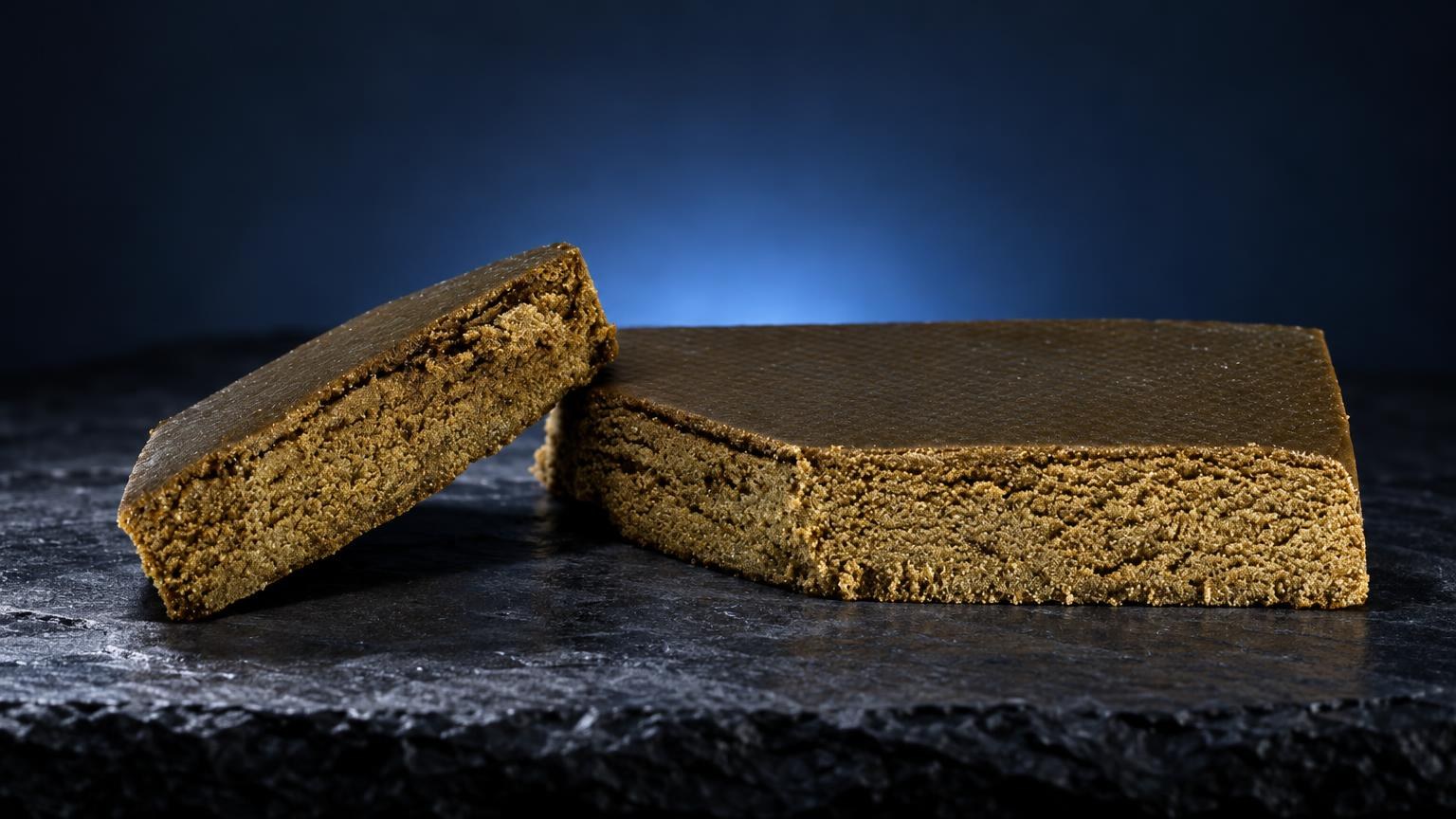
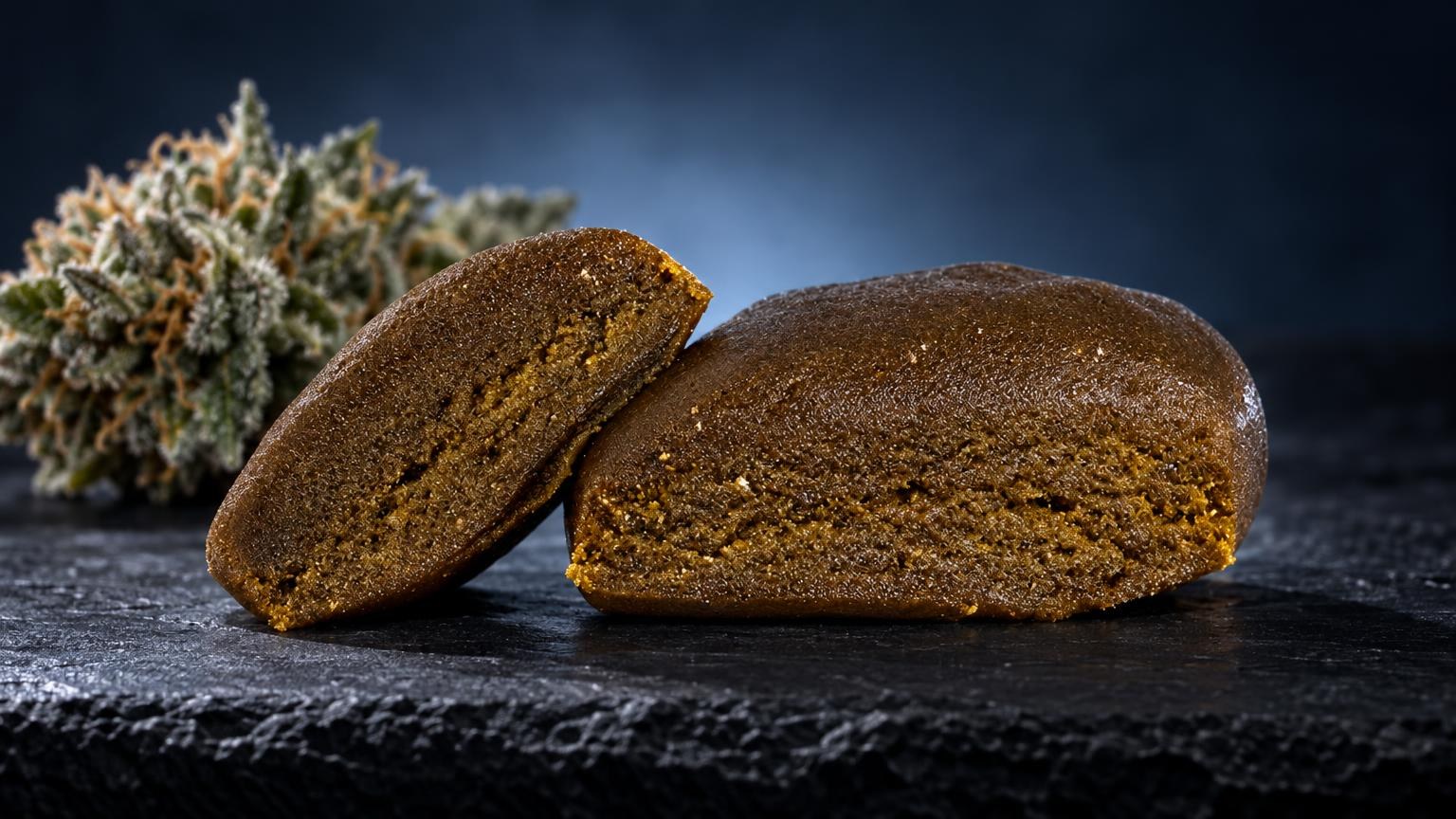
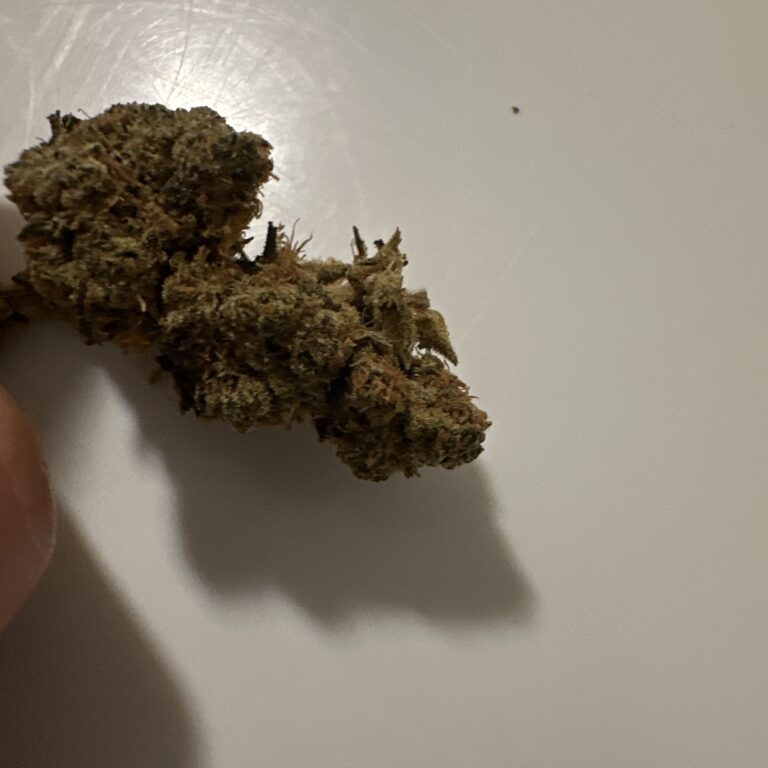
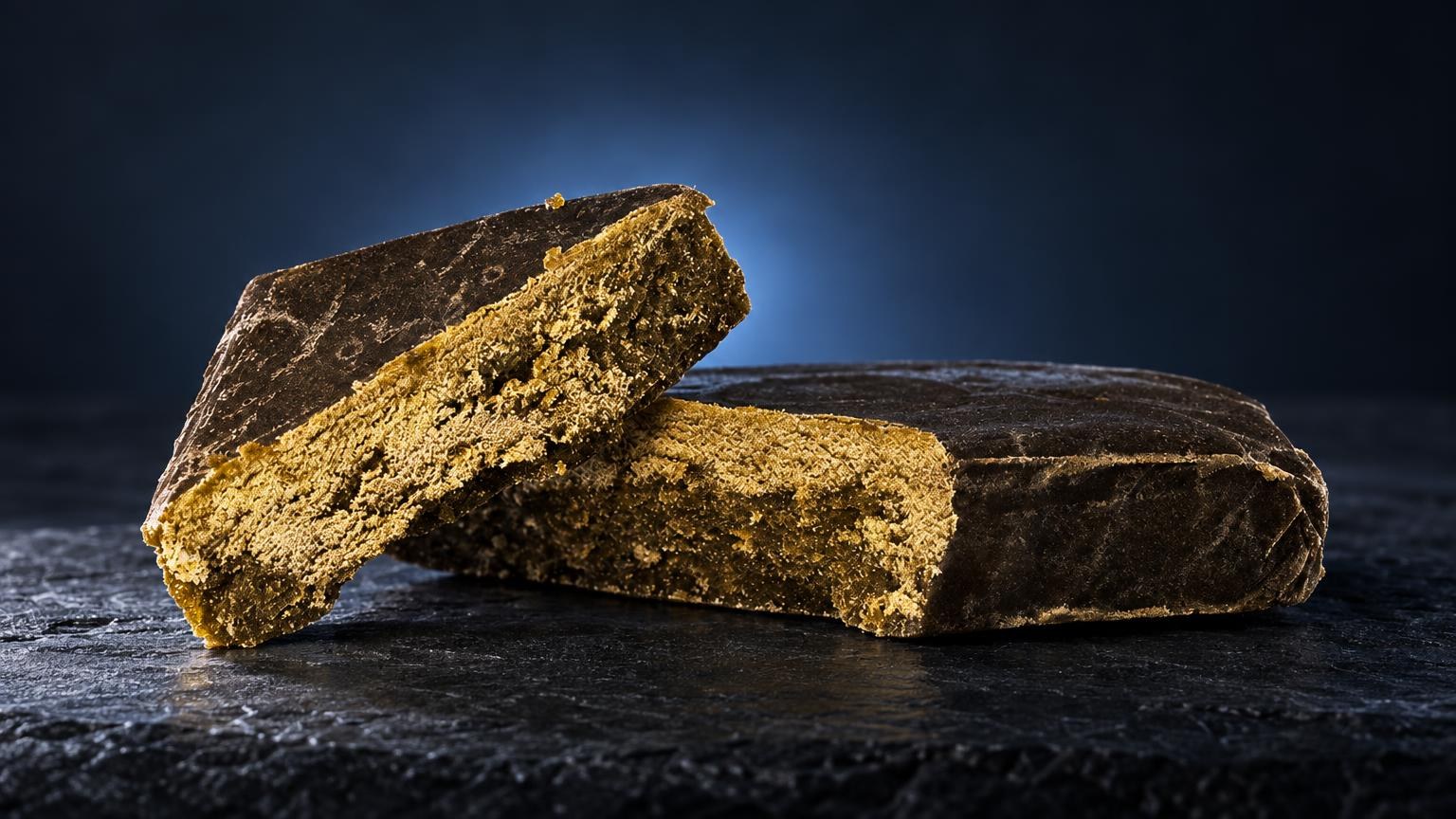
Tip a tiny jar of static hash out onto baking parchment and it looks pale sandy blonde, near enough the colour of demerara sugar. Put a phone torch on it and it throws back a glassy shimmer, thousands of little facets, because that is exactly what you’re looking at: heads, the 40 to 110 micron glands that carry the resin on a cannabis flower[2].

Pinch it cold and it crumbles like dry brown sugar. Roll that same crumb between thumb and finger for about 10 seconds and it turns into something else entirely: tacky, a shade darker, pliable enough to smear.
That heat response is the single most useful thing you can learn by touch, and checking it costs you nothing before you spark a single thing.
The essentials in 30 seconds
Three things decide whether a jar of static hash is worth its price, and none of them are on the label.
- Made from bone-dry material in cold, low-humidity, draught-free conditions so the static charge actually holds
- Judged by five checks: colour uniformity, absence of green or fibre, aroma, melt behaviour and texture shift
- Ages faster than flower once jarred, so it needs a short cure, airtight cold storage and minimal handling
Holding Static Hash for the First Time: Look, Smell, Feel
Right, the smell. Get your nose over an open jar of fresh static hash and it should read terpene-forward and alive: citrus peel, pine sap, something faintly gassy or floral depending on the cultivar it came off. What you shouldn’t get is a chemical edge. No solventy sting at the back of the throat, none of that.
That absence matters, and here’s why: a dry sift is mechanical from start to finish. Nothing gets dissolved, nothing gets boiled off. So what you’re smelling is the resin itself, not a process.
You’ll see purity percentages quoted for static sift against ordinary dry sift on plenty of shop pages. I’m not going to repeat them, because I can’t find one that traces back to independent lab work rather than to another shop page.
What those pages do describe correctly is the direction of travel. Static tech pulls resin heads away from plant matter more cleanly than a plain screen, so you end up with less green dust riding along in the mix.
Which is where the “is it strong, then?” question actually lands, and the honest answer is technical rather than experiential. Strength here means concentration, not effect: a refined sift is mostly resin heads and very little leaf, so the cannabinoid content declared on the jar is higher per gram than the flower it came off. Nothing in this guide should be read as a promise about anything else.
Quick reality check on what you’re actually holding, because the sifted-resin world gets muddled fast:
- It’s not an oil and not a solvent extract. No butane, no ethanol, no CO₂ anywhere in its history.
- It’s not automatically full melt. Plenty of static sift sits at half melt and behaves brilliantly in a pipe or a spliff regardless.
- It’s not a different plant. Same flower, cleaner separation, smaller yield.
What Static Hash Actually Is: Trichome Heads Lifted by Static
That glassy, heads-heavy crumb has a proper technical name behind it, and it’s worth being precise about what the label is actually claiming.
Static hash is an ultra-refined solventless concentrate: trichome heads separated out of dry sift using an electrostatic charge, a method the trade calls static tech. Purely mechanical sorting, from the first screen to the finished jar.
The reason anyone bothers with all this? Botany. Cannabinoids and terpenes aren’t spread evenly through the plant: they sit in the secretory glandular trichomes packed across the female flower[1]. Microscopy work on cannabis inflorescences puts those glandular heads at roughly 40 to 110 microns across, on stalks that vary from 20 to 1100 microns[2]. Everything else (leaf, stalk, cell wall) is just packaging.
Standard sifting is step one. You agitate dried, cold material over screens of a given micron rating, and what falls through is kief or pollen: a working mix of resin heads plus a fair amount of pulverised green matter. The whole thing only works because those heads come away from their stalks: the same study that measured them found post-harvest handling and drying changing the proportion of heads left intact versus detached[2]. Good dry sift is lovely stuff, but it’s a mixture.
Static tech is the sorting pass on top. Dry resin heads take an electrostatic charge readily, so when a charged surface comes close, the light heads lift and jump to it while heavier plant fragments stay put. It’s the balloon-rubbed-on-a-jumper trick you did at school, applied to a tray of dry sift. Worth saying plainly: that’s a workshop technique described by the people who do it, not a process anyone has written up in a laboratory. What follows on method comes from the trade, and I’ll flag where the evidence stops.
Which is why the format is named after the physics rather than the plant. Nothing is being extracted in the chemical sense here, only separated by mass and charge.
- Nothing to purge: because no solvent ever touches it, there’s no residual anything to chase out at the end.
- Water-free: unlike ice water hash, the resin never gets wet, so it never needs drying.
- Unpressed and trichome-only: the heads stay loose and individual unless someone chooses to press them later, and the goal is a pile of heads with as little plant matter riding along as possible.
Now the unglamorous bit. Static sift hash comes off in tiny quantities: you feed in a serious volume of dry sift and you finish with grams, sometimes less if the starting material was mediocre.
It also explains why doing this properly is production work, not kitchen work. The kit is fiddly, the material has to be bone dry and cold, and one careless pass drags plant debris straight back into your heads.
How Static Hash Is Made, Step by Step (and Why It's Fiddly)
Knowing why the resin jumps is one thing. Getting it to jump reliably, into a jar, on a damp Tuesday night in a city flat, is quite another. The workflow is short on steps and absolutely brutal on conditions.
Sieving flower into kief is nothing new, mind. Screen-sifted resin is one of the oldest ways of concentrating a cannabis flower, and the electrostatic pass is simply the newest tool bolted onto that lineage. If you are still weighing resin against whole bud, our hash vs weed guide sets out what actually changes between the two.
Four things have to be right before a single trichome moves.
- Properly dried material. Cured flower, trim, or an existing batch of dry sift. Static dry sift only works when the material is bone dry; anything holding moisture smears rather than sifts.
- A cold room. Cold keeps the heads brittle so they snap off the stalk cleanly instead of squashing. The nearest hard evidence is on the flower rather than on the sift: microscopy of dried inflorescences records handling and drying changing trichome morphology and the share of heads left intact[2]. Nobody has published the equivalent for a static plate.
- Low humidity. Damp air kills the charge outright, and no charge means no static sift.
- Zero draught. One open window and your yield is on the floor, the worktop and your jumper.
Miss any one of those and you’ll know about it straight away. Warm hands or a warm room and the resin welds itself to the screen. Damp material gives you a dull, greenish powder full of fibre instead of glassy heads.
The old-school version is genuinely low-tech. A sheet of parchment paper, rubbed hard against a sleeve or a jumper to build the charge, held over the sift so the heads leap up onto it. It works, but it’s slow, uneven and impossible to scale past a couple of grams.
Production kit does the same job with plexiglass or acrylic plates and charged screens. The material has already been graded through micron sieves, so coarse plant matter never reaches the static stage. Cleaner input, cleaner lift, far less hand-fiddling.
Then comes the bit most write-ups skip: grading. You sweep each pass off the plate and keep the fractions separate instead of tipping the lot into one jar, since quality drops off pass by pass. That first pass is the one you save for the good occasions.
Some producers stop there and sell it loose. Others press the heads gently into a small slab for handling and storage. Gently is the operative word, because leaning on it crushes the heads, weeps the oil out and turns a full-melt fraction into something that just bubbles and chars.
Worth knowing what those grades are actually for: the top fraction is the one you keep for a bowl or a dab, while the later, greener passes get their uses in a joint or a bit of home cookery. Nothing goes to waste, it just gets demoted.
That gap in equipment, cold rooms and patience is most of the reason static hash, CBD or otherwise, carries the price it does on the shelf.
Static Hash vs Dry Sift, Bubble Hash and Piatella: The Grid
Four jars on a table, four products that look near enough identical, four completely different processes behind them. Here’s how to tell them apart before you part with your money.
Start with the family resemblance. Dry sift and static hash come off the same production line, with static tech picking up where the mesh gives up. The electrostatic pass is there to pull resin-heavy heads away from the waxes, fibre and micro-debris a screen alone leaves behind.
So think of the sift spectrum as a scale of refinement, not a set of rival products. A good dry sift is already mostly resin. Static sift is that same resin with the passengers removed.
Bubble hash changes one variable, and that one variable changes everything downstream. The separation is still mechanical, but ice water extraction does the work, so the heads come off wet and need careful drying.
That water contact tends to give you a darker, tackier, sometimes granular product. The terpene expression often reads differently too, a touch rounder than a bone-dry static sift.
Piatella isn’t a separation method at all, which is where most of the confusion kicks off. It’s a finishing style: fresh, high-grade hash pressed and cold-cured over time until it turns dense, dark and glossy. Pressed static slabs get mistaken for it constantly.
The giveaway is the break. Snap a piatella and it bends and stretches before it gives, with a wet-looking fracture. A pressed static slab still fractures short and dusty, because the heads inside were never wetted or cured that way.
| Format | Separation | Water | Melt | Texture | Best in |
|---|---|---|---|---|---|
| Static hash | Screens, then static | None | Varies by grade, plenty sits at half | Dry, glassy, sandy blonde | Low-temp dab, vape, pipe |
| Dry sift | Gravity through mesh | None | Varies by grade | Powdery, blonde to greenish | Spliff, pipe, pressed |
| Bubble hash | Ice water extraction | Yes | Wide range, 6-star full melt | Tacky to granular, sand to brown | Dab, pipe |
| Piatella | Any, then cold-cure press | Usually yes | A finish, not a grade | Dense, dark, oily, pliable | Pipe, spliff, tulip |
One caveat before treating that grid as gospel: it describes how the formats behave in the hand, not a certified classification.
Use the grid as a shopping filter. Whether you’re browsing CBD hash or comparing static and pressed formats, the label should tell you the separation method and the cannabinoid spec, not just the name. And if you’re stacking a basket to hit free delivery, that’s exactly the moment to read those specs properly rather than picking on looks.
How to Smoke, Roll and Vape Static Hash Without Wasting It
Whichever of those four jars you end up with, the gesture changes. Static hash is fine, dry and dead keen to fall straight through your paper, so how you handle it decides whether you actually smoke it or leave it in the carpet. For every method side by side, from joint to pipe to vaporiser, see our complete guide to smoking hash.
Rolling first, because let’s be honest, that’s what most of you will do with it. Two options: crumble it cold, or warm a piece between your fingers for a few seconds and roll it into a thin snake, thinner than a matchstick. The snake wins with a loose dry sift, simply because it stays where you put it.
- Layer, don’t dump. Run the snake the length of the spliff, or break the crumb into three or four small deposits through the flower rather than one lump sat near the filter.
- Use a proper filter. A rolled card tip or a glass tip stops fine sift being pulled straight into your mouth.
- Roll slow and slightly tighter than usual. Resin burns hotter than flower, and a loose spliff will run and canoe down one side.
- Tulip or cone if you’re feeling flash. Both give you a fat chamber where the hash sits above the airflow, which is genuinely why they work, not just for the photo.
A hash pipe or a small bowl with a screen is your low-waste option. A piece the size of a rice grain, sat on the screen, flame kissed near it rather than held on it. Torch a full-melt sift and you’ll incinerate the terpenes you paid for.
If your batch is genuinely full melt, low-temperature dabbing is where the flavour lives. Follow the temperature guidance from your own device manufacturer rather than a number off a blog, and cold-start if your rig allows: you want the resin to bubble and bead rather than char. Black residue welded to the bottom of the dish tells you everything about melt grade: it was half melt at best.
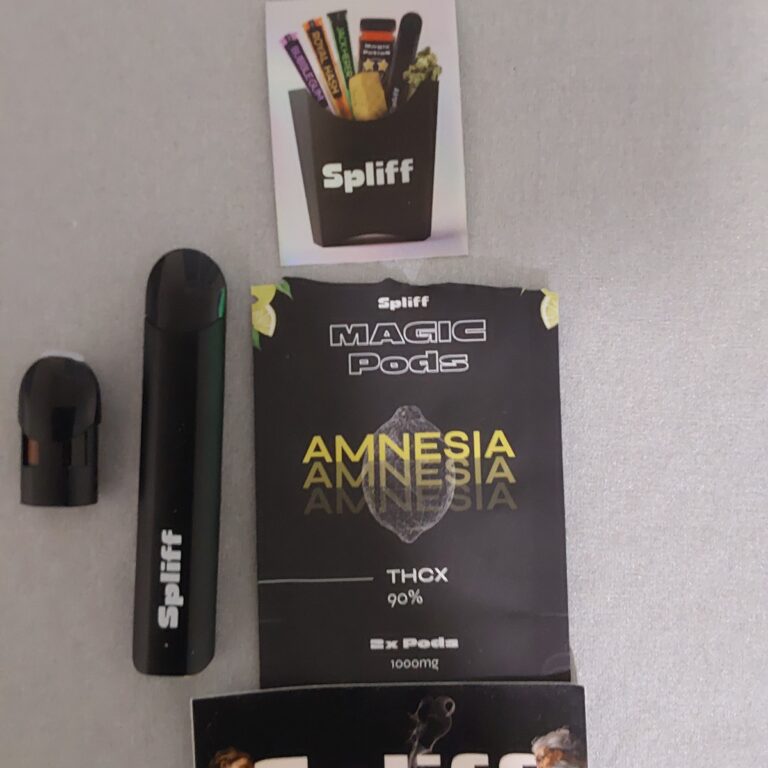
And if handling sticky resin just isn’t your thing, pods exist for exactly that. The Magic Pod Live Rosin x2 keeps that solventless, terpene-forward character in a sealed cartridge, and the standard Magic Pod is the no-fuss version: click it in, draw, done. Cannabinoid content is printed on the pack, so you know exactly what you’re working with.
Curing, Storing and How Static Hash Ages
Assuming you haven’t worked your way through the whole jar in one sitting, that little stash has a life ahead of it. And here’s the thing: a refined sift ages faster than flower, because there’s no plant material left to shield the resin. Kinetic work on dried cannabis resin measured exactly that trade-off: CBD and delta-9-THC break down and cannabinol builds up faster as temperature rises[3]. Warm storage is not a neutral choice.
Straight off the plates it’s still shedding a bit of residual moisture and a lot of volatile aroma. A short cure sorts that out: cold, dark, lid on, cracked open for a few seconds every couple of days across the first week or two. Handle it as little as you can get away with, because every squeeze warms the heads and nudges them towards merging into one sad lump. On the flower, microscopists record resin seeping from glandular heads until they stick together or collapse outright[2], which is the same failure a warm thumb causes in a jar.
Storage spec, and honestly, it’s this simple:
- Glass jar or an airtight tin, small enough that there’s little air above the resin.
- Parchment liner if the sift is sticky, so you can lift it out clean.
- Cool, dark, dry, and nowhere near a radiator, a windowsill or the top of the fridge.
- Freezer only for long-term keeping, and let the sealed jar return to room temperature before you open it, otherwise condensation lands straight on the resin.
Ageing itself isn’t a fault, mind. Blonde drifting towards amber-brown over months is the ordinary course of things, and the same browning is what microscopists record as glandular heads mature and senesce[2]. The texture usually firms up as it goes. What tells you it’s past its best is the aroma flattening off towards hay or cardboard, or a sandy dry sift turning oddly plasticky and refusing to crumble.
One habit properly worth nicking: portion it. Keep a working amount in a tiny tin for the week and leave the main jar shut. Most static hash doesn’t die of old age, it dies of being opened, poked and warmed forty times.
Judging Quality and Choosing Your Static Hash
Storage sorted, so now the bigger question: which jar do you actually buy? A listing photo tells you next to nothing, so you judge on two things instead: what the resin does in your hand, and what the label genuinely commits to.
Run the same five checks every single time, in this order:
- Colour uniformity : sandy to blonde, consistent throughout. Patchy dark flecks mean the sift wasn’t graded properly.
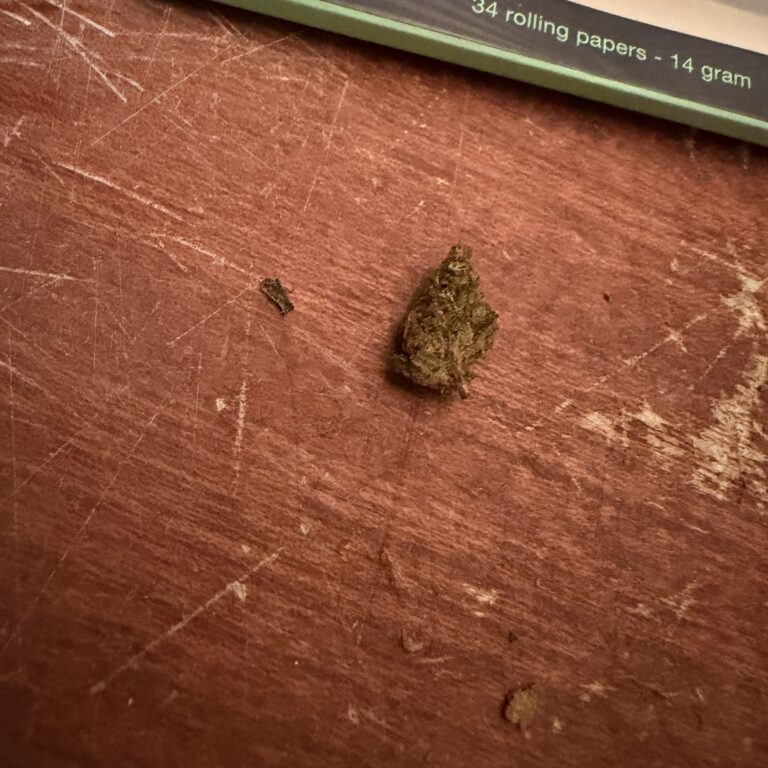
- No green, no fibre : spread a pinch on white paper. Plant fragments and hairs are refinement failures you can spot with the naked eye.
- Aroma check : confirms what you already sniffed for earlier, no coaxing needed if it’s right.
- Melt behaviour : a crumb on a hot surface should bubble and bead, not just sit there smoking.
- Texture : nothing that stays powdery under body heat belongs in this price bracket.
Then read the label like a spec sheet, not a sales pitch. Cannabinoid percentages are declared contents and nothing more: our Static Hash 70 % CBN listing states what’s in the resin, and that number is a specification, not a promise about how your evening goes.
What you want sitting next to that percentage is traceability: a batch reference, an analysis you can actually ask for, and a full ingredient declaration. Across the European Union there is no single list that settles it: each country writes its own boundary, and the declared composition is what a seller can actually be held to. That’s precisely why documented composition matters so much on a concentrate.
Compare across the shelf before you commit, honestly. The CBD hash collection lets you weigh a refined static sift against pressed and traditional formats on price per gram, and the THCX hash range (THCX is a product range name, not a molecule) sits alongside it for a like-for-like look at formats.
And if you’re not fancying loose resin at all? Totally legitimate answer, and that’s where the Magic Pod Live Rosin x2 and the standard Magic Pod earn their place: same solventless logic, zero handling, 18+ only.
Labelling and Buying Static Hash in Europe
Be clear about what this guide has been describing. Static sift is a separation method, and the same method is used on very different raw material. What is sold here, and what everything above is written about, is sifted resin sold with its cannabinoid content declared on the label: CBD and CBN grades, alongside the formats sold under the THCX range name. THCX is a product range name, not a molecule. High-THC hash is a different matter entirely, and it is not what is on these shelves, not what is being compared in the grid, and not what anything in this article describes.
Then read the listing like a document, not an advert. A serious one tells you what’s in the resin and then shuts up.
- A clear cannabinoid declaration, given as a percentage of the product and presented as content, never as a promise.
- A batch or analysis reference you can match to the jar that turns up.
- Adult-only sale stated plainly, with an age check that genuinely functions at checkout.
- No health messaging anywhere in the description. If a static sift page starts telling you how you’ll feel, that’s a red flag, not a selling point.
Let the batch analysis do the talking rather than the marketing copy.
Same logic across the whole shelf, whether you’re weighing up a CBD hash, a pressed dry sift slab or a fine static sift. The listings worth trusting are the boring, specific ones.
One habit worth nicking from me: file the order confirmation and the batch reference somewhere you’ll actually find them again. A declared product with paperwork behind it answers questions far better than your memory ever will.
CBD is not a medicine and is not a substitute for medical advice or treatment. If in doubt, consult a healthcare professional.
Conclusion
So that’s the arc: lifted off a charged plate, judged by hand, smoked or vaped with care, then kept cold and dark until it’s gone.
Static hash isn’t magic. It’s discipline applied to dry sift, and that’s where everything good about it comes from, not a number on a jar.
Give a new jar a couple of days to settle before you judge it, and go easy on a first sweep from a supplier you don’t know yet.
And whatever you’re weighing up on the shelf, CBD hash or otherwise, buy on process and paperwork, not on price per gram alone.
Frequently asked questions
What is the strongest type of hash?
Strength here means concentration rather than effect, and it is a property of the resin, not a promise. The reasoning is in Holding Static Hash for the First Time.
Is dry sift hash stronger than static hash?
Neither is stronger by nature. They are the same resin at two degrees of refinement, which the comparison grid sets out side by side.
What is static hash?
Trichome heads lifted off dry sift with an electrostatic charge, mechanical from the first screen to the jar. The full explanation is in What Static Hash Actually Is.
Is static hash good quality?
Judge the jar in front of you rather than the grade name on it: look, smell, and how a crumb behaves under body heat. The five checks are set out in Judging Quality.
How do you cure static hash?
Cold, dark, lid on, opened briefly during the first fortnight, handled as little as possible. The reasoning is in Curing, Storing and How Static Hash Ages.
How do you smoke static sift hash?
Crumble it cold or warm it into a thin snake, layer it through the flower and use a proper tip so none of it goes through. Technique in How to Smoke, Roll and Vape.
How is static hash made?
Graded sift is passed under an electrostatic charge in cold, dry, draught-free conditions, one fraction at a time. The steps are in How Static Hash Is Made.
Can you make static hash at home?
You can, with parchment and patience, but the yields are tiny and one warm fingertip ruins a pass. The same section explains why it is production work.
Sources
- Xie Z. et al. (2023), Cannabis sativa: origin and history, glandular trichome development, and cannabinoid biosynthesis — Horticulture Research — pmc.ncbi.nlm.nih.gov
- Punja Z.K., Sutton D.B., Kim T. (2023), Glandular trichome development, morphology and maturation in cannabis inflorescences — Journal of Cannabis Research — pmc.ncbi.nlm.nih.gov
- Jaidee W. et al. (2022), Kinetics of CBD and delta-9-THC degradation and cannabinol formation in cannabis resin at various temperatures — Cannabis and Cannabinoid Research — pmc.ncbi.nlm.nih.gov