 Written by Sophie Clarke
 Contents10 sections
- What a THC Vape Actually Does to You, Onset, Peak and Comedown
- Inside the Device: Carts, Disposables and Why 70% THC Is a Lot
- Dosage: How to Read a Puff Instead of Guessing
- The Legal Reality in Europe (as of 5 October 2026)
- What You Can Vape Instead, and How Spliff Tests It
- Why We Won't Tell You How to Make Vape Juice at Home
- So What Should You Actually Do? Two Reader Profiles
- Conclusion
- Frequently asked questions
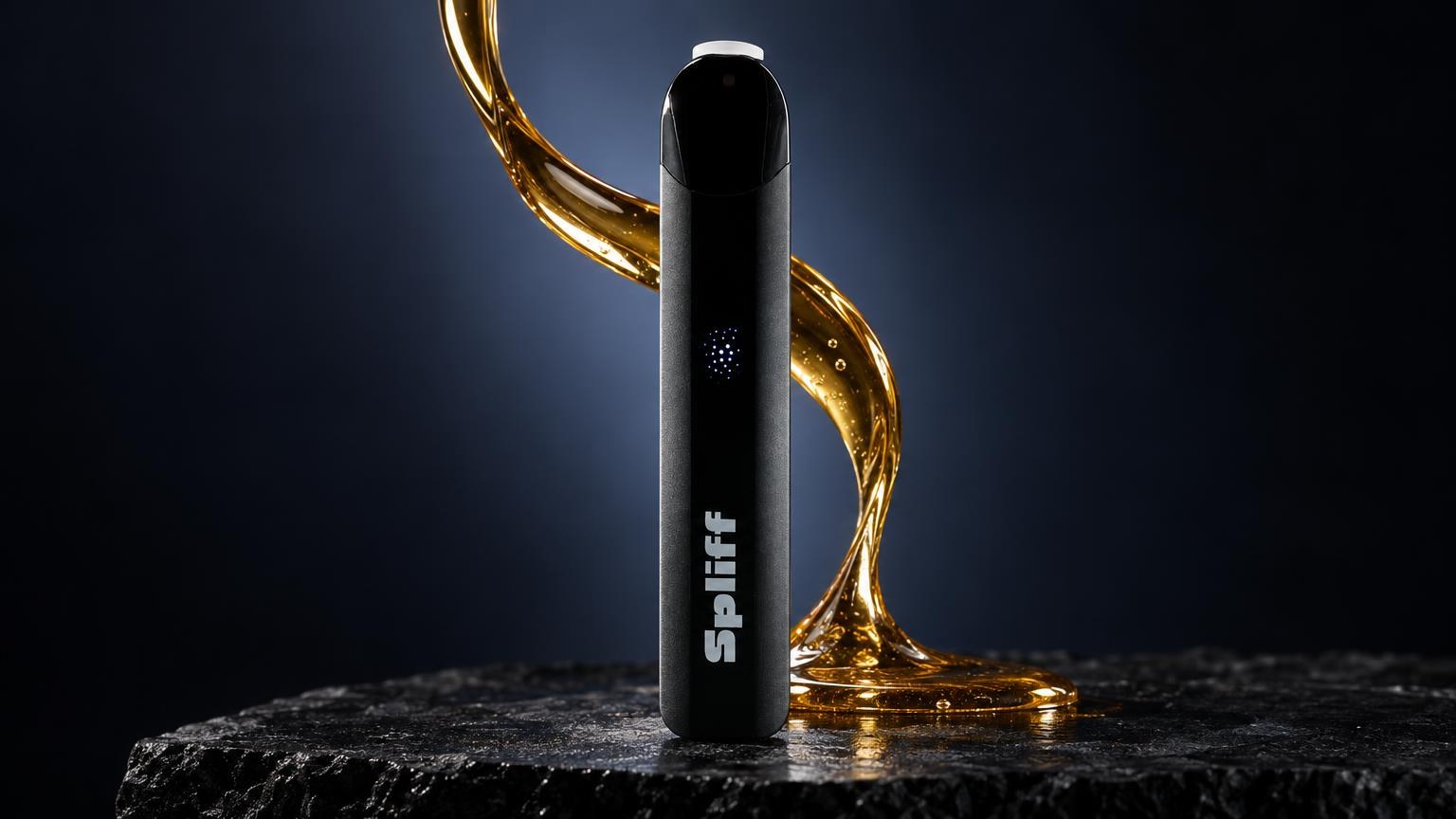
A thc vape is a battery-powered device that heats a cannabis extract into an inhalable aerosol rather than burning plant matter. The curve is fast: first signals within roughly 30 seconds to 2 minutes, a peak around 15 to 30 minutes, and a return towards baseline within 2 to 3 hours depending on dose, extract strength and tolerance. For inhaled cannabis in general (not vaping specifically) that is the curve reported in Grotenhermen’s 2003 pharmacokinetics review.
In practice the thc vape pens sold online fall into two families: a disposable thc vape that arrives pre filled and gets binned when empty, and refillable pens that take 510 cartridges or pods. The extracts inside range from delta 9 THC distillate to THCA-labelled resin, and the strains named on the box are a marketing choice, not a lab result.
That speed is the whole point, and it’s also the whole problem. With an edible you can misjudge the dose and only clock it 30 to 90 minutes later. With a vape, three extra pulls have already landed before your brain has finished registering the second one.
| Format | Onset | Dose control | Smell |
|---|---|---|---|
| Vape | 30 s, 2 min | Puff by puff, but easy to overshoot | Faint, fades fast |
| Weed spliff | 1–5 min | Fixed by how it’s rolled | Loud, clings to everything |
| Edibles | 30–90 min | Precise on paper, brutal if rushed | None |
| Traditional hash (piatella, beldia) | 1–5 min | Depends entirely on the crumb | Heavy, distinctive |
None of this is uniform, and anyone telling you otherwise is guessing. Bodyweight, tolerance, an empty stomach and the terpene profile of the extract all shift the outcome. Two devices sold as the same product can hit completely differently.
The unwanted stuff deserves naming plainly, no soft-pedalling: dry mouth, racing heart, disorientation, and a rising wave of anxiety that plenty of people never see coming.
Many people who are perfectly comfortable with a spliff treat a pen like it’s the gentler option.
The essentials in 30 seconds
A THC vape heats cannabis extract into an inhalable aerosol with a fast onset-peak-fade curve, and that speed plus the hardware itself carry their own risks.
- Fast onset makes overshooting your dose easy.
- Cheap hardware components carry documented risks of their own.
- Your alternative: CBD vapes and hemp flower.
What a THC Vape Actually Does to You, Onset, Peak and Comedown
With a vape, the feedback loop is brutally quick. You find out you’ve gone too far while the aerosol is still in your lungs, not an hour later over a cup of tea. There’s no walking it back once it’s in.
And the hardware part? Nobody thinks about it. Coils, wicks and solder sit in direct contact with hot oil, and metals leaching from cheap components into the aerosol is a recognised concern with unregulated hardware, it is exactly what the heavy-metals line on a proper batch lab report exists to rule out. Not the oil. The thing holding it.
A typical scenario: someone borrows a mate’s pen, takes three big pulls because it tasted of absolutely nothing, and is sat down on the grass ten minutes later.
Inside the Device: Carts, Disposables and Why 70% THC Is a Lot
So what’s actually going on inside the thing you’re pulling on? Three bits do most of the work: a battery, a coil, and the cartridge holding the extract.
- 510 cartridge : a threaded tank you screw onto a reusable battery, often with adjustable voltage.
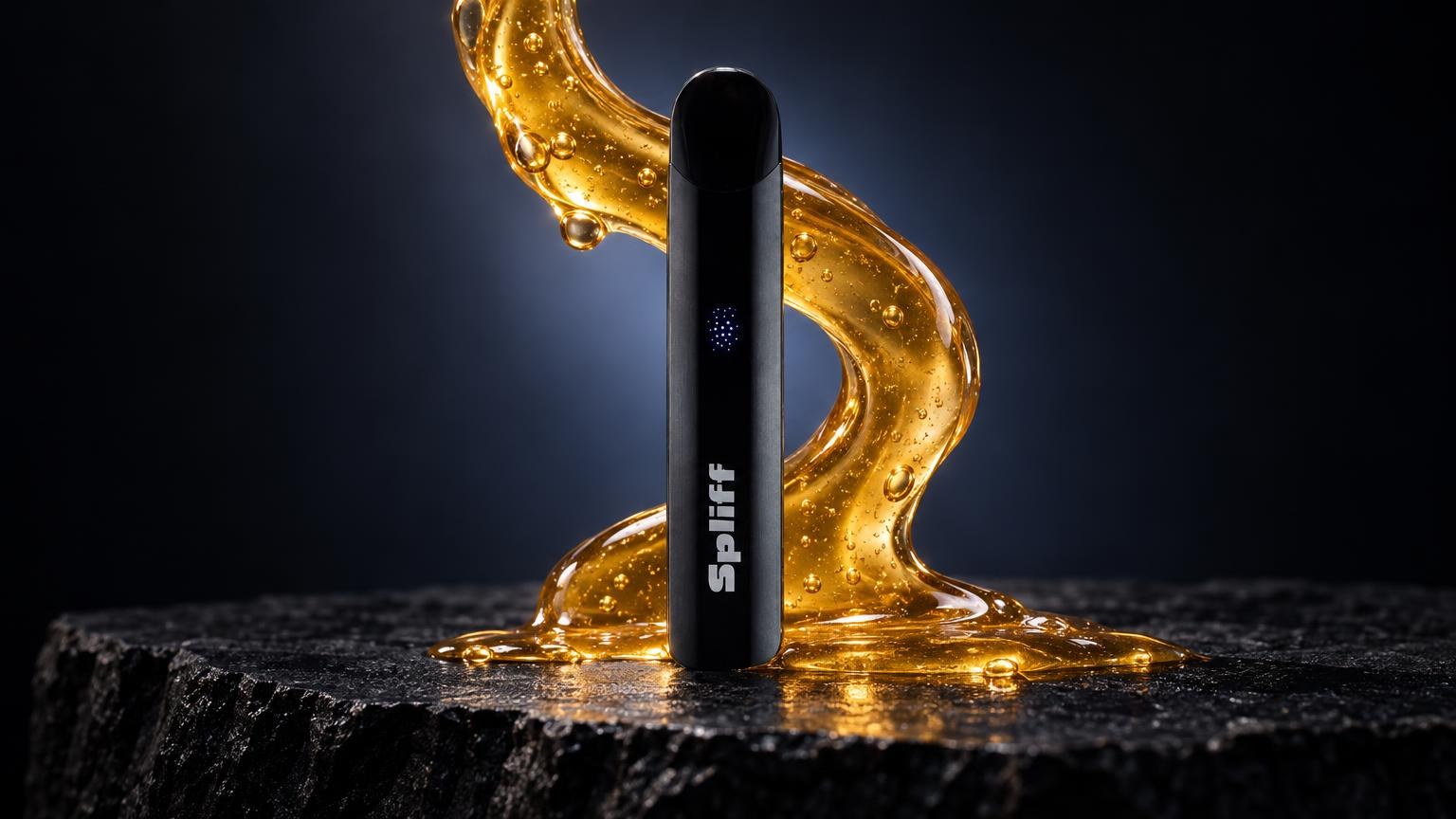
- Disposable : battery, coil and oil sealed as one unit, sold pre filled and binned when it’s empty.
- Pod : a proprietary clip-in cartridge that only fits its own device.
The coil matters way more than people give it credit for. Ceramic tends to heat the oil evenly at lower temperatures, while older fibre wicks scorch faster and shift the taste. Same liquid, hotter battery, denser aerosol: the hardware changes the hit as much as the extract does.
Right, now the number on the box. Distillate is typically marketed at roughly 80–90 % THC with almost no terpenes left, live resin usually lower at around 60–75 % because it keeps more of the plant’s aromatic fraction, and full-spectrum holds the widest cannabinoid profile. For calibration: in the JAMA Psychiatry naturalistic study, dispensary concentrates ran 70 % and 90 % THC, versus 16 % and 24 % for flower.
Read those brackets as marketing ranges, not lab facts. They come from grey-market packaging and seller listings, and I’ve yet to see one of them backed by a named, accredited laboratory. No source, no audit, no accountability.
And yes, 70 % is a lot. As an order of magnitude, that’s several times the strength of strong flower. The per-puff dose people quote (somewhere under a milligram) also traces back to sellers, not to any published testing we could point you to.
The one number in this section that is properly sourced comes from a human trial. According to Johns Hopkins Medicine (2018), infrequent users given 25 mg of THC reported anxiety and paranoia scores around 7 % higher on average when they vaped it than when they smoked it. Real people, same molecule, different delivery.
Dosage: How to Read a Puff Instead of Guessing
Knowing what’s sitting in the tank is one thing. Metering it out is something else entirely, and let’s be honest: “a puff” is a rubbish unit of measurement.
The rule worth using is one puff, wait ten. One short pull, ten minutes on the clock, then you decide whether you want more.
Do the maths once and you’ll never guess again. A 0,5 ml cart at 80 % holds roughly 400 mg of THC in total; divide that by the puff count the brand claims and you’ve got a rough mg per puff, and unlike nicotine vapes, puffs don’t map to cigarettes.
Then remember a 3-second pull isn’t one dose, it’s closer to three: pull length shifts how much THC you actually absorb. For inhaled cannabis, Grotenhermen’s 2003 pharmacokinetics review reports bioavailability ranging from roughly 2 % to 56 %, driven largely by how people puff. That’s the bit most people skip.
Context shifts the outcome too. The same cart on a Tuesday sofa and at 11pm at a festival, on no dinner, after a couple of drinks, is not the same afternoon.
Tolerance drifts both ways. Take a fortnight off and your old dose lands properly hard, which is exactly the kind of gap the Johns Hopkins figures mentioned earlier make obvious.
So if you’re still finding your footing, start at the low end of whatever you’ve got and keep a note on your phone: strength, seconds, how you felt at the ten-minute mark. Three sessions of that beats three months of guessing.
The Legal Reality in Europe (as of 5 October 2026)
Which brings us to the bit most articles on this subject either skip entirely or get flat-out wrong, mostly because they were written in Colorado. Here is where things stand on 5 October 2026 in the four countries this guide covers, each with the text that sets the rule.
The common ground first. Cannabis, cannabis resin and cannabis extracts and tinctures sit in Schedule I of the UN Single Convention on Narcotic Drugs of 1961; in December 2020 the UN Commission on Narcotic Drugs removed cannabis from Schedule IV but kept it in Schedule I[9]. A THC vape cartridge holds a concentrated extract, so it is not a hemp product. And the EU’s 0.3% THC figure for hemp is a farm-subsidy rule: under Regulation (EU) 2021/2115, hemp land only counts for CAP payments if the varieties grown stay at or below 0.3% THC[10]. It says nothing about selling THC.
| Country | What the law says (5 October 2026) | What it means for a THC cart |
|---|---|---|
| Germany | Since 1 April 2024, the Consumer Cannabis Act (KCanG, part of the Cannabis Act of 27 March 2024) lets adults carry up to 25 g of cannabis and keep up to 50 g and three plants at home; its definition of cannabis covers preparations made from the plant[11] | No shop, no delivery: extraction, trade, import, shipping and delivery are prohibited, and cultivation associations may only hand out marijuana or hashish in pure form[11] |
| Netherlands | THC and cannabis oil (hennepolie) are on List I of the Opium Act; cannabis and hashish are on List II[12] | Coffee shops are tolerated for List II products only, under the Public Prosecution Service’s Opium Act Directive, which expressly excludes courier and mail-order sales[13] |
| Belgium | The Royal Decree of 6 September 2017 on narcotic and psychotropic substances prohibits growing cannabis outside the EU’s CAP conditions[14]; the hemp THC limit has been 0.3% since 1 June 2024[15] | The hemp exception is tied to that 0.3% limit; a THC cart, at 70% or more, is nowhere near it |
| Austria | Cannabis, cannabis resin and the extracts and preparations made from them are narcotics under the Narcotics Ordinance (SV); hemp is exempt only if it stays at or below 0.3% THC before, during and after processing[16] | A THC extract falls under the same annex as cannabis itself |
Which is why the whole “discreet online store” question sort of answers itself, doesn’t it? Crypto-only payment, no registered address, shipping from abroad, plain packaging sold to you as a feature, no batch analysis. Those aren’t quirks. That’s the business model of an unregulated seller, and you’re the one carrying the risk.
If what you’re actually after is a wind-down, that’s a different conversation, and it’s the next section.
What You Can Vape Instead, and How Spliff Tests It
So if a thc vape is off the table, what can you actually put in a device without gambling? Two things, broadly: CBD vapes, and hemp flower under 0.3% THC when lab-tested. That’s it. Everything else is someone on the internet asking you to trust them.
And here’s the thing worth being precise about: what you can buy here are cannabinoid products, not THC products. A CBD vape lists CBD as its dominant cannabinoid, sometimes alongside CBG or CBN, and ours come in at 0% THC when lab-tested.
Which is exactly why you need to read a lab report properly, and I mean properly. Line by line, before you add anything to a basket and long before it goes near your lungs. Here’s my checklist:
- Cannabinoid profile: does the CBD figure match the label, not just “contains CBD”?
- Residual THC: quantified, under the applicable limit, not left blank.
- Residual solvents and heavy metals: pass results, ppm shown. Metals matter because the hardware itself, coils and wicks, is a plausible route into the aerosol, which is precisely what a lab report is there to rule out batch by batch.
- Pesticides: screened, with the panel listed.
- Batch number and date: must match the code printed on the box in your hand.
If a brand can’t hand you that document, that’s your answer. At Spliff, every batch, CBD vape or hemp flower, is lab-tested. The lab analysis of each batch is available on request from customer service. The terpene-forward ones taste like the strain on the tin rather than sweetshop syrup.
Pleasant, unremarkable, nothing dramatic: that’s the point with a CBD vape, and it squares with the WHO’s critical review, which found CBD generally well tolerated, with a good safety profile[1].
If you want the longer version of how we test, I’ve broken it down in our guide to reading a CBD lab report.
What does vaping actually cost?
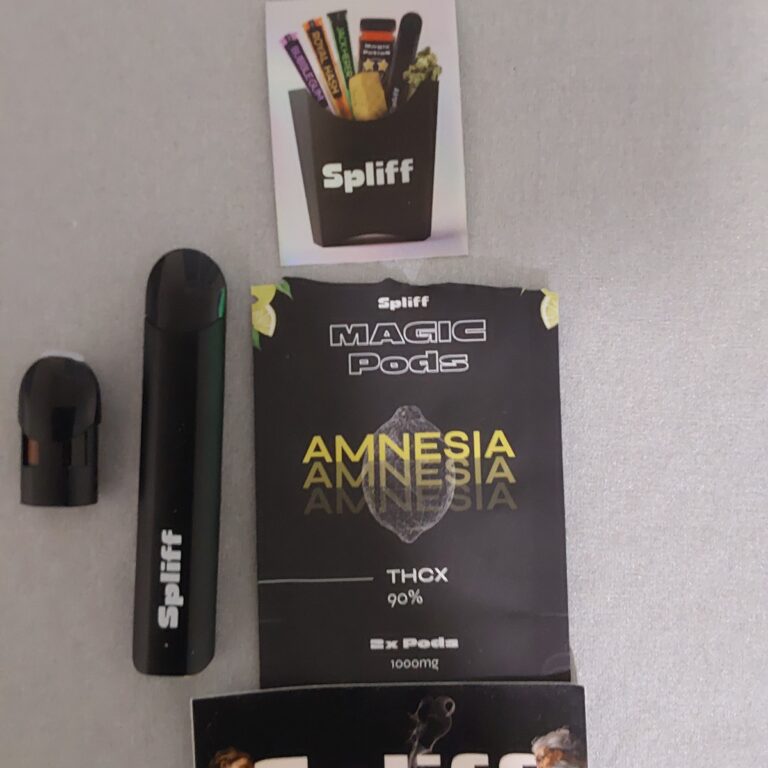
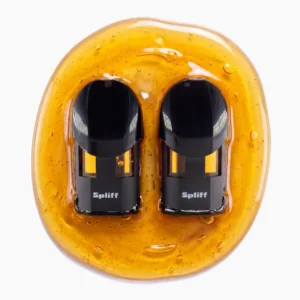
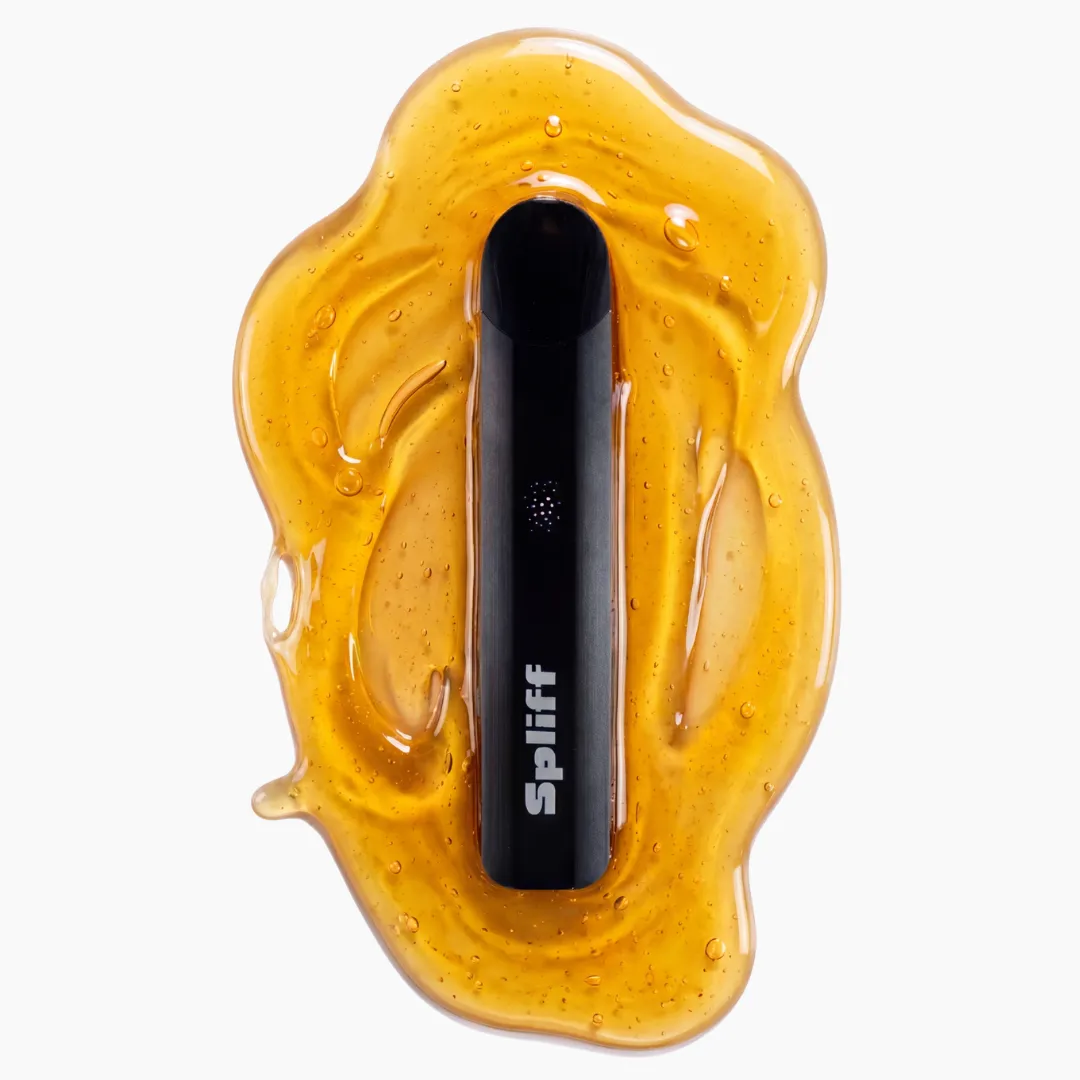
As of August 2026, the regular (non-promotional) prices on our EU store look like this: the Magic Vape pen with its first pod included at €49.90, refill Magic Pods at €79.80 for a pack of two (€39.90 a pod), and the Magic Pod Live Rosin two-pack at €89.90. The pod format is where the cost logic lives: you buy the battery once and replace only the pod, instead of binning battery, coil and tank together with every disposable. Each pod flavour has its own product page with multiple variants, so you select options for strain profile and strength rather than guessing from a quick view thumbnail, and a new pod on sale is still the same tested batch as the one at full price: premium quality here means the lab report, not the packaging.
And what you’re paying for isn’t just the extract. Every batch is lab-tested, and that testing is baked into the price. A cart with no COA is cheaper for a reason: the lab work simply never happened.
Why We Won't Tell You How to Make Vape Juice at Home
That paper trail is also why the next question gets a flat no from me. Two of the biggest searches around thc vape are “how to make thc vape juice” and “how to make thc vape liquid”, and loads of sites happily monetise them. I’m not going to. Zero steps, zero ratios, zero kit.
And here’s why, because a refusal without a reason is just posturing.
- The physical risk. Volatile solvent extraction at home has caused documented fires and explosions, and you simply cannot purge what’s left behind without proper lab equipment.
- The respiratory risk. Thickening and cutting agents are exactly the untested, home-blended end of the market that caused the outbreak flagged earlier, not the regulated one.
- The dose risk. With no batch analysis, there’s no honest mg per puff figure, which makes the one puff, wait ten method useless. You’d be metering out a liquid whose strength nobody has ever measured.
I’d rather lose the click than hand you a recipe that could land you in an emergency room. If you want the vape experience without the guesswork, stick to something with a batch number on it, like our lab-tested CBD vape range, where the strength is measured before it ever reaches your lungs.
So What Should You Actually Do? Two Reader Profiles
Right, enough about what CBD vapes aren’t. You came here with a situation, so let’s land on yours.
The curious one. What you’re actually after is the ritual and the discretion. A CBD vape hands you the hardware, the draw and the flavour. A CBD vape won’t give you the head-change a thc vape does, and anyone telling you otherwise is selling you something.
The spliff or hash smoker leaving combustion behind. You already know the draw you like, so this is really about swapping the delivery, not the habit. Spliff’s vapes are built for exactly that swap: every batch is lab-tested, and on the product page you select options across multiple variants for flavour and strength. If you’d rather stay closer to what you used to roll, our hemp flower covers you.
My own position, plainly: I wouldn’t touch an untested cart. 🙂
Conclusion
So that is where I land, and I would rather say it plainly than hide behind the reporting.
I am not anti-THC. I am not going to pretend a thc vape does nothing for the people who reach for one.
What I am against is a product category where the number on the box, the oil in the tank and the metal in the coil are all unverifiable.
That is a bad bet, and you are placing it with your lungs. 🙂
Here is the bit I keep coming back to: the honest products are the boring ones. The ones that hand you a batch number, a lab report and a date, and let you do the maths yourself.
If you are already on medication, managing a health condition, or just unsure how any cannabinoid product fits your situation, have a word with a pharmacist or your GP before you inhale anything. Two minutes of proper advice beats any blog post, mine very much included.
And if what you actually wanted from all this was something calm and tested, that is a different conversation: start with anything backed by a lab report you can genuinely read, because that transparency is the whole point of everything I have just written.
Look after yourself out there. Sophie.
Frequently asked questions
Can you buy a THC vape in Europe?
Not through a legal shop in Germany, the Netherlands or Austria, as of 5 October 2026. Germany’s Consumer Cannabis Act prohibits the trade, import, shipping and delivery of cannabis, preparations included[11]. In the Netherlands, THC and cannabis oil are on List I of the Opium Act, and the coffee-shop tolerance covers neither them nor courier or mail-order sales[12][13]. Austria classifies cannabis extracts as narcotics[16], and Belgium’s hemp limit is 0.3% THC[15], far below any THC cart.
Is a 70% THC vape strong?
Yes, dispensary concentrates in the JAMA Psychiatry study ran 70–90 % THC versus 16–24 % for strong flower; the full breakdown lives in “Inside the Device” above.
What is a THC vape?
A THC vape is a battery-powered device that heats cannabis extract into an inhalable aerosol instead of burning flower.
Are THC vapes legal?
Not as a retail product in Germany, the Netherlands or Austria, as of 5 October 2026. Germany has allowed adults to possess limited amounts of cannabis since 1 April 2024 but prohibits its trade, extraction and delivery[11]; the Netherlands lists THC and cannabis oil on List I of the Opium Act[12]; Austria classifies cannabis extracts as narcotics[16]. In Belgium, the hemp THC limit is 0.3%[15], far below any THC cart. Cannabis extracts also sit in Schedule I of the UN Single Convention of 1961[9].
How to make THC vape juice?
Don’t: it carries real physical risk, from fire hazards to unverified additives with no way to check dosage.
Is 20% THC strong?
For flower, yes: 16–24 % is the strong-flower bracket logged in the JAMA Psychiatry study, so 20 % sits firmly at the potent end. A distillate cartridge is another scale entirely, the same study logged concentrates at 70–90 %.
How long does a THC vape cartridge last?
It depends on pod size and pace: as a concrete reference, the 1 000 mg pods on our own Magic Vape range are rated for about 600 puffs. At a light 4–6 puffs an evening, one pod covers months rather than weeks.
Sources
- Cannabidiol (CBD) critical review report — WHO Expert Committee on Drug Dependence — www.who.int
- Cannabis — World Health Organization — www.who.int
- Epidyolex (cannabidiol) — European Medicines Agency, EPAR — www.ema.europa.eu
- Grotenhermen F. (2003), Pharmacokinetics and pharmacodynamics of cannabinoids — PubMed — pubmed.ncbi.nlm.nih.gov
- Bidwell LC et al. (2020), naturalistic study of cannabis flower and concentrates — JAMA Psychiatry, PubMed — pubmed.ncbi.nlm.nih.gov
- Vaping cannabis produces stronger effects than smoking for infrequent users — Johns Hopkins Medicine (2018) — www.hopkinsmedicine.org
- Outbreak of lung injury (EVALI) associated with e-cigarette use — US CDC — archive.cdc.gov
- Chaiton M et al. (2026), review on cannabis vaping — PubMed — pubmed.ncbi.nlm.nih.gov
- UN Commission on Narcotic Drugs, 2 December 2020: cannabis removed from Schedule IV, kept in Schedule I of the Single Convention of 1961 — UNODC — www.unodc.org
- Regulation (EU) 2021/2115 of 2 December 2021, Article 4(4): hemp eligible only if the varieties used do not exceed 0.3% THC — EUR-Lex — eur-lex.europa.eu
- Konsumcannabisgesetz (KCanG), Article 1 of the Cannabisgesetz of 27 March 2024 (BGBl. 2024 I Nr. 109), in force since 1 April 2024: §§ 1, 2, 3, 19 — www.gesetze-im-internet.de
- Opiumwet (Dutch Opium Act), Lists I and II, version in force since 17 September 2026 — wetten.overheid.nl — wetten.overheid.nl
- Aanwijzing Opiumwet (Opium Act Directive, 2015A003, in force since 1 March 2015): coffee-shop tolerance criteria — wetten.overheid.nl — wetten.overheid.nl
- Belgium, Royal Decree of 6 September 2017 regulating narcotic and psychotropic substances (Belgian Official Gazette, 26 September 2017) — Justel — www.ejustice.just.fgov.be
- Belgium, Royal Decree of 24 April 2024 (in force 1 June 2024): hemp THC limit raised from 0.2% to 0.3% — Justel — www.ejustice.just.fgov.be
- Austria, Suchtgiftverordnung (Narcotics Ordinance, BGBl. II Nr. 374/1997 as amended), Annex I.1.a — RIS — www.ris.bka.gv.at