 Written by Sarah Mitchell
 Contents9 sections
- What a moon rock actually is
- How moon rocks are made, and why we do not tell you to do it at home
- Why a moon rock is not a stronger flower
- Handling, storing and not wasting it
- Spliff moon rocks, September 2026: the three we actually stock
- Moon rock or hash: which one are you actually looking for?
- The short version before you buy
- Conclusion
- Frequently asked questions
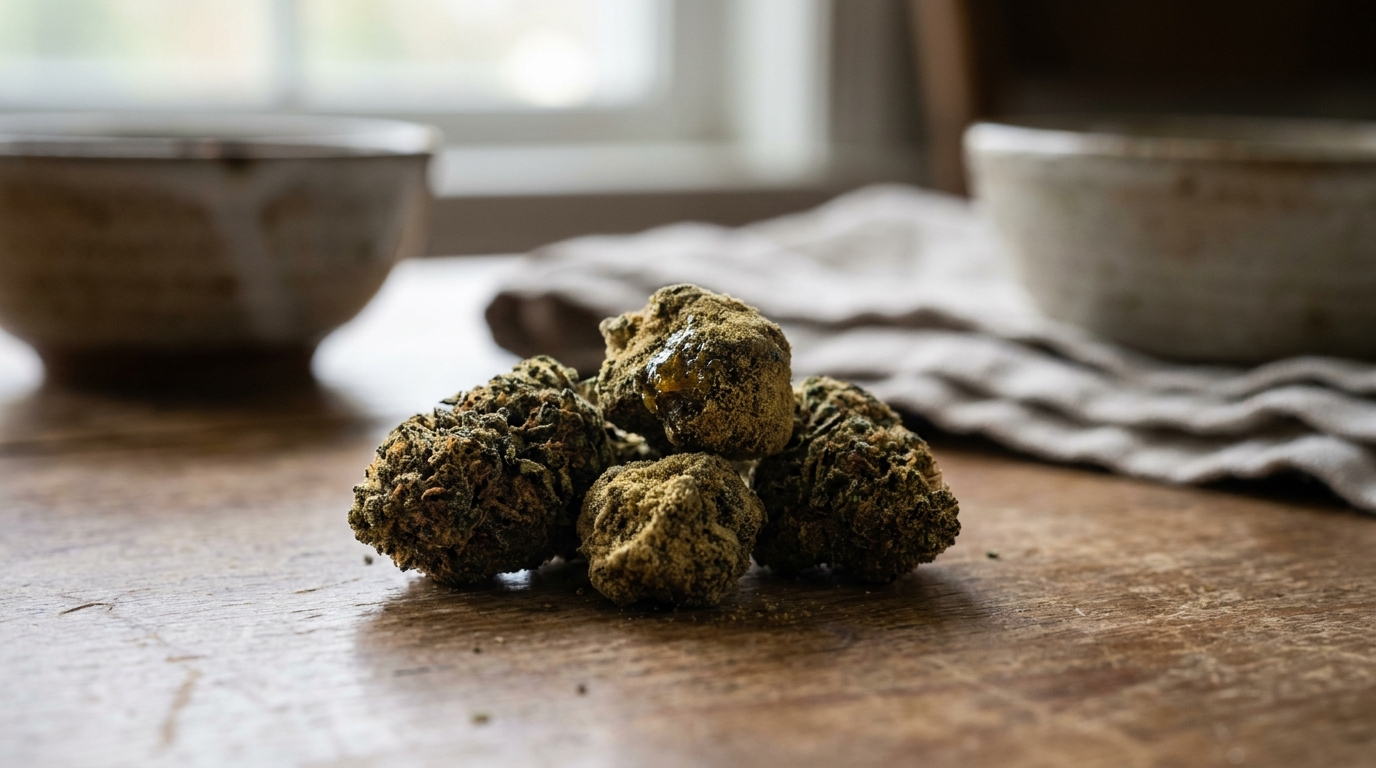
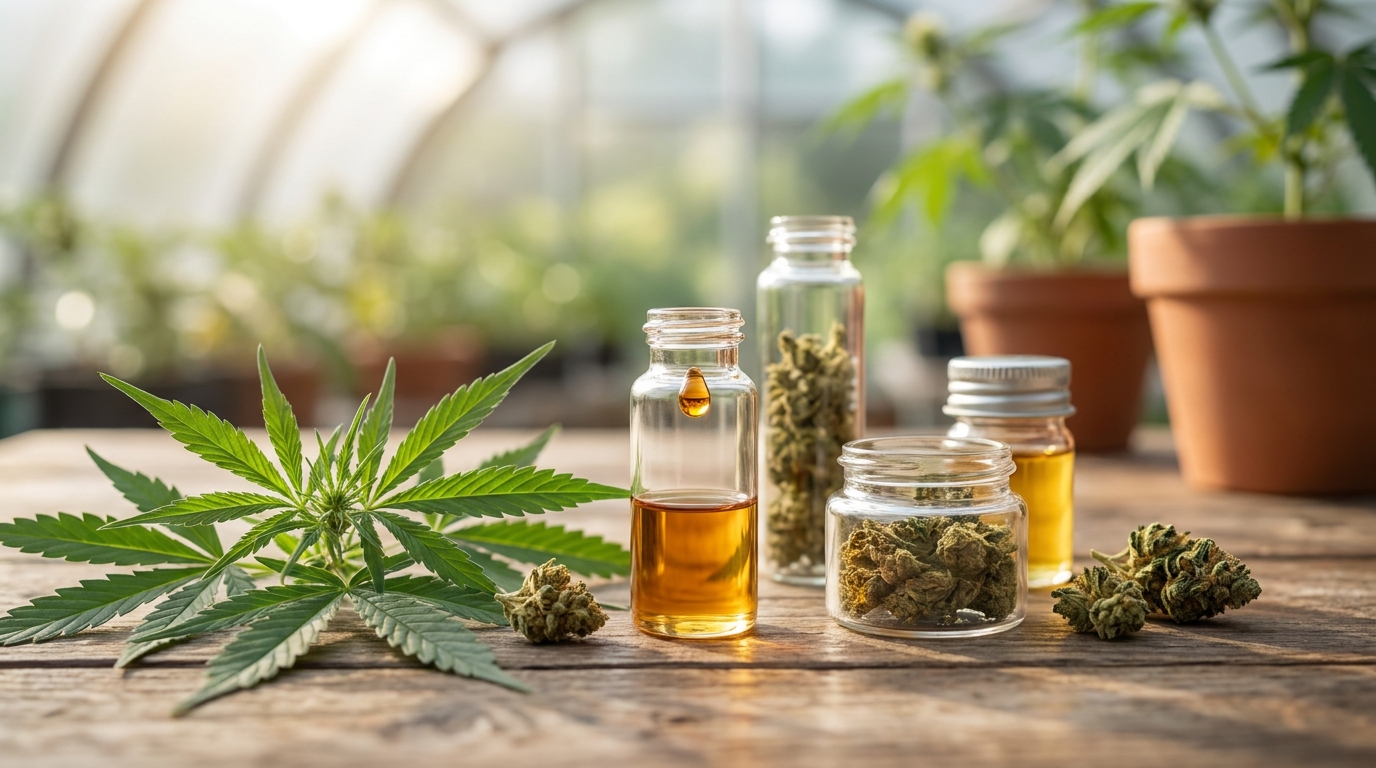
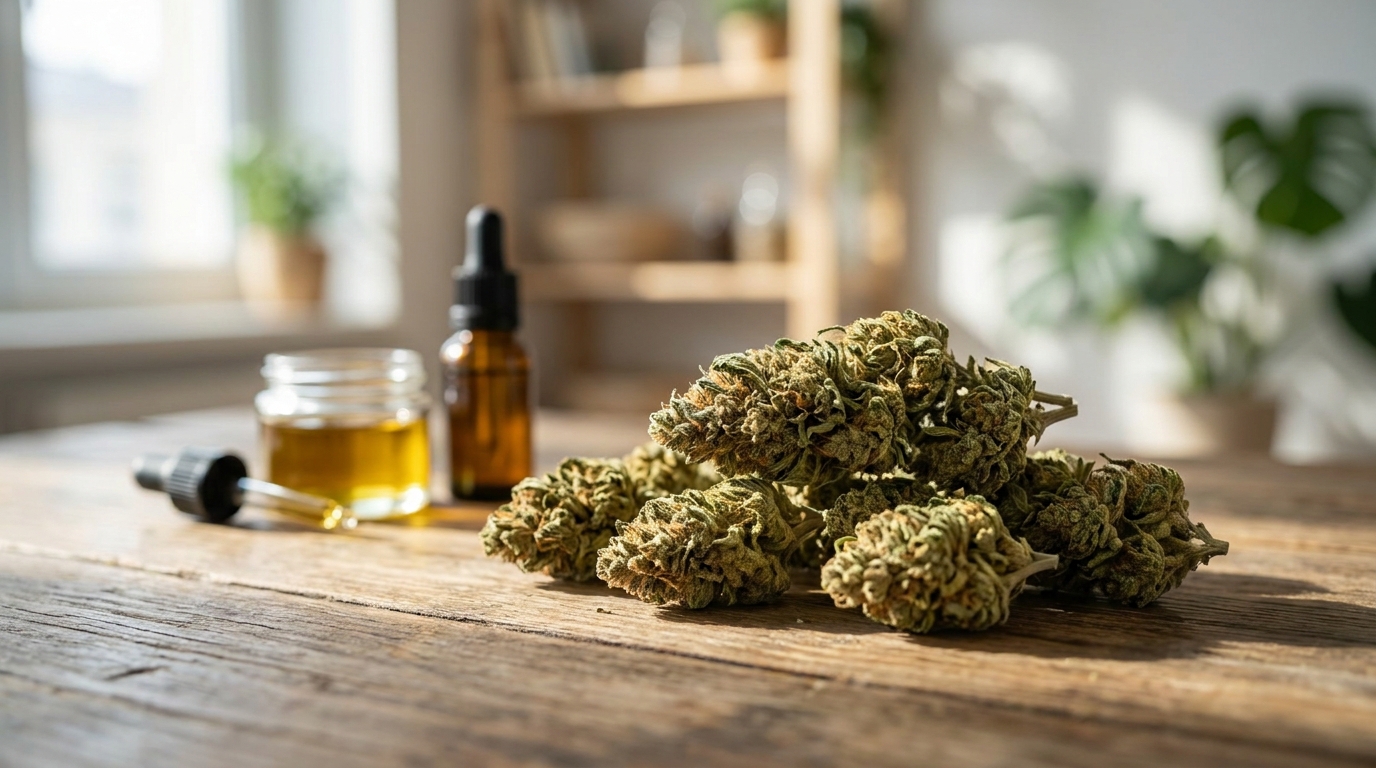
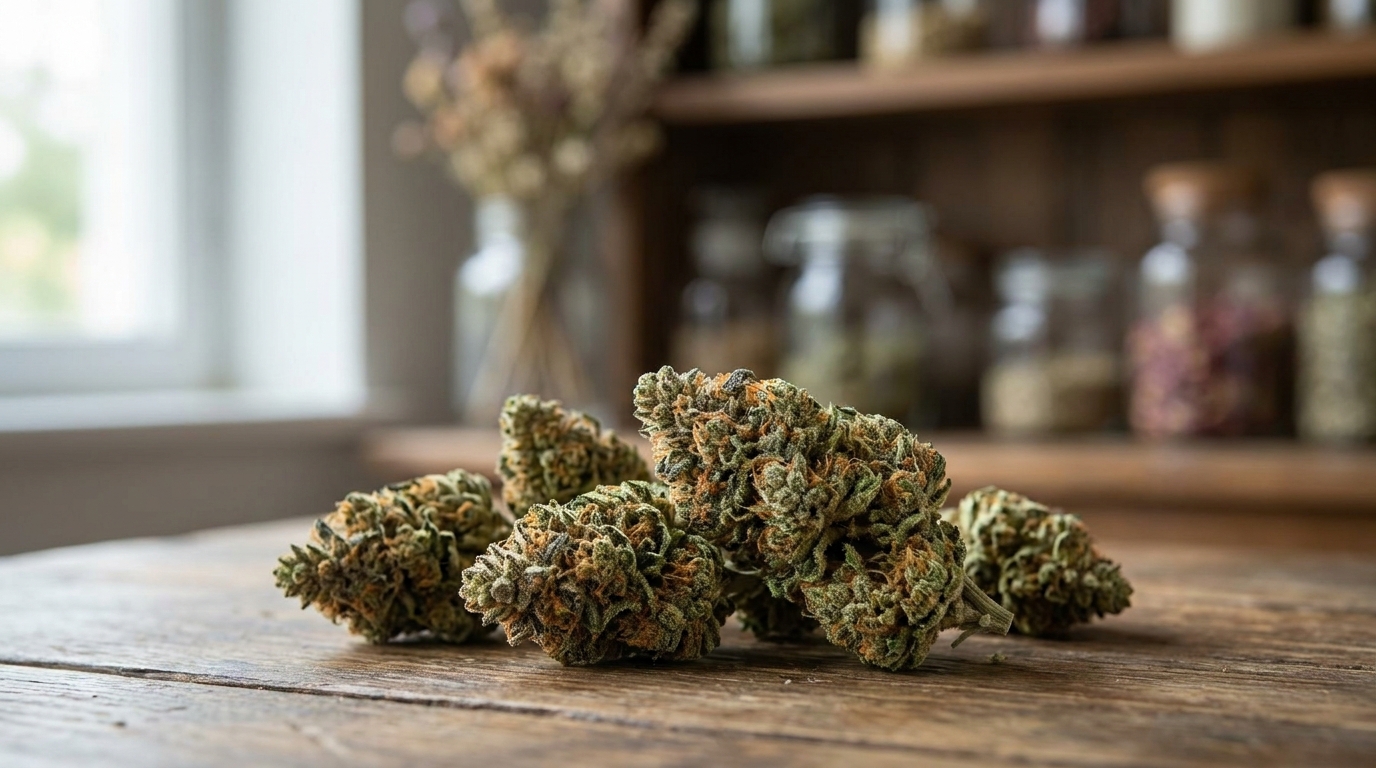
Moon rock weed is a cannabis product, not a lunar sample: a whole flower bud coated in an extract, then rolled in kief, so three layers of the same plant assembled by hand. It is dense, very sticky, and it burns slowly. Adults only.
That three-layer description is not a Spliff invention. Leafly’s cannabis glossary defines moon rocks the same way, as a flower nug covered in liquid concentrate and dusted with kief, and it is the definition I work from here.[1]
The composition makes far more sense as a stack than as a recipe. Each layer comes from the same plant material, processed differently, and each one performs a specific function in the finished lump; the next section takes them one at a time. For what resin actually is and how it differs from flower, we cover that separately in our hash versus weed guide.
The name gets two explanations: the pitted, powdered surface that reads like a small grey-green pebble, or the product’s marketing reputation, which is the reading the same glossary favours.[1] Neither tells you what a given piece contains.
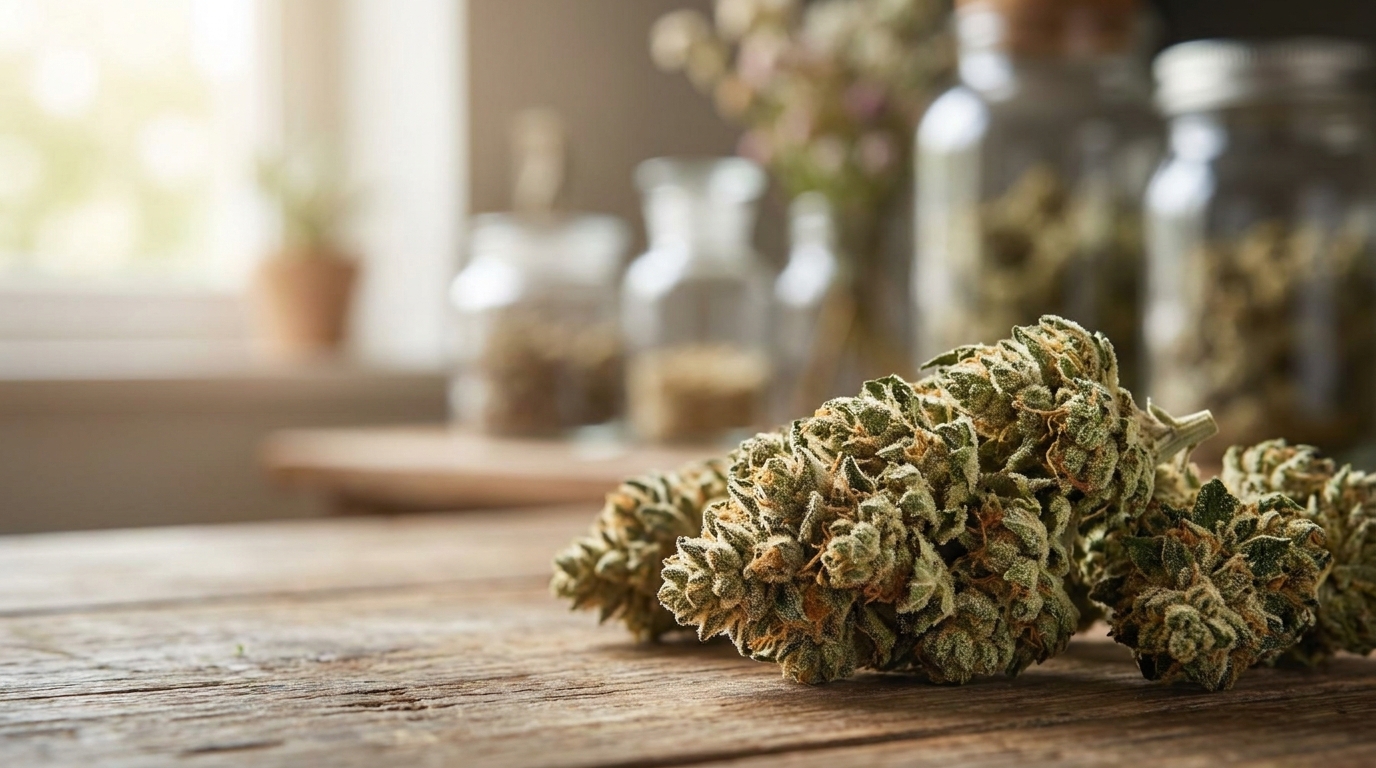
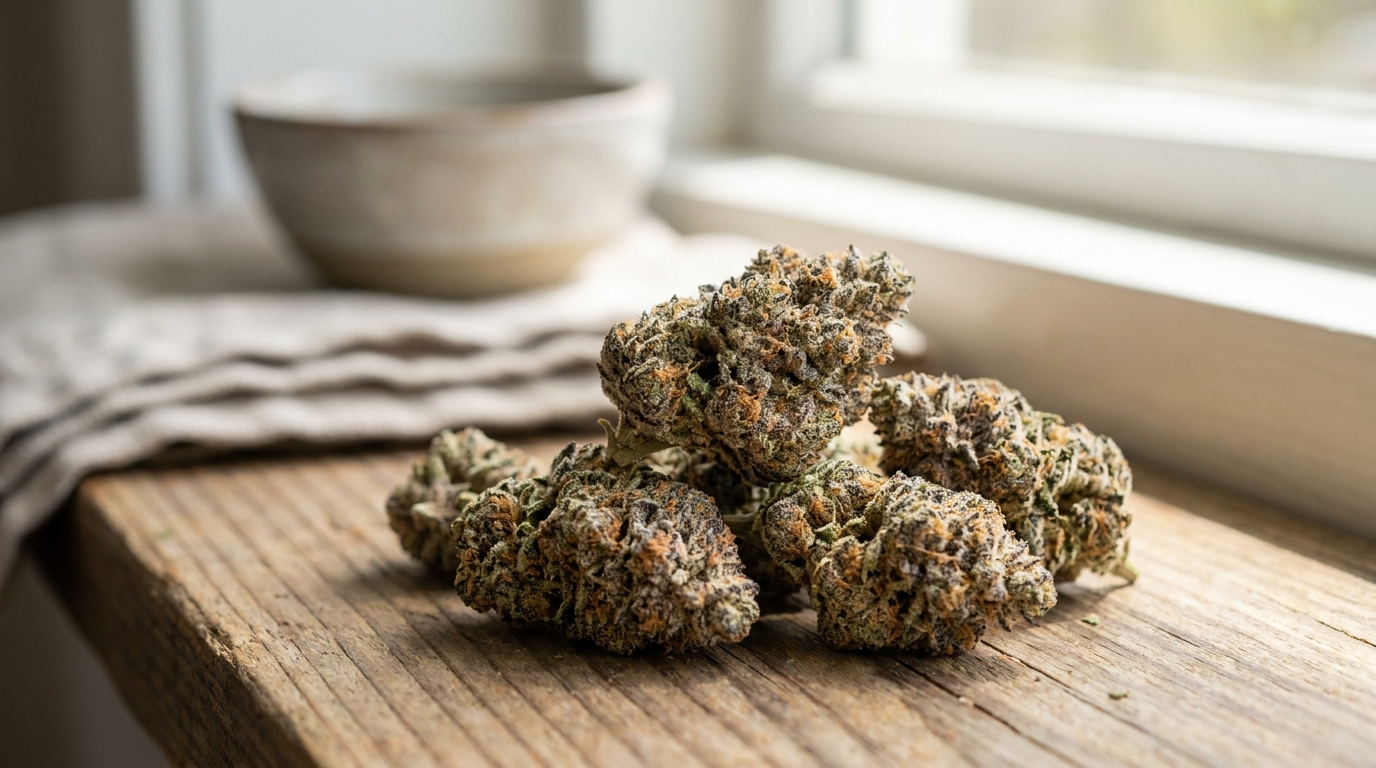
Pick one up and the difference registers in your fingers before anything else. Noticeably denser, grippier, and it leaves a resinous residue on your fingertips that a bare bud of the same size never would.
You will see a lot of “high THC” marketing attached to these. Pages calling moon rocks extremely potent, or extremely loaded with THC, quote big round numbers; even Leafly’s glossary gives an average “more than 50%” without saying which measurements it comes from.[1] I will not repeat those figures as fact. If a page promises you a specific result without a lab document behind it, treat the figure as copy, not data.
Most cannabis users I talk to expect a moon rock to behave like flower once it is lit. It does not. What actually changes is density and combustion behaviour, not superlatives, and that is all this guide sticks to.
The essentials in 30 seconds
Moon rock weed is a hand-assembled cannabis product built from three layers of the same plant: a whole flower bud, a hash oil coating, and a kief dusting. People use moon rocks or smoke moon rocks for slow, unhurried sessions rather than everyday rotation, since the composite structure resists easy subdivision.
- The core is an intact cured bud dipped in hash oil, then rolled in kief until fully coated: an assembly, not a cultivar.
- Break it by hand or with scissors rather than a grinder, and keep it sealed, dark and cool.
- We describe how it is made without publishing a home method, and list the three references we stock with their public prices.
What a moon rock actually is
Building it layer by layer explains why each material behaves the way it does once assembled.
The core is an intact cured flower, selected for firmness and geometry rather than sheer size. Not trim, not milled flower, not a pressed pellet: a complete calyx structure that holds its knobbly silhouette under everything applied on top. I have yet to see two pieces come out identical, and that is a property of hand assembly, not a flaw.
Around that core sits a cannabis extract, an oil or a resin, warmed only enough to become workable. Its role is mechanical: it flows into the hollows between calyxes and leaves the surface tacky. Stickiness is not a side effect of that layer, it is its entire function. A bud dipped in hash oil stops behaving like flower and starts behaving like an adhesive substrate.
The outer coat is kief, the pale powder of trichome heads sieved from dried flower. Cannabinoids, together with terpenes, are produced in the plant’s glandular trichomes, as Livingston and colleagues describe in The Plant Journal.[2] That is why kief looks, flows and burns nothing like ground bud.
The format changes the assembly, not the botany. Every layer is still material from the same plant, simply handled three different ways.
How moon rocks are made, and why we do not tell you to do it at home
Knowing what the three layers are is one thing. Knowing how they get welded into a single mass is another, and it is the question most people actually type into a search bar.
The assembly is short, entirely manual, and honestly low-tech. A cured bud is held steady, a cannabis extract is brought to a workable viscosity and laid over the surface, then the tacky bud is rolled through kief until the coat closes all the way round. That is the same sequence the glossary definition describes: flower, concentrate, kief.[1]
Then comes drying time. The piece has to firm up before anyone can handle it, weigh it or pack it without deforming the coating.
That is the full description you will get from me. No quantities, no temperatures, no solvents, no equipment, no numbered steps. We do not publish a method for making marijuana moon rocks, and my reasoning here is analytical rather than moral.
- A homemade extract is an unknown quantity. Nothing about its cannabinoid or terpene composition has been measured, so the coating you apply is a blank in the record.
- Warming an extract by hand is the step people underestimate. It is sticky, it is hot, and it does not behave anything like flower.
- The finished piece loses every reference point. Once three uncharacterised layers are fused, nobody can state what is in the gram sitting in front of them. In that case, every later claim about it is guesswork.
The useful question to put to any seller is therefore simple: which extract coated the bud, and where did the kief come from? A seller who cannot answer is selling you the same blind spot.
Layered products like moon rocks only mean something when every component has been characterised first. What we stock is assembled from material analysed batch by batch, and I list the exact references further down in Spliff moon rocks, September 2026.
Why a moon rock is not a stronger flower
A moon rock is not stronger flower, it is a composite: a bud coated in extract and rolled in kief, three separate materials pressed into one object. The “stronger flower” idea follows this format everywhere, and it collapses for structural reasons before you even reach the chemistry.
Start with what the object is. There is no cultivar behind an assembly, no genetic line expressing a particular terpene profile, so looking for indica or sativa family logic in a hand built lump tells you nothing about what you are holding (strain families are a separate subject, covered in our guide on plant families).
What genuinely changes is the material mix. The EUDA’s European Drug Report 2024 puts the average THC content of seized herbal cannabis in the EU at 10.1% in 2022, against 24.8% for resin.[3] Moon rocks are not part of those statistics, but the gap shows that concentrated material sits in a different range from flower, so coating a bud changes what a gram is made of rather than making the flower itself stronger.
That extra mass does not behave like a loose nugget in the bowl. In my experience the coated surface resists the flame instead of catching instantly, and combustion runs slow and uneven as a result, which is precisely the practical constraint our hash smoking guide walks through in detail.
The only real risk with this format is a handling one: waste. Torn pieces shed kief, warm fingers transfer resin onto every surface they touch, and anything you crush is gone for good.
Even a seasoned consumer treats the object differently for that reason. Smaller fragments, a slower pace, and no assumption that it behaves like the flower sitting next to it in the jar.
Handling, storing and not wasting it
So what happens between opening the jar and loading the bowl? That gap is where most of your material quietly disappears.
Handle it cold and dry. Body heat is enough to soften the extract layer on the outside of the piece, so warm fingertips turn it tacky and transfer it straight onto your hands, the table and the inside of the lid. Hold the piece briefly, work fast, or skip fingers entirely and use scissors.
Storage is non negotiable: airtight, out of light, away from any heat source. A four-year forensic study of hashish and herbal cannabis samples found THC steadily degrading into CBN when kept at room temperature, whether lit or dark, with light changing both the speed and the balance of that conversion; refrigerated and frozen samples were the ones that held up.[4]
Give it its own container rather than letting it sit loose in your stash. That resin layer bonds to flower, to papers and to anything else it touches.
The powder collecting at the bottom is not waste, it is the most trichome-dense fraction you own. Tip it back onto the piece before you load it and you recover most of what fell off.
Using a vaporiser? Use a concentrate insert or pad, and very small fragments only. Loaded loose into a dry herb chamber, the extract melts and glues itself to the screen. The combustion gestures themselves sit in our guide to smoking hash and are not worth repeating here.
None of this changes with the version in front of you. CBD and CBN builds are just as tacky as any other, and a headline concentration on a label tells you nothing about how a lump survives a week in a drawer.
Spliff moon rocks, September 2026: the three we actually stock
Spliff moon rocks are three catalogued references, priced between 20,40 € and 29,70 € as of our 10/09/2026 stock pull. That is the number most pages on this format quietly avoid giving you.
I queried our own Store API on 10/09/2026 to see exactly what was available and at what price. Three references came back. None of them carried a promotion that day, so every figure below is a regular price rather than a discounted one.
| Product | What is on it | Regular price |
|---|---|---|
| Moon Rock 90 | Flower, extract, kief | 20,40 € |
| Moon Rock THCX | The THCX range version | 29,70 € |
| Moon Rock 80 CBN | The CBN version | 21,30 € |
What changes between them is the material used at the coating stages, not the structure of the object itself.
One clarification, and I will make it once. The Moon Rock THCX belongs to our THCX range. THCX is a trade name, not a molecule: every batch is lab-tested for classified molecules and none are detected. We do not describe a formula, and a batch analysis is available on request from our customer service.
No dispensary trip involved: these cannabis moon rocks are ordered online and shipped, so the practical variables are stock and the weight per listing, not opening hours. The naming logic behind the range has its own page, our THCX explainer.
Moon rock or hash: which one are you actually looking for?
Pick a moon rock for an occasion, hash for routine. A moon rock is dense, slow and awkward to divide into small amounts, so it suits a session you have already decided to take your time over. Pressed or sieved hash portions finely, shares easily and is ready in seconds, which makes it the everyday format.
So the real question is not which format wins on paper. It is what the next hour of your evening actually looks like.
A moon rock binds three separate materials into one piece, and that structure resists subdivision, which is exactly why moon rock weed performs best when you are settled in and not watching the clock.
Break a piece off and you have committed to it. On a slow Sunday evening that is a feature. On a Tuesday between two obligations, it is a nuisance.
Hash behaves in the opposite way. A pressed or sieved slab scales down to whatever mass you want, it travels without welding itself to the lining of your pocket, and it passes round a group cleanly.
Our comparison of flower and resin covers what physically separates the two materials, the sieved side has its own dedicated guide, and the smoking gesture is already written up elsewhere. Worth reading before you choose a format.
Here is where I part company with most pages on this topic. They file both products under potent cannabis, quote a high potency figure and stop there, as if the number settled the question.
I compare handling, not effects. Crumble both over a precision scale and the difference is obvious within seconds: hash portions predictably, a moon rock does not. Neither format is a health decision, and I will not present it as one.
If the occasion version is what you came for, Moon Rock 90 is the plainest expression of those three layers.
The short version before you buy
That formula explains every property you will notice: the shape comes from the bud, the tack comes from the resin coat, the dusty surface comes from sieved trichome heads. Learn the three layers and you never need a potency claim to know what is in your fingers.
Every handling rule in this guide follows from that tacky middle layer, which is what makes moon rock weed a slow format rather than a shortcut.
Treat it exactly as you would treat any of our cannabis products. Read the product page before you order, check the stated weight, and check which coating version you are actually buying.
If that slower hour is the one you are planning, the Moon Rock THCX reference is listed on the shop next to the flowers you will want underneath it.
Conclusion
Moon rock, moonrock, marijuana moon rocks: three names, one handmade object, and a vocabulary that’s worth knowing once you’ve seen how the thing is actually built.
That vocabulary makes you harder to sell to. Instead of chasing a number on a jar, you start asking which concentrate coated the bud and which kief was dusted over it.
The same three questions work on any layered or infused product: what is the base, what was added on top, and who measured it.
Cannabis use is an adult decision. Read the composition, then decide.
That’s the standard we hold across everything we stock.
Frequently asked questions
Is a moon rock the same thing as an infused pre-roll?
No. An infused pre-roll applies the same concentrate-and-kief idea to a rolled joint rather than a whole bud, and Leafly’s glossary notes that some brands do exactly that.[1] There is nothing to break, but the same questions about what coated it apply.
How are moon rocks made, and can you make one at home?
See “How moon rocks are made, and why we do not tell you to do it at home”: the assembly is described in outline, and we publish no home method.
How do you smoke a moon rock?
The lighting gestures are in our hash smoking guide; “Handling, storing and not wasting it” covers what is specific to this format.
Do the CBN and THCX versions handle differently?
No. The coating material changes from one reference to the next, the structure and the stickiness do not; the September 2026 table lists all three.
Is a moon rock just a stronger version of regular weed?
No: it is a composite rather than a cultivar. The reasoning is in “Why a moon rock is not a stronger flower”.
Should you choose a moon rock or hash?
It depends on the occasion rather than the product; the comparison section above explains why in terms of handling.
Sources
- Moon rocks, Leafly cannabis glossary — www.leafly.com
- Livingston et al., Cannabis glandular trichomes alter morphology and metabolite content during flower maturation, The Plant Journal 101(1):37-56 (2020) — pubmed.ncbi.nlm.nih.gov
- European Drug Report 2024: cannabis, European Union Drugs Agency (EUDA) — www.euda.europa.eu
- Zamengo et al., The role of time and storage conditions on the composition of hashish and marijuana samples: a four-year study, Forensic Science International 298:131-137 (2019) — pubmed.ncbi.nlm.nih.gov