 Written by Sarah Mitchell
CBD Hash at Spliff · from €3.50/g · ★ 4.9/5 (429 reviews)
72 h delivery in Europe · Free delivery from €99
Contents9 sections
- Hash vs Weed: What Actually Changes When You Switch Format
- Inside the Trichome: Where Cannabinoids and Terpenes Actually Live
- Dry Sift, Ice-Water, Pressed, Static: A Four-Line Reading Grid
- Why the Label Never Tells You the Chemistry (Read the Lab Report)
- Handling Flower and Resin: Grinding, Warming, Mixing, Vaporising
- Choosing Between Resin and Flower: A Practical Decision Frame
- Sarah Mitchell's Takeaway: Sorted, Not Stronger
- Conclusion
- Frequently asked questions
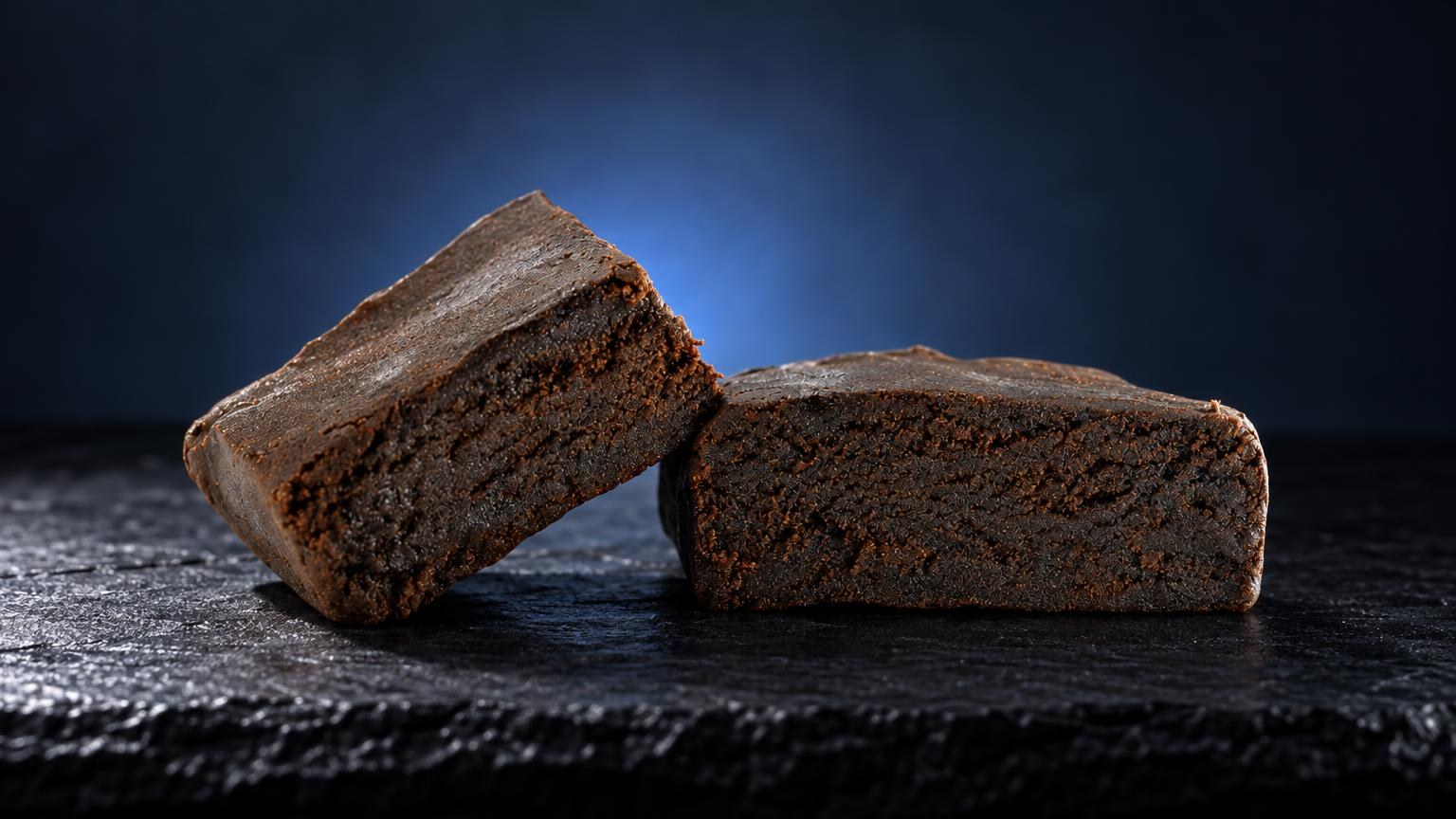
Weed is the whole dried flower: calyxes, plant fibre and the resin glands still attached. Hash is that resin fraction sorted off the plant and pressed together, without the leafy scaffolding.
That single sentence answers most of what people mean when they ask about hash vs weed.
The resin originates in capitate-stalked trichomes, the tiny mushroom-shaped glands covering the surface of the bud. Cannabinoids and terpenes are synthesised inside those glandular heads, not in the leaf tissue. Separate the heads from the plant and you have hashish, better known as hash: a concentrated form of cannabis material rather than a different one.
Here is what you actually notice, in the hand and in the spliff:
- Quantity per gram. Same gram, far less cellulose and chlorophyll, so the active fraction sits denser.
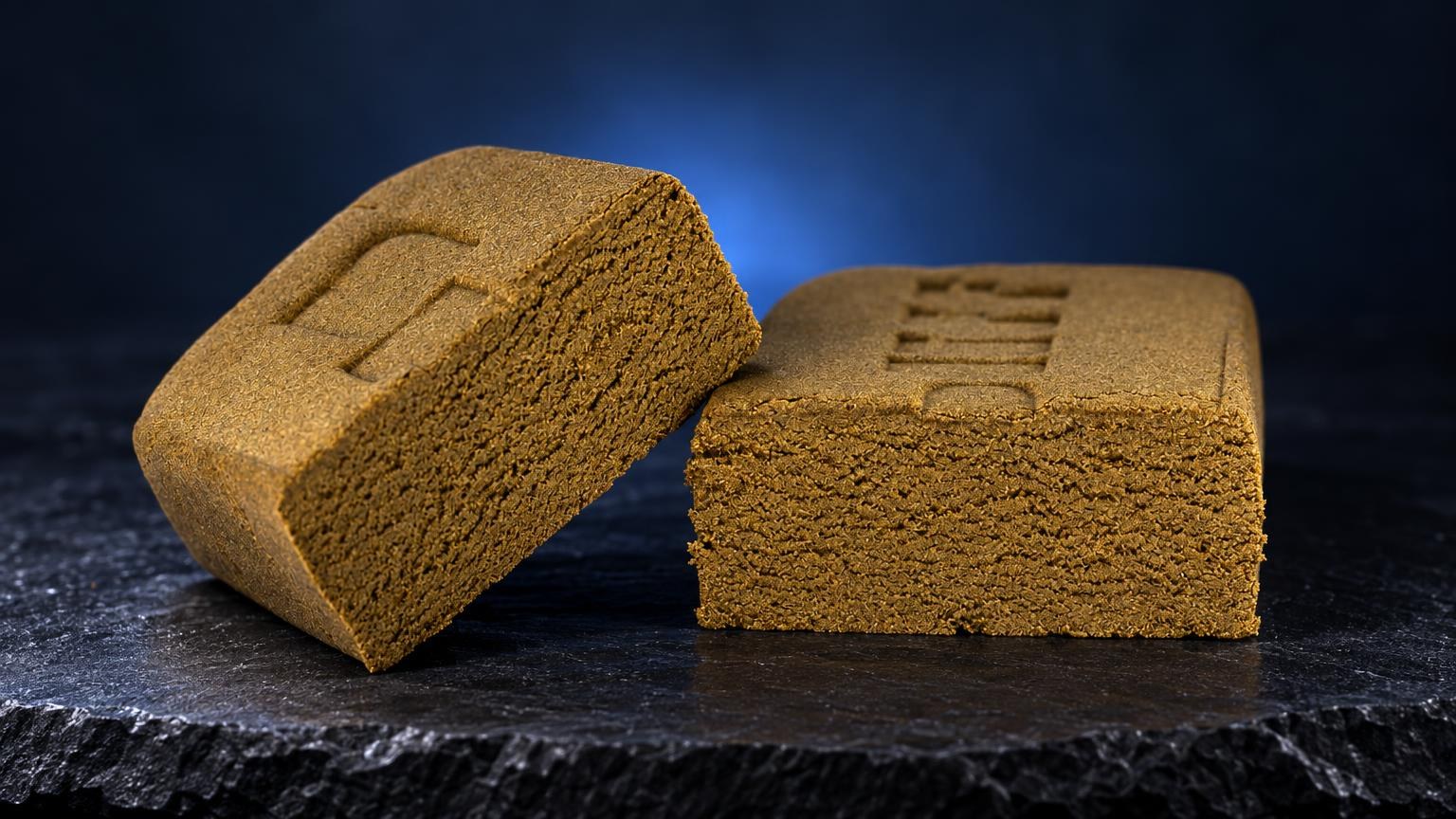
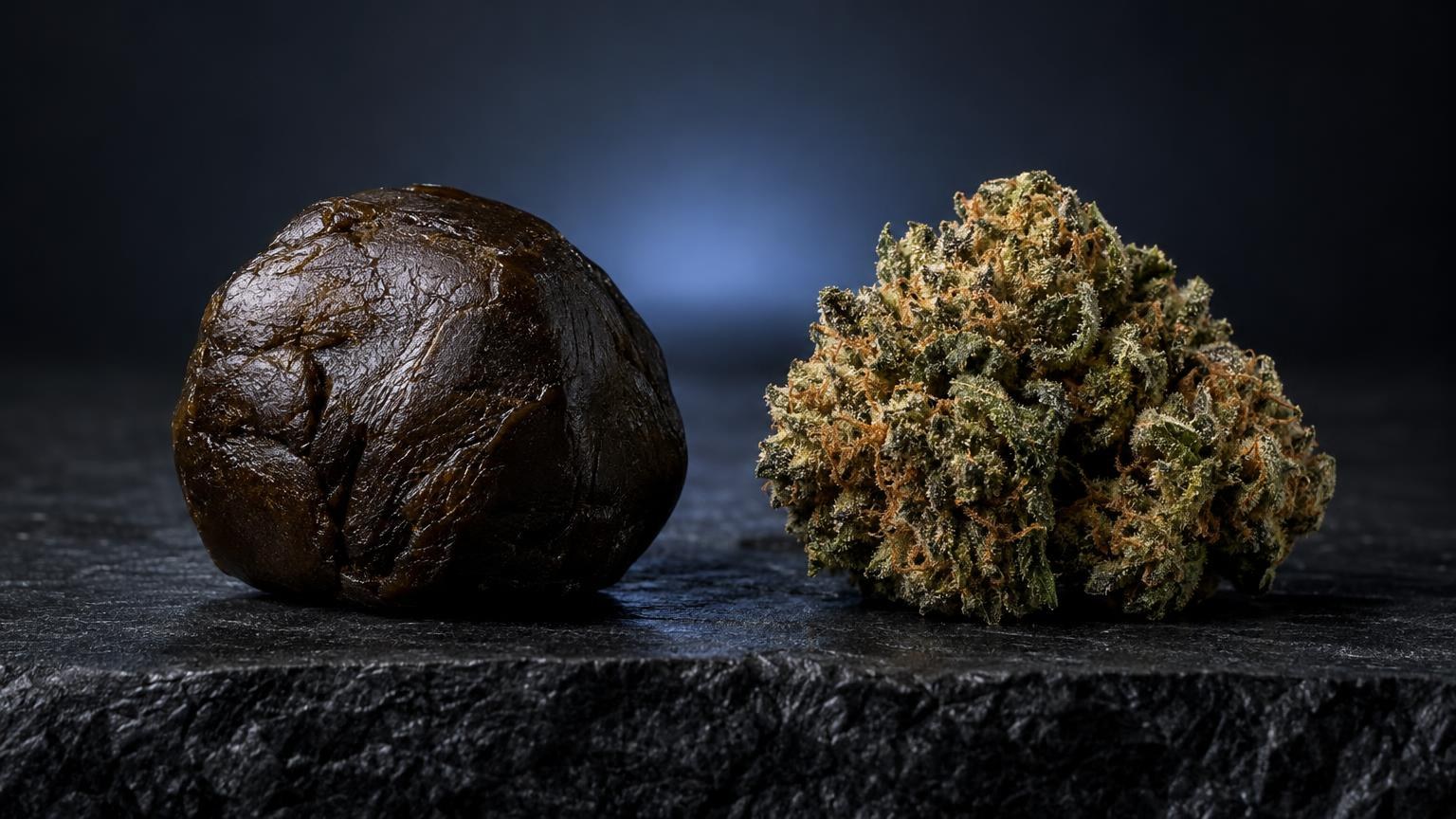
- Texture. Flower crumbles between your fingers; resin arrives as a block, a slab or a soft paste that you warm and break down.
- Aroma. Green, fresh and grassy on one side; dense, resinous, sometimes spicy or leathery on the other.
- Burn. Resin smoulders slower than shredded bud, which changes how you build a hash joint versus a weed spliff.
This is the line I will hold for the rest of the piece. Hash is not weed with something added to it. It is weed with something taken away, and that shifts the maths per gram without altering the chemistry inside the gland itself.
Which brings us to the variable almost nobody discusses when comparing the two formats: the separation method. How you use hash vs weed matters far less than how that resin came off the plant, and that is exactly where we go next.
The essentials in 30 seconds
Hash is the resin of the same plant that gives you weed, minus the bud around it. What changes is how a gram feels, smells and burns; what tells you what is inside is the separation method and the batch lab report, never the name.
Hash vs Weed: What Actually Changes When You Switch Format
The gland heads don’t multiply during processing; hash simply arrives with far less of the plant material around them, which is why per-gram comparisons stop working the moment you switch format.
This matters because it reframes the usual hash vs weed question. People ask which one is “stronger”, as if potency were a property of the format. It isn’t. It’s a ratio between gland material and everything else.
In practice, you feel the switch in your hands before you notice it anywhere else. A bud breaks apart between your fingers; a pressed block wants a moment of gentle warmth before it crumbles at all.
And a gram stops being a comparable unit across the two formats. That’s the single most common misread I see when someone rolls their first hash joint exactly the way they’d roll a weed spliff.
So if format doesn’t determine chemistry, what does? Two variables, and neither gets much airtime elsewhere.
- The separation method. Each of the four separation methods, covered in the reading grid further down, keeps a different share of that aroma. Terpenes are the first casualties, and each technique treats them differently.
- The batch analysis. A name on a label describes a lineage or a style, not a chemotype. Only a lab report on that specific lot tells you what the material actually contains.
Those two variables are where the rest of this article lives. They explain far more about how you’ll use hash or weed than any headline percentage ever will.
Inside the Trichome: Where Cannabinoids and Terpenes Actually Live
Zoom in far enough on a bud surface and the arithmetic stops being abstract. The chemistry of this plant is not distributed evenly through its tissue. Cannabinoids and terpenes are synthesised and stored in a thin surface layer, inside the glandular structures we call trichomes.
The working part is the head. A small disc of secretory cells sits at the top of the stalk, assembles cannabinoid acids and terpenes, and pushes those compounds into a cavity sealed by a thin cuticular membrane. The stalk is plumbing rather than chemistry: it feeds precursors upward and holds the head clear of the leaf surface.
Glandular density follows the flower. It peaks on the floral bracts wrapped around each calyx, drops on the small sugar leaves, and becomes negligible on fan leaves and stem. That single gradient explains most of what separates a resin from a flower.
One distinction is worth carrying into every label you read. According to the WHO‘s cannabis resource, hashish and cannabis oil are listed as separate products, with the oil described as a concentrate obtained through solvent extraction[2].
Now look at what a dried bud carries in addition to those heads:
- Cellulose and lignified fibre building the cell walls and vascular tissue
- Chlorophyll held in the leaf and bract mesophyll
- Cuticular waxes coating the epidermis
- Structural water and residual sugars from curing
None of those compounds contribute cannabinoids. They are inert from a cannabinoid standpoint, but they are far from neutral on the palate. Leaf tissue and chlorophyll are what give whole-flower smoke its green, vegetal edge as it combusts.
Kief is the honest halfway point. Knock the heads loose from the bracts, collect them, and you hold the glandular fraction with the scaffolding removed, still loose, still full of air between the grains. Press that powder and the air leaves too, which is how you land at a slab of hash.
This is why hash vs weed is a botany question before it is a taste question.
Dry Sift, Ice-Water, Pressed, Static: A Four-Line Reading Grid
So the question worth asking is not flower or resin. It is how the resin heads were taken off the plant, because that single mechanical step decides which volatile compounds are still in the block by the time it reaches you.
What follows is a reading grid, not a measurement. I built it from terpene chemistry and from the physics of each separation method, so treat it as a way of interpreting a product.
| Method | Removed | Preserved | Dissipated | Nose & texture |
|---|---|---|---|---|
| Dry sift | Fibre, leaf fragments, most non-glandular tissue | Cannabinoid acids, broad terpene spread | Little, if worked cold and quickly | Closest to the source flower; powdery, sandy |
| Ice-water | Plant matter, waxes, water-soluble debris | Gland heads intact, heavy sesquiterpenes | Part of the light monoterpene fraction, plus drying losses | Bright but narrower top notes; granular when dry, plastic when pressed |
| Pressed (heat + pressure) | Air, void space between grains | Cannabinoids, the heavier aromatic backbone | The most volatile terpenes, first to leave | Rounder, darker, spicier slab |
| Static | Vegetal material, by charge rather than by force | Fragile gland heads, full aromatic spread | Minimal, no water, no heat | Loose, dusty, close to the living plant |
Dry sift follows the oldest logic in the book: agitate dried material over a screen, let the glandular trichomes drop through, keep the leaf behind. No solvent dissolves anything, no heat is applied, so the resulting powder carries a profile close to the flower it came from.
Our Red Lebanese is the classic expression of that route: a traditional dry-sift pressed 50 % CBD resin with the dusty, tea-and-spice character sift heads develop under a hand press.
Ice-water separation exploits brittleness instead. Cold makes the gland heads snap off their stalks, agitation frees them, and a stack of mesh bags sorts them by size while the plant matter washes out.
The trade-off sits in the water itself and in the drying stage. Monoterpenes are small molecules with limited water solubility, so a fraction of the lightest aromatics partitions into the aqueous phase or evaporates as the material dries. What comes out is exceptionally clean, with a slightly narrower top end than the fresh plant carried.
That is precisely why cold pressing matters afterwards. Our Piatella Hash gets compacted without heat: a dense, glossy, almost buttery slab that keeps its aromatic top notes instead of cooking them off. The figures printed here are exactly the sort a datasheet, not a label, is meant to confirm.
Static separation pushes the same idea to its gentlest form. Electrostatic attraction lifts gland heads off the cannabis plant with almost no mechanical shear, no solvent and no water.
It is the least aggressive route in the grid, and our piece on static hash walks through the mechanics if you want them.
One caveat closes the grid. No separation method invents cannabinoids: the balance between THC and CBD is set upstream, in the plant, and sorting resin off the flower does not change that ratio. It only removes the plant matter around it.
Method shapes the aroma; genetics shape the ratio underneath it. That is why no extraction technique will help a sift or a static hash deliver a stronger high than the marijuana it started from, whatever the block looks like in your hand.
Which is the practical takeaway I give users who ask me to rank the four lines: read the method to predict the smell and the texture, read the lab report to predict the strength. Match the technique to the cannabis used at the start and you stop being surprised by a block.
CBD is not a medicine and is not a substitute for medical advice or treatment. If in doubt, consult a healthcare professional.

Why the Label Never Tells You the Chemistry (Read the Lab Report)
Hazekamp and Fischedick made the point quantitative in Drug Testing and Analysis in 2012, arguing that commercial cannabis names are an unreliable guide to what a sample actually contains, and proposing classification by measured chemovar instead of by cultivar label (PMID 22362625). Two products sharing a name can sit in different chemical territory entirely.
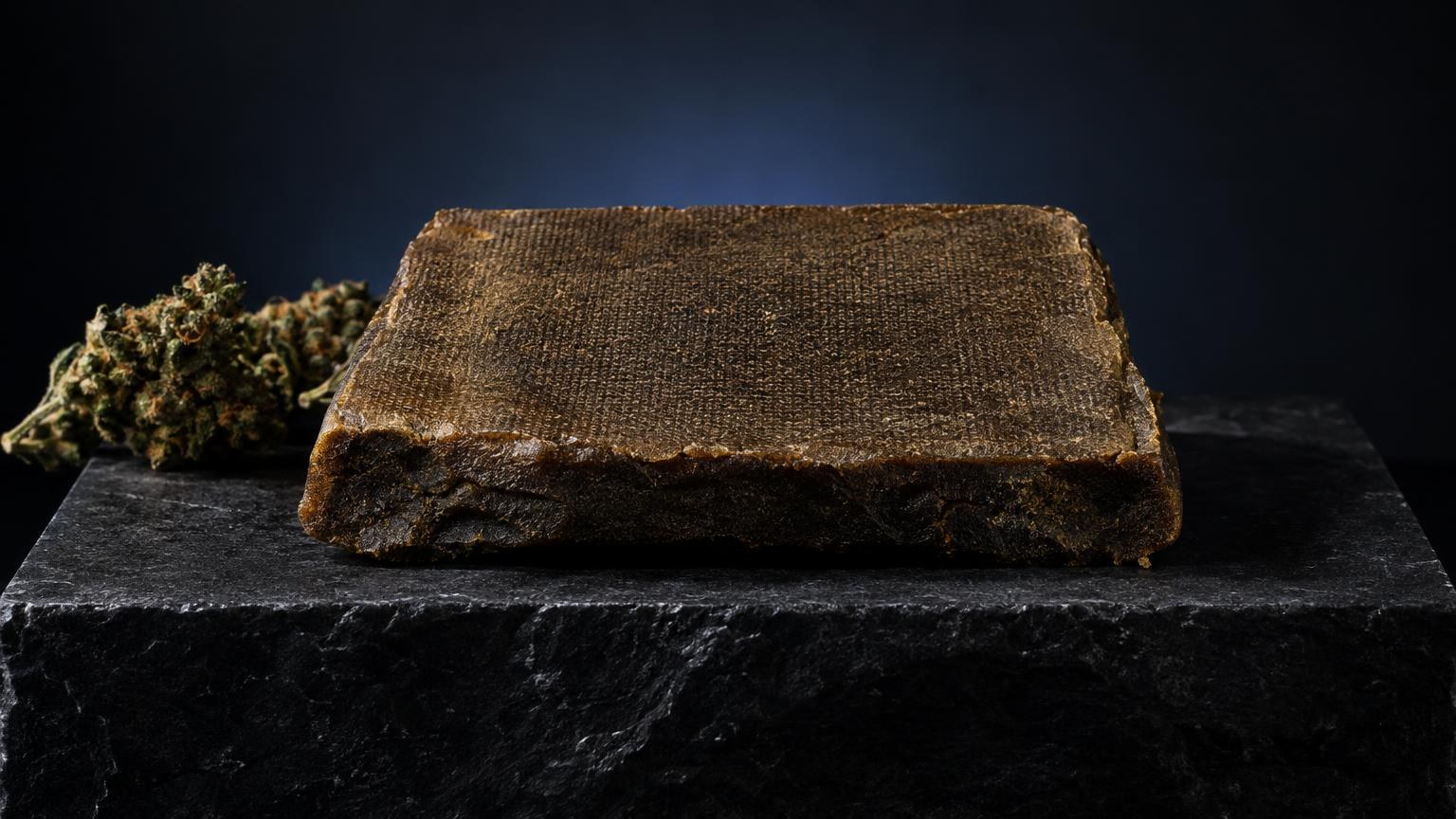
That gap widens with resin. A block is sifted, pressed, aged and traded before it reaches a shelf, so its name often describes a regional style rather than the batch in front of you. Put plainly: hash appears black, brown, soft or hard depending on the type, and none of that appearance tells you the composition.
On a certificate of analysis, four things carry information:
- The cannabinoid profile of the batch, not a figure attached to the product line in general.
- The terpene profile, when the laboratory provides one.
- The date of analysis and the laboratory that ran it, because volatiles are not permanent.
- A batch or lot number that you can match to the packaging in your hand.
This is exactly where a name like THCX needs care. THCX is a trade name, not a molecule, and two producers can put that same name on different formulations.
Every lot is also screened in a laboratory for scheduled molecules, with none detected, a fact the batch report itself demonstrates.
The terpene column deserves a note of restraint too. Russo proposed cannabinoid-terpenoid interaction in the British Journal of Pharmacology in 2011 (PMID 21749363); it remains a pharmacological hypothesis in discussion, not a demonstrated outcome, and I read terpene data as compositional information rather than as a promise.
Read this way, the hash vs weed argument stops being a contest of numbers. It becomes a question of which batch you can actually document, and knowing what a gram contains also matters because regular cannabis use carries documented risks, including cannabis use disorder[2].
Handling Flower and Resin: Grinding, Warming, Mixing, Vaporising
A certificate of analysis tells you what a gram contains. It tells you nothing about how that gram behaves between your fingers, and that is exactly where the practical differences between flower and resin start.
Flower breaks along its own architecture. Pull a bud apart by hand or run it through a grinder and you get an even, fibrous fluff that spreads across a paper without you having to think about it. That fibre is also the ember: the cellulose scaffolding holds air channels open, which is why a spliff of pure flower lights easily and burns fast.
Resin has no scaffolding. It is essentially a mass of pressed trichomes, so how you handle it depends almost entirely on how it was separated and pressed.
- Friable dry sift crumbles under a fingertip straight into the paper, closer to a coarse powder than a solid.
- A cold-pressed slab is dense and slightly waxy at room temperature, so most people warm it briefly between the fingers or near (never in) a flame until it gives.
- A soft, plastic paste rolls into a thin thread and can be laid along the length of a joint without any warming at all.
Which explains the oldest habit in the room: mixing. People blend hash with flower for reasons of physics rather than tradition. A dense resin has no internal porosity, so it smothers its own ember.
The flower supplies the airflow matrix that keeps combustion going; the resin sits inside it as the concentrated fraction. That is the whole logic of the hash weed mix, in one sentence.
| Gesture | Flower | Resin |
|---|---|---|
| Breaking it up | Grinder or fingers, uniform result | Crumbled, warmed or rolled, depending on press |
| In a spliff joint | Distributes evenly on its own | Laid as a thread or crumbled through a flower base |
| Burn behaviour | Fast, self-sustaining ember | Slow, needs a carrier to stay lit |
| Vaporiser loading | Loose bowl, packed lightly | Solid insert or pad, since resin softens and flows |
The reading grid already made the point: the lightest aromatics leave first, so the order in which you heat a resin decides what you taste.
Push the temperature up, or simply keep working the same load, and what is left to evaporate skews woodier and more spiced. Aromatic recovery from a resin is also front-loaded, because its higher cannabinoid concentration means the same gesture delivers far more material per draw. The last draw of a session smells nothing like the first, and that is sequence, not degradation.
One sober note, because it belongs here rather than in a footnote: whatever the format, smoking means combustion by-products, and heavy cannabis use over the long term carries a recognised risk of dependence, or addiction, that no extraction method removes.
So the honest way to use hash and weed is not to rank them. Each format asks for a different set of hands. For the gesture itself, joint, pipe or vaporiser, our guide on how to smoke hash takes each method step by step.
Choosing Between Resin and Flower: A Practical Decision Frame
Once you know how each format behaves in your hands, choosing stops being a contest and becomes a question of what you want from the session. None of the criteria below touch on effect. They are about aroma, handling and physical format.
| What you care about | Points toward flower | Points toward resin |
|---|---|---|
| Aromatic register | Green, fresh, top-note driven | Dense, resinous, deeper and rounder |
| Handling | Grinder or fingers, no preparation | Crumbling or brief warming, depending on the block |
| Quantity per gram | Diluted by cellulose and fibre | Denser active fraction |
| Storage | Loose buds, large surface exposed to air | Compacted mass, far less exposed surface |
| Ritual | Rolling a spliff from whole bud | Working a piece of hash by hand before it goes in |
Read that grid honestly and the hash vs weed question usually answers itself in a single line. If you like the tactile part of a session, the warming and the crumbling between your fingers, you will drift toward resin. If you want to grind and roll without a second thought, stay on flower.
There are four doors into the catalogue, and they map precisely onto that split. Our CBD hash range covers the traditional side, dry-sift pressings and cold-compacted slabs, while the THCX hash range sits alongside it under its own trade name.
On the flower side, the CBD flower and THCX flower ranges give you those same two families in whole-bud form. Same chemotypes, same lab paperwork, different physical starting point[4].
One caveat on the numbers that follow: they come from our own order records, not from an audited market study. Counting shipping country and product category across every order placed on our store over a rolling twelve months (Sept 2025 to Sept 2026), Germany accounts for roughly 61 % of orders, with resins appearing in about 27 % of German orders and flowers in about 35 %. Read them as a snapshot of one shop’s customers, nothing broader.
What that snapshot does tell me is simple. Resin and flower coexist in the same baskets far more often than the format debate suggests.
If you want one place to start, put a cold-pressed piatella slab and a jar of whole bud side by side. You get comparable chemistry in two different physical structures, and that comparison teaches you more than any percentage printed on a label.
Sarah Mitchell's Takeaway: Sorted, Not Stronger
Which brings me to the honest part of any analytical piece: saying exactly where the reasoning stops.
Now the limits, because they matter. The four-line grid I laid out is an interpretive tool, built from terpene chemistry and the physics of each method rather than from laboratory measurements. It predicts tendencies, not values.
Profiles drift too. Two blocks made the same way, from the same cultivar, across two harvests will not carry the same volatile signature, and the glands called trichomes on a given plant never mature uniformly. Treat every generalisation here as a working hypothesis.
What I left out, I left out on purpose: effects, personal use patterns, and numbered potency comparisons between hashish, known simply as hash, and dried flower. The first two sit in clinical and personal territory I do not write in, including the mental health risks flagged earlier. The third would have meant inventing figures, and I would rather hand you a method than a number I cannot source.
Conclusion
Process First, Paperwork Second
So where does that leave you at the counter? Treat hash vs weed as a question about process, never as a leaderboard. The format tells you how a gram behaves between your fingers.
Pick the format that suits the session, then verify the numbers.
Not medical advice, check with a professional if you’re unsure.
Frequently asked questions
What is the difference between hash and weed?
Same plant, different fraction. Weed is the whole bud; hash is only its resin glands, collected and pressed. Everything else in this guide follows from that one sorting step.
Why does a gram of hash behave differently from a gram of weed?
Because the gram no longer contains the plant scaffolding. Expect a denser block, a slower smoulder and a rolling technique you have to adapt rather than copy from a flower joint.
Does the extraction method change hash's effects?
Yes. All four methods collect the same glands but not the same aroma; the reading grid above says which terpenes each one keeps.
Can you tell hash quality just by its name or appearance?
No, a product name describes a lineage or regional style, not a measured chemotype, per Hazekamp and Fischedick’s 2012 argument for classification by chemovar. Hash can appear black, brown, soft or hard regardless of its actual composition, so only a batch-specific lab report reveals real cannabinoid and terpene content[4].
How do you handle hash differently from weed when rolling a joint?
Flower crumbles evenly by hand or grinder into a fibrous fluff that lights easily. Hash varies by texture: friable dry sift crumbles like powder, a cold-pressed slab needs brief warming near (never in) a flame until pliable, while a soft paste can be rolled into a thread with no warming at all.
Sources
- Cannabidiol (CBD) critical review report — WHO Expert Committee on Drug Dependence — www.who.int
- Cannabis — World Health Organization — www.who.int
- Epidyolex (cannabidiol) — European Medicines Agency — www.ema.europa.eu
- Hazekamp A, Fischedick JT. Cannabis — from cultivar to chemovar. Drug Test Anal. 2012 (PMID 22362625) — pubmed.ncbi.nlm.nih.gov
- Russo EB. Taming THC: potential cannabis synergy and phytocannabinoid-terpenoid entourage effects. Br J Pharmacol. 2011 (PMID 21749363) — pubmed.ncbi.nlm.nih.gov