 Written by Sophie Clarke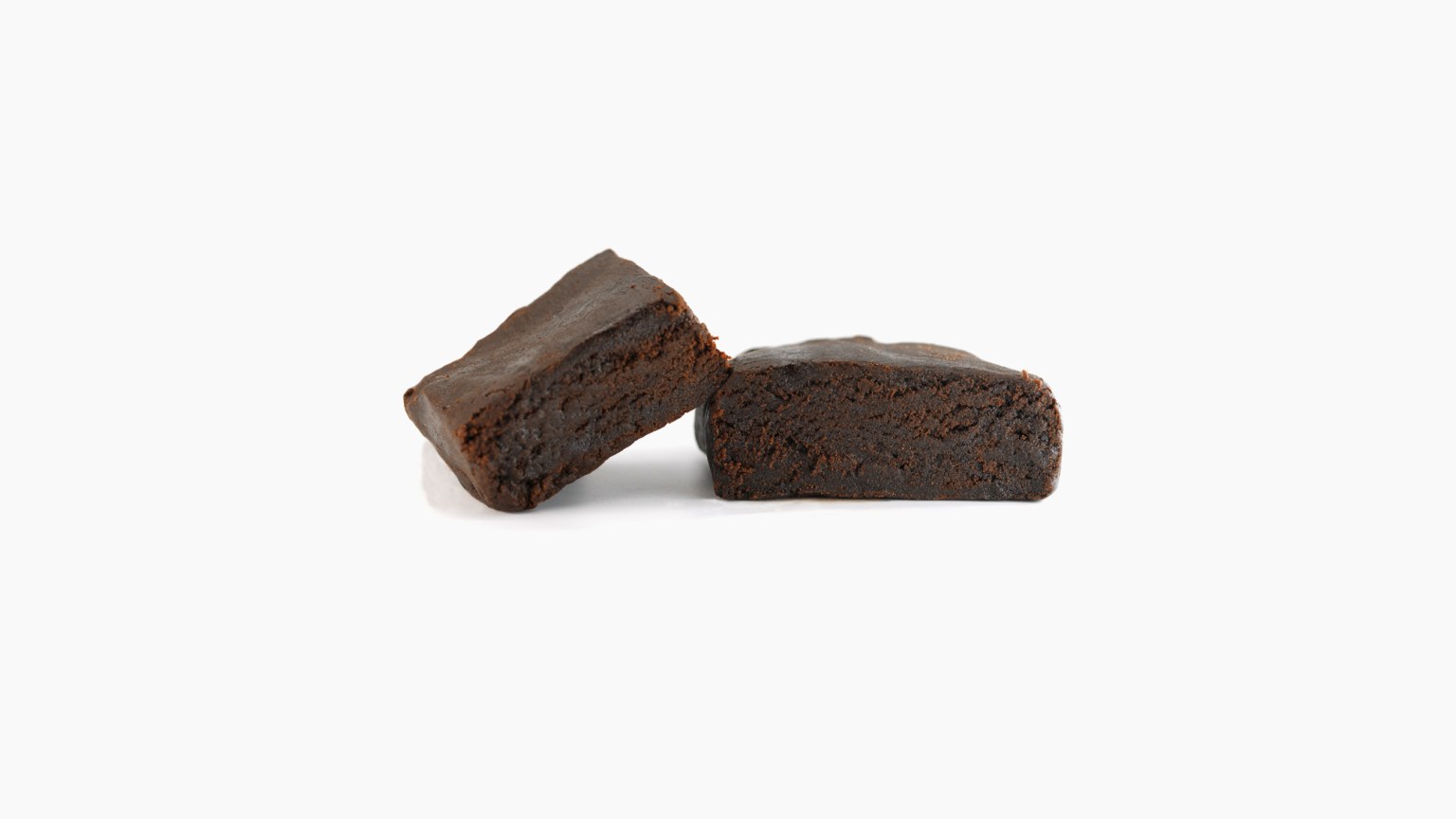
Moroccan hash refers to hashish from the Rif mountains, known for its sandy texture and classic sieved production, historically making Morocco a major source for hashish before a shift toward Afghanistan[5]. It remains a long-known style across Europe and Spain, with roots tied to the region’s origins and traditional drying and smoking culture[5].
Contents7 sections
It’s long been known as the classic sieved style of hashish consumed in Europe, and the reference most other resins get measured against.
Flowers give you the whole bud. Hash keeps only the resin: strip away leaf and stem, collect the sticky trichomes, press them together, and you get a dried, compacted, concentrated piece that looks and handles nothing like weed.
Good Moroccan hash feels sandy and a little crumbly at room temperature, a bit like halva or shortbread, then softens when warmed between your fingers. That’s why it’s traditionally crumbled by hand before smoking. The aroma leans earthy and spicy with a soft sweet edge, closer to toasted spice than to the citrus punch of fresh buds.
From here, you’ll follow the resin from the Rif and its history through the kif and sieving method, learn to decode label names like beldia and double zero, and see in one table how Moroccan compares with Afghan, Lebanese and other resin traditions stretching from Turkey across the Middle East. One thing no guide can do for you: the law where you live decides what you can buy, so check it before anything else.
What is Moroccan hash?
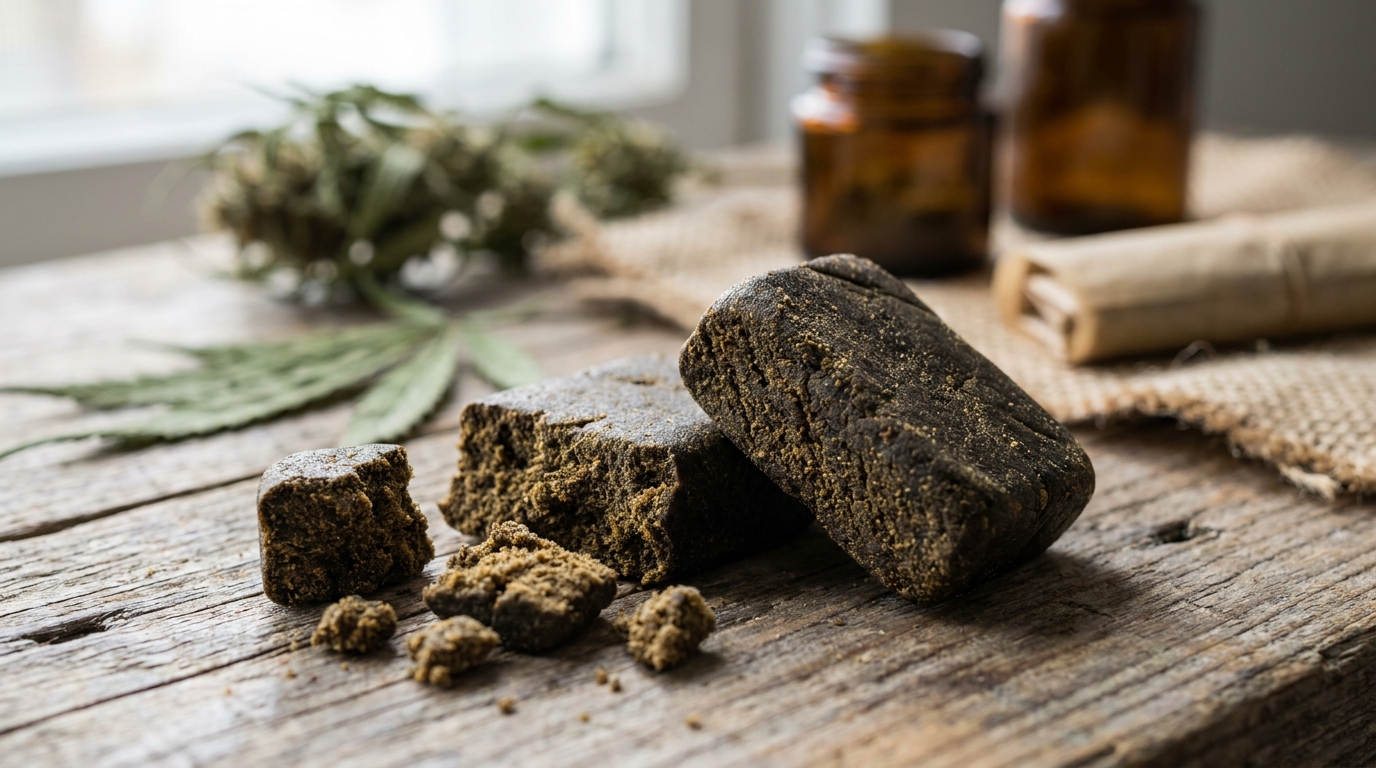
Moroccan hash is the hashish cannabis fans know from Morocco’s Rif region: the resin glands (trichomes) of the cannabis sativa plant, dry-sieved from dried plants and pressed into a block. Expect a blond to light-brown colour, a sandy texture that crumbles cold and turns supple when warmed, and an earthy, spicy aroma with a soft sweet edge.
One gram of hash is smaller than most people expect. Picture a sugar cube cut in half: a compact, matte piece that flakes a little at the corners when pressed with a thumbnail.
Sieve grade changes that picture. A fine grade keeps mostly resin heads, so the piece looks paler and smoother, closer to fudge than shortbread. A coarser grade carries more plant dust and feels drier and grittier.
- Colour: blond, golden or light tan points to a cleaner sieve; a greenish cast means more plant matter.
- Break: a clean, sandy crumble is typical of the pressed Moroccan style.
- Warmth: a few seconds in your fingers should soften the surface.
Its reputation on the European drug market has outlasted big swings in hashish production: Morocco, according to the study “Hashish revival in Morocco”, reportedly saw cannabis cultivation decrease by 65% over the period examined.[4] Hashish output is widely believed to have followed the same trend[4].
Morocco is only one point on a resin map far older than modern drugs policy. Afghanistan and the rest of Central Asia, India and the Middle East each shaped their own style, and “Moroccan, Afghan and Lebanese hash: the differences in one table” lines them up side by side.
The Rif: where Moroccan hash comes from
That sandy, blond block has a precise address. Most Moroccan hash is produced in the Rif, the mountain range curving along the north of Morocco’s Mediterranean coast in Northern Africa. The Ketama area, high in its central valleys, is the name you’ll see most often.
The terroir combines altitude, steep terraced slopes and a dry spell at harvest time, suiting a resin tradition built on dried plants. Generations of cannabis cultivation shaped these valleys long before the name meant anything abroad.
In the Rif’s cannabis history, kif came first: the traditional word for the dried plant material itself, long the local product. Think of it as the raw ingredient, with hashish as the reduction made from it.
The resin habit itself travelled roughly east to west before reaching Morocco:
- India: hand-rubbed resin from living plants, the oldest branch of the family.
- The Middle East: Lebanon and its neighbours, where sieving dried plants became the norm.
- Northern Africa: the Rif, which took the sieve and scaled it up.
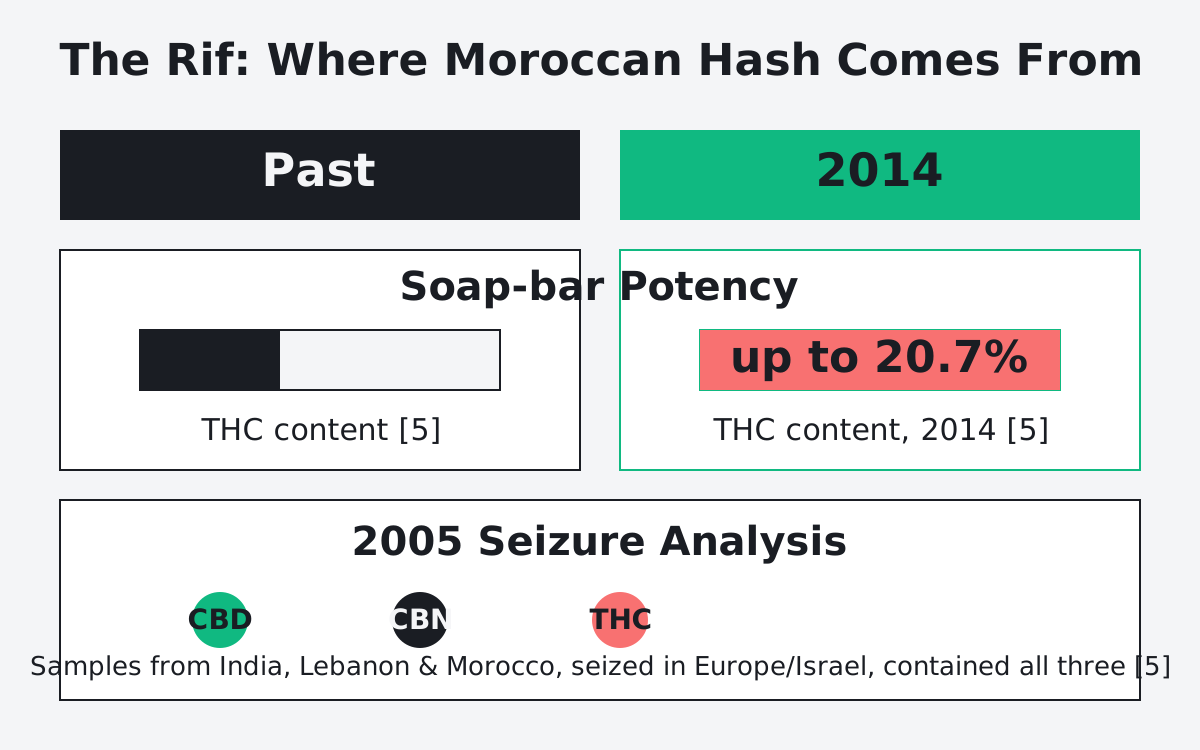
That shared lineage shows up in the chemistry too. According to the Wikipedia entry on hashish, samples from India, Lebanon and Morocco seized in Europe and Israel in 2005 all contained appreciable amounts of CBD and CBN alongside THC[5].
Ask most European smokers to picture resin and Morocco’s hashish remains the default image.
The second reason is sheer market weight: the same source names Western Europe as the biggest market for cannabis resin, with 70% of global seizures[5].
When one region supplies a market for that long, its style becomes the yardstick every other resin gets judged against.
Kif, sieving and pressing: the Moroccan method explained
That dry harvest season is more than scenery: the whole Moroccan method depends on it. It starts with kif, cut, hung and stored until the trichomes turn brittle enough to snap off.
Then comes dry sieving. The kif is beaten or shaken over a fine mesh stretched across a bowl, the resin powder falls through and the plant material stays on top, like flour drifting through a sieve while coarse sugar stays stuck.
One pass is never the end: each later pass drags in a bit more leaf. That sliding scale is where label grades come from, decoded in “Beldia, double zero and other names you’ll see on a label”.
Some makers press the powder by hand, others use a heat press, shaping it into blocks that keep their form on the long road north to Western Europe, the biggest cannabis resin market in the world going by law enforcement seizures[5]. Those shapes have shifted over time, as the 1990s soap bars gave way to melon shapes, tablets and olive-shaped pellets[5].
Different origins, different methods. Further east in Asia, resin is collected differently (in India it’s rubbed off live plants by hand to make charas), which is why a block of hash from India looks nothing like one from the Rif.
| Method | Starting material | Typical result |
|---|---|---|
| Dry sieving (Morocco) | Dried kif shaken over mesh | Sandy, blond, crumbly when cold |
| Hand-rubbing (charas, India) | Live plants rubbed between the palms | Dark, sticky, soft like fudge |
| Ice water hash (modern) | Plants stirred in ice water, filtered through mesh bags | Fine, pale resin, no dry mesh involved |
Beldia, double zero and other names you'll see on a label
Those successive passes over the mesh are what label vocabulary tries to squeeze into a single word. Some names describe the cannabis plants, some the sieve grade, some just the place or the colour.
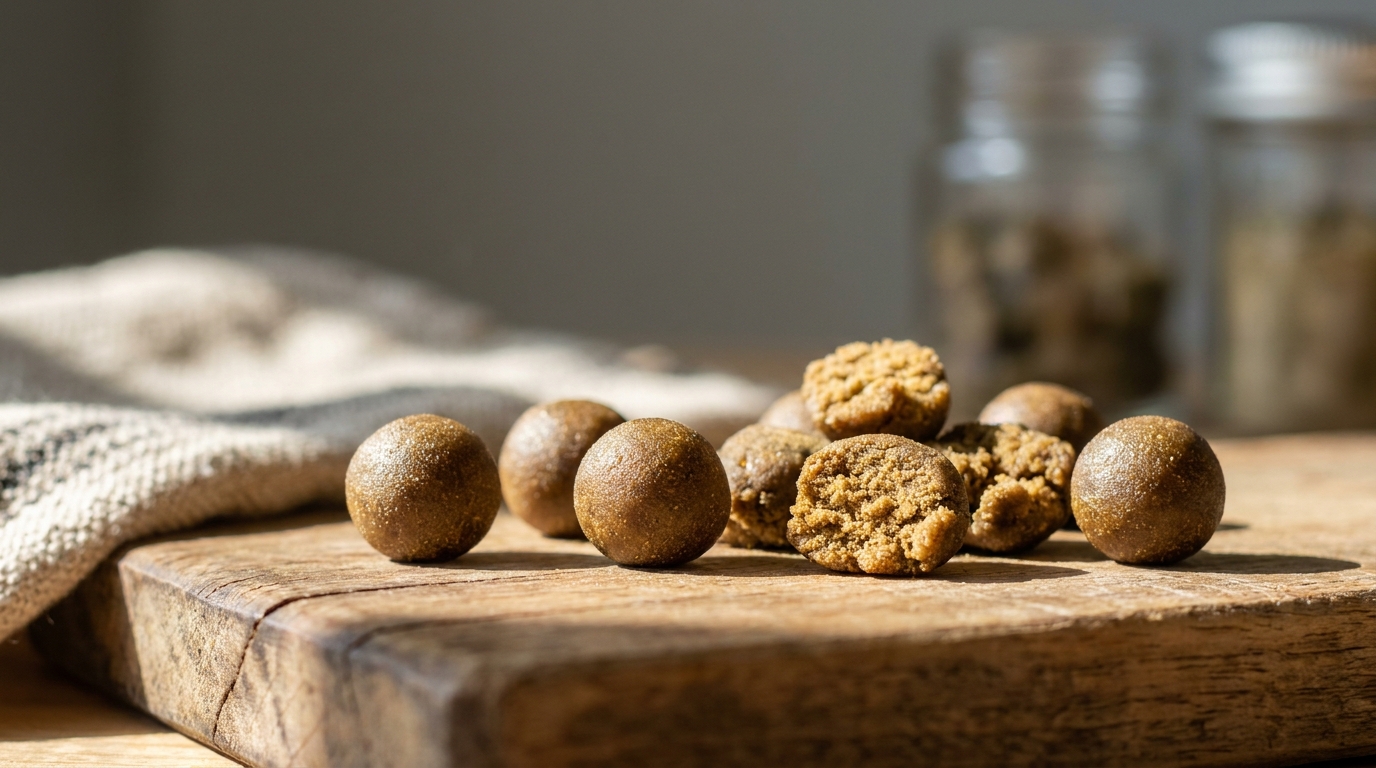
- Beldia: the traditional Moroccan landrace, grown in the Rif long before imported hybrids reshaped production. Morocco’s beldia resin gives that classic sandy break and spicy, earthy nose, while hybrid hash often turns out stickier with a louder, fruitier aroma.
- Double zero, triple zero, pollen: grade or marketing names pointing to the finest first-pass resin. Nobody standardises them, so read them as a hint, never a guarantee.
- Ketama, gold, yellow: Ketama tells you where the resin was produced (Moroccan, central Rif) and nothing more. Colour words describe the look of the block, not a quality certificate.
Regional names travel too. “Kashmir” or “Nepal” on a hash label borrows a style from a region, the way “Champagne-style” borrows from a map, and says nothing about how the resin was graded.
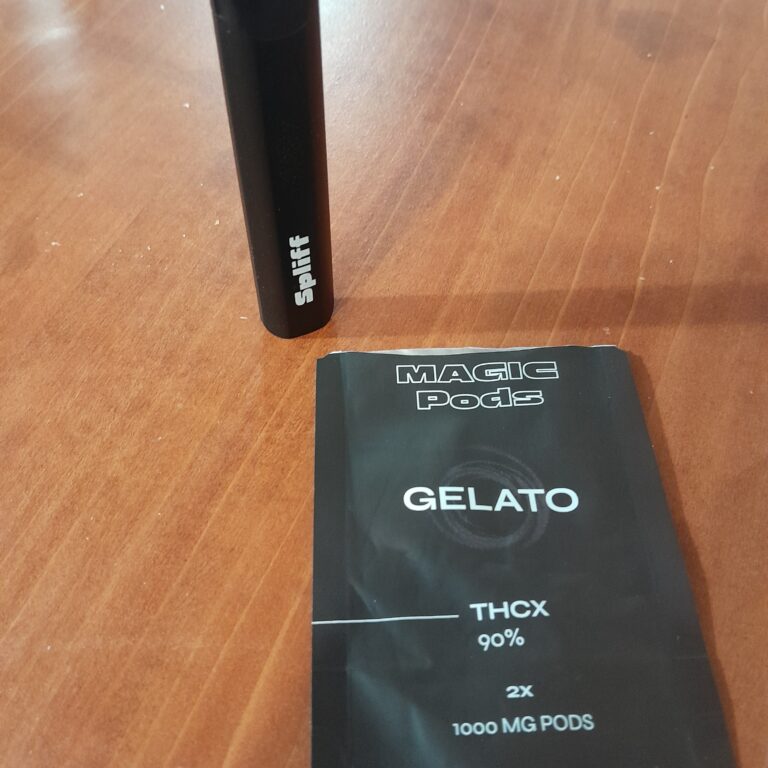
Modern labels skip the grade poetry and state the cannabinoids with their content instead, which tells you far more about potency than any colour word and is easier to compare. It’s the same logic as a bottle of CBD oil: whether you buy hash for recreational purposes or mostly for the aroma and texture, that’s the line worth reading first.
Our Golden Hash is a THCX hash format inspired by blond sieved Moroccan hash, and Kashmir Hash takes its cue from darker, softer resin styles. Neither is a Moroccan import. THCX is a trade name, not a molecule: every batch is lab-tested for classified molecules and none are detected.
Moroccan, Afghan and Lebanese hash: the differences in one table
Once you can read the label, origin is the last clue, and the one people argue about most. Here’s how the three classic origins line up, with ice water hash (piatella) as the modern reference point.
| Style | Method | Colour | Texture | Aroma | Region |
|---|---|---|---|---|---|
| Moroccan | Dry-sieved, then pressed | Blond to light brown | Firm, sandy, crumbly | Earthy, spicy, soft sweet edge | Rif mountains, Morocco |
| Afghan | Hand-pressed with heat | Dark brown to black | Soft, sticky, fudge-like | Deep, earthy, peppery | Afghanistan |
| Lebanese | Sieved, pressed, then cured | Red or blond | Firm, slightly crumbly | Mellow, rounded, lightly sweet | Bekaa Valley, Lebanon |
| Ice water / piatella | Ice water and mesh bags | Pale blond to tan | Creamy, malleable | Close to the fresh flower | Modern, no single origin |
Moroccan vs Lebanese comes down to curing: hashish from Lebanon’s Bekaa Valley rests after pressing, giving it a reddish tint and rounder nose. Production in Morocco stays simpler, Rif farmers sieving dry and pressing, hence the sandy, shortbread crumble. Afghan sits at the far end: heat and pressure turn it into dark fudge instead.
As for which country has the best hash, our answer is firm: none, objectively. The map keeps shifting east anyway, since in the history of hashish Morocco was the major source, while Afghanistan has lately been named the major producer[5]. Sieve grade and freshness tell you more than the flag, so choose the texture and aroma you enjoy and defend it like your favourite album.
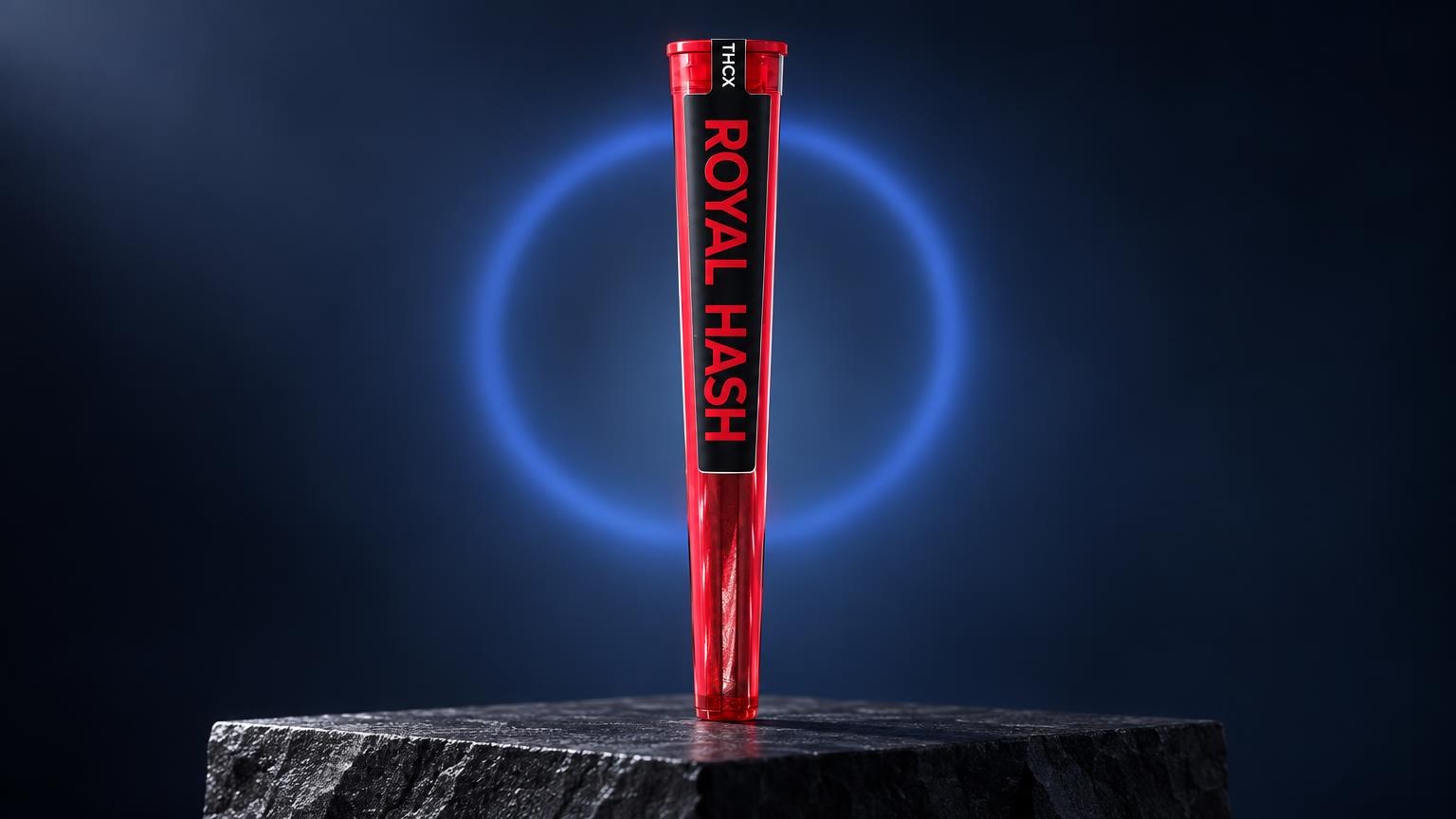
If the blond, sandy style is yours, Golden Crystal hash echoes that golden look. The Royal Hash pre-rolled THCX joint puts a resin profile in a ready-rolled format. Both are formats inspired by these styles, not imports with Moroccan origins; to shop the whole range, the CBD hash collection and THCX hash collection run from 3 g up to 100 g.
Conclusion
That table settles method, not taste, and leaves one takeaway: hash is a style you read through sieve grade, texture and freshness, not a flag. Whether a block is called Moroccan, Afghan, or from Pakistan or the USA, the same clues apply, whatever sieve was used. Think of it like olive oil: the region on the bottle tells you less than how it was pressed and how fresh it still is.
So read the label before the price tag. Our hash formats run from small taster sizes up to bulk weights, so you can match the pack to how often you reach for it. To compare styles, explore the CBD hash collection or the THCX hash collection.
Frequently asked questions
What does hash look like?
One gram of Moroccan hash is roughly the size of half a sugar cube: a compact, matte piece, light in the hand, that flakes slightly at the corners when pressed with a thumbnail. Colour and texture vary with sieve grade, from pale and smooth to drier and grittier.
Sources
- Research paper Hashish revival in Morocco — www.sciencedirect.com
- Hashish – Wikipedia — en.wikipedia.org