 Written by Sophie Clarke
Contents7 sections
An indica plant refers to Cannabis indica, the short, bushy, broad-leaved type of cannabis plant first described from specimens linked to India, as opposed to the taller, narrow-leaved Cannabis sativa.
The name is Latin for “from India” and started life as a botanical classification. Botanists still argue over whether indica is a separate species or a subtype of Cannabis sativa, and the indica sativa split has never been as tidy as seed catalogues make it look. Today the word mostly works as a commercial label in the drug-type cannabis market, stuck on hybrids whose roots also trace back to Central Asia and the Middle East.
Below, you’ll see what the plant looks like and how to tell indica sativa plants apart by leaf, structure and flower. You’ll also learn why nearly every modern cultivar is a sativa indica cross. Then we follow the plant through to flowers, hash, rosin and vape extracts.
Spoiler: the cannabinoid and terpene profile says more than the label, since leaf shape predicts neither potency, the effect you’ll feel, nor long term effects. Think of it like judging wine by the bottle shape: what really counts is the balance of THC and cannabidiol (CBD) inside, plus the terpenes riding along.
The essentials in 30 seconds
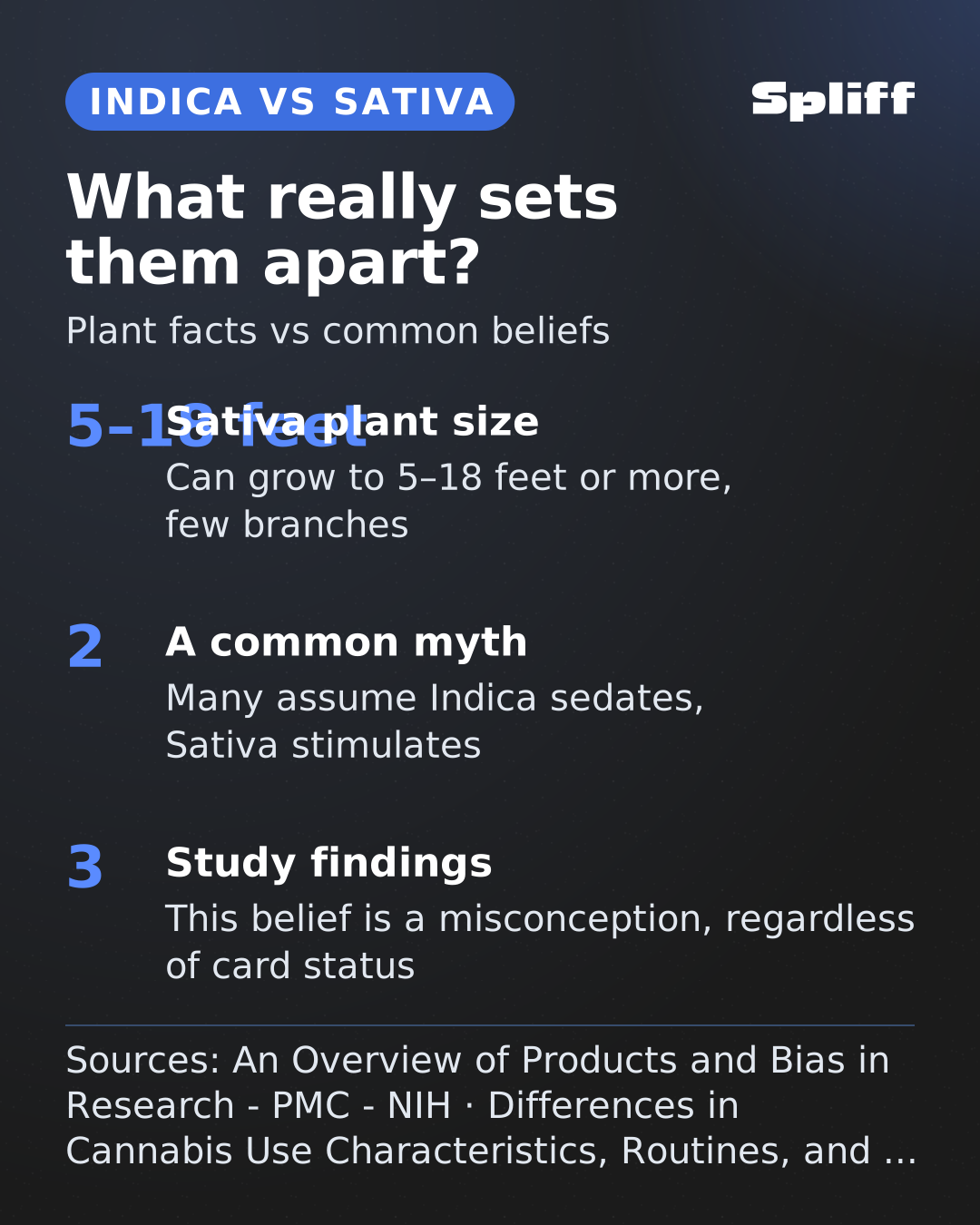
An indica plant is the short, broad-leaved Cannabis indica type, typically 2–4 feet tall with compact branching[4], while Cannabis sativa can reach 5–18 feet or more[4]. Leaflet width, frame and bud density help tell indica cannabis sativa types apart, though chemistry (not shape) determines actual effects.
- Over 700 cannabis strains exist, many crossbred hybrids blurring the sativa cannabis indica line[4].
- Despite common belief, studies show the idea that Indica and Sativa strains produce sedative versus stimulant effects is a misconception, and retailers still often recommend Indica for insomnia and anxiety[5][5].
- Rather than trusting leaf shape, check the cannabinoid named precisely (THC, cannabidiol CBD), the THC/CBD ratio and CBD content indica strains carry, and the terpene profile on the product page before choosing a format.
What does indica mean in plants?
In plants, “indica” is a botanical epithet meaning “from India”. Paired with cannabis, it points to Cannabis indica, the broad-leaved type described from Indian and Central Asian plants, as opposed to the species Cannabis sativa. So an indica plant, in cannabis terms, belongs to that lineage, and indica strains on a shop shelf reuse the word as shorthand.
The catch: “indica” isn’t a cannabis-only word. Botanists attach it to unrelated genera too, which is how a garden flower ends up in your search results. Same word, different plant, a bit like an alcohol-free beer sharing a label style with the real thing.
Is Canna indica the same as an indica cannabis plant?
No. Telling them apart takes a glance: Canna grows big paddle-shaped leaves and loud red, orange or yellow flowers, while an indica plant shows serrated, finger-like leaflets and sticky, resinous buds.
What makes cannabis cannabis is its trichomes: those tiny hairs on female plants are particularly rich in cannabinoids such as THC[4]. So whether a label reads indica, Cannabis sativa or hybrid, the right reference point is the cannabis plant itself, never the ornamental border.
Retailers are more likely to recommend indica strains for insomnia and anxiety[5], but that’s shop-floor shorthand, not proof of what a strain will do for you. If you have questions about your own cannabis use, worry about cannabis use disorder, or are already dealing with alcohol use disorder or opioid use disorder, talk to a healthcare professional rather than a shop counter.
What does an indica plant look like?
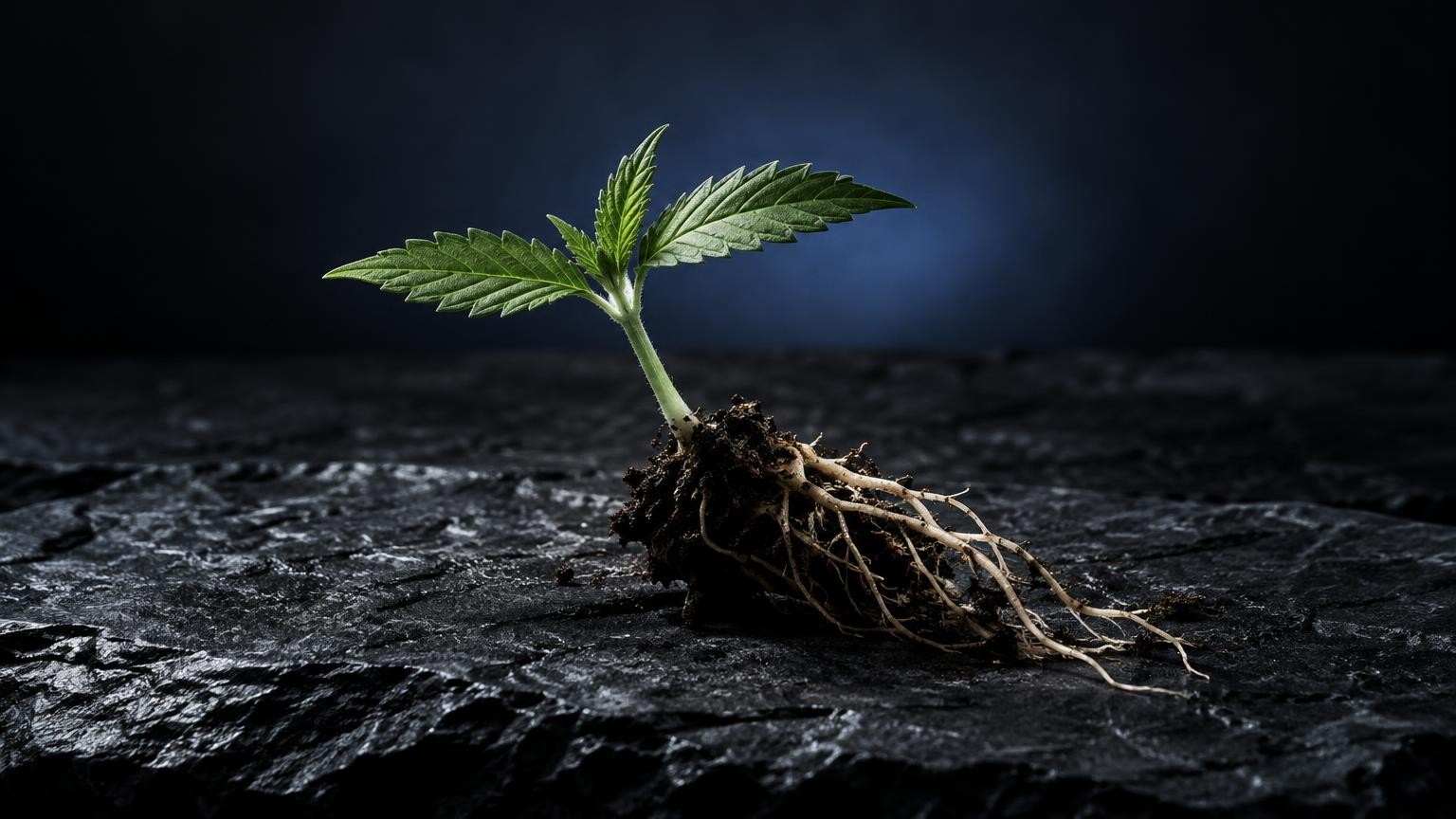
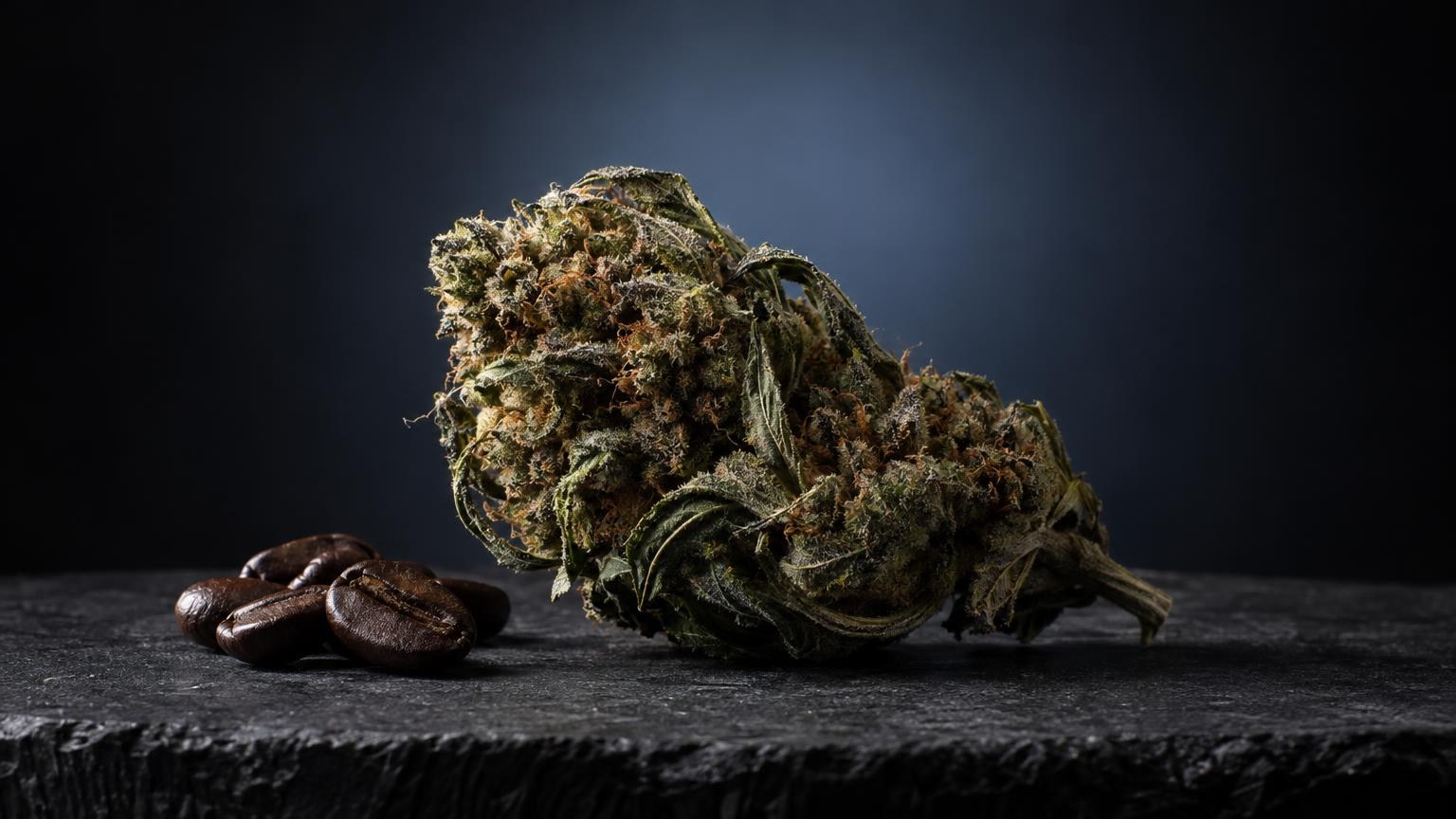
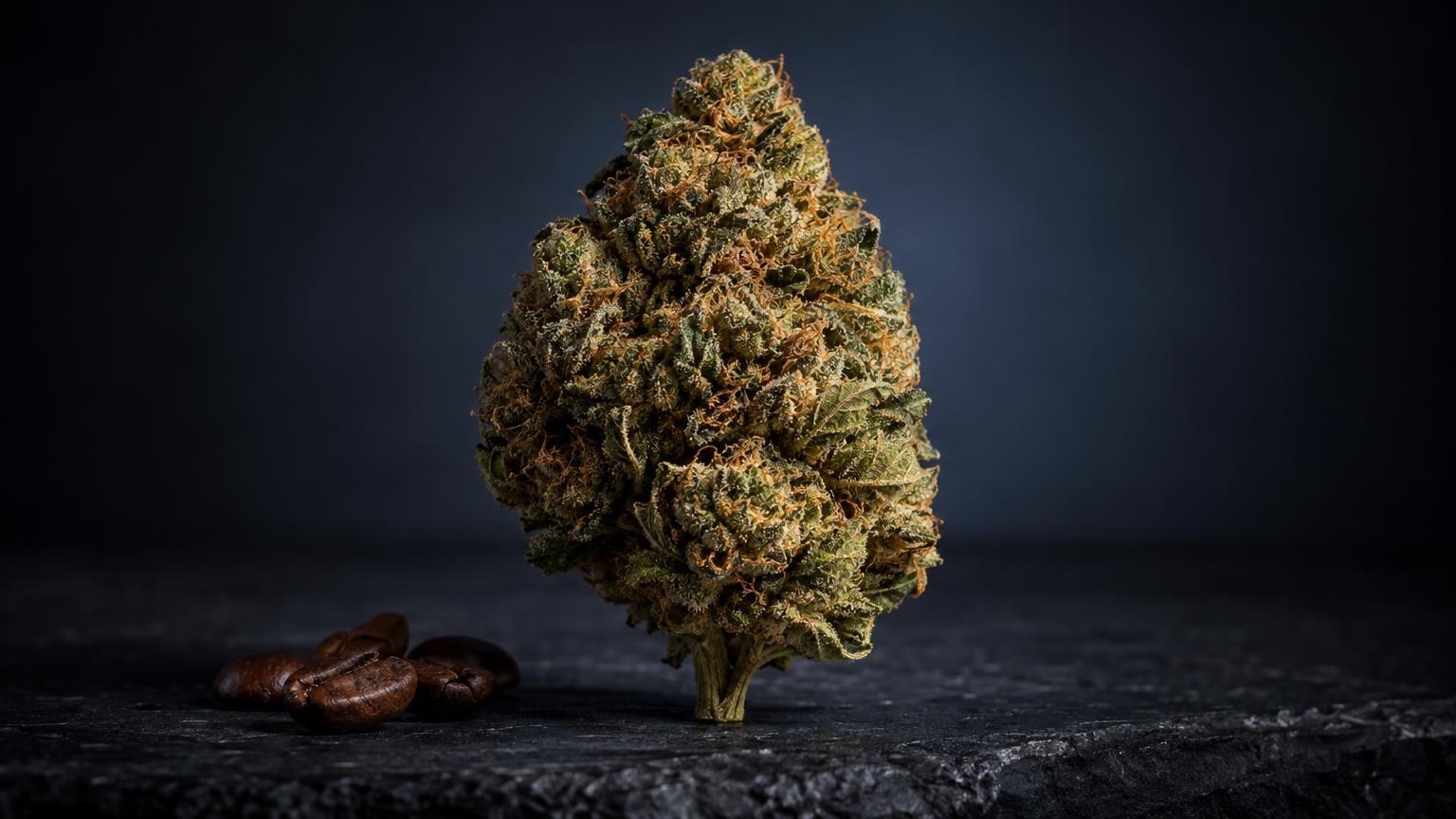
An indica plant is short and bushy, with a compact, fir-tree silhouette, broad dark-green fan leaves and tight spacing between branches. Its flowers form dense, chunky buds that look heavily frosted with resin.
How many leaves does an indica plant have?
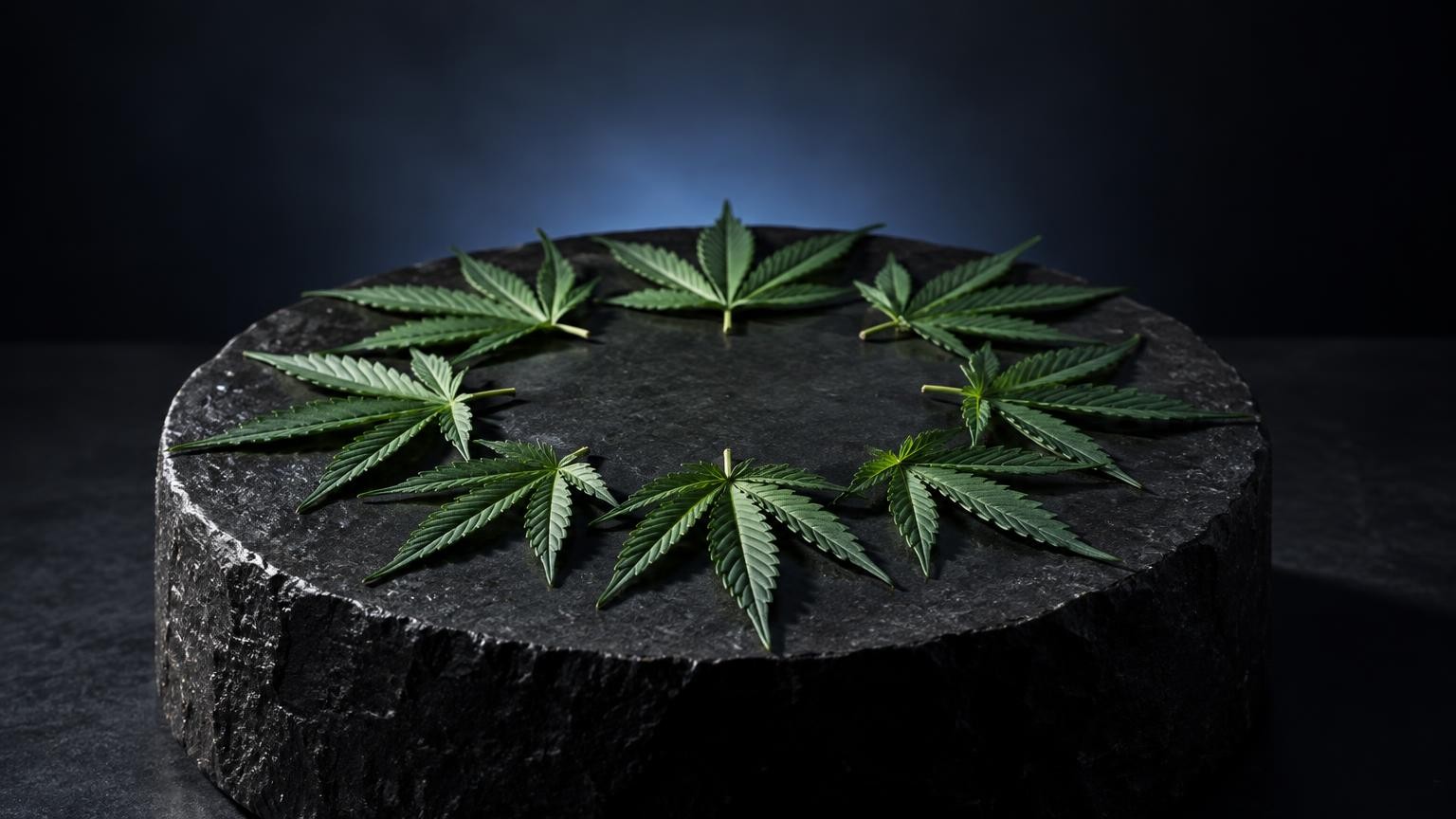
What you count is the leaflets on each fan leaf, not the leaves on the whole plant. An indica cannabis fan leaf carries an odd number of fingers, and that number shifts from one plant to the next, sometimes even along the same stem. The count alone won’t tell you what you’re looking at.
Shape tells you far more. Indica fingers are wide and deep green, giving each leaf a broad, heavy body, like a chef’s knife beside the slim paring-knife leaflets of sativa, which are also a lighter green.
- Silhouette: a compact fir-tree outline with dense branching, closer to a bonsai than a palm. Under indoor lamps or out in full sun, these plants stay short and wide, the stocky kush-style build most growers picture when they hear “indica”.
- Flowers: dense, chunky buds packed tight to the stem and coated in that sticky trichome frost.
That resin is the substance that matters, because it’s where the cannabinoids sit. According to the World Health Organization, ∆-9 tetrahydrocannabinol (THC) is the major psychoactive constituent of cannabis preparations[2].
Is my plant indica or sativa?
To tell whether you’re looking at an indica plant or a sativa, check three clues in order: leaflet width, overall frame, then bud density. Trust them in that order, not equally. Most plants today are an indica sativa hybrid, though, so your eyes give you a lean, not a verdict.
- Leaflet width. The strongest signal: wide fingers on indica plants, slim ones on sativa plants. Read it on mature fan leaves, not the first small ones.
- Height and branching. Cannabis indica typically grows 2–4 feet tall and is more broad-leaved and compactly branched than C. sativa[4]. Light intensity, pot size and training can still stretch or squash any frame.
- Bud density. The weakest clue. It only shows late, and conditions shape it heavily.
Decades of crossbreeding have blurred the borders, so most sativa indica strains on the market carry both lineages and a tangled breeding history. Cross a squat Afghan-type parent with a lanky landrace from Thailand, and the offspring can take its leaves from one side and its height from the other.
That’s why “indica-dominant” on a marijuana menu describes a shape, not a genetic certainty, and not a promise about the experience. Plenty of sativa strains carry indica genes too, and two plants with the same broad leaves can sit far apart on paper. Think of the label as a rough sketch, and drop any one-size-fits-all approach when you read it.
What's the real difference between indica and sativa?
The visible difference between indica and sativa is shape: leaf width, height and bud density. The difference that matters in a product is chemical: which cannabinoids it carries, its THC CBD ratio and its terpenes. That chemistry doesn’t always follow the label on the jar.
Once you can spot an indica plant, set the leaves aside and read the numbers instead. Two flowers from the same cannabis sativa indica family tree can land in very different places on potency and aroma. Terpenes work like a spice rack: one batch reads earthy and peppery, its sibling bright and fruity.
Effects are where the label misleads most. In research on how people use cannabis, study participants, regardless of medical cannabis card status, believed Indica and Sativa strains produce primarily sedative and stimulant effects respectively, a belief the researchers called a misconception[5]. The indica sativa difference you’ll notice tracks the lab breakdown, not the strain name.
Do indica strains have more CBD?
No, not by default. CBD content depends on each strain’s genetics and what breeders selected for. The indica tag tells you nothing reliable about it.
A strain whose ancestors came from Pakistan or elsewhere in Southern Asia can be bred THC-heavy just as easily as CBD-rich. The difference indica sativa fans point to is about form, and any cannabinoid claim tied to the tag is related to marketing rather than genetics. The cannabinoid profile is what actually describes your product.
What happens to an indica plant after harvest?
After harvest, an indica plant’s flowers are dried and cured, then either sold as cannabis flowers or processed further. Hash collects the resin glands, rosin presses that resin out with heat and pressure, and vape extracts concentrate the cannabinoids and terpenes into an oil. Each route keeps a different slice of the plant’s character.
Cannabis indica heads for the drying room, and those dense, sticky buds are exactly what processors want.
- Flowers: dried, trimmed buds, the closest you get to the living plant and its natural cannabinoid mix.
- Hash: sifted or pressed resin, a craft long tied to Afghanistan and its stocky, resinous cannabis plants.
- Rosin: resin squeezed out with heat and pressure, no solvents like alcohol or butane involved.
Live rosin starts from fresh material instead of dried buds, so more of the strain’s terpene profile makes it into the jar. Think fresh basil versus the dried stuff. With more than 700 strains of cannabis in circulation[4], that aroma fingerprint is what keeps indica strains distinct, long after Jean-Baptiste Lamarck gave the type its name.
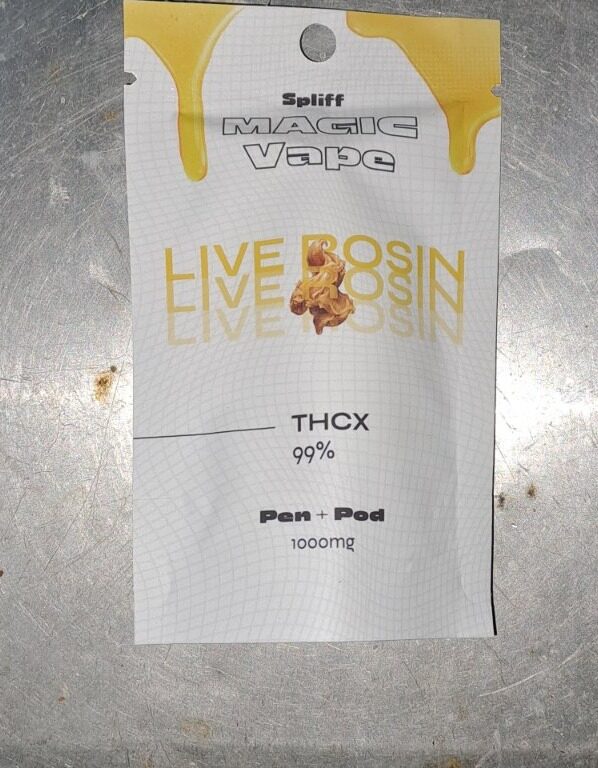
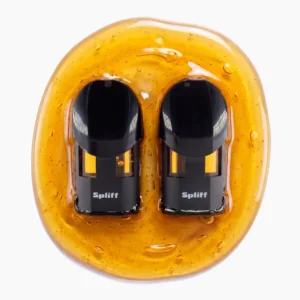
Pods put an extract profile into a simple click-in format. The Magic Pod Live Rosin x2 follows the live rosin route, while the Magic Pod x2 is the classic extract pod. If terpene depth is your thing, start with the live rosin one, and let each product page help with the rest: it lists the full specs.
How to choose an indica-labelled product
Once you know which route a plant took after harvest, shopping gets simpler: you’re comparing data, not leaf shapes. “Indica” tells you about lineage, so let the product page fill in the rest.
Read the page in this order:
- Cannabinoid: CBD, THCX or another, with the active substance named precisely. “Indica” alone is a lineage, not an ingredient.
- Ratio and content: the balance between THC and cannabidiol (CBD), plus the CBD content of an indica strain, as stated on the sheet, never guessed from the label.
- Terpenes: the aroma profile, the closest thing a strain has to a fingerprint.
- Format and price: flower, hash, extract, pod or disposable, with the price of the day shown on the product card.
Pick the format for how you actually consume. Flower shows the whole indica plant, an extract concentrates it, and a disposable just works out of the box. The Magic Vape THCX is that grab-and-go option.
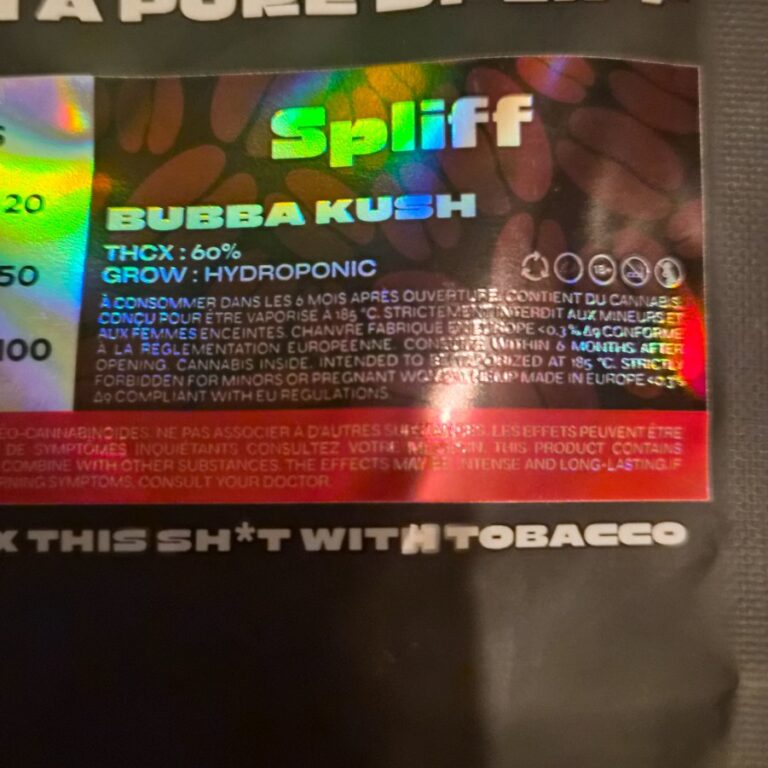
THCX is a trade name, not a molecule: every batch is lab-tested for classified molecules and none are detected. The lab analysis of each batch is available on request from customer service.
One more filter: skip any shop selling “medical cannabis strains” on the strength of an indica tag. A lineage label is not a medical promise, and no product page should read like a treatment plan. Patients with health questions deserve a doctor’s answer, not a strain name.
For adults only (18+), and never before driving.
Conclusion
So the indica plant you can now spot by its leaflets and frame is a starting point, not a promise. Whether a jar comes from the United States or from Europe, grown indoors or under the sun, the THC CBD balance and the terpene sheet tell you far better than any label what’s inside and whether to expect a high at all. That’s good advice whether you lean pure CBD or want a CBD THC blend.
At Spliff, the products linked to this topic come with customer reviews you can read before you choose. Orders ship after payment, with delivery notably to these 4 countries: AT, BE, DE, NL.
Keep your use deliberate. If it ever starts sliding toward substance abuse, talk to a healthcare professional.
Sources
- Cannabis — World Health Organization — www.who.int
- An Overview of Products and Bias in Research – PMC – NIH — pmc.ncbi.nlm.nih.gov
- Differences in Cannabis Use Characteristics, Routines, and … — pmc.ncbi.nlm.nih.gov