 Written by Sophie Clarke
CBD oil pairs hemp-derived cannabidiol with a carrier oil, sold as drops rather than a flower or vape. It does not contain THC, the psychoactive component of cannabis responsible for the “high”[4], and products available to buy come in a wide choice of strengths, from full spectrum to oils THC-free isolates.
CBD Oil at Spliff · from €29.00 · ★ 4.9/5 (51 reviews)
72 h delivery in Europe · Free delivery from €99
Contents8 sections
- What is CBD oil, exactly?
- Full spectrum, broad spectrum or isolate: what's the difference?
- What do 20% and 30% actually mean on a bottle?
- Which brand of CBD oil is best?
- Spliff's 20% vs 30% full spectrum CBD oil compared
- How do you use and store CBD oil day to day?
- Which CBD oil should you pick?
- Frequently asked questions
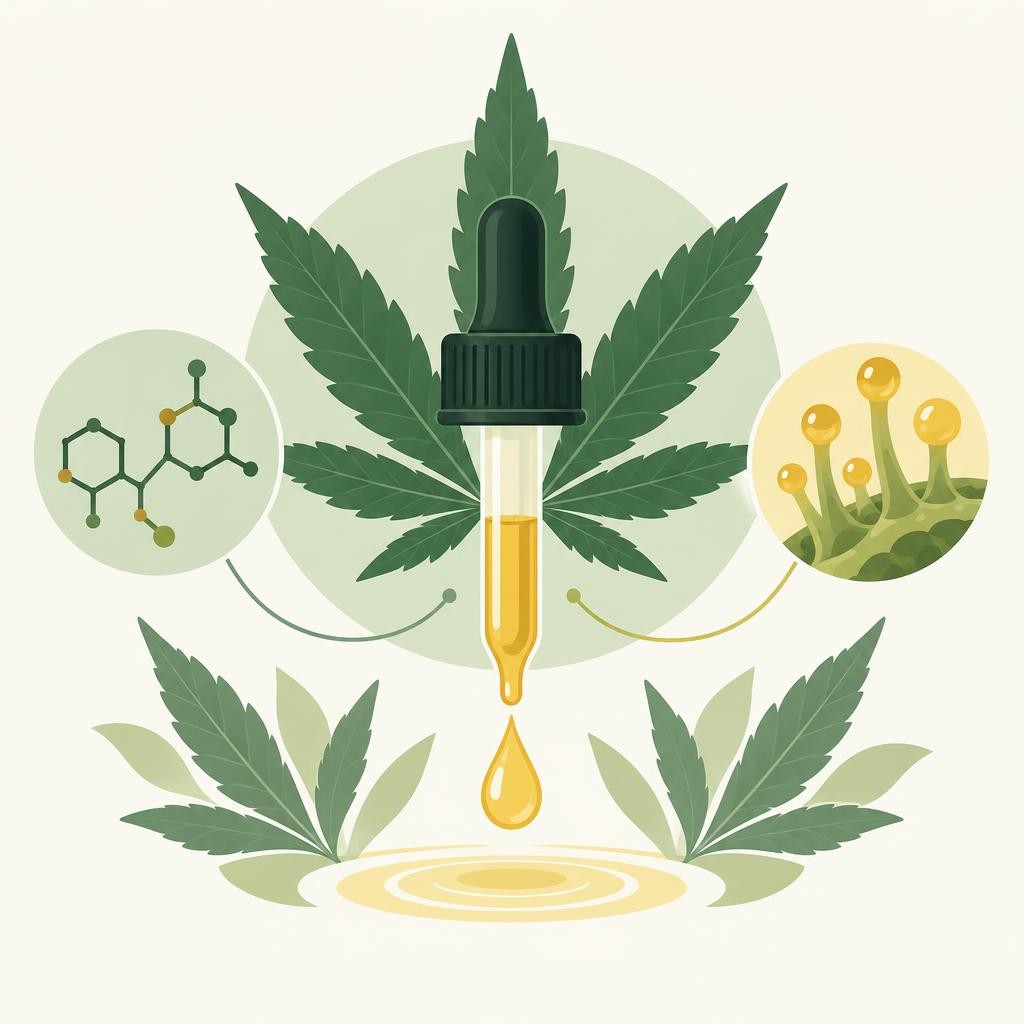
CBD oil is cannabidiol (CBD), a naturally occurring compound of the hemp plant, extracted and diluted in a carrier oil such as MCT or hemp seed oil, then sold in a small bottle with a dropper. Every label you’ll read is a variation on that simple recipe.
Think of it like an infused olive oil: the extract brings the character, while the oil CBD is diluted in sets the texture and the taste. Open the bottle and you’ll find three things:
- Hemp CBD extract, with or without the plant’s other cannabinoids and terpenes.
- A carrier oil, light and neutral (MCT) or nutty and green (hemp seed).
- A dropper, which is why people also call them CBD drops.
This guide teaches you to read a label like a seasoned cannabis shopper. You’ll decode full spectrum, broad spectrum and isolate (and where the THC-CBD split and those THC traces fit in), turn a percentage into milligrams and a price per mg, and check a lab report line by line.
What is CBD oil, exactly?
CBD oil is a cannabis-based product with its own spot on the shelf: it isn’t a flower, a vape or a gummy. The cannabidiol in the bottle comes from hemp, the cannabis variety grown for its fibre, its seeds and its CBD-rich flowers. The molecule itself doesn’t contain THC, the psychoactive component of cannabis responsible for the “high”[4].
When you buy CBD oil, what changes from one label to the next is the rest of the extract. If you’re used to reading labels on products containing THC, think of it like the difference between a single-origin coffee and a blend: a full spectrum CBD oil keeps more of the plant’s other compounds, other recipes strip them back, and the concentration varies too. Each of those families of products gets decoded in the sections ahead.
How is CBD oil different from CBD vape oil?
One goes under your tongue, the other goes through a vaporiser, and each is formulated for its own route. Drops rely on an edible carrier oil, while a vape liquid uses a base designed to be heated and inhaled.
| Criterion | CBD oil (drops) | CBD vape oil |
|---|---|---|
| Base | Edible carrier oil | Liquid made for heating |
| Format | Dropper bottle | Cartridge, pod or tank refill |
| Route | By mouth | Inhalation |
The two aren’t interchangeable, so a dropper bottle never belongs in a tank. The full breakdown lives in our article “CBD Vape Oil: Why It’s Not the Same as Your CBD Drops”, which leaves this guide free to focus on the bottle.
Full spectrum, broad spectrum or isolate: what's the difference?
The difference is what comes along with the cannabidiol (CBD). Full spectrum keeps the whole hemp extract: other cannabinoids, terpenes and traces of THC. Broad spectrum keeps the terpenes and minor cannabinoids but removes the THC. Isolate is CBD alone, purified until the aroma almost disappears.
CBD is the second most prevalent active ingredient in cannabis (marijuana)[5]. Most cannabis based products built around it fall into one of three spectrums, and you can smell the difference before you read a word of the label.
| Spectrum | Other cannabinoids | Terpenes | THC | Aroma and taste |
|---|---|---|---|---|
| Full spectrum | Yes | Yes | Traces | Herbal, earthy, like unfiltered olive oil |
| Broad spectrum | Yes | Yes | Removed | Green, a little softer |
| Isolate | No | No | None | Almost neutral |
Which spectrum fits a THC-free preference?
If you’d rather avoid any product containing THC, whatever the legal definition of marijuana where you live, choose broad spectrum CBD or isolate. Broad spectrum keeps a terpene-driven aroma, a bit like a herb garden after rain. Isolate is a blank canvas that tastes close to the plain carrier oil.
Don’t trust the front label alone. “THC free” is a claim, and the lab report behind it is what makes it credible. On that report, the THC line should read “not detected” or “below the limit of detection”.
What do 20% and 30% actually mean on a bottle?
The percentage on a bottle of CBD oil is the strength the brand declares for the liquid inside. Multiply it by the bottle’s volume to get total milligrams, then divide the price by that total: that’s your fair basis for comparing two bottles and making a smart choice.
The wide choice of strengths among CBD oils available online looks confusing at first, but the formula above reduces it to simple ratio maths. One thing to keep straight: on CBD oils, THC isn’t what that figure describes. It’s the CBD.
Price per mg is the only honest way to compare two oils of different strengths. A pricier bottle can turn out to be the better deal once you run the numbers. Labels deserve that scrutiny: one test-purchase study checked the packaging and product information of 12 CBD oil products bought online in December 2020[6].
Concentration also shapes the sensory side: a 30% oil feels denser and tastes more pronounced, while a 20% stays softer on the palate.
Which brand of CBD oil is best?
No brand of CBD oil is the best for everyone. The right one is the brand whose label and lab report agree line by line and are easy to find. Skip “best CBD oil” rankings with no stated criteria: with properly tested CBD products, verifiable proof beats a famous name.
How do you read a CBD lab report (COA)?
Start with the header: the lab’s name, batch number and test date must match the bottle in your hand. Independently lab tested means a third-party lab, not the brand’s own bench. Then check these lines:
- CBD content: the measured figure should line up with the strength printed on the label.
- Residual solvents: their presence shows the extraction method was checked.
- Composition: the carrier oil (MCT, hemp seed) and the hemp’s origin belong on the label too.
The same filter works if you’re shopping for gummies or any other CBD products available to buy online: a lab analysis available for each batch, a complete ingredient list, a visible rating with its number of reviews, and customer service real customers can reach. As for which CBD Claudia Winkleman uses, there’s no verifiable source, and a famous fan is no substitute for a readable lab report.
Spliff's 20% vs 30% full spectrum CBD oil compared
Time to run that checklist on two real bottles. Spliff’s 20% oil – Full spectrum and 30% oil – Full spectrum share the same extract, like a lungo and an espresso made from the same beans.
It’s purely about how concentrated you want each drop to be.
| Criterion | 20% oil – Full spectrum | 30% oil – Full spectrum |
|---|---|---|
| Declared strength | 20% | 30% |
| Taste intensity | Rounder, milder | Bolder, more concentrated |
| Best fit | Your first full spectrum bottle | Regulars who already like the taste |
| Price per mg | Crunch it with the ratio above | Crunch it with the ratio above |
Across this oil range, Spliff shows 21 reviews averaging 4.9/5. The lab analysis of each batch is available on request from customer service.
Full lineup: CBD oil collection.
CBD is not a medicine and is not a substitute for medical advice or treatment. If in doubt, consult a healthcare professional.
How do you use and store CBD oil day to day?
Using CBD oil comes down to four gestures: shake the bottle, squeeze the dropper bulb, place the oil under your tongue, then screw the cap back on straight away. Store it upright in a cool, dark spot, keep the pipette clean and keep an eye on the date printed on the label.
Shaking counts most with full spectrum oils, since the extract can settle and a quick swirl helps even out texture and aroma. Keep the glass tip off your tongue: saliva on the pipette is the fastest way to spoil the whole bottle.
How long does an opened bottle of CBD oil keep?
An opened bottle keeps until the date printed on the label, as long as you store it properly. Oxygen, light and heat age an oil, and every use lets a little air in. If you’re new to using CBD in drop form, write the opening date on the box.
- Amber or dark glass, cap closed tight
- A cool, dark cupboard, away from the stove and the windowsill
- Bottle upright, so the oil doesn’t soak into the rubber bulb
Good storage habits help reduce oxidation, so the oil keeps the taste it had on the first day.
Our verdict
For anyone weighing full spectrum against broad spectrum or isolate, let the lab report settle the choice, not the label copy. Picking by concentration keeps things simple: lower strengths suit a lighter daily habit, higher strengths suit those who already know their preferred dose range. Prefer vaping? That’s a different product family entirely, covered in the CBD oil collection and the Magic Pod / Magic Vape options.
- Pour those avoiding THC entirely → broad spectrum or isolate oil, verified against the lab analysis available on request.
- Pour an established routine wanting fewer drops per use → a higher-concentration full spectrum oil, same extract, denser dose per drop.
- Pour anyone comparing bottles on a budget → calculate price per mg from the public prices listed, rather than relying on the sticker price alone.
Which CBD oil should you pick?
Your shortcut by profile: new to CBD, start with the lower strengths for their softer taste. Already know how you like to use CBD, a denser oil suits you. On a budget, let the per-mg math (not the sticker price) decide.
The lab analysis of each batch is available on request from customer service. Whatever your profile, let that evidence carry more weight than the packaging, and take any dosage question to a healthcare professional rather than to a label.
When you’re ready, browse the CBD oil collection. At Spliff, orders ship 0.9 day on average after payment to Austria, Belgium, Germany and the Netherlands. For adults only (18+).
Frequently asked questions
Does CBD oil work?
Spliff does not make effect or therapeutic claims about CBD oil. What’s verifiable is composition: cannabidiol doesn’t contain THC[4], and each batch’s lab analysis is available on request from customer service.
Is one drop of CBD oil enough?
There’s no universal answer: the right amount depends on the oil’s strength and personal preference, not a fixed drop count. Compare strengths by price per mg rather than by drops, and direct any dosage question to a healthcare professional rather than to the label.
Where can I buy CBD products online from a trustworthy brand?
Look for a brand whose label and lab report match line by line: lab name, batch number and test date visible, a complete ingredient list, and a reachable customer service. Spliff ships to 4 countries, publishes customer reviews (21 reviews, 4.9/5 average), and lab-tests every product, keeping THC below 0.3% (0% for vapes and pods).
Sources
- Can I buy CBD Oil (cannabidiol) for my pet? – Veterinary Medicines Directorate — vmd.blog.gov.uk
- Cannabidiol (CBD): What we know and what we don't — www.health.harvard.edu
- Safety and risks of CBD oils purchased online — pubmed.ncbi.nlm.nih.gov