 Written by Sophie Clarke

Contents7 sections
- What is Blueberry, and why is a cannabis strain named after a fruit?
- Where does the Blueberry strain come from?
- What does Blueberry smell and taste like?
- Blueberry the fruit vs Blueberry the strain: what's actually different?
- Blueberry flower, THCX pods or live rosin pods: which format to choose
- Is Blueberry the right pick for you?
- Blueberry, fruit vs strain: the bottom line
The essentials in 30 seconds
- Epidemiological studies link regular, moderate blueberry intake to reduced cardiovascular disease risk[5].
- Blueberries are the most popular berries of the genus Vaccinium, subgenus Cyanococcus[6].
- A 12-week intervention study found lower fasting blood insulin in a pre-diabetic population[4].
- Blueberry breeding is slow, taking more than 10 years[6].
Blueberry refers to two different things: the soft fruit, blueberries (Vaccinium sect. Cyanococcus) native to North America, and one of the best-known cannabis strains, named for the berry aroma of its flowers. They share a smell, not a family tree. That single link is what this article is about.
In cannabis culture, a strain name works as a sensory promise. Think of a wine label that says “blackcurrant” with no blackcurrant in the bottle: the word describes what hits your nose. Names like Blueberry or Pink Lemonade (also the name of a pink-fruited blueberry variety) follow the same logic and tell you what aroma to expect.
So here’s the line between the two meanings, the one plenty of online articles blur. The strain has nothing in common with blueberry plants beyond that smell: no fruit content, no Vaccinium in its genetics, no nutrition to speak of, and no blueberry planting advice that carries over to it. The name is a description, not an ingredient.
Our take is simple: treat a strain name like the tasting notes on a coffee bag. It’s a forecast of the aroma, not a guarantee. What actually decides whether you get that jammy berry hit is the batch itself and the format it comes in, which is why we’ll judge the flower and the extracts separately later on.
From here, the fruit becomes your reference point for understanding the strain:
- where the Blueberry name and its lineage come from
- how its aroma maps onto wild and cultivated berries
- where fruit and flower clearly part ways
- which formats carry that profile best, and how to pick yours
What is Blueberry, and why is a cannabis strain named after a fruit?
Blueberry is both a fruit and a cannabis strain. The fruit is the small blue berries of shrubs in Vaccinium sect. Cyanococcus. The strain is a cannabis variety whose name describes the sweet berry smell of its flowers. Same word, two unrelated plants, joined only by aroma.
Blueberry plants are low shrubs with woody stems, grown for their fruit. Cannabis is a plant from a completely different family. The only bridge between them is your nose.
Breeders name strains the way perfumers name scents: after the dominant note you pick up when you open the jar, which is how a cannabis breeding line ends up called Blueberry. The neat twist is that Pink Lemonade is also a pink-fruited blueberry cultivar, so the fruit world and the cannabis world sometimes borrow from the same vocabulary.
Science treats the fruit as food, the kind of thing that gets a daily value line on a nutrition label: one 12-week blueberry intervention study reported lower fasting blood insulin levels in a population with pre-diabetes, a single result worth reading in full rather than a settled conclusion[4]. That finding belongs to the berries you eat.
Where does the Blueberry strain come from?
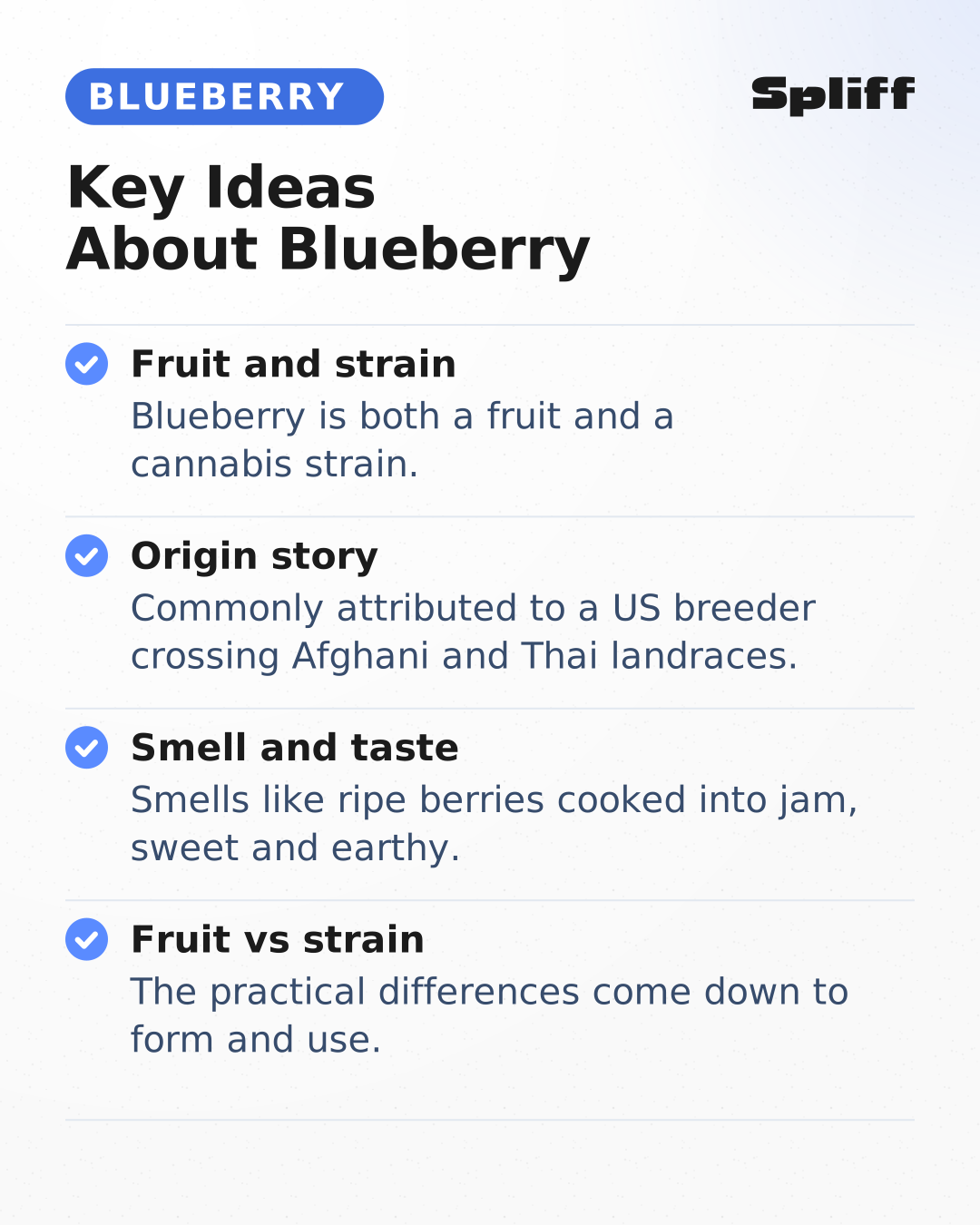
Blueberry is commonly attributed to a US breeder who reportedly crossed Afghani and Thai landrace genetics several decades ago, which gave the strain its indica-leaning heritage. It was later refined and spread in Europe, where its reputation took off. Read this as reported history, not a verified record.
The fruit went through a similar process. Highbush blueberries (Vaccinium corymbosum) were selected from wild blueberry plants for large, more uniform berries suited to commercial production, while lowbush wild blueberries stayed small and intense. Cannabis breeding follows the same logic: keep each plant whose aroma and structure you like, and set the rest aside.
Why did Blueberry become a parent for so many strains?
The short answer is its scent. Breeders want traits that are easy to spot and that carry over from one generation to the next. A loud, sweet berry terpene profile is a gift when you’re building a new cultivar, because if you cross Blueberry into another line, the fruit note often comes through. That’s why so many later strains put “berry” or “blue” in their names.
Blueberry breeding runs into one limit in both worlds. Strain lineages are often poorly documented, and names drift between producers. Two flowers sold as Blueberry today can come from different genetic lines, so a modern version and the original can differ in aroma, colour and density.
Treat the name as a family resemblance, not a guarantee.
What does Blueberry smell and taste like?
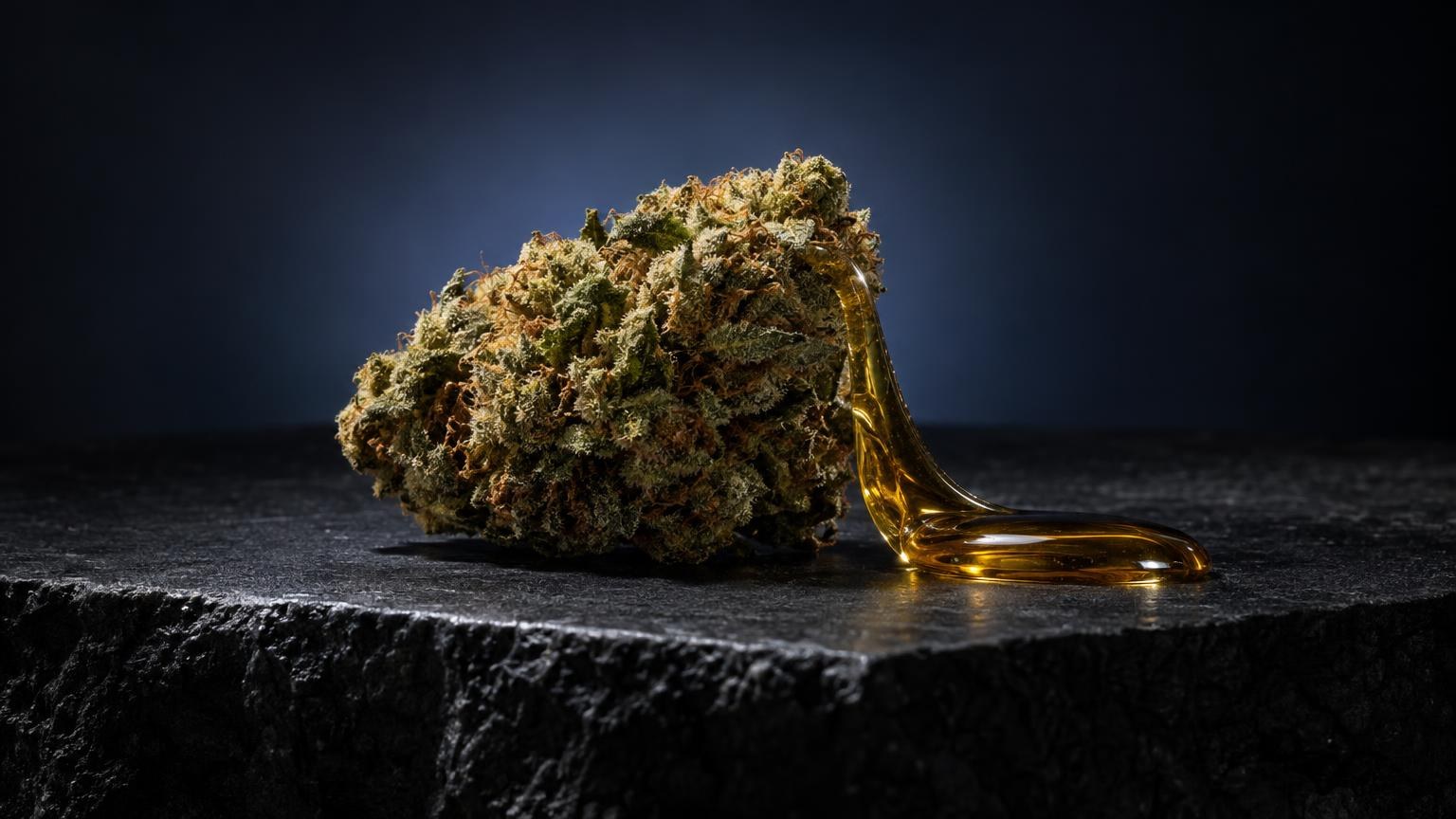
Blueberry smells like ripe berries cooked down into jam: sweet, round and fruity, resting on an earthy, slightly hash-like base, sometimes with a touch of spice or a faint pine edge. Myrcene and pinene are the terpenes commonly reported behind berry profiles, though no single batch is guaranteed to match.
Wild or highbush: which blueberry does the strain actually resemble?
The strain is closer to the wild berry. Lowbush wild blueberries are small, concentrated, dark and slightly tart. Highbush blueberries (Vaccinium corymbosum), the common cultivated kind, are bigger, milder and juicier.
A good Blueberry flower sits at the wild end. Think blueberry jam or a golden muffin top, not a fresh berry from the punnet, with the earthy base keeping it from turning cloying. Our rule: if a batch smells light and watery, it has drifted towards highbush, and that’s often a sign it has lost freshness.
Format moves the dial too. Broken dried flower gives the full jammy nose, while a vape pushes the sweet top notes forward, a bit like hearing only the melody of a track without the bass line. More on that in the format comparison.
Your flavour questions, answered straight
- Does it really taste like blueberries? On the exhale, yes, but like jam or a baked muffin, not a raw berry. Expect fruit on top and earth underneath.
- Why does mine taste grassy or harsh? Usually freshness or curing, not the strain itself. Dry, crumbly buds lose their berry first and keep only the earthy base.
- How do you get the most berry out of it? Break the flower just before use and keep it sealed away from light and heat. Fruity top notes are the first to fade, so freshness matters more here than with gassy strains.
Our take: Blueberry is a nose-first strain. If the jar doesn’t smell of fruit when you open it, no amount of label romance will fix that.
And the colour? A research review published via the University of East Anglia notes that epidemiological studies associate regular, moderate intake of blueberries and/or anthocyanins with reduced risk of cardiovascular disease, death, and type 2 diabetes[5]. That’s about eating the fruit. On the strain, blue is only a word on the label.
Blueberry the fruit vs Blueberry the strain: what's actually different?
The practical differences come down to form and use. Blueberries are fruits you eat fresh by the handful, often as a summer snack, while the Blueberry strain is a cannabis flower you judge on aroma, texture and format. The questions you ask about each one barely overlap, and the overlap stops at the name itself.
According to the James Hutton Institute’s blueberry breeding programme, blueberries are the most popular berries of the genus Vaccinium, subgenus Cyanococcus[6]. Blueberry bushes thrive in acidic soil. Varieties range from the classic dusty blue to Pink Lemonade, which has pink fruit.
That’s why the most-searched berry questions belong to the fruit only:
- Are blueberries good for you? That’s a diet question about the fruit. A cannabis flower with the same name shares none of it.
- How many calories do blueberries have? Same logic, and the same goes for vitamin content. For calories or daily value vitamin percentages, check an official food composition database, not a strain page.
- Can dogs eat blueberries? Ask your vet about the fruit. The cannabis side has a simpler rule, below.
What is the flared crown end on a blueberry?
The flared crown end is the small star-shaped crown on the bottom of each berry, opposite the stem: what remains of the flower’s calyx, attached as the fruit swells.
Field guides use it as a quick check for a true Vaccinium blueberry, wild or from a commercial crop. Flip a few berries over and you’ll spot it.
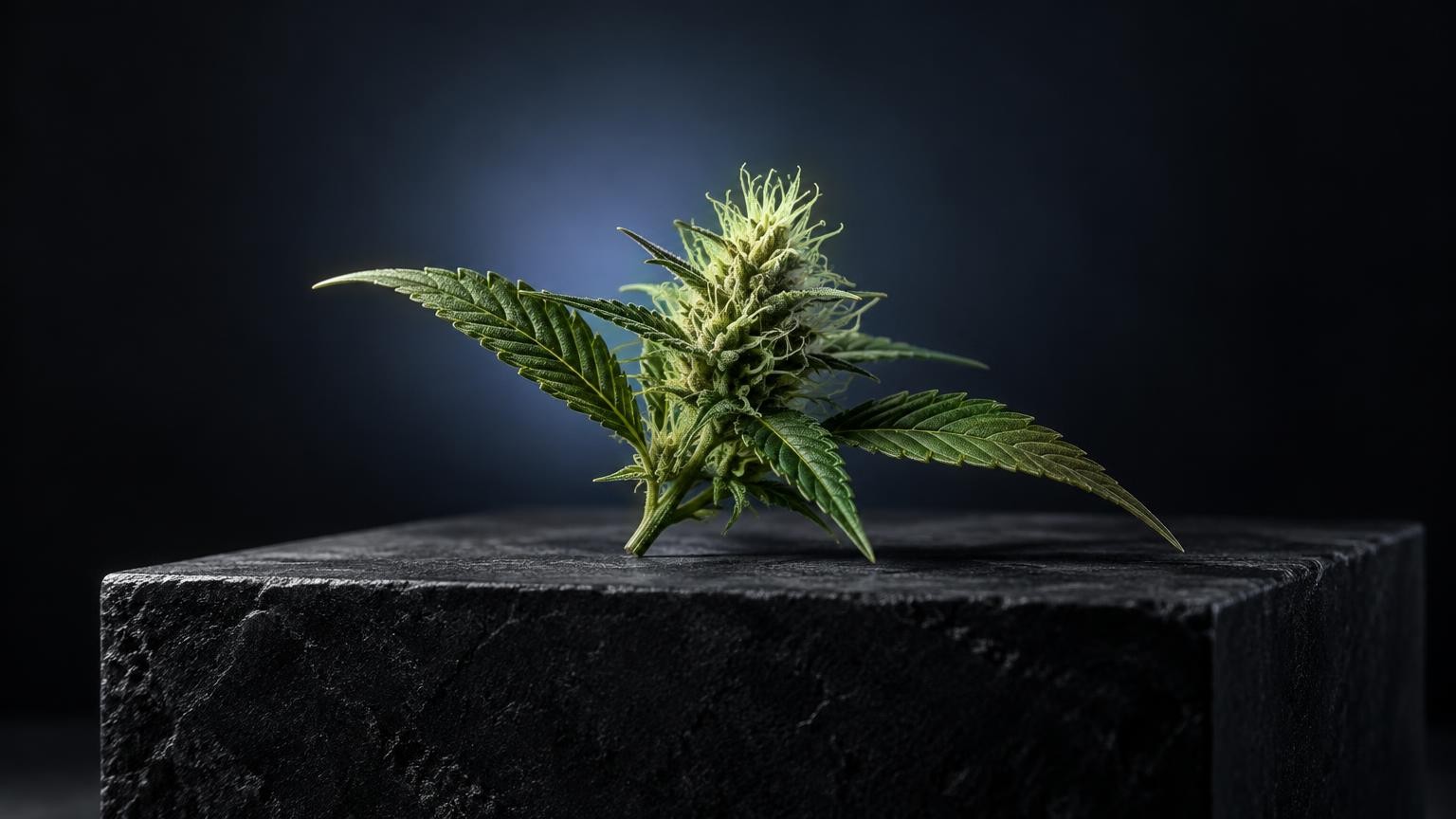
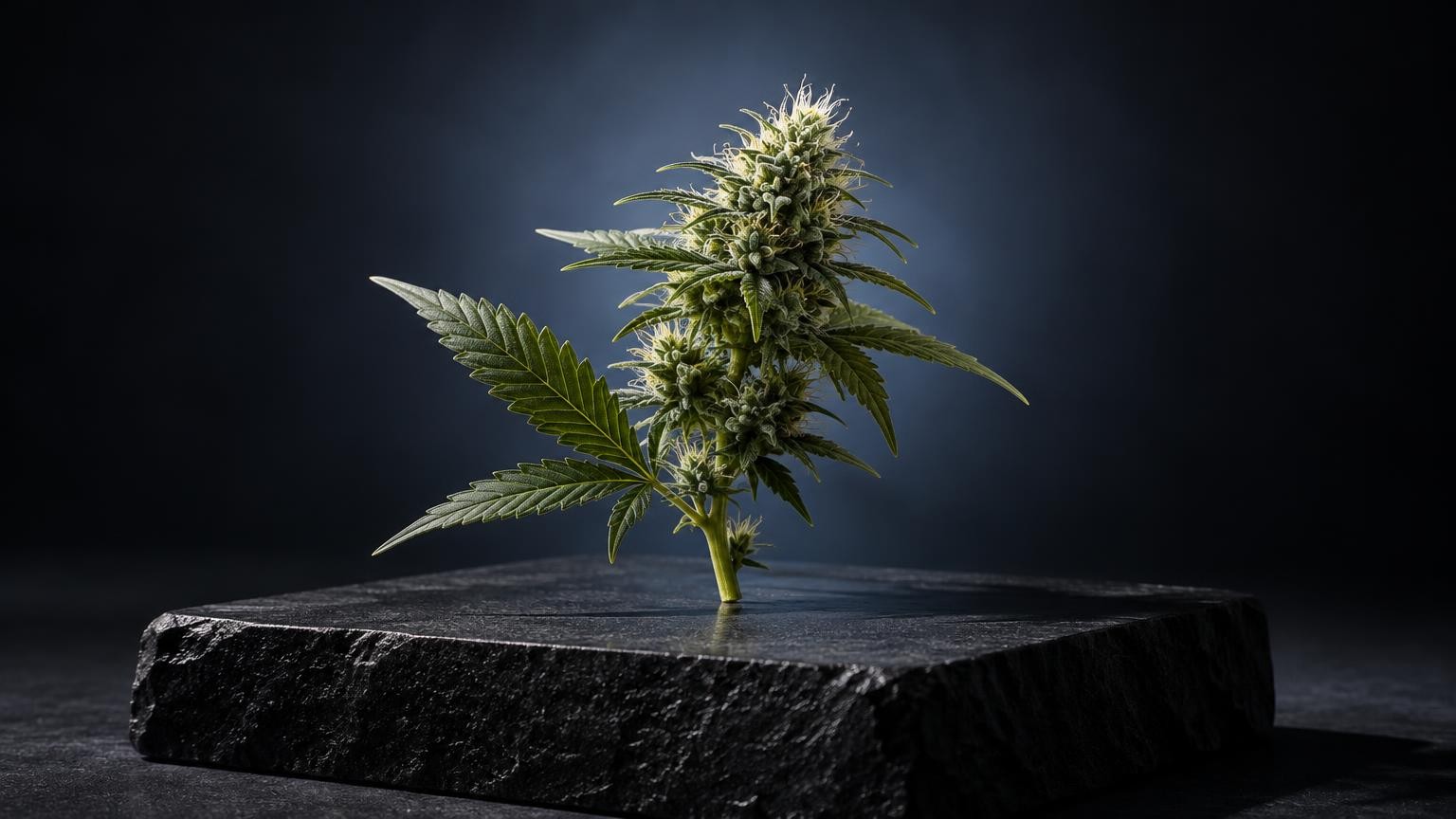
The cannabis strain has no equivalent. Whether you open the jar in October or April, a Blueberry bud has no crown, no skin and no round shape: it looks like any other cannabis flower, so judge it on nose and trichomes, not looks.
Blueberry flower, THCX pods or live rosin pods: which format to choose
Once you know what Blueberry should smell like, the format decides how much of that aroma reaches you. Spliff offers three options, each giving up some nuance for convenience.
- Blueberry flower: the most complete aroma, with the full jam-and-hash profile from “What does Blueberry smell and taste like?”. It comes in 3 g to 100 g.
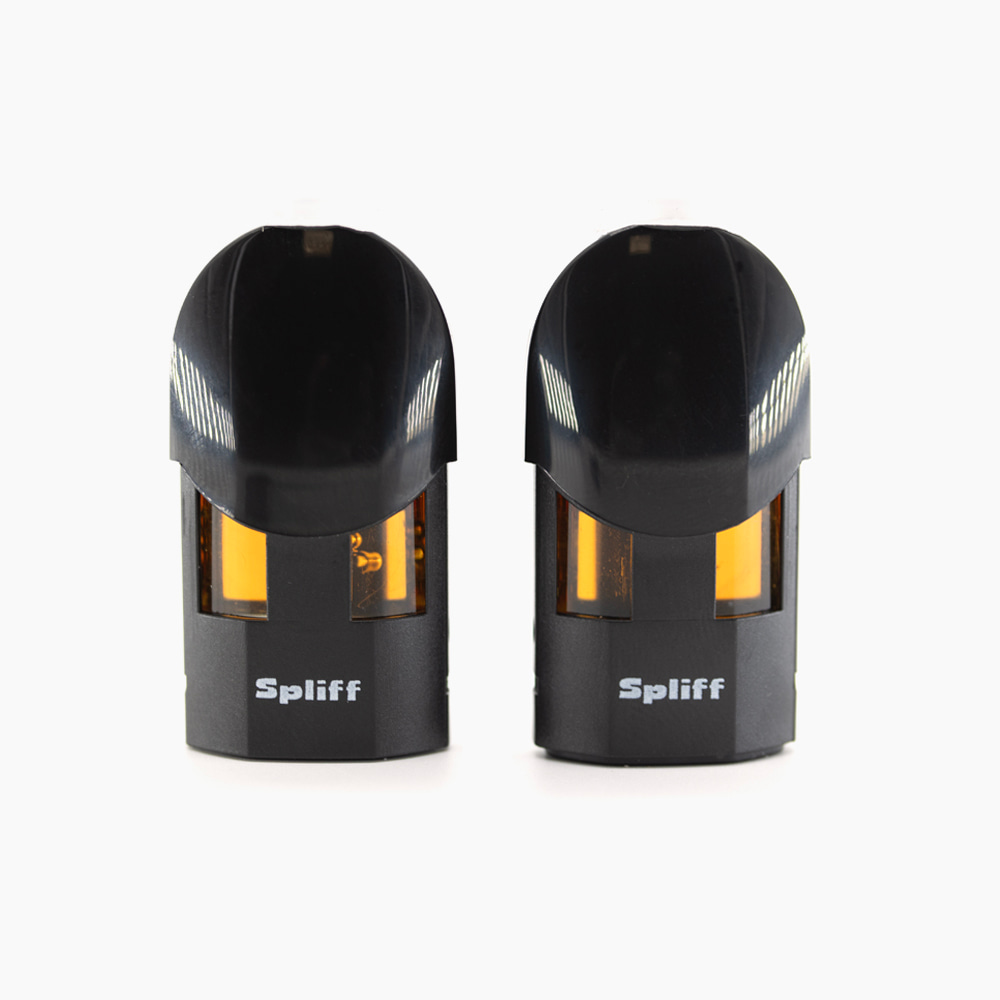
- Magic Pod Live Rosin x2: the vape that stays closest to the plant’s own aroma.
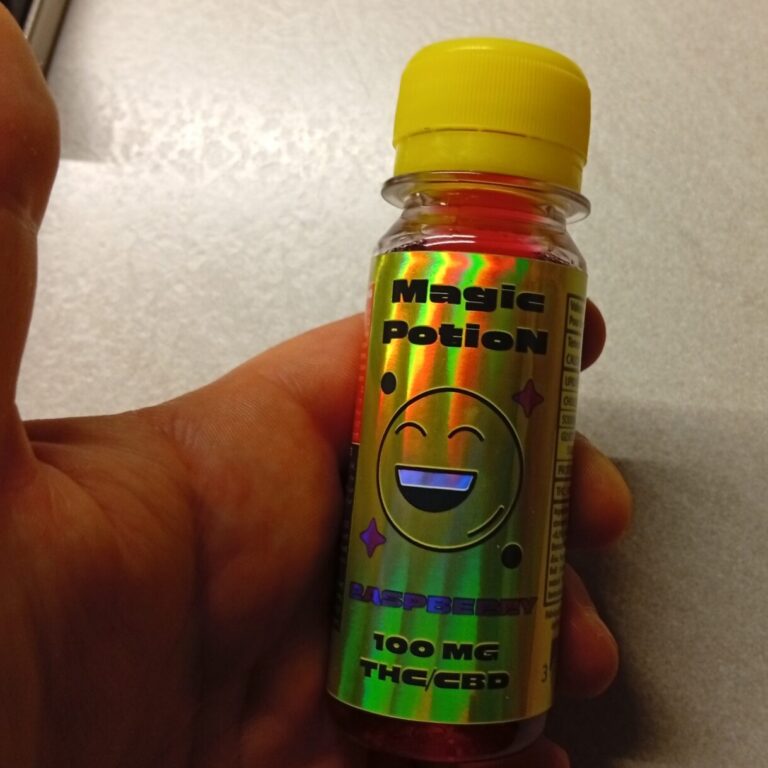
- Magic Pod x2, THCX vape pods 90%: discreet and simple, with a stronger extract and a flatter flavour than flower. THCX is a trade name, not a molecule: every batch is lab-tested for classified molecules and none are detected. It’s part of our THCX range. The lab analysis of each batch is available on request from customer service.
Live rosin or standard pod: what actually changes?
Live rosin keeps more of the original aroma, while a standard pod gives up some of it for consistency. Live rosin is a solventless extract made with heat and pressure alone, so the bright berry top notes survive. A distillate pod is refined further, giving a cleaner, uniform oil whose flavour is closer to blueberry syrup than fresh fruit.
That extra care in production explains the price gap on the product cards. Rosin quality is also settled long before the press, back at planting: a press can’t add aroma that wasn’t there, just as no harvest can rescue blueberry bushes planted in soil where root rot has already taken hold.
If flavour comes first, go for rosin. If discretion and a lower cost per session matter more, the standard pod is the better fit.
Is Blueberry the right pick for you?
Blueberry is the right pick if sweet, jammy berry aromas are what you enjoy in cannabis. Choose the flower if aroma is your priority, the live rosin pods if you want that flavour in a vape, and the standard Magic Pod if discretion and simplicity come first. If you lean towards citrus, gas or herbs, skip it.
- The aroma lover: flower, no contest. It’s the only format that gives you the whole picture.
- The discreet vaper: the standard Magic Pod x2 is the easy, low-key option, with the flatter flavour you already know about.
- The first-timer curious about fruity strains: start small with flower so you learn the real reference before moving to any vape.
Blueberry varieties at a market range from tart to honey-sweet, yet they all taste like fruit. If your palate wants lemon zest, diesel or herbal pine, this strain will feel like dessert when you ordered a lemonade.
Like blueberries grown on different farms, no two batches or two people are identical. Experience varies, so no specific effects are promised here. For adults only (18+), and never drive after use.
If you want the berry character without rolling anything, the Magic Pod Live Rosin x2 is the format we’d point most Blueberry fans to.
Blueberry, fruit vs strain: the bottom line
Bottom line: the fruit gives you the vocabulary, the strain delivers the aroma, nothing more crosses over between them.
New to berry-scented cannabis? Let your nose pick the format that matches your priority. Spliff ships notably to these 4 countries: Austria, Belgium, Germany and the Netherlands.
Sources
- The state of the science on the health benefits of blueberries — www.frontiersin.org
- Recent research on the health benefits of blueberries and … — research-portal.uea.ac.uk
- Blueberry Breeding – James Hutton Institute — www.hutton.ac.uk