 Written by Sarah Mitchell
 Contents8 sections
- What Eating a THC Brownie Actually Feels Like
- The Dosage Maths: mg on the Label ÷ Portions You Cut
- Why Homemade Batches Never Dose Evenly
- Brownie vs Gummies vs Chocolate: Which Format Doses Best
- Buying THC Brownies and Edibles Online in Europe: What to Check
- Labelling Rules, Redosing and Responsible Use
- Conclusion
- Frequently asked questions
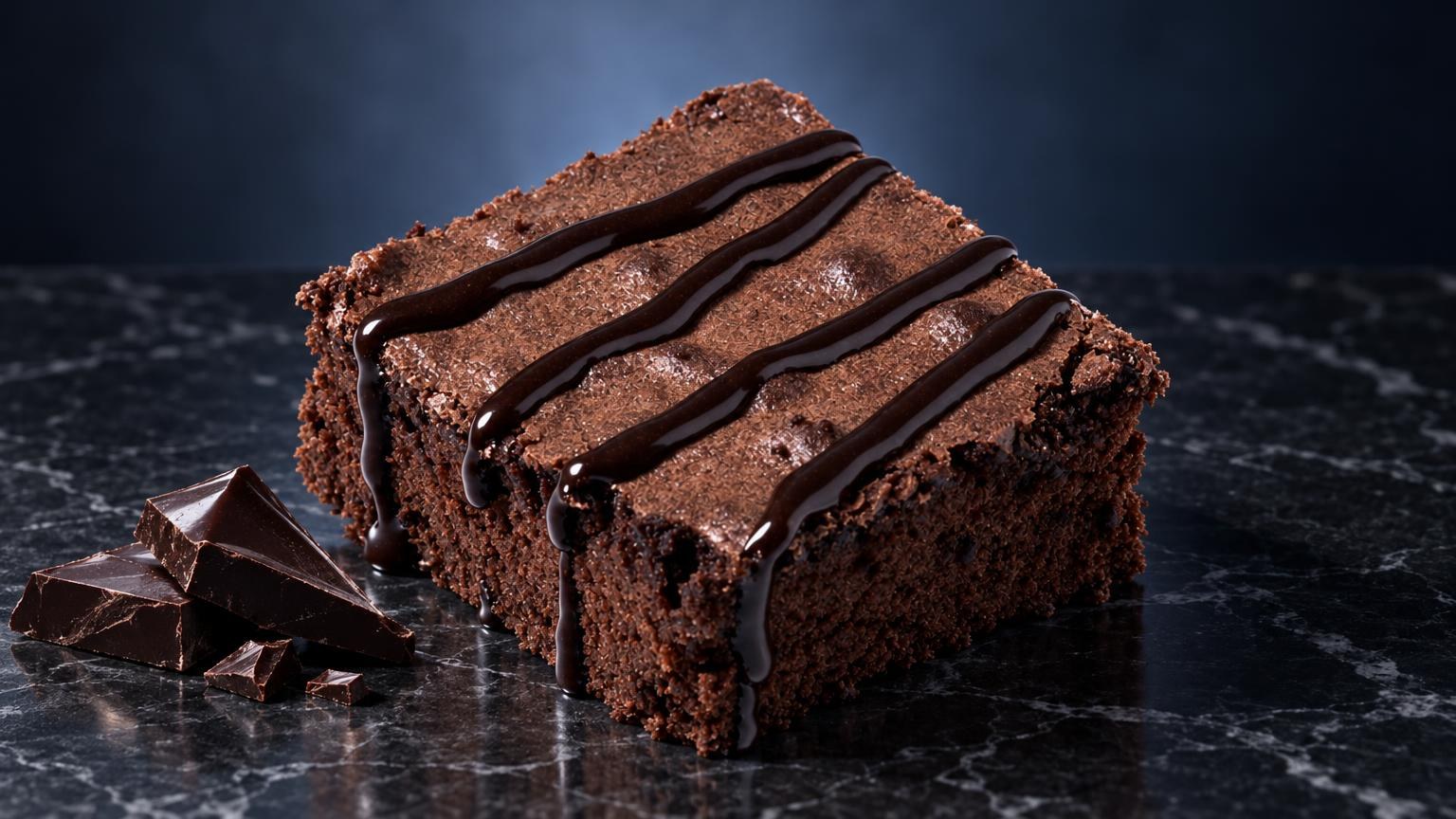
A THC brownie is a baked cannabis edible: cannabinoids dissolved into a fatty batter, then swallowed instead of inhaled. That single change of administration route rewrites everything downstream, from what your liver does to the molecule to how long the effect lasts.
Inhaled THC crosses the alveolar membrane and reaches the bloodstream almost unmodified. Swallowed THC takes a longer road. It passes through the gut wall to the liver first, where first-pass metabolism converts a substantial share of it into a hydroxylated metabolite before anything reaches general circulation[1].
You are not consuming the same active profile as a joint, even at an identical milligram count. That metabolic step is the honest chemistry behind every “edibles hit different” comment you have ever read.
Then there is the matrix. Cannabinoids are lipophilic, and in cannabis brownies they sit inside butter, oil and cocoa solids, which the digestive system unpacks slowly. Eat one after a full meal and you flatten the absorption curve further; eat it on an empty stomach and the same brownie behaves differently.
Which brings us to the tension this article is built on. With brownies, the experience depends far less on the product than on the number of milligrams you actually swallowed. And a brownie is the one format people cut into pieces before anyone counts.
The essentials in 30 seconds
A brownie acts later and lasts far longer than anything inhaled. The only dose figure worth trusting is the one printed on a lab-tested pack.
- Expect a delayed rise, a long plateau and a tail that outlasts both.
- The rise phase is easy to mistake for nothing happening; a second piece taken then simply doubles the dose.
- When buying online: a batch number with its lab report available on request, an allergen list and a durability date are non-negotiable.
What Eating a THC Brownie Actually Feels Like
Ask ten people what a THC brownie felt like and you’ll get ten different timelines, because the variable they’re describing isn’t the brownie. It’s the milligram count that actually crossed their lips.
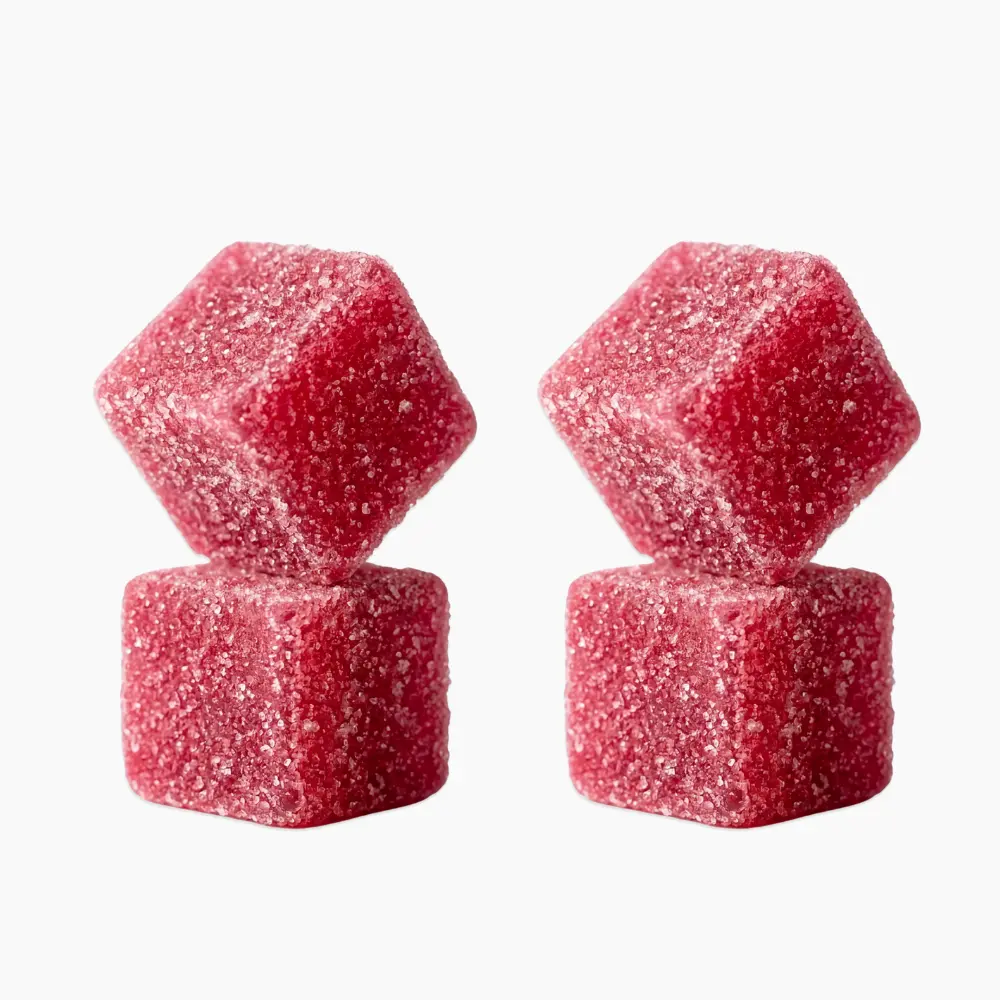
The first thing most people notice is nothing at all. The batter’s fat holds the cannabinoids while the stomach empties at its own pace, so the molecule waits in a queue before absorption even begins. Ingested cannabis therefore takes effect later and lasts considerably longer than inhaled cannabis[1].
Then the curve arrives, and it really does arrive as a curve rather than a switch. In neutral, observable terms, most oral experiences follow three measurable phases:
- Rise: a gradual build over tens of minutes, not a single spike.
- Plateau: the longest stretch, where perceived intensity holds relatively flat.
- Tail: a slow return that outlasts the plateau, often by hours.
That shape is the signature of the detour from the introduction at work: cannabis edibles rarely feel like a slower version of smoking. They behave like a different pharmacokinetic event entirely.
Where the real uncertainty lives is distribution. THC is fat-soluble: in a batter it travels with the butter or oil, and analyses of finished edibles report considerable variation in how much cannabinoid ends up in a given product and how evenly it is spread[2]. Wherever that fat pools in the pan, the cannabinoids pool with it.
Pinning that figure down is pure arithmetic, and it comes next.
The Dosage Maths: mg on the Label ÷ Portions You Cut
Which brings us to the only calculation in this article worth memorising. Two inputs, no ambiguity: total mg printed on the label ÷ number of portions you genuinely cut = mg per portion. That is the entirety of edible dosing arithmetic.
So when people search for how much THC is in a brownie, the accurate answer is that no standard value exists. A cannabis brownie is a format, not a dose. The only figure that survives scrutiny is the milligram count printed on the packaging of a lab-tested unit, and that count refers to the entire unit, never to a bite.
Run a 200 mg unit through the formula and the grid writes itself.
| Label total | Portions cut | mg per portion |
|---|---|---|
| 200 mg | 1 (whole) | 200 mg |
| 200 mg | 2 | 100 mg |
| 200 mg | 4 | 50 mg |
| 200 mg | 8 | 25 mg |
| 200 mg | 16 | 12.5 mg |
Now compare that with the arithmetic circulating in a typical weed brownie recipe. Bon Appétit’s version divides its batch across 12 portions and arrives at roughly 8.3 mg per serving. That figure is produced on paper, before the tray ever reaches the oven.
Food52 lands in the same range, quoting a theoretical 8–10 mg per portion across 16 brownies. Same method: an estimate calculated in advance, never confirmed against an analytical result afterwards. Both are paper calculations, and neither has passed through a laboratory.
Given where those fat molecules end up settling, that neat division only holds on paper, a home tray was never mixed to guarantee it.
Estimation by eye is where the arithmetic of thc brownies stops being maths and turns into chemistry. That’s the next problem.
Why Homemade Batches Never Dose Evenly
Skill is not the issue here; measurement is.
The same measurement problem applies to the coffeeshop classic, as explained in Space Cake: Effects, Timing and Dosage Explained.
Hand-mixing doesn’t fix that. A domestic whisk gives you a visually uniform batter, not an analytically uniform one, and you cannot verify the difference without a lab. Two adjacent squares from the same tray of cannabis brownies can carry different milligram loads.
Then there’s the conversion step. Raw cannabis contains THCA, an acidic precursor that becomes THC through decarboxylation, a reaction governed by the time and temperature the material is held at. Without precise control of that pairing, conversion runs partial and variable, so the real THC content stays unknown even when the starting flower has been analysed.
The oven adds a second unknown. Decarboxylation and thermal degradation are both governed by the exact time and temperature pairing, and a home oven controls neither with any precision. Any figure you calculate on paper before baking therefore describes an input, not a verified output.
The earliest controlled trial of this exact format dates from 1988: five volunteers ate brownies baked with a laboratory-analysed quantity of cannabis, and even with the dose known in advance, the measured effects appeared slowly and differed between subjects[3]. A home tray starts without even that known dose.
So no, you won’t find a weed brownie recipe here, and the reason is arithmetic rather than caution. Three unquantified variables stack up:
- Distribution: where the fat went in the tray.
- Conversion: how much THCA actually became THC.
- Survival: how much of it left the oven intact.
Freezing a finished batch preserves the matrix. It tells you nothing about what sits in each square. Only a lab-analysed unit converts a guess into a printed number.
Brownie vs Gummies vs Chocolate: Which Format Doses Best
The useful question is which factory-dosed format gives you the number you actually need. That comes down to matrix behaviour and portioning, not flavour.
Three matrices dominate the shelf: baked lipid, gelled sugar and tempered chocolate. Each hands you a different unit of measurement.
| Format | Dose unit | Cutting precision | Sharing | Matrix & onset feel |
|---|---|---|---|---|
| Brownie (200 mg) | Per tray, divided by you | Depends on your knife | Excellent, built for a group | Baked lipid matrix, fat-carried |
| Gummy (100 mg or multipack) | Per printed unit | None needed | Good, one piece each | Gelled sugar, little fat |
| Chocolate sphere/bar | Per pre-scored square | Moulded, not improvised | Very good | Cocoa butter, fat-carried |
The gummy wins on granularity. One piece equals one printed figure, and no arithmetic survives contact with your dessert plate.
The brownie wins on the social format, because it’s the only one of the three designed to be divided at the table. Its weakness is that same feature: you make the division, not the manufacturer.
Chocolate sits between the two. The mould already did the cutting, so each square is a fixed fraction of a printed total rather than an estimate you improvised with a knife.
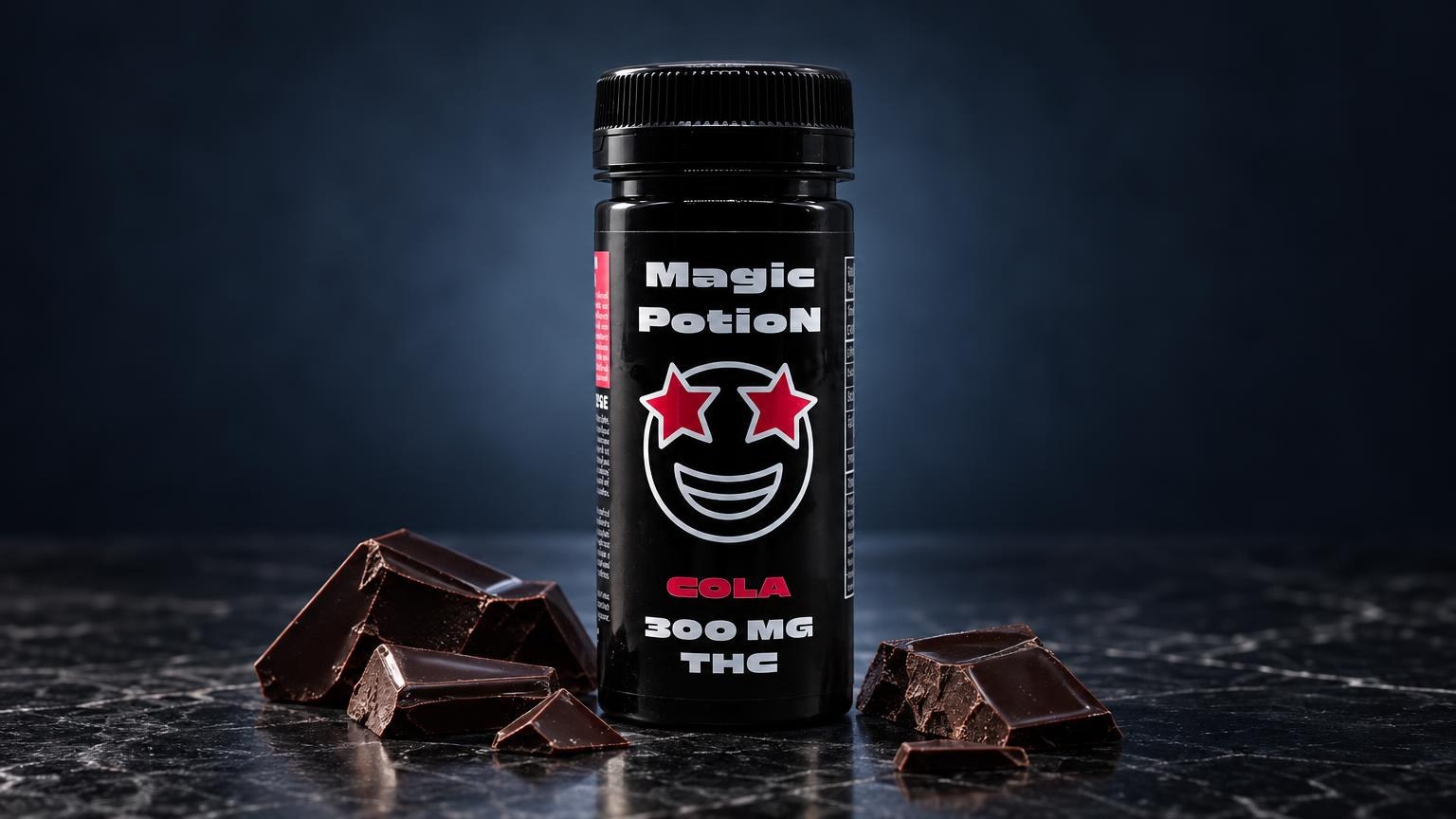
In our own range, the Magic Brownie Space Cake is the shareable format: one tray, one printed total, divided at the table. For per-unit control, Magic Candy sweets scale up to the Family Pack, while the Family Pack Magic Sphere uses high quality chocolate in pre-portioned spheres. One clarification so the arithmetic and the paperwork line up: “THC” in these product names is the commercial name of the range. What sits inside belongs to Spliff’s THCX range, not the THC discussed in the pharmacology above, so do not carry THC potency figures over to it milligram for milligram. THCX is a trade name, not a molecule: every batch is lab-tested for classified molecules and none are detected. The milligram figure printed on the pack is the declared active content of that unit, every batch is analysed, and the analysis is available on request from customer service.
Buying THC Brownies and Edibles Online in Europe: What to Check
Picking a format is the easy half. Picking who prints the number is the hard half, because a milligram figure is only worth the paperwork standing behind it.
Cannabis edibles sit on the food side of the shelf, not the pharmacy side. That is why a serious seller operates like a food business: batch numbers, allergen declarations, durability dates. That’s the standard I shop against, and so should you.
Five things to verify before anything goes in the basket:
- Total mg and mg per portion, both printed. One figure without the other hands the arithmetic back to your knife.
- A third-party lab report for the batch, available on request and tied to the batch number on the pack, not a generic PDF covering the whole product line.
- Full ingredient and allergen declaration. Brownies are eggs, wheat, dairy and often nuts before they’re anything else.
- A durability date, because a baked fat matrix ages exactly like a baked fat matrix.
- Resealable packaging, which matters precisely because this is the format people cut into and come back to.
Which is why searching for thc brownies near me is a poor heuristic. Proximity tells you about delivery time and nothing whatsoever about cannabinoid content. With an ingested product, traceability beats availability every single time.
Ordering from one pan-European shop has a practical upside: tracked shipping, discreet packaging, and the same label on every market rather than whatever a local counter happens to have scribbled by hand.
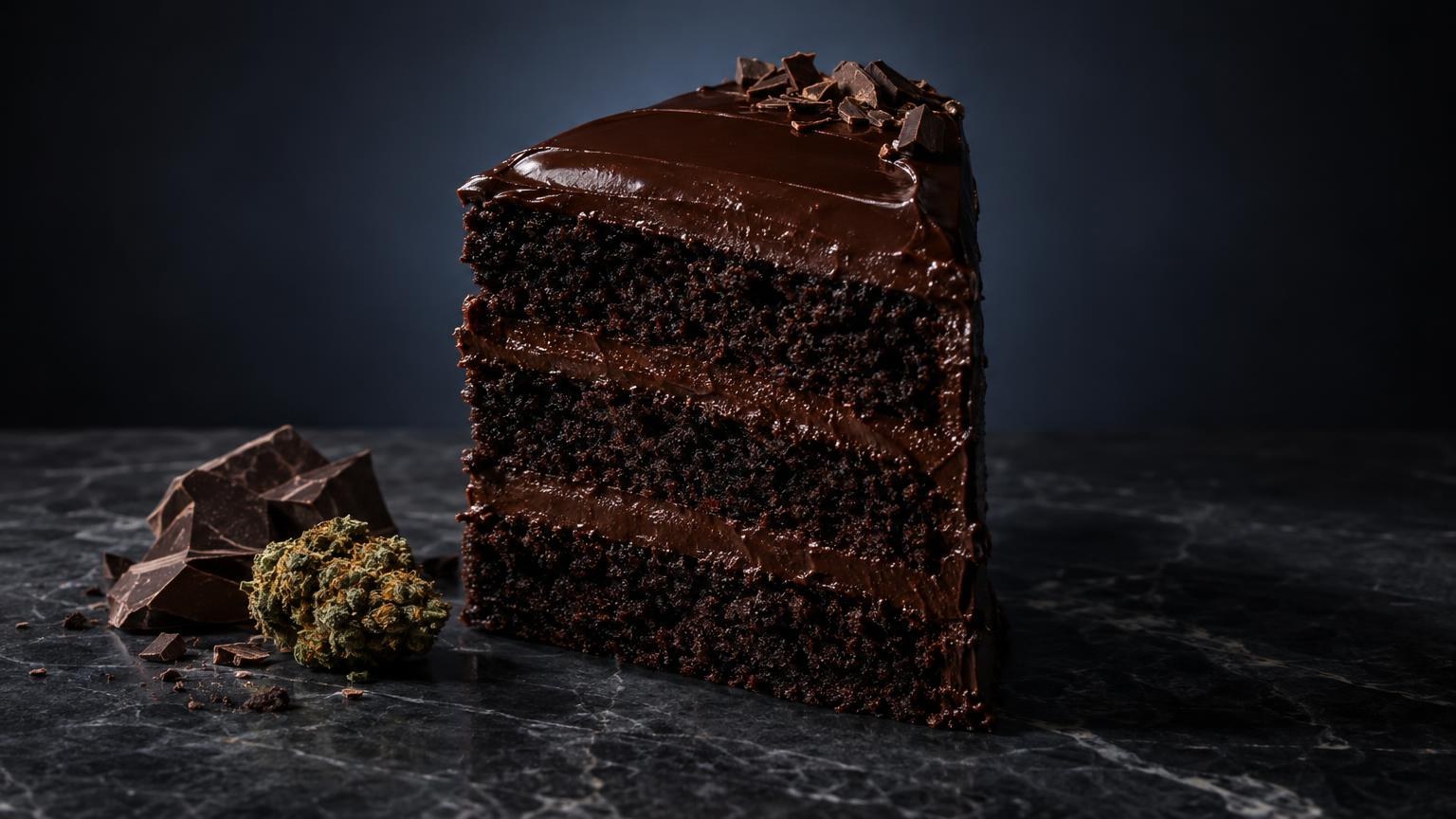
Concretely, that’s the appeal of the Magic Brownie Space Cake: a properly dense, fudgy cake, sold as one shareable unit with the total printed on the pack, so the only variables left are how many squares you cut, and how evenly you cut them. Store it sealed and cool, ideally with something from the accessories shelf rather than an open drawer.
One last point: what Spliff ships under “THC” product names is its THCX range, which is not the THC discussed above; each batch is analysed and the analysis is available on request from customer service.
Labelling Rules, Redosing and Responsible Use
The paperwork tells you what you bought. What follows tells you how not to waste it, and the single most common way people undo their own dose.
Almost every bad edible story starts identically: someone eats a portion, registers nothing, and eats another. That second portion isn’t a correction, it’s a doubling, and it lands on top of the first one at roughly the moment the first was finally going to arrive. That misreading of the delay is how people end up swallowing more than they intended[2]. Two 25 mg squares taken forty minutes apart are not two separate experiences. They’re a single 50 mg dose with a staggered rise.
So the waiting rule is arithmetic, not patience. You commit to your smallest cuttable portion, you let the full rise-to-plateau cycle run its course, and only then do you ask whether a second portion is a decision or a reflex.
On the labelling side, read the packet as a document. A comestible sold as food carries an ingredient list, declared allergens, a batch or lot identifier and a durability date.
Those four mentions are your cheapest proxy for whether anyone upstream takes analytics seriously. Cannabis edibles that skip them are telling you something about how the milligram figure was arrived at, and it isn’t flattering.
Storage deserves the same rigour. A Los Angeles investigation published in 2009 traced the sudden symptoms of a group of preschool teachers to brownies bought from a sidewalk vendor, with cannabinoids detected in a recovered sample and two patients seeking medical care[5]. Brownies look like brownies, which is precisely the problem: keep thc brownies sealed, labelled and out of reach, in a place nobody raids by accident.
Conclusion
Strip everything back and THC brownies reduce to a single number: the milligrams you actually swallowed. Every other variable only shapes how that number reaches you.
A recipe can tell you how a tray will taste. It cannot tell you what a corner square contains, and that gap is the whole argument.
Treat the label as data, not decoration, and a shared brownie stops being a gamble.
Frequently asked questions
How much THC is in a brownie?
None you can assume in advance. Content varies with the maker and the batch, and only a lab-verified label pins it down for the unit in your hand.
How do I make THC brownies or use THC oil in brownies?
Deliberately not covered: without laboratory analysis, no kitchen method can tell you the milligrams in any given square, whatever the recipe promises.
How much mg THC per brownie should I expect?
Retail units print very different totals, so read the pack rather than trusting the format: a 200 mg tray cut into eight equal squares gives 25 mg a square, cut into four it gives 50 mg.
Why does the same batch of homemade brownies hit differently square to square?
Because the infused fat pools unevenly in the tray, decarboxylation runs partially, and the oven degrades part of what was converted; none of the three can be checked without laboratory equipment.
What should I check before buying THC brownies online?
Total mg and mg per portion both printed, a batch number with a lab report available on request, a full ingredient and allergen list, a durability date and resealable packaging.
Sources
- Huestis M.A. (2007), Human Cannabinoid Pharmacokinetics — Chemistry & Biodiversity / PMC — pmc.ncbi.nlm.nih.gov
- Barrus D. et al. (2016), Tasty THC: Promises and Challenges of Cannabis Edibles — RTI Press / PMC — pmc.ncbi.nlm.nih.gov
- Cone E.J. et al. (1988), Marijuana-laced brownies: behavioral effects, physiologic effects, and urinalysis — Journal of Analytical Toxicology — pubmed.ncbi.nlm.nih.gov
- Cao D. et al. (2016), Characterization of edible marijuana product exposures reported to US poison centers — Clinical Toxicology — pubmed.ncbi.nlm.nih.gov
- CDC (2009), Inadvertent ingestion of marijuana — Los Angeles, California — MMWR — pubmed.ncbi.nlm.nih.gov
- How to Make Weed Brownies — Bon Appétit — www.bonappetit.com
- Best Weed Brownies Recipe — Food52 — food52.com