 Written by Sophie Clarke
 Contents8 sections
- What the mg number on an edible label actually means
- 100 mg: what the single-pack format looks like
- 200 mg: reading a one-piece brownie label
- 300 mg and 1,000 mg: bulk formats and the price per 100 mg
- All five formats side by side
- Your five-second label check before you buy
- Conclusion
- Frequently asked questions
The mg figure on an edible label is the declared cannabinoid content of the whole product, not of one bite, unless the label explicitly says “per piece”. So 100 mg, 200 mg and 1,000 mg tell you what sits in the bag, in the brownie or in the family pack. And that number is the single biggest thing moving the price tag.
Here is where people get caught out. You search “edible mg”, you land on a North American dosage chart, and not a single euro price in sight. You still have no clue whether a pack should cost you 17,90 € or 129,00 €. That gap is exactly what I wanted to close here.
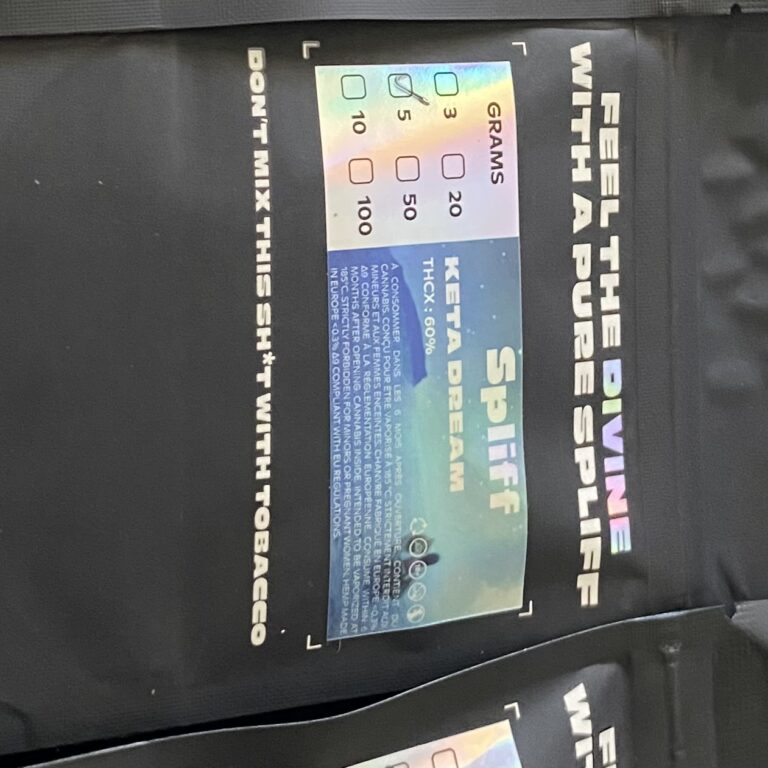
One more thing worth checking on the front of the pack: which cannabinoid is actually named. Several names in our edible range still carry the wording “THC” for historical reasons only. That wording is a leftover label, not the declared content.
What is actually declared in those products is THCX. THCX is a trade name, not a molecule: every batch is lab-tested for classified molecules and none are detected. So two packs can both say “THC” on the front and still declare THCX. Read the declared THC CBD content line, not the product name.
That distinction matters the second you start comparing labels. The lab analysis of each batch is available on request from customer service. Delivery conditions also differ from one European country to the next: check yours before ordering.
And no, I am not going to tell you how any of this will feel. Onset, the type of experience, the setting you are in: that is a different conversation, and it belongs on the pillar page.
So here is what you are getting: a label and price guide, built around milligrams of declared cannabinoid. For the basics of what an edible is and what the experience feels like, that pillar has you covered.
What the mg number on an edible label actually means
The mg number on an edible label tells you how much cannabinoid is declared in the product, and nothing else. Not how strong it feels, not how much you should eat. Declared content, full stop.
So your first move in a shop, or staring at your cart at 11pm, is not to compare figures. It is to work out which figure you are looking at.
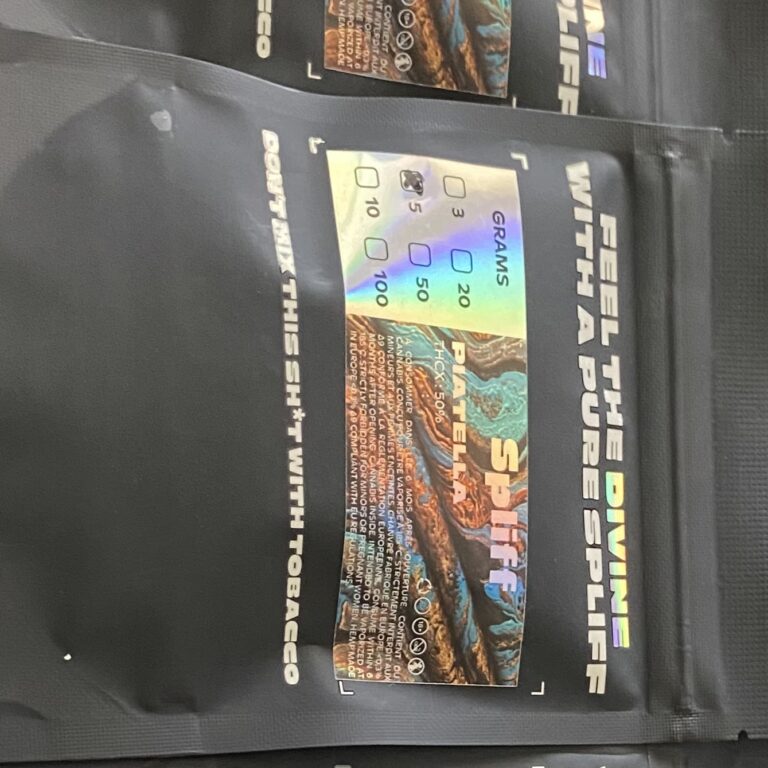
A well made label carries two numbers: the total content of the pack, and the content of one piece. Plenty of brands print only the first. Once you know how many sweets are in the bag, or how many ml are in the bottle, the second number is simple arithmetic you can do right there at the counter.
That count is not a detail, it is half the information. A milligram figure with no piece count and no volume is just a number floating in space. That is exactly how people end up misreading edible mg on two products that look completely identical.
Now the part most people skip: the word printed next to the milligrams matters as much as the milligrams. THC and CBD edibles are not declared the same way, so a bare number tells you nothing until you have read the name beside it.
On our own packs, product names like “THC Sweets” describe the category you’re shopping in, not the content itself, as flagged above, it’s the cannabinoid name that carries the actual information.
One last thing the figure is not: a dosage instruction. It describes declared content, nothing more, and label accuracy has been a documented issue in research on cannabis edibles. If the whole format is new to you, start with what an edible actually is. That is where most people want to begin anyway.
100 mg: what the single-pack format looks like
Now put that reading trick to work on the smallest format in the range, and something odd pops out straight away. Two products, the same 100 mg printed on the front, two labels that tell you completely different things.
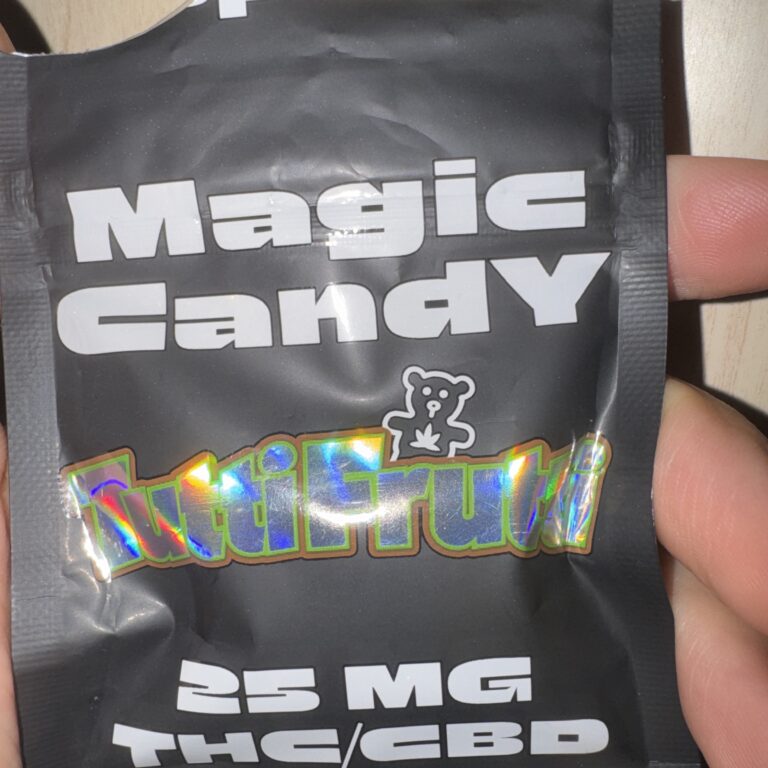
First up, the Magic Candy THC Sweets 100 mg (17,90 €). It’s a bag of individual sweets, so your per-piece number is the total divided by the count printed on the pack. Simple maths, but you do have to actually do it.
Then there’s the THC Syrup Magic Potion 100 mg (17,90 €). Same number on the front, except here there’s nothing to count. The content is spread across a volume in millilitres, so your denominator is ml, not pieces.
This is the entry format, and honestly, the price is why it moves. One flavour, one bottle or one bag, no commitment to a big pack.
People buying edibles for the first time often pick this format for exactly that reason. But that’s a shopping decision, not a dosing one, and nothing printed on the label turns it into one.
200 mg: reading a one-piece brownie label
Take the Magic Brownie Space Cake THC 200 mg. It’s one baked piece carrying the whole declared figure. The pack holds a single brownie, so the total content line and the per-piece line say the exact same thing: 200 mg.
At first glance, that can look like a printing slip. It isn’t. On a bag, the front figure always needs dividing by the count; on a one-piece format, the pack and the piece are the same object.
One more thing worth knowing: label conventions are not the same everywhere, which is why edible packs, baked goods included, can look completely different outside Europe.
300 mg and 1,000 mg: bulk formats and the price per 100 mg
Here’s the number no label prints for you: what 100 mg actually costs. Once you move up to the bigger bottles and packs, that’s the figure worth doing in your head before you click.
The Magic Potion syrup, 300 mg, sits at 34,90 € for a bottle carrying triple the declared content of the small one.
The Family Pack Magic Candy, 1,000 mg, is 129,00 € for the same fruit sweets. It’s a pack sized to last far longer: you order once, then forget about it for a good while.
| Bulk format | Declared content | Regular price | Price per 100 mg |
|---|---|---|---|
| Magic Potion syrup | 300 mg | 34,90 € | 11,63 € |
| Family Pack Magic Candy | 1,000 mg | 129,00 € | 12,90 € |
Regular prices in euros, read on spliffstore.eu on 11/09/2026, promotions excluded. Check my maths if you like: 34,90 € divided by 3, and 129,00 € divided by 10.
The bigger pack is not automatically the better deal. Here, the 1,000 mg option costs slightly more per 100 mg than the syrup.
That surprises a lot of people. It’s exactly why the division is worth running before checkout, every single time.
So why do bulk formats exist at all? Because edibles are a serious chunk of the category wherever they are sold.
A CDC MMWR report on Colorado put edible products at roughly 45 % of marijuana sales in that US state. That’s a figure specific to that market and that period, by the way, not a European benchmark.
Price per 100 mg is simply the honest way to compare those packs. It turns a milligram figure into a purchasing decision instead of a puzzle, and it keeps the comparison where it belongs: on price, not on effects.
All five formats side by side
Short answer first: the cheapest milligram in this line-up is the 300 mg syrup at 11,63 € per 100 mg, and the Family Pack is right behind it at 12,90 €. Five references, five labels, one grid, at regular prices read on spliffstore.eu on 11/09/2026.
| Product | Format | Pieces or ml | Regular price | Price per 100 mg |
|---|---|---|---|---|
| Magic Candy THC Sweets 100 mg | Bag of sweets | Count printed on the pack | 17,90 € | 17,90 € |
| THC Syrup Magic Potion 100 mg | Bottle | Volume in ml on the bottle | 17,90 € | 17,90 € |
| Magic Brownie Space Cake THC 200 mg | One baked piece | 1 brownie | 34,90 € | 17,45 € |
| THC Syrup Magic Potion 300 mg | Bottle | Volume in ml on the bottle | 34,90 € | 11,63 € |
| Family Pack Magic Candy 1,000 mg | Family pack of sweets | Count printed on the pack | 129,00 € | 12,90 € |
Read that last column as a purchasing ratio and nothing else. It tells you what a hundred milligrams of declared content costs in each pack, exactly the way your supermarket shelf shows a price per kilo.
So “milligrams of THC declared” here always means the figure printed on that label, nothing more.
Shipping zone unchanged from what I mentioned earlier in this piece.
Want the full line-up rather than these five? Browse all THC edibles and read every label the same way: milligrams of THC declared, count, then price. Same three steps, every time.
Your five-second label check before you buy
Here’s the shortcut: line up any label, from any shop, and five checks get you to a decision in about five seconds. It works on a phone, right before the basket page.
- Total or per piece: work out which of the two that mg figure refers to, then look for the count or the volume that completes it.
- The cannabinoid named: the front of the pack should tell you which one is declared, not just wave at “hemp extract”.
- The lab mention: a batch reference or a test statement you can actually match to the product in your hand.
- The best-before date: baked goods and syrups do not keep like a sealed bag of sweets.
- The delivery country rule: what a site displays and what it actually ships to your address are two very different questions.
That last one is the one people skip, and it’s the one that bites. Delivery conditions vary country by country across Europe. A pack listed on a site does not magically become deliverable to your address just because a checkout took your order.
Check the delivery conditions for your country before you pay, not after. It takes a minute, and it saves you a parcel that never arrives.
And if you’re wondering about the length of an edible high, or what a THC edibles high actually feels like, both sit outside label reading: see how long edibles last and what an edible high feels like.
Our verdict
For pure value, the 100 mg calculation settles it: bulk formats price out lower per declared milligram than single-serve packs, but that gap reflects purchase conditions, not potency or effect. Match the format to how you actually buy, not to the biggest number on the label.
- For the lowest price per 100 mg → the 300 mg Magic Potion syrup, at 11,63 € per 100 mg.
- For a first order without a big pack → a 100 mg format at 17,90 €, the smallest outlay in the range.
- For regular buyers stocking up → the 1,000 mg Family Pack, one order that lasts a good while.
Conclusion
So here’s the thing: the big number on the front of the pack was never the tricky part. Reading it in context is. Once you’ve got the piece count, the volume and the actual cannabinoid name, that mg figure turns into something you can put on a price list.
Start there every single time, whatever the label says: THC, CBD, or a trade name like THCX. Two packs can show you the same figure and be built nothing alike. The price per 100 mg is what settles the argument.
And when you want to take that little grid out for a spin, the whole range sits in one place: all THC edibles, with every label spelled out on its own page. Do the maths yourself. It takes twenty seconds and it’ll save you money. 😉
Frequently asked questions
Is a 100 mg edible strong?
A label does not describe strength or effects: 100 mg is the declared content of the whole pack unless it says per piece. To see how that figure splits, divide it by the piece count or the ml printed on the pack. How any product feels is not something a label, or this guide, can tell you.
Is a 500 mg edible strong?
The label tells you declared content only, so a 500 mg pack could be a multi-piece bag or a single item: divide by the piece count or the volume to read the per-piece figure. The THC or CBD named beside the number changes what that figure refers to, since the two are not declared the same way.
How much is a 500 mg edible?
Pricing for a 500 mg product isn’t listed among the five formats shown, but you can estimate it using the price-per-100mg method: multiply the cheapest observed rate (around 11,63 € to 12,90 € per 100 mg) by five to get a rough range, then compare against the actual label price.
How long does a 1500 mg edible last?
The total mg figure on the pack describes declared content, not duration or effects over time, so the label alone cannot answer that. Onset and duration sit outside label reading and are covered in our separate guide on how long edibles last.
How long does a 25 mg edible last?
The declared mg figure, 25 mg included, says nothing about onset or duration: it only states what the product contains. This guide sticks to labels and prices; questions about timing are covered in our separate guide on how long edibles last.
How many mg are in edibles?
See “What the mg number on an edible label actually means”, the figure is the declared cannabinoid content of the whole pack unless marked “per piece,” and formats in this range go from 100 mg single bags up to 1,000 mg bulk packs.
How much does a 1,000 mg edible cost?
The 1,000 mg format appears among the bulk sizes discussed in “300 mg and 1,000 mg: bulk formats and the price per 100 mg,” where the meaningful figure is price per 100 mg rather than the sticker price alone, letting you compare it directly against smaller packs like the 100 mg bag at 17,90 €.