 Written by Sophie Clarke
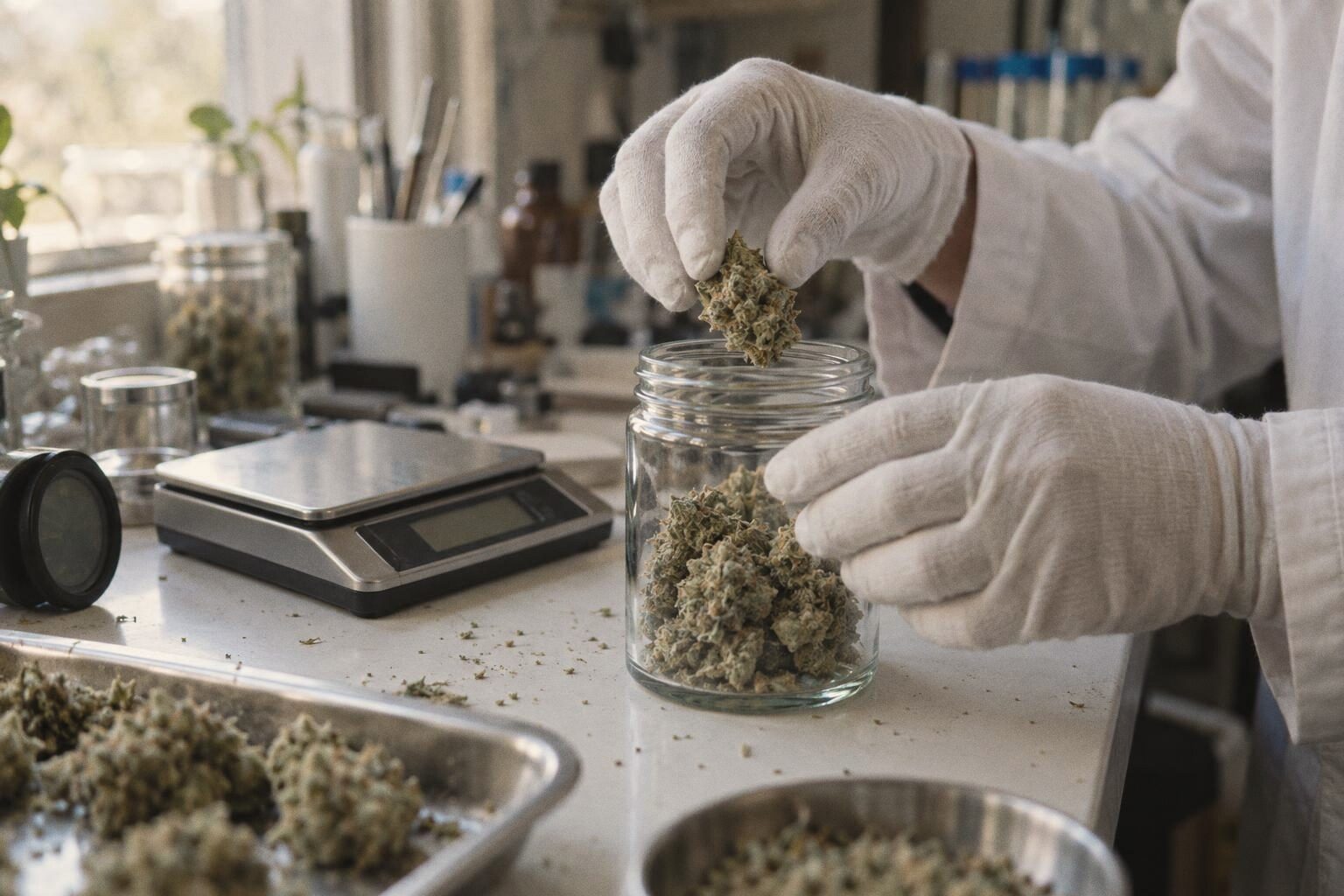
Hydroponic weed is cannabis grown without soil, with the roots sitting in water or an inert medium and every nutrient arriving in a dissolved nutrient solution[4]. Growers rely on pump air stones to oxygenate the solution, automatic timers and LED tent kits to provide optimal temperature and humidity. Quality checks on the product page matter more than the growing method itself.
Contents8 sections
Hydroponic weed is cannabis grown without soil: the roots sit in an inert medium or hang in water, and everything the plant eats comes from a dissolved nutrient solution. Below, you’ll see how the main systems work, what water, air and nutrients do, and where the method hits its limits. Then we set hydro against soil-grown cannabis from the buyer’s side of the jar, and show you how to read a product page with a sharper eye.
The key word is inert. Clay pebbles, coco coir and rockwool hold the plant upright and keep the nutrient solution, roots and oxygen in contact, but they add nothing to the menu. Think of them as the plate, not the meal.
Most hydro flowers come out of sealed grow rooms or tent kits that use LED panels overhead. Temperature, humidity and light cycles are set by the producer, not the weather.
Producers choose hydro for control. They dose water and nutrients precisely and track EC (electrical conductivity, a reading of how concentrated the solution is) day by day. Soil acts like a sponge that buffers mistakes, while hydro reacts fast to good and bad decisions alike.
What is hydroponic weed?
Hydroponic weed is cannabis grown without soil. The roots sit in water or in an inert medium, and every nutrient the plant needs reaches them already dissolved in a water-based solution. It describes how the plant was fed, not which strain it is, and this kind of cultivation nearly always happens indoors under tightly controlled conditions.
Growers call this a wet grow environment: nutrients dissolve straight into the water, and plants sit in something like clay balls that stay moist around the roots[4].
Here’s a short glossary to keep handy for the rest of this guide:
- Nutrient solution: water with dissolved minerals, the plant’s only source of food.
- Reservoir: the tank that holds that solution before it reaches the roots.
- Root zone: where roots meet water, air and medium. All the systems below are just different ways of managing it.
- Controlled indoor environment: the room or tent where light, airflow, temperature, humidity: everything follows the producer’s settings instead of the weather.
For you as a buyer, one point matters more than the label. Cannabis plants grown in hydro and in soil can carry exactly the same strain name, so “hydro” on a jar tells you about the kitchen, not the recipe.
Which hydroponic systems are used for cannabis plants?
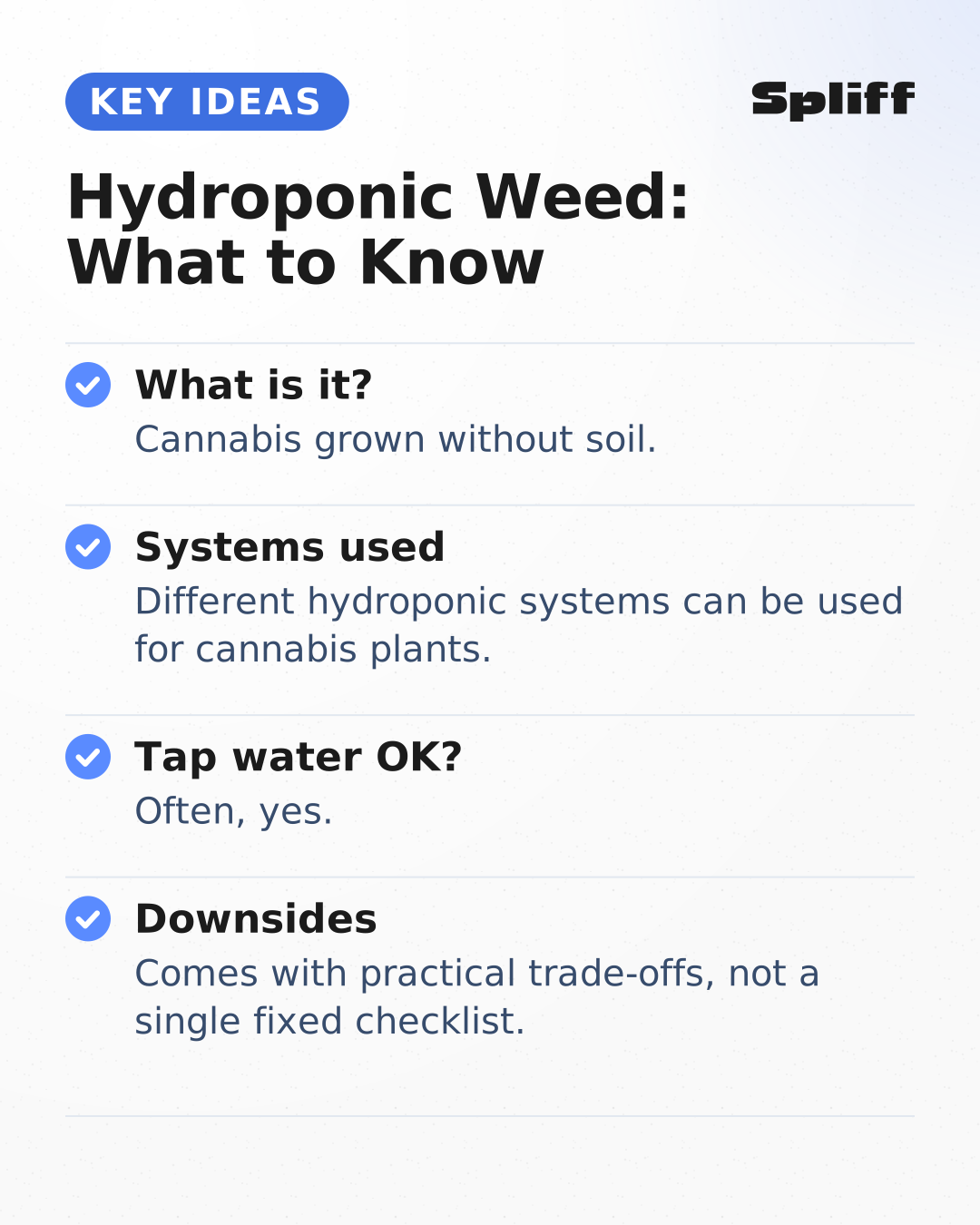
Most hydroponic weed comes from three systems, all built around growing plants without soil, which is the big split from soil grown cannabis.[4] In deep water culture (DWC), the roots sit in a reservoir of nutrient solution that growers keep oxygenated. In the nutrient film technique (NFT), a thin stream of solution runs over the roots. In drip irrigation, timed drippers feed a medium like coco coir, and each system depends on its own hardware.
Hydroponic producers usually pick one of these setups and build the whole operation around its gear. In a deep water setup, plants sit in net cups on top of buckets with their roots dangling into the solution. Meanwhile, an air pump pushes air through an air stone in each bucket.
The nutrient film technique swaps the bucket for a sloped channel, and a pump recirculates a shallow film from the reservoir. Drip irrigation wets coco coir or clay pebbles through small drippers, and the runoff is either drained or sent back round to continue the cycle.
Can you have too much air in hydroponics?
Rarely, from the roots’ point of view. Roots need dissolved oxygen to breathe, and in a DWC bucket the air stones keep the nutrient solution roots hang in well oxygenated. That’s why producers leave the pump and air stones running continuously.
The real issues are the side effects of all that bubbling. As a general rule, warm water holds less oxygen, which is why temperature tends to matter more than extra airflow. Vigorous bubbling can also splash solution onto stems and net cups, and heavy aeration lets the pH drift as carbon dioxide escapes, so growers keep a closer eye on their solution.
Is tap water OK in hydroponics?
Often, yes. Tap water can work in hydroponics when it isn’t too hard, when its chlorine or chloramine level is manageable and when its starting EC leaves room for nutrients. With very hard or heavily treated water, producers often run it through reverse osmosis first, then add calcium and magnesium back.
Once that’s sorted, think of the water as an ingredient rather than a carrier. Unlike a soil pot that’s left to dry out between waterings, a reservoir has nothing to buffer it, so whatever is dissolved in there reaches each plant’s roots directly. That’s why the nutrient solution growers mix has to be complete: water-soluble, micronutrients included.
Water quality isn’t a one-off check, either. Producers often keep testing it across the whole grow, and the net payoff is stability: steady water helps keep yields consistent.
Can you use Miracle-Gro in a hydroponic system?
Not really. A classic all-purpose feed like Miracle-Gro is designed for garden soil, a poor match for a nutrient solution.
Hydro asks for something stricter: formulas that dissolve completely and deliver the full nutrient list, trace elements included. For hydroponic weed, producers use dedicated hydro nutrients that stay balanced in the reservoir, so plants keep getting everything they need to grow.
What are the disadvantages of hydroponics?
Growing hydroponic weed comes with a handful of practical trade-offs rather than one fixed checklist. Growers usually mention a higher setup cost for the kit, total dependence on electricity and pumps, little margin for error when a pump fails, constant monitoring of EC, pH and water temperature, and root problems that can spread fast because the plants share the same water. You trade soil’s forgiveness for precision.
Think of soil as a simmering stew: leave it a bit long and it still tastes fine. Hydro is a sauce held at an exact temperature, and a few degrees off is enough to make it split.
- Power: if the air pump stops in a DWC setup, the roots hanging in the buckets start losing oxygen fast.
- Shared water: root rot in one spot can travel through recirculating systems to every plant.
These are the producer’s headaches, not yours. A well-run setup still turns out excellent hydroponic weed, and genetics, drying and curing shape the jar far more than the feeding method.
Which plants are not recommended for hydroponics?
Root vegetables, sprawling crops and tall staple grains struggle without soil. Potatoes and carrots grow underground, so they need deep, loose soil to swell into shape instead of sitting in constant moisture. Pumpkins send out long vines and heavy fruit that no channel or bucket is built to support.
Corn grows tall, needs open space for wind pollination and gives too little per plant to justify the pump and reservoir. Cannabis sits on the other side of that line: it’s compact enough to train indoors, and its plant growth responds well to precise feeding.
Hydroponic vs soil weed: which makes the better flower?
Neither method wins by default. Many producers say hydroponic weed is easier to keep consistent from batch to batch because they control every input, while soil fans argue that living soil adds depth of flavour. Since post-harvest care outweighs the substrate, judge the bud itself, not the label on the jar or a bold THC promise.
What hydro can provide is repeatability: same feed, same climate, so the batch you liked last month should look and smell much like the next. The soil camp counters that living soil adds layers to the terpene profile, but that’s still a debate among growers, not a settled fact.
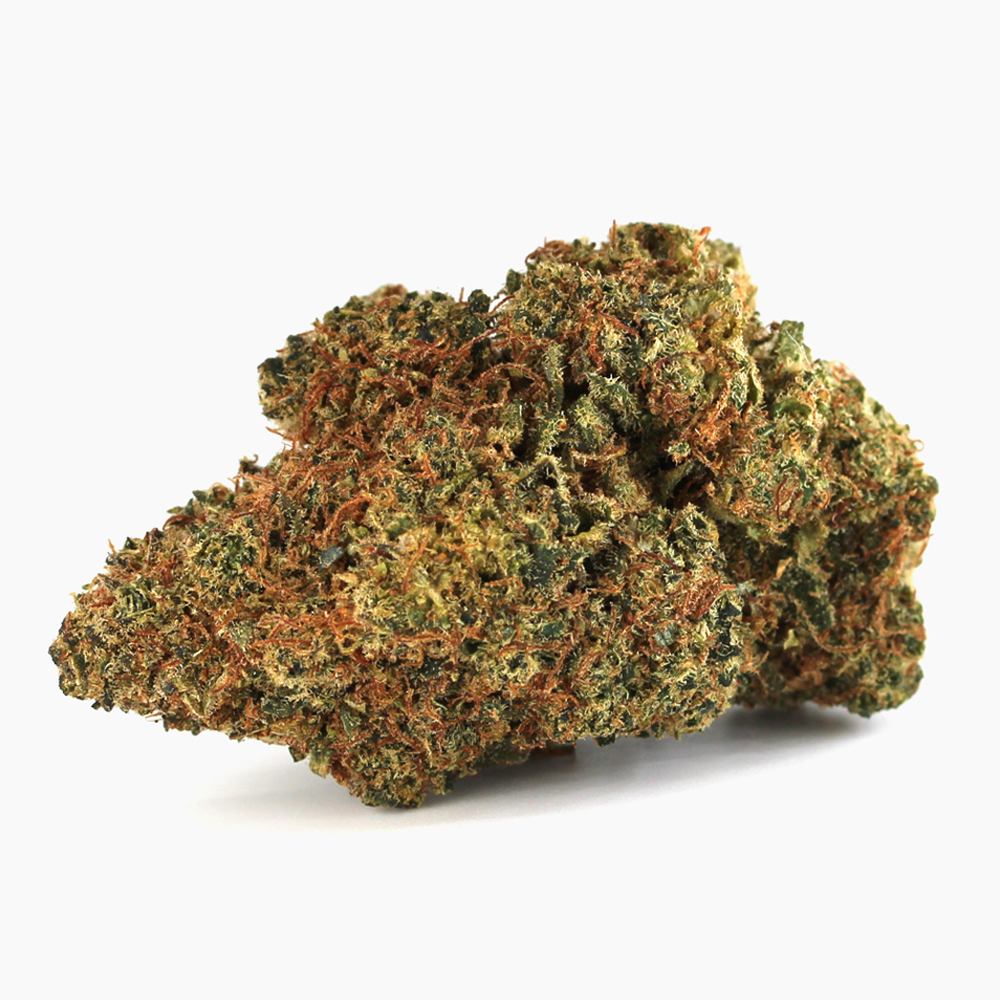
So set a high bar on what you can check yourself, using nothing more than your nose and eyes. On an indoor flower like our Amnesia, look at the aroma profile, how dense the buds are and how neatly they’ve been trimmed. The net result: those clues say more about post-harvest care than any “hydro” label.
How to choose indoor flowers at Spliff
The substrate matters less than how the buds dry and cure after harvest, so the product page is where you do the real homework. Whether the buds grew above air stones in a hydro tank, under automatic timers or in plain soil, this quick filter works for hydroponic weed and soil-grown buds alike.
- Production method: indoor, greenhouse or hydro, stated plainly.
- Lab analysis: worth asking for before you commit. The lab analysis of each batch is available on request from customer service.
- Cannabinoid content: CBD and THC clearly displayed, not buried in vague wording.
- Aroma and terpene profile: concrete notes like citrus, pine or earth tell you more than “premium quality”.
- Look of the flower: photos showing density, frosty trichomes and a clean trim.
For everything else, stick to what the page shows: today’s price, the rating and the number of reviews. The best cannabis pages give you that at a glance. If you’d have to guess a figure, it doesn’t belong in your decision.
Our Amnesia, the indoor benchmark above, comes in 3 g, 5 g, 10 g, 20 g, 50 g and 100 g, like the rest of the range. There’s no single optimal size: if the profile is new to you, start small and scale up once you know it suits your taste.
Related flowers, such as Banana Berry, Bubba Kush and Mango, each show their rating and review count on their own page, a public score you can weigh before choosing your weed.
Conclusion
Run that checklist and the substrate question mostly answers itself. Hydroponic weed is a production choice, not a flavour guarantee. What you actually taste in any cannabis flower comes down to genetics, drying and curing, and genetics set the cannabinoid profile too, THC and CBD alike.
Once a page passes your filter, the rest moves faster. At Spliff, we deliver to several countries, including these 4: AT, BE, DE and NL. Browse the indoor flower collection, compare aroma profiles and pick the one that fits your palate and the way you use your flower.
CBD is not a medicine and is not a substitute for medical advice or treatment. If in doubt, consult a healthcare professional.
Frequently asked questions
Is hydroponics healthier than soil?
What matters for you as a buyer is post-harvest care, genetics and lab testing rather than the growing medium itself. Every Spliff product is lab-tested: THC content below 0.3% (0% for vapes and pods).
How do you grow weed hydroponically?
Hydroponic weed grows with roots sitting in water or an inert medium like clay balls, fed by a nutrient solution dissolved directly into water[4][4]. Common setups use pump air stones to oxygenate reservoirs, or tent kits led to control temperature and humidity, keeping conditions continuously optimal as the system automatically delivers the nutrient solution to the roots.
Sources
- Hydroponics 101: Growing Cannabis as a Career — www.excelsior.edu