 Written by Sophie Clarke
Contents6 sections
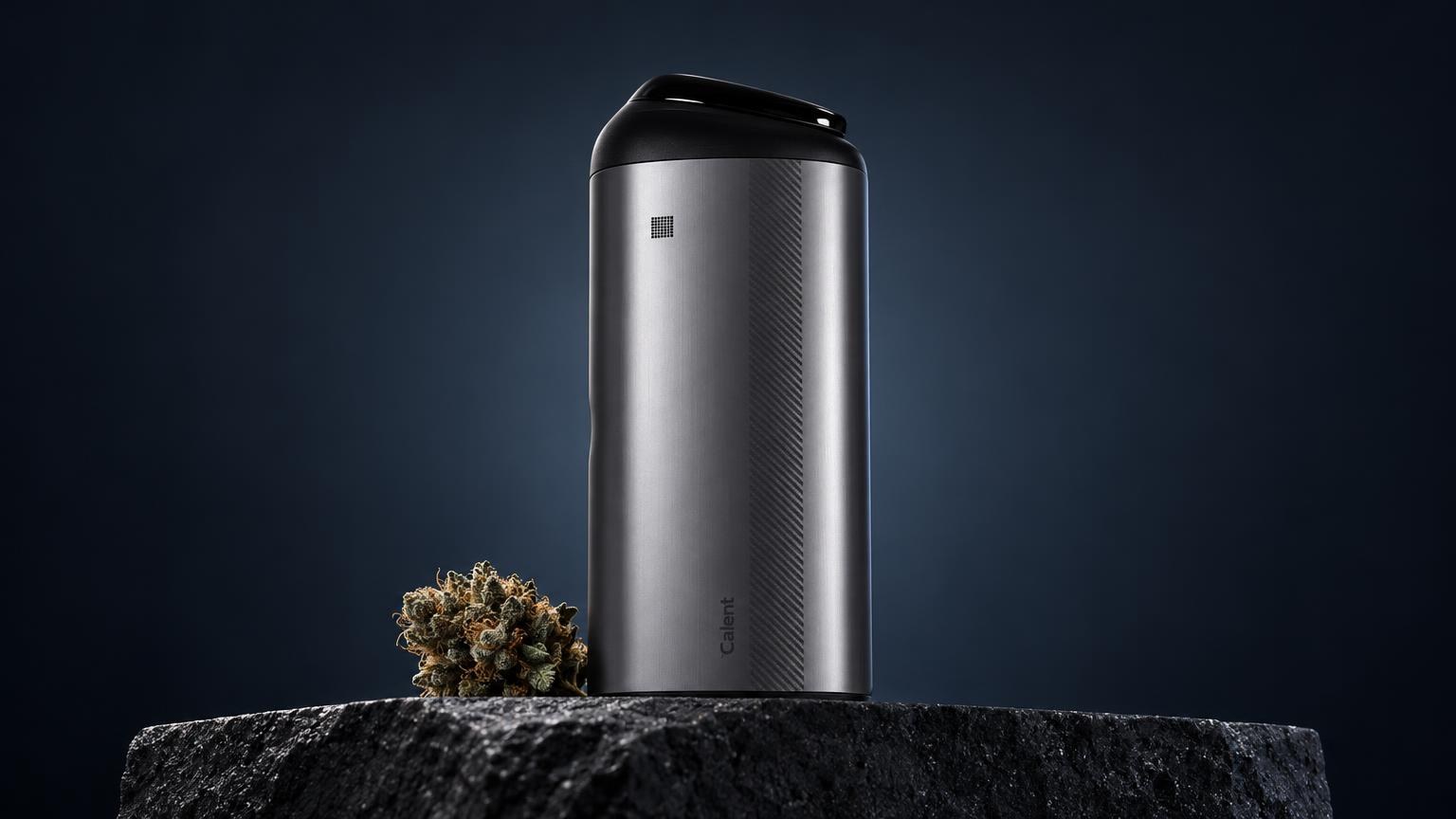
A dry herb vaporizer is a device that heats ground cannabis flower until its aromas and active compounds turn into vapour, without ever setting the plant material on fire. Think of it as roasting coffee beans rather than burning them: steady heat, no flame.
You’ll also see it sold as a dry herb vape or a herb vaporizer, on shop shelves from Germany to Belgium. Unlike an e-liquid vape pen or a cartridge, it takes whole ground flower, not an extract.
- Oven (chamber): holds the flower; its bowl size sets how much fits in one load.
- Heating element: brings the oven up to the temperature you choose.
- Battery or mains power: a battery for portables, a plug for desktops.
- Vapour path and mouthpiece: the route the vapour takes to your lips.
Some models handle both formats. These dry herb concentrates devices come with a dedicated insert for wax or oil, but most people use dry herb on its own. Either way there’s no smoke and no ash, so the vapour stays clean and flavorful, and the “already vaped bud” (AVB) comes out brown and toasted, not black and charred.
Below, you’ll learn how heating without burning works, which format fits you, how temperature shapes the flavor of your vapour, and the load, use and clean routine that keeps every session tasting right.
The essentials in 30 seconds
A dry herb vaporizer’s feel comes down to oven material, battery capacity mAh, airflow and ease of use, not just the headline heating method, and lab comparisons of commercial devices show they differ widely in how much of the flower they actually vaporize[1].
- Battery capacity, airflow and ease of use shape portables as much as the underlying heating principle.
- Oven material, power source and vapour path change feel and flavour more than conduction versus convection alone.
- Every Spliff product is lab-tested: THC content below 0.3% (0% for vapes and pods), with shipping available to 4 countries.

What is a dry herb vaporizer?
A dry herb vaporizer is defined less by its basic heating principle than by how its chamber, power source and airflow are engineered, details that shape texture, draw and flavour session after session. These components are what separate one model from another on a spec sheet, and what you should compare before buying.
What separates dry herb vaporizers is the choice of materials and small design details, which make up most of a spec sheet.
- Oven: ceramic, stainless steel or a gold plated chamber. The material mostly changes how the walls hold residue and how easily they wipe clean.
- Power source: decides whether the device travels with you or stays on the table.
- Controls and airflow: buttons, temperature control and adjustable airflow shape how the device feels in your hand and how freely each draw pulls.
- Vapour path and mouthpiece: glass, ceramic or plastic. This is the part your vapour travels through, so it touches the flavour most directly.
Put one next to a cartridge pen and the real difference is the material itself. The vaporizer takes flower you grind yourself, not a prefilled extract.
Some devices are sold as hybrid models that accept concentrates through a dedicated insert or pad. Flower stays their main job, though, and a device built only for concentrates doesn’t count as a herb vaporizer.
How it works: heating without burning
What changes from one model to the next is how the heat actually reaches your herb. Spec sheets describe it with three terms.
| Heating type | How heat reaches the herb | Warm-up | Flavour and vapour | Watch out for |
|---|---|---|---|---|
| Conduction | Direct contact with the hot oven walls | Fast | Dense, can turn toasty | Uneven heating: stir the chamber mid-session |
| Convection | Hot air flows through the ground herb | Often slower | Even, often described as cleaner tasting | Needs a slow, steady draw |
| Hybrid heating | Warm walls plus a stream of hot air | Middle ground | Balances speed and evenness | Results depend on the design |
One naming trap is worth knowing. Brands love words like “hybrid” or “pro” in their model names, but these don’t always describe a true mix of conduction and convection. Read the heating line on the spec sheet, never just the name on the box.
Independent lab work backs up that advice. In a comparison of five commercial vaporizers, the four electric, temperature-controlled models released between about half and just over four-fifths of the cannabinoids loaded into the chamber into the vapour, while the only gas-powered model was found to burn the material[1].
The same goes for a headline heat time in seconds: impressive on paper, but it tells you nothing until you know which heating method sits behind it. What counts is how evenly that heat holds across your sessions.
Portable or desktop: which vaporizer format fits you
The heating method decides how your vapour tastes; the format decides how the device fits into your day. A portable vaporizer runs on a battery and slips into a jacket pocket, while a desktop unit sits on a table, plugs into the mains and keeps heating for as long as you need. If this is your first dry herb vaporizer, start with a simple portable before you invest in a desktop rig.
Battery capacity in mAh tells you how big the tank is, not how far you’ll drive: real battery life shrinks with higher temperatures and longer sessions. A removable battery lets you swap in a charged cell instead of waiting by the socket.
Pocket-first designs put portability ahead of everything else, so check the mouthpiece and air path material before you fall for the dimensions.
| Your profile | Format | Specs worth your attention |
|---|---|---|
| Out and about | Portable | Real battery life, removable battery, size |
| Home sessions with friends | Desktop | Continuous mains power, glass vapour path |
| First device | Simple portable | Ease of use, precise temperature control, warranty |
“Best portable vaporizer” rankings love raw power, but the best portable for you is the one with the right ease of use for your routine, and, as the table above makes clear, raw numbers only tell half the story. Here’s how the four Spliff devices line up. Prices, ratings and reviews move, so the product page is always the reference.
| Device | Format | Heating | Power | Price & reviews |
|---|---|---|---|---|
| CALENT | On product page | On product page | On product page | Today’s price on page |
| CELSIUS | On product page | On product page | On product page | Today’s price on page |
| CRAFTY+ | Compact portable | On product page | Battery | Today’s price on page |
| MIGHTY CBD | Larger handheld | On product page | Battery | Today’s price on page |
Our take: if your vaporizer lives in your pocket, go CRAFTY+, trading a bit of bulk for real mobility. If your sessions mostly happen at home and size doesn’t bother you, the MIGHTY CBD makes more sense.
Weighing up the CALENT or the CELSIUS? Check format, battery setup and air path on each product page, then match them to how you actually use a dry herb vaporizer. The right device fits your routine with ease, not the one with the loudest spec sheet.
Temperature settings: what each range changes
Whichever vape format you picked, the temperature dial is where the character of your sessions gets decided. The short answer to the question everyone types first: flower is usually vaped at an intermediate temperature, neither too low nor close to the point of combustion, and where you land in that range shapes taste, aroma and how thick the vapour feels.
| Range | Flavour and aroma | Vapour texture |
|---|---|---|
| Low temperature | Bright and terpene-forward: citrus, pine and floral notes come through clearly | Light, thin and smooth |
| Mid | A balance of aroma and body, still clearly strain-specific | Fuller clouds, comfortable on the throat |
| High | Toasted, nutty and roasty, like a darker coffee roast | Dense, warmer and hotter on the throat |
Treat these ranges as a starting map, not a rulebook. The spec sheet only tells part of the story: whatever the official specification says, your dry herb vaporizer’s thermostat, chamber design and the moisture in your flower can all shift the sweet spot by a few degrees. Push past a certain temperature and you’re edging towards combustion, which defeats the whole point of vaporizing.
Lab tests on a desktop convection vaporizer show why the setting matters. Vapour collected at 170 °C carried the poorest ratio of cannabinoids to other by-products, while vapour collected at 200 °C and 230 °C carried a clearly better one[2].
As flagged when we weighed up battery and build above, it’s the fine, degree-by-degree adjustment that lets you pin down the exact point where a given strain tastes its best, rather than being stuck jumping between a handful of preset temperature settings.
How to load, use and clean a dry herb vaporizer
Once the dial is set, the rest is routine, keeping your dry herb vaporizer producing flavorful vapor.
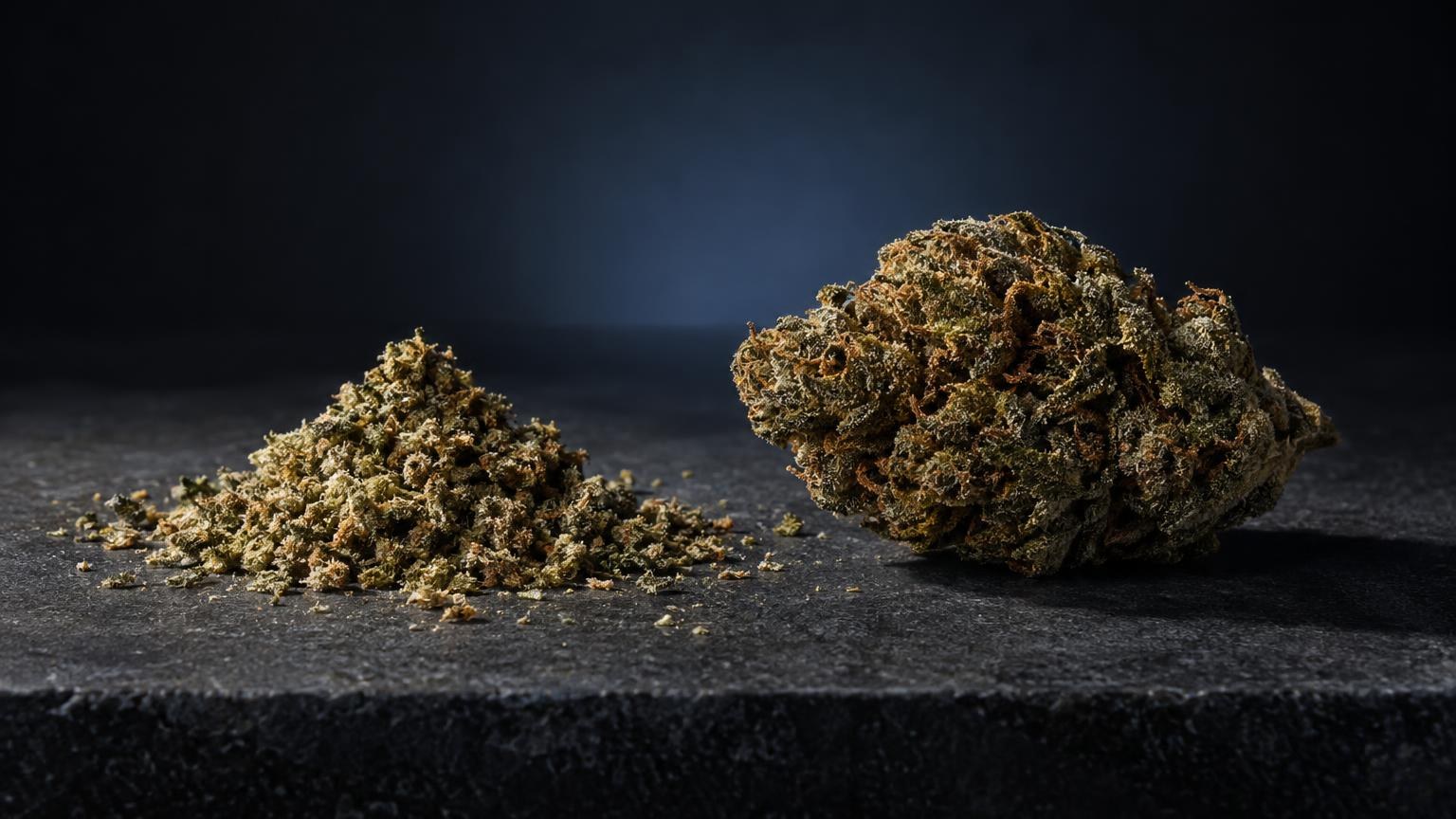
- Grind medium-fine. Dry flower should feel like coarse sea salt. Too fine clogs the screen, too chunky heats unevenly.
- Fill, don’t cram. Load the chamber loosely. Convection needs airflow, while conduction handles a light press against the walls.
- Wait out the heat-up time. Let the device signal it’s ready, then draw slowly and steadily.
- Stir halfway on conduction units. A quick stir with the included tool moves the outer layer away from the hot walls.
- Read the color. An even brown bowl and thin, toasty vapor mean it’s spent.
Cleaning is where vapor quality is won or lost. Brush the chamber after every session while still slightly warm.
From time to time, soak the mouthpiece and any glass vapor path in isopropyl alcohol, rinse, and dry completely before reassembling. Cloudy glass means the flavor already has a stale edge.
For adults only (18+). Keep vaping and driving well apart. To practise this routine on a portable, the CRAFTY+ Vaporiser and the MIGHTY CBD Vaporizer both take ground flower in a refillable chamber.
Conclusion
Keep the chamber clean and the rest falls into place: the best dry herb vaporizer for you is one whose routine you’ll actually stick to. Fast USB charging, shaving seconds off the heat-up or a tempting price all come second to well-ground, dry flower and a device you’ve matched to your actual habits.
Shipping runs quickly once payment clears.
CBD is not a medicine and is not a substitute for medical advice or treatment. If in doubt, consult a healthcare professional.
Sources
- Lanz C, Mattsson J, Soydaner U, Brenneisen R. Medicinal Cannabis: In Vitro Validation of Vaporizers for the Smoke-Free Inhalation of Cannabis. PLoS One. 2016;11(1):e0147286 — pubmed.ncbi.nlm.nih.gov
- Pomahacova B, Van der Kooy F, Verpoorte R. Cannabis smoke condensate III: the cannabinoid content of vaporised Cannabis sativa. Inhal Toxicol. 2009;21(13):1108-12 — pubmed.ncbi.nlm.nih.gov