 Written by Sophie Clarke
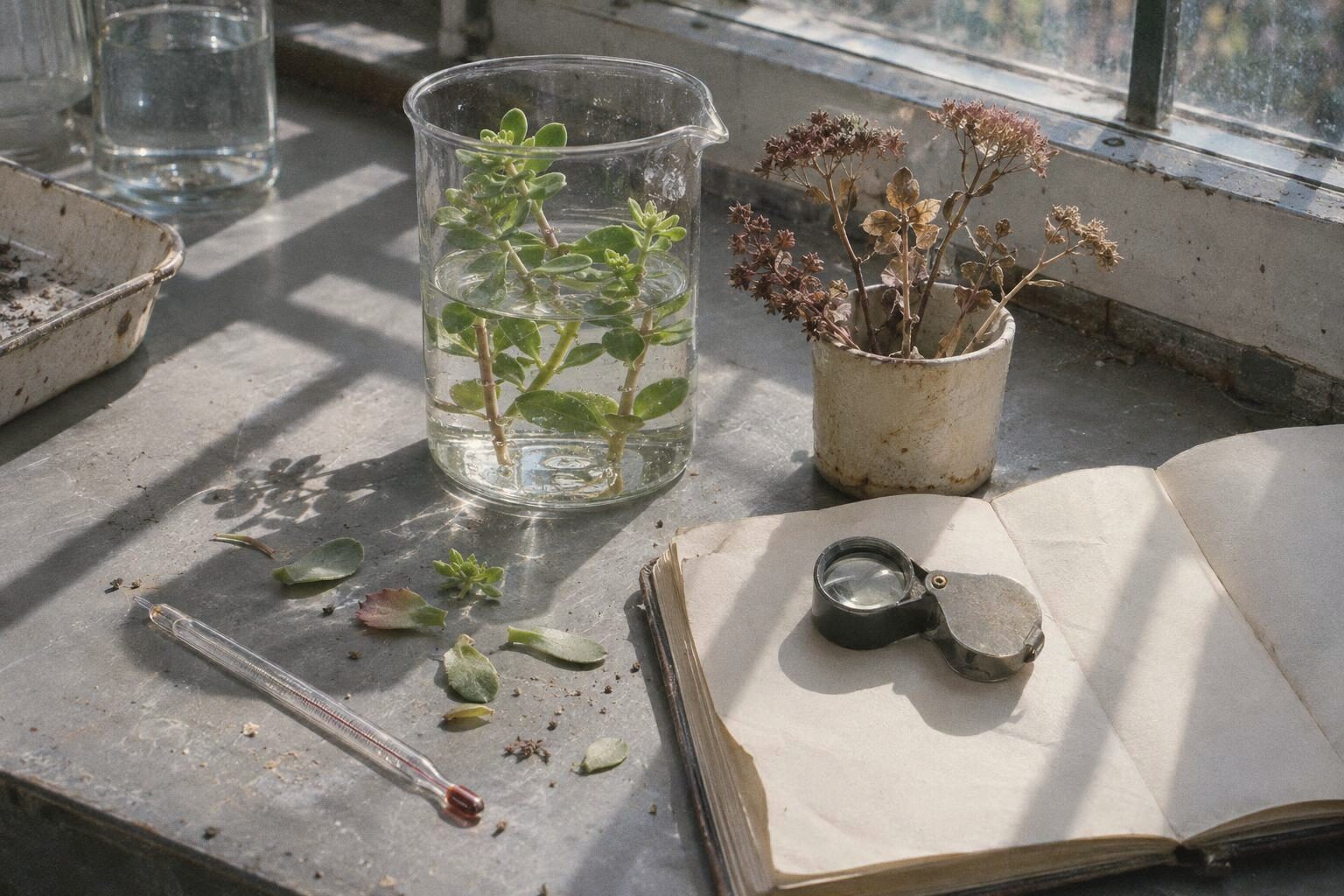
A sedum plant is a hardy perennial stonecrop, a leaf succulent whose fleshy leaves store water, so it tolerates dry spells and full sun[5]. Sedum is a large genus in the family Crassulaceae[5], with up to 600 species once described[5]. Format, pot size, cultivar rarity and season set the price of sedum plants, so compare the plant height spread on each label before you buy.
Contents8 sections
A sedum plant is a stonecrop: a mostly hardy perennial succulent with thick, fleshy leaves that store water. That’s why it shrugs off dry spells, poor soil and full sun, then comes back every year with a late-summer flower show. This guide turns the scattered plant details on nursery labels into three clear decisions: upright or creeping, which format to buy, and how far to push the “less is more” rule on sun, soil and watering.
Start with how a stonecrop perennial plant behaves through the seasons, because it’s the detail that worries people most. Upright types die back to a crown of buds in winter and regrow in spring. Creeping types often keep part of their foliage, so a bare clump in January is dormancy, not a dead plant.
The other key point among the stonecrop plant details is shape. In shops, sedum plants come in two silhouettes with very different plant height and spread:
- Upright stonecrop: clump-forming stems topped with flat flower heads in late summer, built for borders and structure. The large upright sedums are often sold under a separate genus name.
- Creeping stonecrop: low mats that spread sideways, made for ground cover, gravel, walls and green roofs.
Our verdict: go creeping for poor ground and gaps, upright for structure and late flowers. Neither type tolerates waterlogged soil, and that single limit shapes most of the perennial plant details that follow.
What is a sedum plant, and does it come back every year?
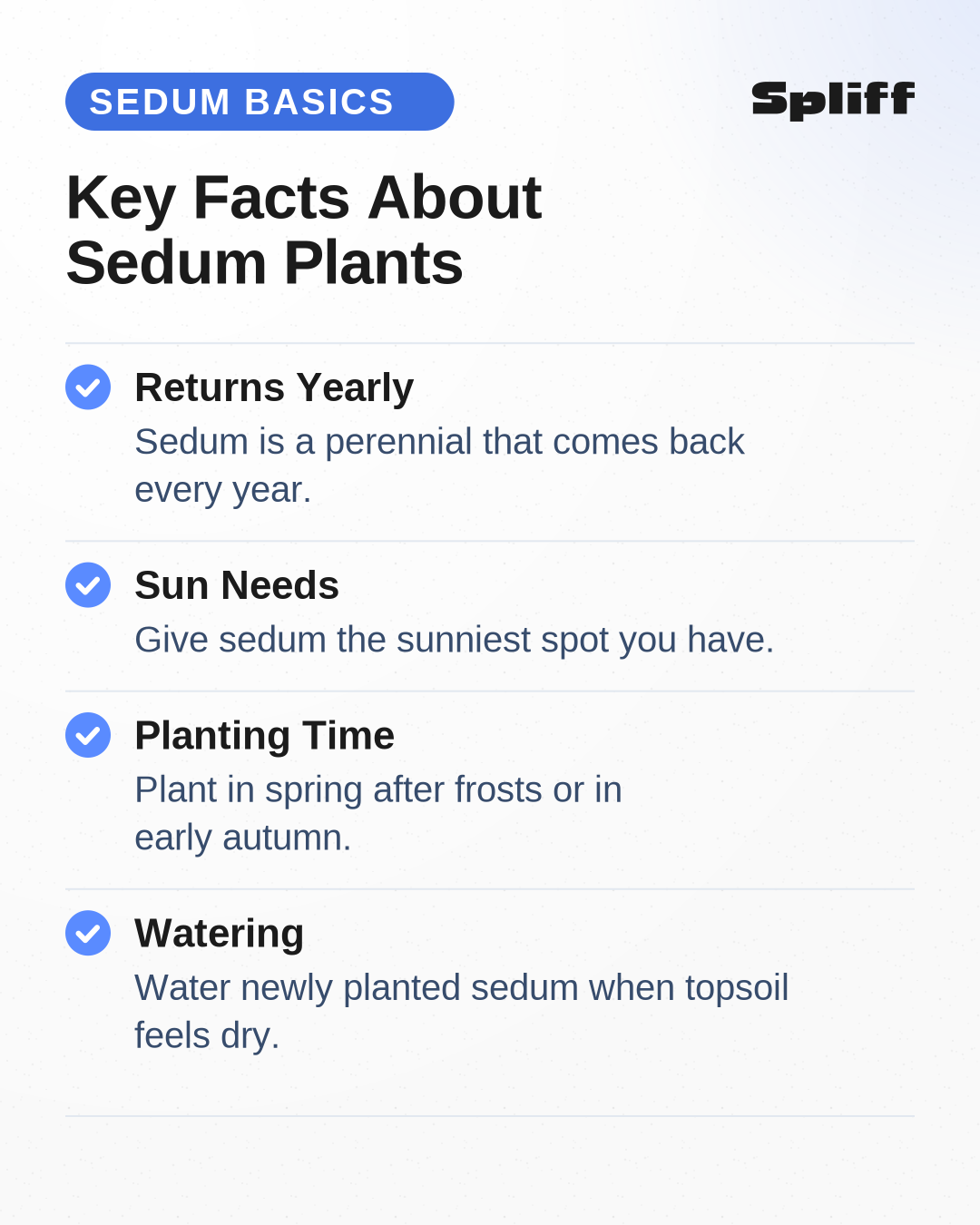
Yes. A sedum plant is a true perennial plant: most stonecrops survive frost, rest through winter and regrow from the same roots each spring. A healthy clump comes back year after year and gets a little wider every season, as long as its crown isn’t left sitting in wet soil.
The genus is bigger than any garden centre bench suggests: Sedum orientalichinense, a new species from eastern China, has been described in a recent taxonomic study[4]. In shops, availability mostly comes down to two silhouettes.
Is sedum really a perennial in cold European winters?
Yes, and frost is rarely the problem. Winter wet is. The real test is what sits around the crown from November to April.
Evergreen creepers often flush red or bronze in the cold, and that’s seasonal colour, not damage. What actually kills a stonecrop plant is soil that stays soggy for weeks and rots the crown. Free drainage matters far more than a sheltered spot.
Upright or creeping stonecrop: which one fits your space?
Pick upright for structure and late flowers, creeping for coverage. Tall types such as ‘Autumn Joy’ (often labelled Hylotelephium) form chunky clumps that anchor a border and bloom in late summer.
Low creepers like Sedum spurium ‘Dragon’s Blood’ spread sideways into a dense mat, ideal ground cover for a rockery, a wall top, a green roof or the rim of a pot. Think of upright types as the bass line of a planting and creepers as the carpet under it.
Read also: THCX
Does sedum need sun or shade?
A sedum plant wants full sun, so give it the sunniest spot you have. It copes with light shade, but stems stretch towards the light, flower heads flop open and you get fewer flowers, especially on upright types. In deep shade, sedum is simply the wrong plant: give that spot to a shade-lover instead.
What kind of soil does a stonecrop plant need?
A stonecrop plant needs lean, free draining soil, the kind most border plants would sulk in. Think gravelly, sandy or stony ground where rain disappears quickly instead of sitting around the roots. A sunny slope, a raised bed or the top of a wall does the drainage work for you.
Rich soil is the trap. Compost and fertiliser push soft growth, so upright types like ‘Autumn Joy’ or the darker ‘Bertram Anderson’ fall open just as their pink flowers should peak. Feeding less gives a tighter clump that holds its flowers from late summer into autumn.

When should sedum be planted, and in which format?
Plant sedum in spring, once the hard frosts are over, or in early autumn while the soil is still warm and workable. A potted plant can go in for most of the growing season, avoiding frozen ground and heatwaves. Bare root and plug plant formats do best at the start of the season.
Plug plant, bare root or potted: what’s the real difference?
The real difference is how much growing has already been done for you, and that is mostly what you pay for.
| Format | Best planting window | First year | Right use |
|---|---|---|---|
| Plug plant | Spring | Spends it rooting in, light flowering | Covering ground cheaply |
| Bare root | Start of the season | Needs a season to settle | Dormant planting on a budget |
| Potted plant | Almost any time, outside frost and heatwaves | Can flower the first late summer | Filling a gap with instant impact |
Four factors decide the price of sedum plants: format, pot size, cultivar rarity and season. A named cultivar like Sedum spurium ‘Dragon’s Blood’ in a large pot, already in bud, sits at the top of the range. That premium buys you time, not a tougher plant.
Our verdict: plug plants to cover ground cheaply, a potted sedum plant when you want impact this year.
How often should you water sedum?
Water a newly planted sedum plant whenever the top of the soil feels dry, but only until it has rooted in over its first few weeks. After that, established sedum in open ground can usually manage on rainfall alone, and you only step in during long dry spells. Sedum in pots is the exception, because containers dry out much faster.
In the ground, a settled clump finds moisture deeper than you think; your job is to stay out of its way.
Pots change the rules. Check the plant details on a potted sedum’s label: a tall upright type in a small pot empties its compost quickly in summer, so check it more often. Young plug plants have shallow roots, so they need more regular watering at first.
- Too much water: soft, translucent leaves, a darkening stem base, then rot.
- Real thirst: wrinkled, shrivelled leaves that plump up again soon after watering.
Is sedum good for pollinators?
Yes. A sedum plant is good for pollinators. The flat, nectar-rich flower heads of upright stonecrops draw bees and butterflies, and they open in late summer, when much of the border has already finished, making sedum a useful food stop at the tail end of the season.
The lean, sparingly watered regime you’ve just set up costs the insects nothing.
Leave the dried flower heads standing through winter. They give the border structure and shelter for insects. Cut them back in early spring, just before the new shoots push through.
Which sedum varieties flower in late summer?
Choose on flower colour first, then on plant height, spread and use, since the height-to-spread ratio decides whether you get a clump or a carpet.
| Variety | Type | Flower colour | Plant height and spread | Best use |
|---|---|---|---|---|
| ‘Autumn Joy’ | Upright | Pink, ageing to rusty red | Knee-high clump, compact spread | Border structure, late flowers |
| Sedum spurium ‘Dragon’s Blood’ | Creeping | Deep red over bronze-red leaves | Low mat, wide spread | Ground cover, wall tops, gaps |
Sedum spurium ‘Dragon’s Blood’ starts in summer, while ‘Autumn Joy’ carries the show into autumn. Plant both and the season gets a relay.
How do you propagate sedum?
Propagate a sedum plant three ways. Take stem cuttings in spring or summer, let them dry for a day or two, then push them into gritty compost. Divide upright clumps in spring as new shoots appear. For creeping types, simply press leaves or short shoots onto the soil surface and let them root.
Once the bees have finished their late-season visits, the clump itself becomes your free nursery stock. A cutting of Sedum ‘Purple Emperor’ grows into a copy of its parent, dark foliage included. Sedum acre ‘Aureum’ roots from almost any fragment, so a few pieces can fill a gap by next summer.
Most failed cuttings die from too much care, not too little. Watch for these three mistakes:
- Watering cuttings like seedlings, which makes them rot before they root.
- Using rich compost, which gives soft, weak growth.
- Dividing in midsummer heat, which stresses the roots.
That curiosity about cultivars, the way ‘Dragon’s Blood’ and ‘Autumn Joy’ each have their own character, also runs through Spliff’s adult range. If you’re into formats, there’s the Magic Pod Live Rosin x2, the pod pack Magic Pod x2 and the all-in-one Magic Vape. For adults only (18+).
Conclusion
That divided clump is next year’s border in waiting, and it sums up the whole approach in three moves:
- Space first: pick the silhouette that fits the spot, tall clump or low mat.
- Season second: buy the format that matches the time of year.
- Then hold back: a lean, dry regime beats any amount of fussing.
Whether it’s a creeping mat spilling from a terracotta pot or a knee-high clump turning from pink to rust in autumn, restraint is the real growing skill.
And if you’re browsing Spliff’s adult range while your stonecrops do their thing, the collection is a click away.
Frequently asked questions
Will sedum cuttings root in water?
Sedum cuttings are best rooted in gritty, free-draining compost rather than water: let the cutting dry for a day or two first, then insert it into the compost. Keeping cuttings constantly wet, as water rooting would do, encourages rot before roots form.
What are the downsides of growing sedum plants?
The main downsides come from the wrong conditions rather than the plant itself: deep shade causes stretched, floppy stems with fewer flowers, and rich, fertilised soil produces soft growth that falls open instead of holding a tight, upright clump.
Sources
- A new species of Sedum (Crassulaceae) from eastern China … — www.sciencedirect.com
- Sedum – Wikipedia — en.wikipedia.org