 Written by Sophie Clarke
CBD Flower at Spliff · from €0.65/g · ★ 4.9/5 (936 reviews)
72 h delivery in Europe · Free delivery from €99
Contents6 sections
Indica or sativa refers to two types of cannabis plant, told apart by their shape and their geographic origin, and today most strains sold under either name are actually hybrids of both. Think of this guide as a quick label education: it unpacks what the two words really describe, why a product’s cannabinoid chemistry and format matter more than its name, and how to read a label before you choose.
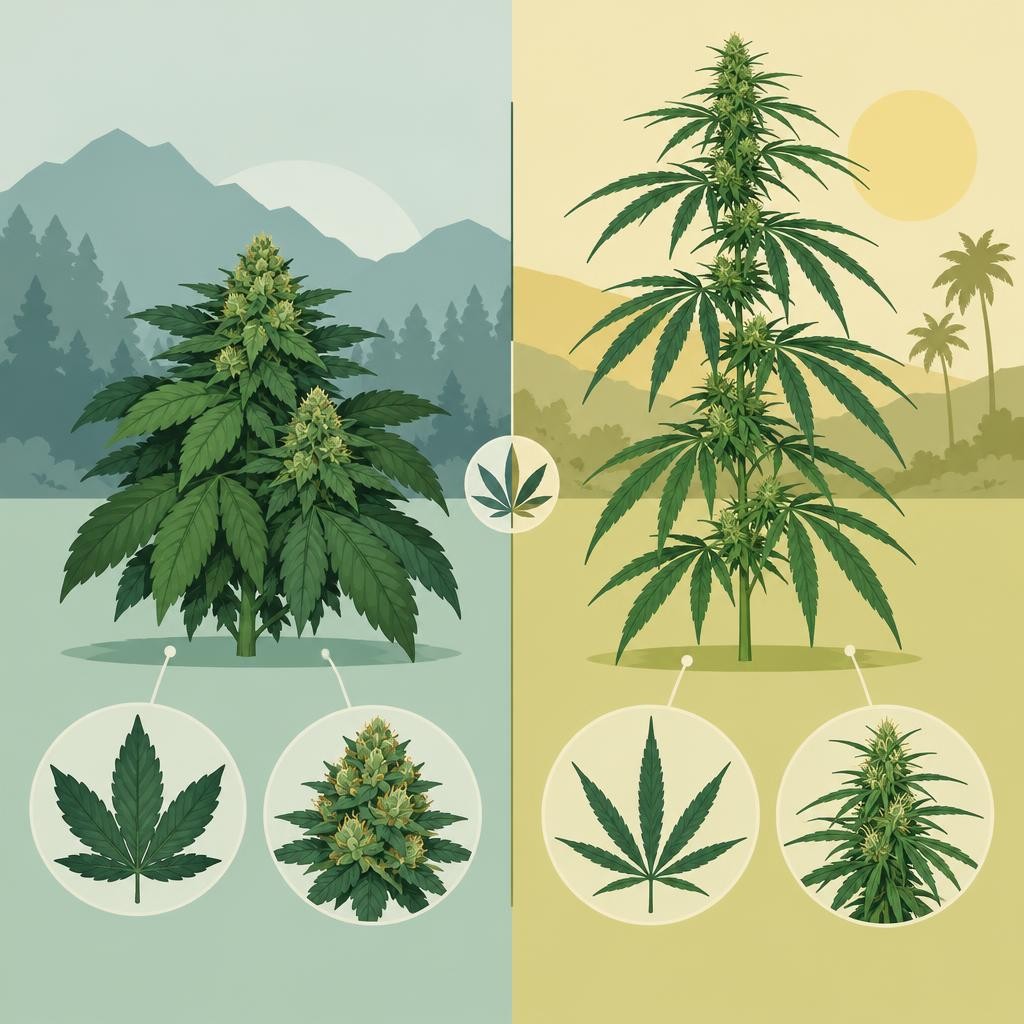
Botanists first described Cannabis sativa and Cannabis indica from cannabis plants that looked nothing alike. Sativa plants grow tall and airy with thin, finger-like leaves. Indica plants stay short and bushy, with broad dark green leaflets packed close together.
Geography explains a lot of that contrast. Classic indica landrace strains are traced to the Hindu Kush range in Afghanistan and to the Himalayan valleys of Nepal, the historic cradle of hash making. Sativa landraces are usually linked to warmer equatorial regions such as Central America and Southeast Asia.
Then came decades of crossbreeding. Shops still sort their strains as indica, sativa or hybrid, yet most sativa indica strains on the market today are an indica sativa hybrid of some kind. Think of a blended wine: the grape names on the bottle give you a handy mental map, but they don’t describe that exact bottle.
The essentials in 30 seconds
Indica or sativa simply names two cannabis strains, told apart by shape and origin, but a plant’s family tree doesn’t predict its effects help reduce pain increase appetite, ease mental fog or boost energy, the thc cbd ratio and format matter far more when choosing between species cannabis types.
- The difference indica sativa is botanical: sativa grows tall with thin leaves, indica stays short and bushy, though most cannabis strains indica sativa sold today are hybrids.
- Research shows a statistically significant preference for indica with pain management, sedation and sleep, while sativa was preferred for euphoria and energy[4].
- Cannabis is a generic term for preparations of the Cannabis sativa plant, with THC as its major psychoactive constituent[2]; every Spliff product is lab-tested, with THC below 0.3% (0% for vapes and pods), and full batch analysis available on request from customer service.
What's the actual difference between indica and sativa?
The actual difference between indica and sativa is botanical and geographic. Calling a plant indica or sativa describes how it grows and where its ancestors came from. In the classic picture, sativa plants are tall with narrow leaves and indica plants are compact with broad, dark green leaves, though botanists still debate how meaningful that split is, and most strains on sale today are hybrids of both.
Set side by side, the strains look different at a glance. Cannabis indica stays short and bushy with wide, dark green leaves, while sativa stretches upward with slim, finger-like leaflets. That silhouette is the whole of what the names were built to describe.
What the names leave out is content. Decades of crossing have turned most indica sativa strains into cannabis hybrid strains, closer to a blended wine than a single grape. Asking “indica or sativa?” tells you about a plant’s family tree, not about what’s inside the product or the effects you’ll get from it.
The labels still carry expectations. In a web survey of medical cannabis users, respondents showed a statistically significant preference for C. indica for pain management, sedation and sleep, and for C. sativa for euphoria and enhancing energy[4]. That’s a preference reported by self-selected users, not a measured effect of the plant type.
Where do landrace strains come from?
Landrace strains come from regions where cannabis grew wild or was farmed for generations before modern breeding. Indica types typically trace back to the Hindu Kush range, Nepal and the wider Himalaya. Sativa types come from warm equatorial zones in Africa, Southeast Asia and Latin America.
Each population adapted to its own particular climate: cool, dry mountains favoured short, sturdy, resinous plants, while tropical heat favoured tall, airy ones.
These original varieties remain the reference points. When a breeder calls a cross indica or sativa, they’re pointing back to one of these two ancestral shapes.
Is sativa or indica stronger?
Neither is stronger by nature. Whether you pick indica or sativa, the strength of a cannabis product depends on its chemistry: how much THC it contains, which other cannabinoids sit alongside it, its CBD/THC ratio and its format. The name on the label tells you about the plant’s family tree, not its potency.
Whether a strain’s ancestors grew in India or Central Asia matters far less than what ended up in the finished product. According to the World Health Organization, cannabis is a generic term for several psychoactive preparations of the Cannabis sativa plant, with ∆-9 tetrahydrocannabinol (THC) as its major psychoactive constituent[2]. Two cannabis indica sativa hybrids can carry very different THC levels, so the figure on the product sheet beats the word in the name.
What to check on a label:
- THC content: the main marker of intensity, whether the figure is high or low.
- CBD/THC ratio: a CBD-heavy product and a THC-dominant one differ, even under the same strain name.
- Other cannabinoids: they round out the composition and belong on the label.
- Terpenes: myrcene, limonene and pinene shape aroma and flavour, describing a profile, not proving a potential effect.
- Format: delivery changes the experience as much as content.
As for whether indica makes you sleepy: the “indica equals couch” idea is a sales convention, and no label guarantees how a product will feel for any individual. The effects indica sativa names suggest are expectations, not a promise printed on the pack. Since two products under the same label can differ in composition, the sheet is where you make informed choices.
Medical cannabis is a separate field. Any medicinal use is a matter for patients and their doctor, and a strain name is no guide for a patient.
Is Haze, Stardawg or Cali sativa or indica?
Haze is usually sold as a sativa or sativa-dominant strain. Stardawg is usually listed as a sativa-dominant hybrid, though catalogues don’t always agree. Cali isn’t a type at all. It’s a marketing nod to California, in the United States, and tells you nothing about whether a product is indica or sativa.
Those three names come up again and again when you compare cannabis strains, so here’s how each is usually filed.
Haze is one of the sativa strains known almost everywhere. Its profile is commonly described as spicy or citrusy, aromatic properties that come from terpenes, not the label.
Stardawg is usually described as part of the Chemdawg line and sold as a sativa-leaning hybrid. Some menus list it closer to 50/50, which shows how loosely hybrid strains get classified from one shop to the next. Every new cross only adds to the confusion.
Cali works like a region on a wine bottle: it points to a place, not a plant type. A Cali product can lean indica, lean sativa or sit in the middle, and only its composition settles which.
So is indica a body high and sativa a head high? Not by definition. That split is a market convention, and the survey cited earlier reports what users say they prefer, not a measured effect[4]. Neither tag is a reliable shortcut for picking a product around specific symptoms.
Hybrid labels follow a simple code that describes ancestry, not how a product feels:
- Sativa indica hybrid or “balanced”: both lineages, no clear lean.
- Indica-dominant or sativa-dominant: the family tree leans one way.
- A breeder’s estimate of genetic share, not a lab result.
Indica or sativa: how to choose your next vape or pod
Once you can decode a hybrid label, the actual choice gets a lot simpler. People often ask whether sativa or indica is better, and the honest answer is neither: the better product is the one whose profile and format match what you’re after. The indica or sativa tag is where you start, not where you decide.
Before you buy, run any vape or pod through four quick questions so you make informed choices instead of trusting a name:
- Which strain label? Indica strains, cannabis sativa or a hybrid: it points you to a family, nothing more, and it says nothing about whether a product is legal where you live.
- What does the lab say? Don’t guess the cannabinoid content or the CBD THC ratio from a name. The batch analysis is the document that counts.
- Which terpene profile? Citrus, pine or earthy notes tell you how it will taste.
- Which format? Live rosin pod, refillable pod or ready-to-use vape.
The same goes for menu tags like indica cannabis or medical cannabis strains: they’re categories, not specs. A “medicinal” tag is no guidance for anxiety or any other health conditions: CBD is not a medicine and is not a substitute for medical advice or treatment. If in doubt, consult a healthcare professional.
When you compare cannabis strains, whether indica or sativa, a landrace from South Africa or genetics from Siberia, the label is a starting point, whatever the indica sativa main label says. The cannabinoids in the batch analysis tell you far more than the name on the box.
| Format | What it changes | Spliff example |
|---|---|---|
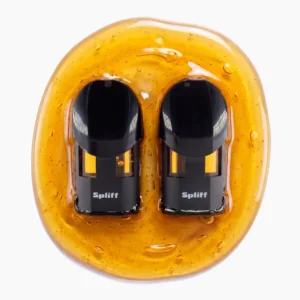
| Live rosin pod | An extract usually chosen for its full, plant-like aroma | Magic Pod Live Rosin x2 |
| Refillable pod | Keep the battery, swap the flavour | our classic pods |
| Ready-to-use vape | No setup, no refill, just open and go | Magic Vape. THCX is a trade name, not a molecule: every batch is lab-tested for classified molecules and none are detected. |
Each product page gives you the strain profile and aroma notes, and the strains cannabis shops love to label get their real description there. The lab analysis of each batch is available on request from customer service. Use the label to orient yourself, then let the format and the flavour make the call.
Conclusion
That four-question check is the whole method. Whether a strain’s family tree starts in the Hindu Kush of Pakistan or in a breeding programme somewhere in Eastern Europe, indica or sativa is the first clue, never the verdict. The CBD/THC balance, the terpenes and the format of the product you’ve actually used tell the real story.
Spliff ships to Austria, Belgium, Germany and the Netherlands, among other countries. Open a product page and let the THC and CBD figures guide your pick.
Frequently asked questions
Why do people prefer indica over sativa?
Preference is subjective and user-reported rather than a proven pharmacological effect. In a web survey, respondents showed a statistically significant preference for indica for pain management, sedation and sleep[4], which may explain why some people favour it over sativa.
Why don't people like sativa?
It isn’t that sativa is disliked, but preferences differ by desired outcome. The same survey found a statistically significant preference for sativa specifically for euphoria and enhancing energy[4], so some users simply choose it less when seeking sedation or sleep.
Sources
- Cannabis — World Health Organization — www.who.int
- a web survey of medical cannabis users — pubmed.ncbi.nlm.nih.gov