 Written by Sophie Clarke
Contents6 sections
The essentials in 30 seconds
Sour Diesel is a sativa-dominant hybrid from the US East Coast, known for a sharp diesel-and-citrus aroma. Its parentage, often cited as Chemdawg x Super Skunk, has never been formally documented, so treat it as tradition rather than certified genetics. As reported by Leafly, its dominant terpenes are caryophyllene, myrcene and limonene.
- Sour Diesel is a sativa-dominant hybrid, not a pure sativa, even when menus file it that way.
- Its lineage is commonly cited as Chemdawg x Super Skunk, but breeders still debate it, so read it as the best-known account.
- THC content varies by grower, batch and format, so check the lab report of the product you buy. Every Spliff product is lab-tested: THC content below 0.3% (0% for vapes and pods).
Sour Diesel is a sativa-dominant hybrid from the US East Coast, famous for its sharp diesel-and-citrus nose and flavor, with a parentage often reported (but never scientifically documented) as a Chemdawg x Super Skunk cross. So it isn’t a pure sativa, even if plenty of menus and online reviews file it there. The hybrid label is the honest one.
Its backstory is part legend, part grower history. The version you’ll hear most often has the first cuts circulating on the East Coast as clones passed between growers, with a Chemdawg Super Skunk pairing as the parentage. Breeders still argue about that lineage, so read it as the best-known account, not a certified pedigree.
What turned this diesel strain into a reference is the smell. That loud, fuel-soaked funk, with a skunk edge many growers credit to the reported Super Skunk side, became the benchmark that countless modern gas cultivars and their aromas and flavors are still measured against.
Below, we review where that fuel aroma and lingering taste actually come from, why no single THC figure tells you how strong Sour Diesel is (worth knowing if potent highs tend to tip you towards anxiety), and how the legend translates into the formats you can buy today.
What is Sour Diesel, the East Coast legend?
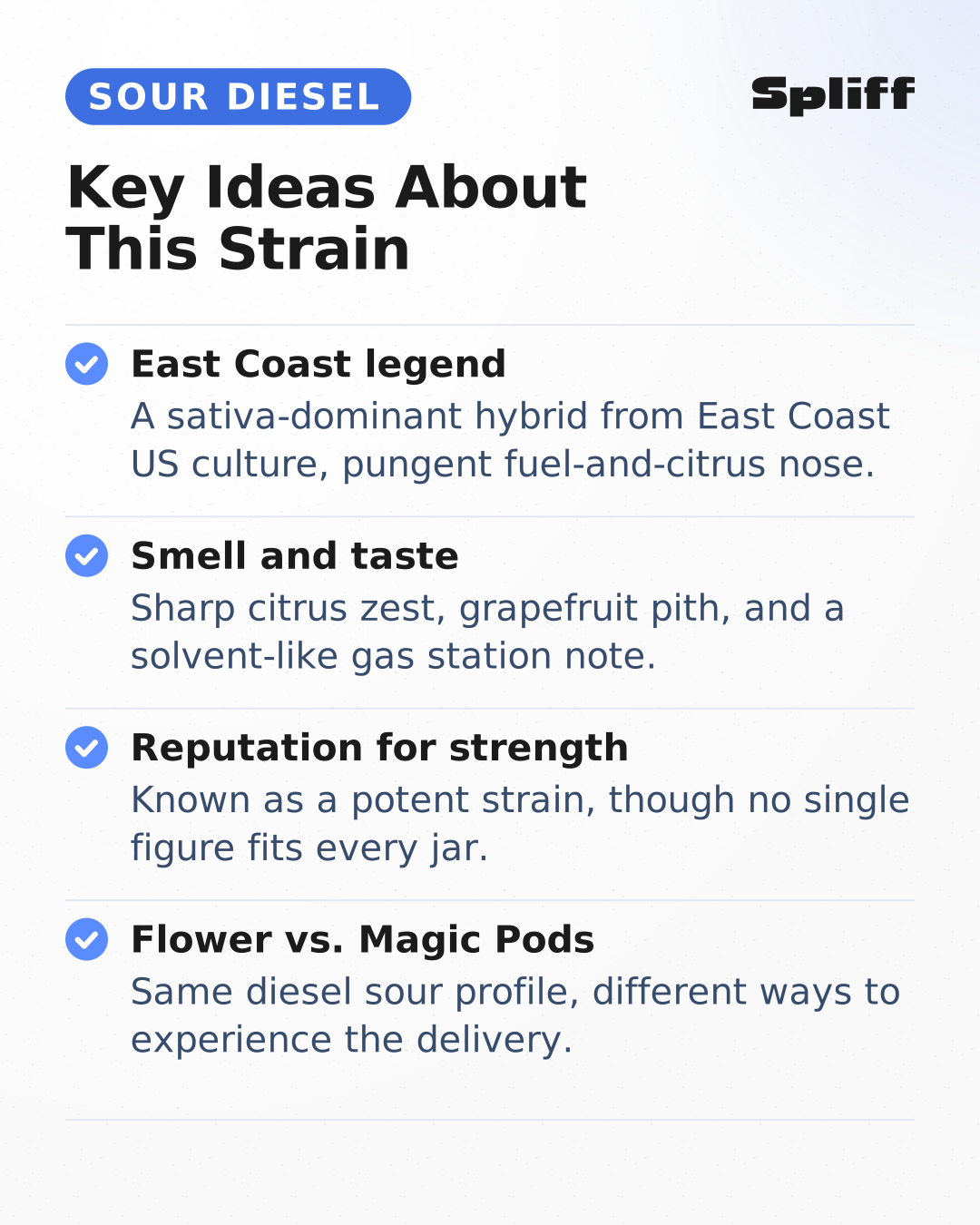
Sour Diesel is a sativa-dominant hybrid rooted in East Coast US cannabis culture, known for a pungent fuel-and-citrus nose. Its lineage is commonly cited as Chemdawg x Super Skunk, but the exact parentage has never been formally documented. Treat that cross as strong tradition, not certified genetics.
Is Sour Diesel a sativa or a hybrid?
It’s a hybrid that leans sativa. In strain culture, “sativa-dominant hybrid” means the plant and its reputation sit closer to the sativa side, with airier buds and a profile often described as uplifting and cerebral. A dominant hybrid still carries genes from both camps, and with Skunk in the commonly cited cross, that mix is built in.
The catch is that indica and sativa labels are only a rough guide. They began as botanical shorthand for plant shape, and menus now use them as mood shorthand. Most sour diesel cannabis you’ll meet is better judged by its aroma and its lab report than by the word on the jar.
Where does the ‘diesel’ in its name come from?
Straight from the nose. People compared the smell to a fuel pump: sharp and chemical, with a sour, lemony edge on top. That citrus-meets-diesel, skunky combination (the funk is usually linked to the commonly cited Super Skunk side) gave the strain both halves of its name.
The tag stuck because few cuts smelled anything like it, and that’s where the sour diesel legendary reputation began. East Coast Sour Diesel became a yardstick, so “Diesel” in a strain name today usually signals a gas-forward profile measured against the original. Why it smells that way is a terpene story, and it gets its own breakdown further down.
What does Sour Diesel smell and taste like?
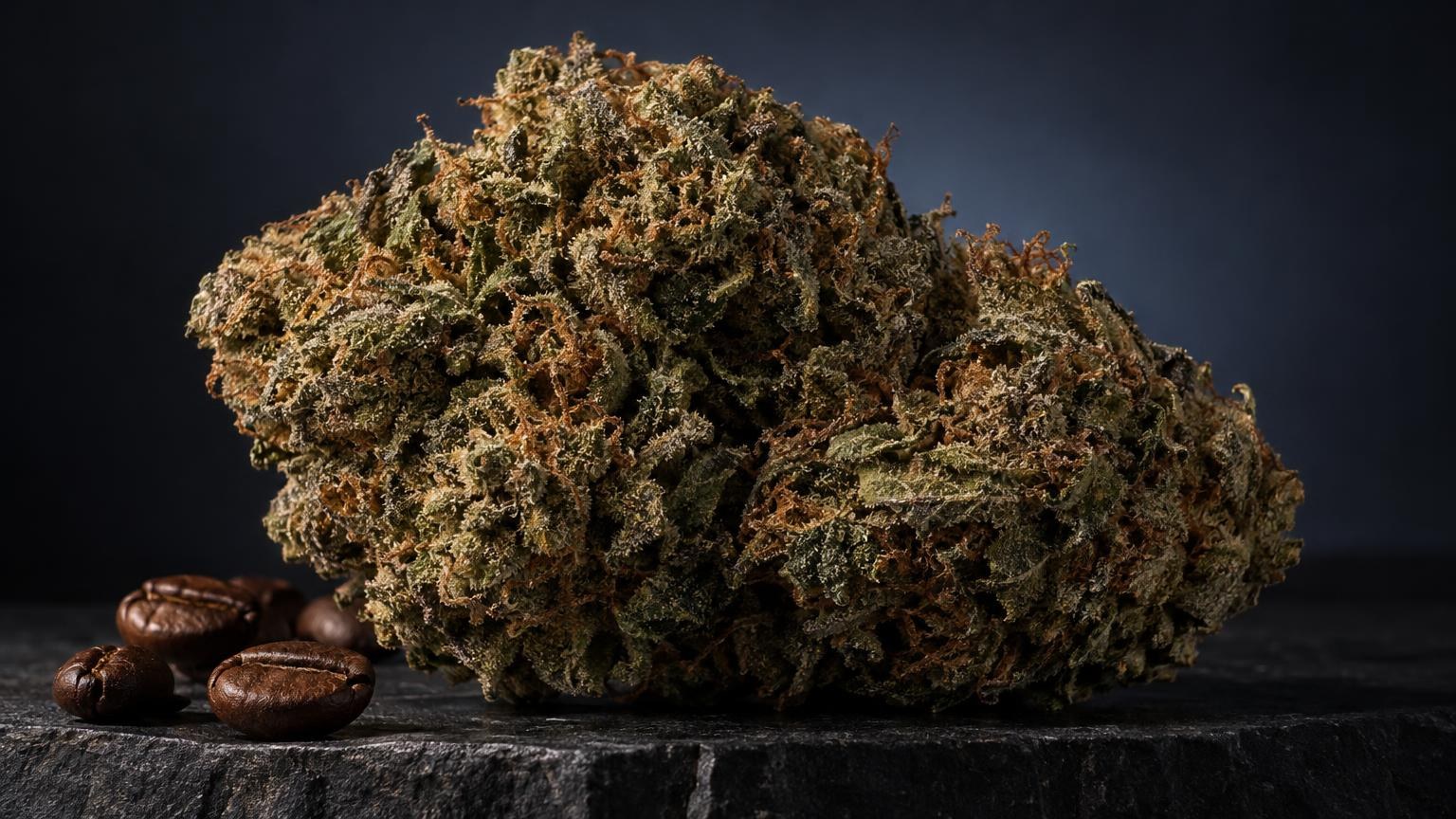
Sour Diesel smells like a squeezed lemon held over a fuel pump: sharp citrus zest and grapefruit pith on top, a solvent-like gas station note in the middle, and an earthy skunk base underneath. On the exhale, that diesel cannabis bite lingers with a peppery, slightly bitter edge.
Which terpenes give Sour Diesel its fuel-and-citrus nose?
Think of it as a three-note chord, not a single smell. Strain profiles commonly list caryophyllene, myrcene and limonene as the dominant terpenes in Sour Diesel, and any honest review of the strain starts right there.
- Limonene: the top note. Lemon peel and grapefruit pith give the strain the “sour” half of its name.
- Caryophyllene: the peppery, slightly rubbery edge that pushes the citrus into solvent and fuel territory.
- Myrcene: the earthy, musky floor that holds the skunky base together.
That myrcene-limonene tension is why plenty of cannabis strains sold as “gassy” only land half the profile. Read enough Sour Diesel reviews and you’ll spot the pattern: many lookalikes marketed as smelling like Sour Diesel nail the fuel and lose the zest, or the other way round.
Keep these terpenes in the aroma box. They describe flavors and texture, and they don’t predict the effects Sour Diesel is known for in strain culture.
How strong is Sour Diesel and how much THC does it have?
The Sour Diesel strain has a reputation as a potent pick, but no single THC figure applies to every jar. Content shifts with the grower, the phenotype, the batch and the format. The honest answer to how much THC does Sour Diesel have sits on the lab report of the product you actually buy, not on a strain card.
Round numbers on strain sites are averages at best and marketing at worst. Two cuts of the same strain, grown differently and cured differently, can land far apart. Swap “how strong is it” for sharper criteria:
- The grower and the phenotype, not just the strain name
- The batch and how carefully it was dried and cured
- The format, since flower, rosin and vape oil concentrate cannabinoids differently
- A lab report tied to that exact batch
As for the high, strain culture tends to describe the Sour Diesel sativa profile as cerebral and energetic, a classic daytime pick. Treat those effects as reported experience, not a guarantee: how it will feel depends on dose, tolerance, setting and your mode of consumption.
Vapes and concentrates sit in their own category, so judge them on their own data rather than on the strain’s legend. THCX is a trade name, not a molecule: every batch is lab-tested for classified molecules and none are detected. The lab analysis of each batch is available on request from customer service.
Our verdict: if loud diesel and sharp citrus are your thing, Sour Diesel is a great pick. If you’re after sweet, mellow aromas, other strains will suit you better.
One distinction worth keeping in mind: the European Medicines Agency has evaluated a specific cannabidiol medicine, Epidyolex, under its own approval process[3]. Consumer CBD products like flowers, oils or vapes haven’t gone through that medical assessment.
Sour Diesel THCX flower vs. Magic Pods: which one to choose
You know what to sniff for and how to judge strength, so the real question is how you want that diesel sour profile delivered. Three formats in the range carry the spirit of the strain Sour Diesel, each suited to a different cannabis routine. THCX is a trade name, not a molecule: every batch is lab-tested for classified molecules and none are detected.
Flower or pod: which format fits your routine?
Pick flower if aroma is the whole point, a pod if convenience matters more. Is Sour Diesel a good strain? For anyone who loves loud gas and lemon, yes, and the format decides how much of that character reaches you.
One thing no format changes: none of these products is a treatment for chronic pain, everyday pain or depression. If that’s what you’re looking into, talk to a healthcare professional first.
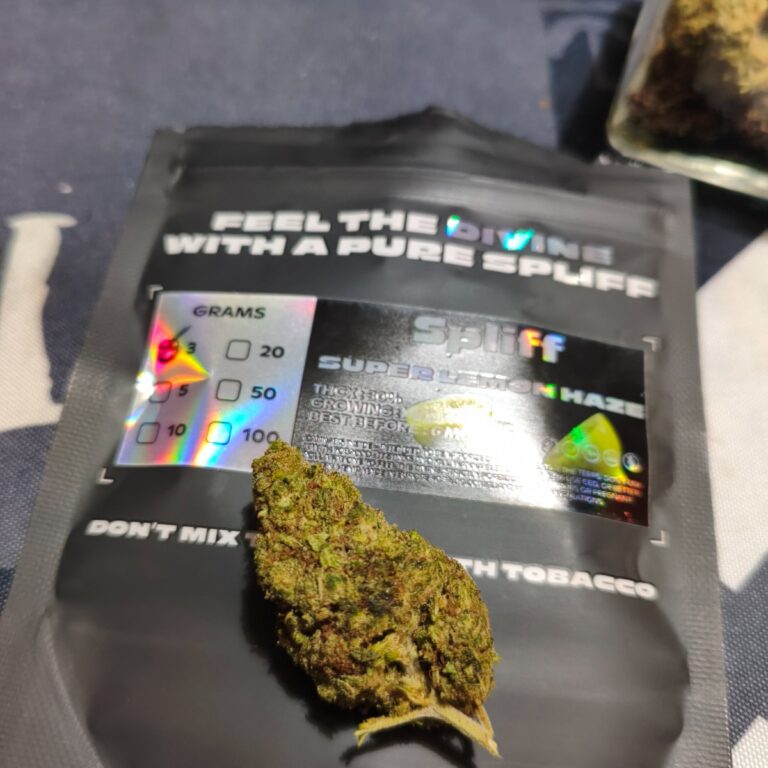
Sour Diesel THCX flower is the full-volume version: open the jar, grind the buds and get every layer of that sativa Sour Diesel aroma, from zest to fuel. It comes in 3 g, 5 g, 10 g, 20 g, 50 g and 100 g. The trade-off is the ritual itself (grinder, papers or a dry herb vaporizer) and a smell that won’t stay subtle.
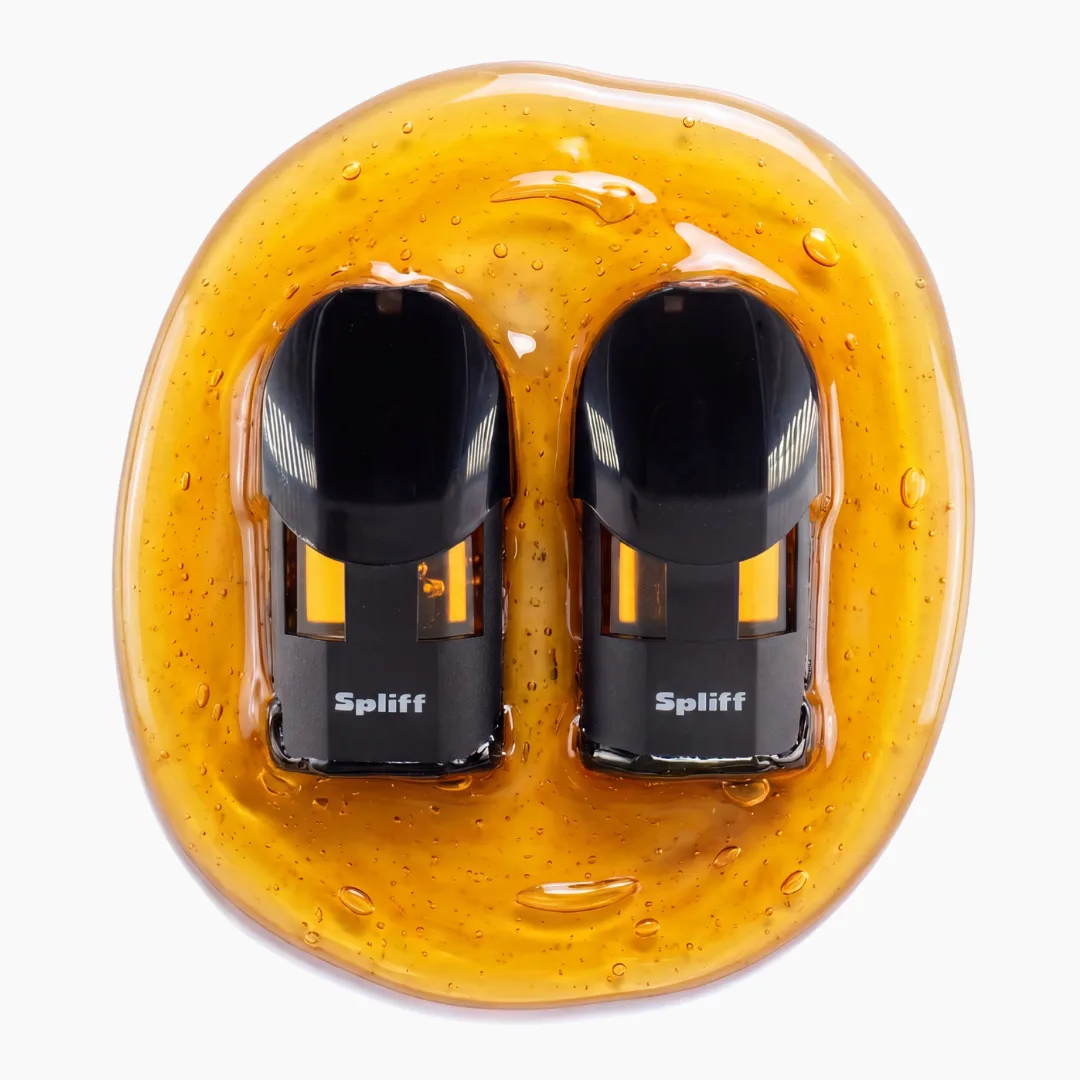
Magic Pod Live Rosin x2 suits terpene chasers who want that diesel sativa dominant character without the gear: freshly cut citrus rather than dried peel.
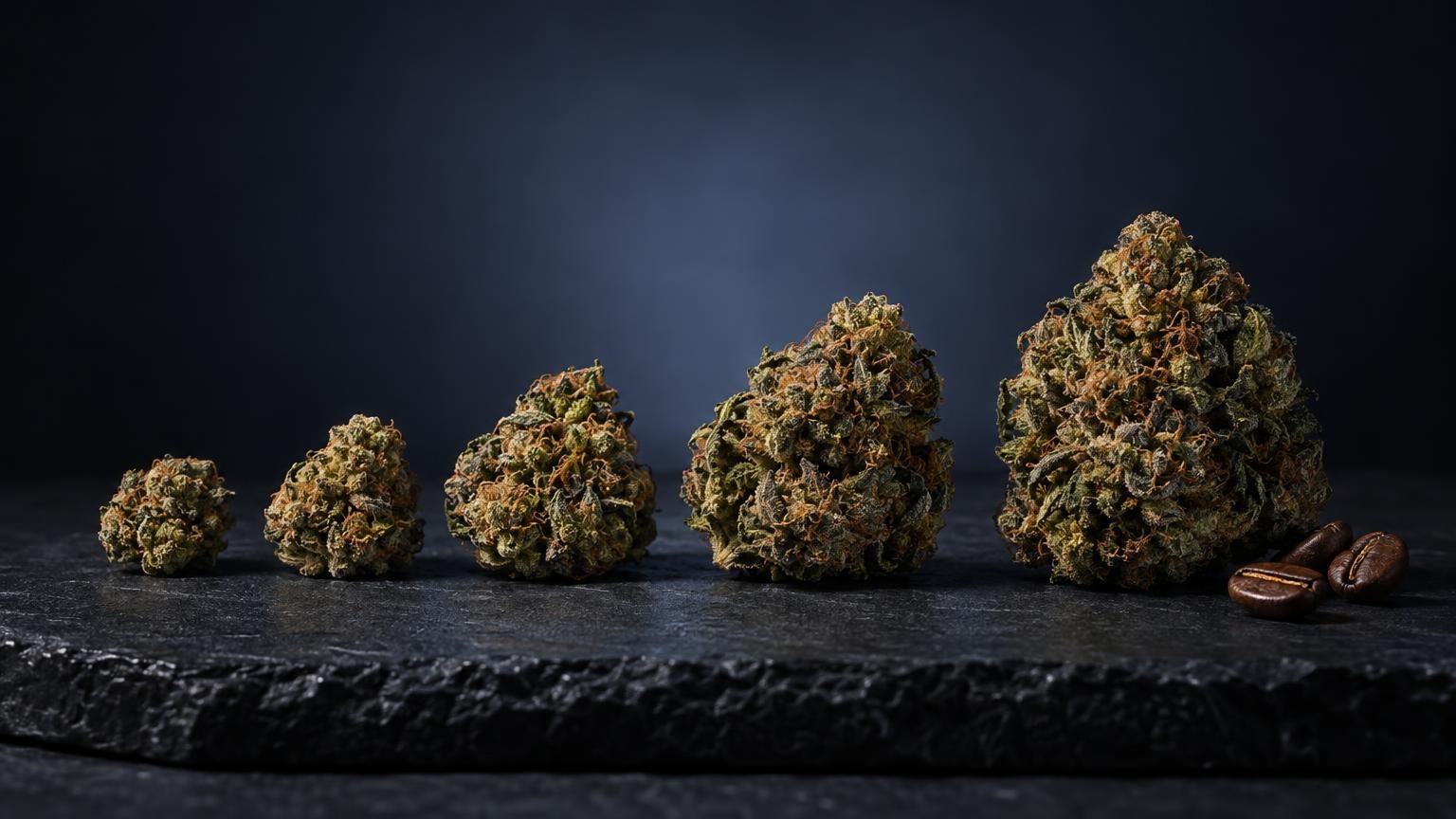
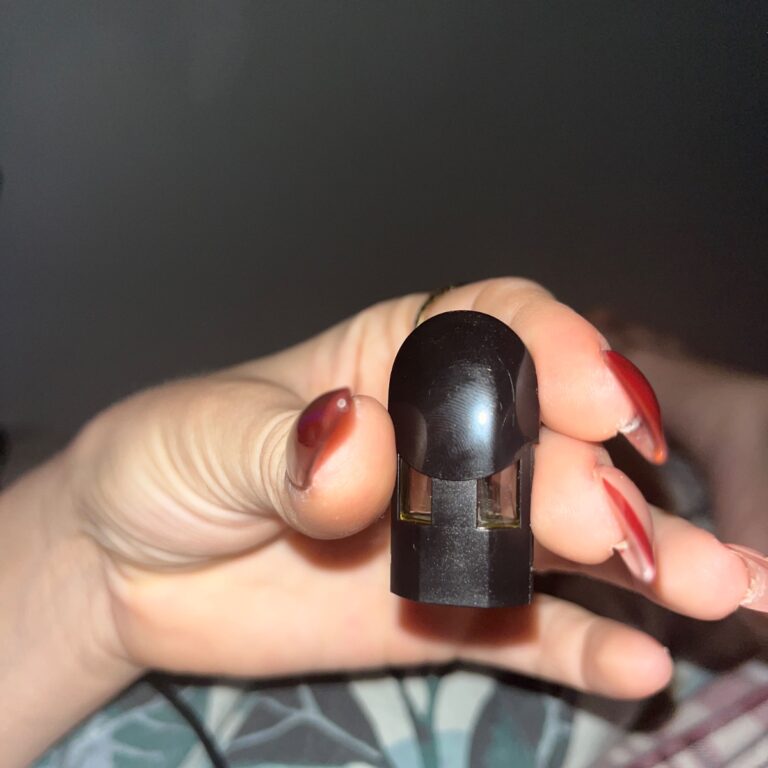
Magic Pod x2, THCX Vape Pods 90% is the low-effort option: no grinding, no smell on your fingers, easy to keep in a pocket. You trade some aromatic depth for simplicity. Before choosing, flip through the Sour Diesel photos on the product page: flower lets you judge density and trichome cover by eye, which a sealed pod never will.
Flower is for the purist, Live Rosin for the terpene hunter and the THCX pod for discretion.
Conclusion
Whichever format wins your vote, the Sour Diesel rule stays the same: let your nose and each batch’s own data do the choosing, not a recycled strain card copied from some old marijuana database that lumps all gassy strains together. Read the details on the product page, starting with THC content, before loading your grinder or clicking in a pod.
One more thing a strain profile won’t give you: health advice. Aroma notes and terpene talk describe a flower, not what it means for your body, so if you have a health question, a healthcare professional can help, not a menu.
On the practical side, check the shipping information on the site for delivery options and timing in your country before you order, so you know roughly which day to expect your parcel. Pick your format, then follow the gas.
Frequently asked questions
Does Sour Diesel still exist?
Yes, it remains a recognized sativa-dominant hybrid in strain culture, still grown and sold under this name, with its signature fuel-and-citrus nose and a lineage commonly cited as Chemdawg x Super Skunk, though that parentage has never been formally documented.
Why is Sour Diesel so hard to find?
Its exact genetics were never certified, and the strain’s character depends heavily on the specific phenotype, grower and cure. Cuts that truly nail both the citrus and gas notes of the original are harder to reproduce than generically “gassy” strains sold under the same name.
How long does Sour Diesel take to flower?
The available text does not give a flowering time for this strain; what’s confirmed is its profile as a sativa-dominant hybrid with a fuel-and-citrus aroma driven by caryophyllene, myrcene and limonene, best judged batch by batch rather than by a generic strain card.
Sources
- Epidyolex (cannabidiol) — European Medicines Agency, EPAR — www.ema.europa.eu