 Written by Sophie Clarke
Contents5 sections
The essentials in 30 seconds
The mustard plant is any one of several species in the genera Brassica, Rhamphospermum and Sinapis, in the family Brassicaceae[4]. Its seeds can be pressed into mustard oil, and its edible leaves can be eaten as mustard greens[4], while grinding the seeds with liquids makes prepared mustard[4].
- Spot it by its bright yellow cross-shaped flowers, lobed leaves and slender seed pods. White mustard (Sinapis alba) has pale seeds and the mildest heat of the group.
- Brown mustard (Brassica juncea) supplies the broad, often frilly leaves sold as mustard greens, and farmers sow the plant as a cover crop that feeds the soil, while flowering patches support wildlife.
- Forage only the plants you can identify with certainty. Many vegetables are cultivated varieties of mustard plants, and domestication may have begun 6,000 years ago[4].
A mustard plant is a leafy annual from the Brassica group, recognisable by its lobed, slightly hairy leaves, clusters of bright yellow cross-shaped flowers and slender seed pods, and grown for its seeds, its peppery greens and as a soil-building cover crop.
This guide shows you how to spot one, which parts end up as food and why farmers sow it for the soil as much as for the plate. Along the way, it settles the mustard tree question and the common mix-up with hemp.
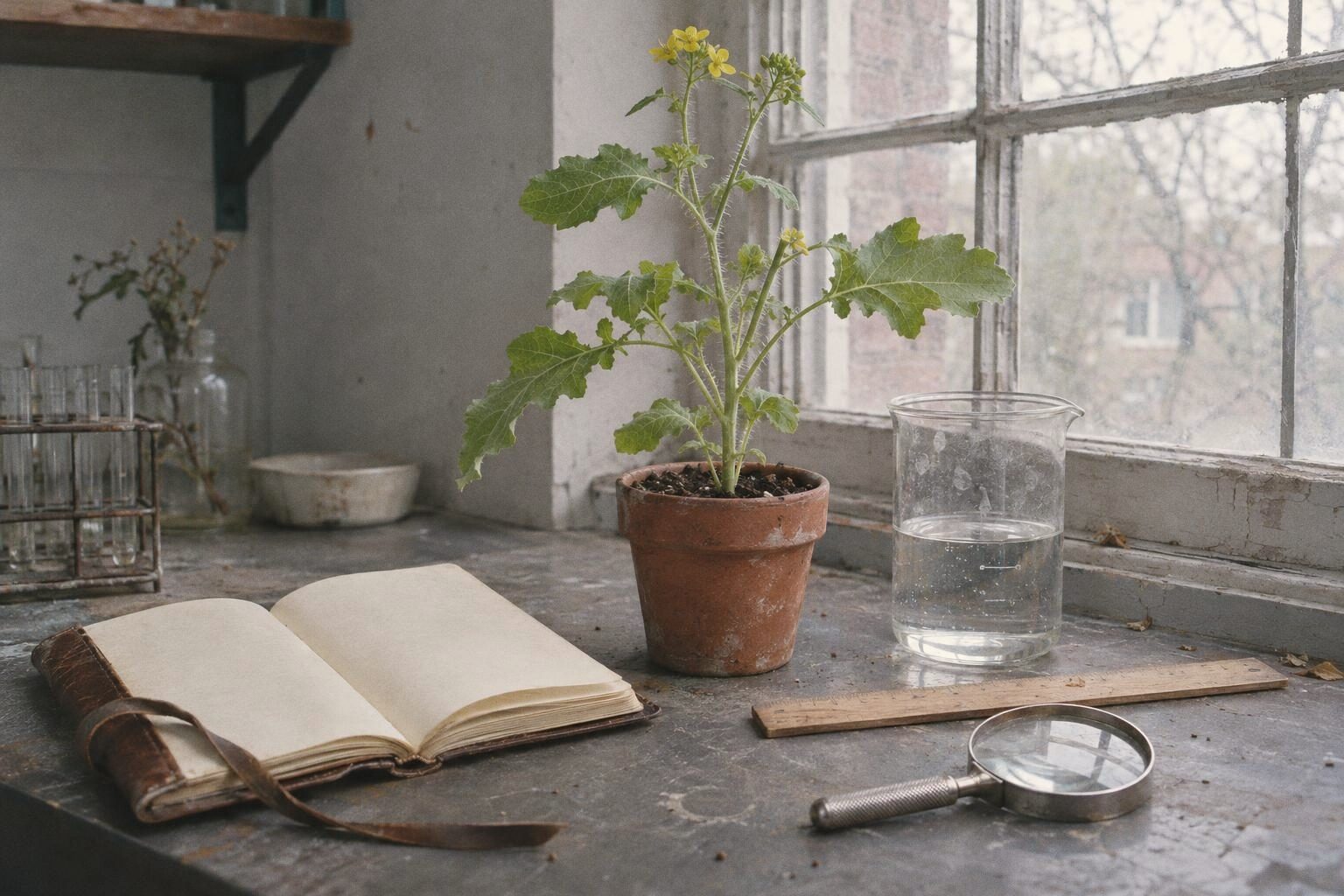
Mustard sits among the cruciferous vegetables, in the same family as Brassica oleracea, the species behind cabbage and broccoli. If you’ve ever seen a cabbage bolt, you know the look: tall stems, yellow blooms, pods that split when dry. A mature plant usually reaches somewhere between knee and chest height.
- White mustard (Sinapis alba): pale yellow seeds and the mildest heat of the group.
- Brown mustard (Brassica juncea): reddish-brown seeds and broad, often frilly leaves sold as mustard greens.
- Black mustard (Brassica nigra): small, dark, sharp seeds on a taller, more branching plant.
Read seed colour the way you read pepper: white stays gentle, while brown and black bring the bite. As for the “mustard tree” of the parable, it is commonly identified with black mustard, which can grow tall and woody-looking. It remains an annual herb, though, not a true tree.
What does a mustard plant look like?
A mustard plant is an annual brassica with lobed, slightly hairy leaves, clusters of bright yellow four-petal flowers and slender seed pods. A mature plant ranges from knee height to well above head height, depending on the species. Botanically, it belongs to the genera Brassica, Rhamphospermum and Sinapis, in the Brassicaceae family[4].
If those yellow flowers remind you of broccoli that has bolted, you’re on the right track. Mustard belongs with the cruciferous vegetables, and Brassica oleracea (cabbage, broccoli, kale) flowers with the same four-petal cross.
To tell the three main mustards apart, look at the leaves, the height and, above all, the seed. Think pepper: pale seeds are gentle, dark seeds bite.
| Species | How to spot it | Seed |
|---|---|---|
| White mustard (Sinapis alba) | Deeply cut, bristly leaves; hairy pods with a flat beak | Pale yellow, mildest |
| Brown mustard (Brassica juncea) | Broad, frilly leaves, the classic mustard greens | Reddish-brown, sharper |
| Black mustard (Brassica nigra) | Tall and branching, pods pressed to the stem; common on field edges across Europe | Small, dark, sharpest |
A “mustard tree” isn’t a separate species. The plant in Jesus’s parable is traditionally linked to black mustard, the tallest of the three, but that’s a long-standing interpretation rather than a settled botanical fact. What you can see for yourself is that black mustard often branches out like a shrub by late summer.
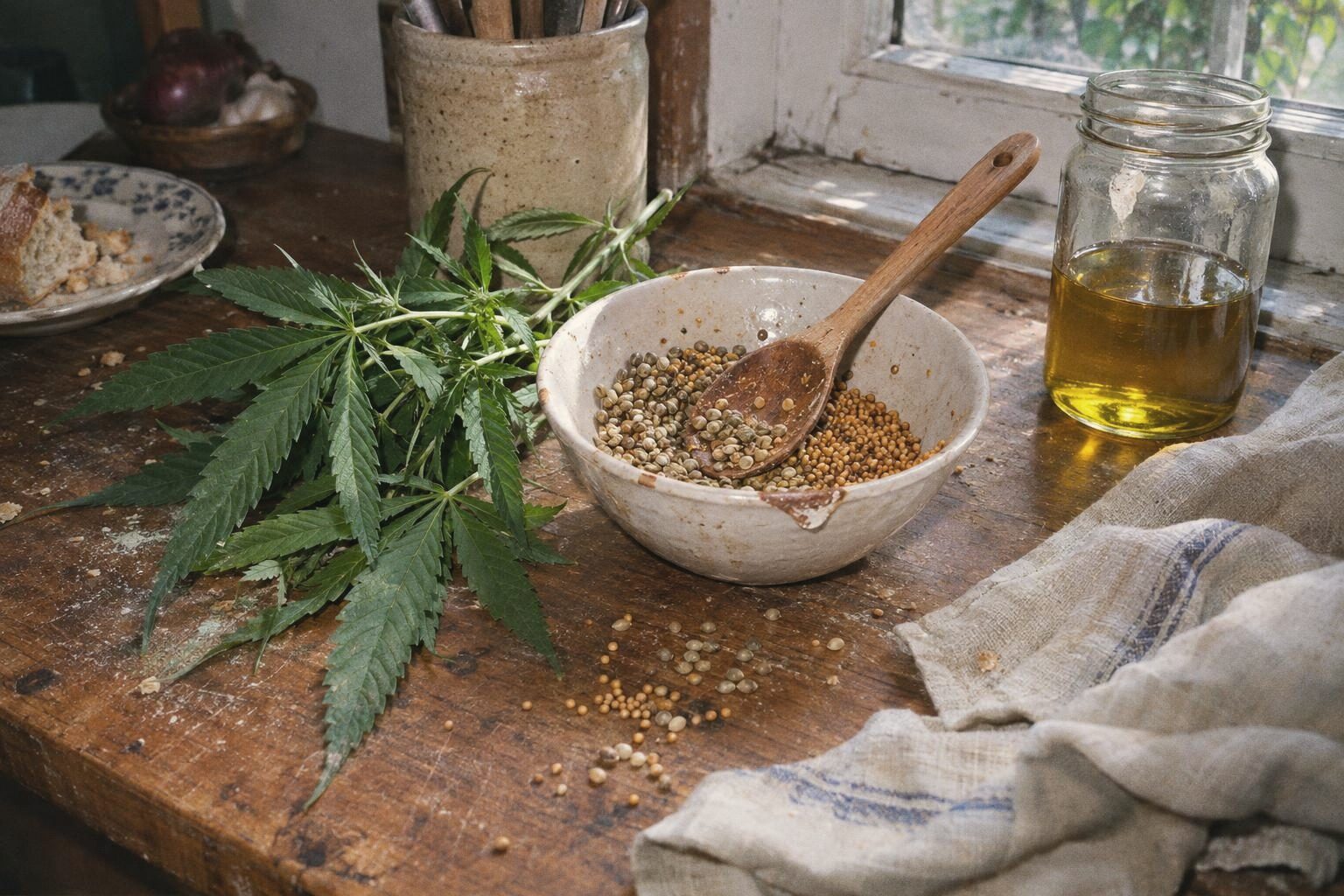
Don’t confuse any of these with hemp either. Cannabis refers to the psychoactive preparations of Cannabis sativa, with THC as the major psychoactive constituent[2], and it comes from a different plant family altogether.
Read also: THCX
Is a mustard plant edible, and which parts do you eat?
Yes, a mustard plant is edible, and the main species are grown as food plants. The leaves are eaten as mustard greens, the seeds become the condiment or are pressed into mustard oil, and the young bright yellow flowers make a peppery garnish for salads.
Once you know the seed colours, each part is easy to place on the plate. According to the Wikipedia entry on the mustard plant, the seeds can be pressed to make mustard oil, and the edible leaves can be eaten as mustard greens[4]. The same entry notes that grinding and mixing mustard seeds with water, vinegar or other liquids creates prepared mustard[4].
Those three parts cover the food side, and mustard oil is an everyday cooking fat in India. If you react to mustard, check the label on sauces and spice mixes.
The heat isn’t stored in the plant ready to go. Crushing a seed or leaf brings glucosinolates into contact with the enzyme myrosinase, which releases sharp isothiocyanates. That’s why dry mustard powder only bites once you add water.
Can you eat garlic mustard?
Garlic mustard (Alliaria petiolata) is often picked as a wild green, but it’s a separate plant and not one of the mustard species above, so the points in this section don’t automatically apply to it. It belongs to the same Brassicaceae family and grows wild along European hedgerows and woodland edges. Its heart-shaped leaves smell of garlic when rubbed.
Foragers pick the young leaves for salads and pesto, which makes it quite different from mustard grown for seed. Several wild plants look similar, so be certain of your identification before you eat any of them.
What is mustard used for beyond the kitchen?
Outside the kitchen, the mustard plant does most of its work in the soil. Farmers grow it as a green manure and cover crop. Its fast growth shades bare ground, and the plants are then cut and worked back in, a practice commonly used in organic farming.
Mustard green manure often goes into a mix with other cover species after a harvest and fills the gap before the next crop. Gardeners like it because it produces a lot of leafy biomass in a short window. A mustard seed is usually just scattered on bare soil, and that quick start is why it’s such a popular multi-purpose cover.
Let a patch flower before you dig it in, and those yellow blooms give pollinating insects and other garden wildlife something to feed on. One sowing, two jobs: soil cover now, flowers for wildlife later.
Mustard vs cannabis: are they related?
No. They sit in separate plant families, as the botany section already shows. The mustard brassica is closer to your vegetable drawer: according to the Wikipedia entry on the mustard plant, many vegetables are cultivated varieties of mustard plants, and their domestication may have begun around 6,000 years ago[4].
Their aromas also come from different places. Mustard’s bite only appears once crushed tissue releases isothiocyanates. Resinous cannabis flowers already hold their terpenes, much like the oils in a citrus peel.
If you want to explore terpene-led profiles in pod and vape format, take a look at Magic Pod Live Rosin x2, Magic Pod x2 and the Magic Vape.
Conclusion
So the verdict is clear: the mustard plant is a food and soil crop, not a cousin of hemp. You can spot it by its bright yellow flowers, eat its leaves and seeds, and leave the rest to farmers who fold it into a cover crop mix.
If you forage, only pick what you can identify with certainty. And if plant aromas are what brought you here, our terpene-led pod and vape collection picks up where this guide stops.
Frequently asked questions
Sources
- Cannabis — World Health Organization — www.who.int
- Mustard plant – Wikipedia — en.wikipedia.org